UIN SGDUIN SGD
IJNIIJNICustomary marriage functions as a social institution under numerous legal systems; yet its implementation often poses significant obstacles to the safeguarding of childrens rights, especially when performed without official registration or involving minors. This paper investigates the normative boundaries of customary marriage within the context of Islamic family law, emphasizing child protection via a comparative examination of Indonesia and South Africa. Using normative legal research methods—integrating legislative, conceptual, and comparative approaches—the study analyses customary marital patterns, child protection norms, and judicial reactions in both countries. The findings indicate that Islamic family law acknowledges custom (urf) only under the condition that it aligns with the objectives of Sharīʿah (maqāṣid al‑sharīʿah), specifically the safeguarding of progeny (ḥifẓ al‑nasl), the mitigation of harm (darʾ al‑mafāsid), and the attainment of justice (adl). The prevalence of unregistered traditional marriages and lenient marriage dispensation norms in Indonesia compromises childrens legal identification, parental responsibility, and access to civil rights. Conversely, South Africa enforces more stringent normative regulations via compulsory registration and judicial measures to amend customary behaviors detrimental to children. This paper normatively asserts that child safety is an essential requirement for the legality of customary marriage and illustrates how Islamic family law serves as an internal corrective mechanism within diverse legal systems.
Customary marriage in both Indonesia and South Africa is legally valid only when it protects childrens rights, aligns with the objectives of Sharīʿah, and adheres to compulsory registration and age limits.Unregistered or early marriages undermine childrens legal status, thereby violating Islamic family laws principles of lineage protection and justice.The study demonstrates that robust, enforceable legal limits—such as mandatory registration and judicial oversight—are indispensable for safeguarding children within customary marriage systems.
Pertama, dilakukan studi empiris di tingkat desa dengan melibatkan aparat adat dan lembaga pengaman anak untuk mengidentifikasi praktik pernikahan adat yang masih tidak terdaftar serta dampaknya terhadap hak anak. Kedua, disarikan uji banding kebijakan registrasi pernikahan adat di Indonesia dengan sistem di Afrika Selatan guna menentukan mekanisme implementasi yang dapat disamakan secara kontekstual, termasuk prosedur pendaftaran dan sanksi administratif. Ketiga, ditelahukan dampak jangka panjang dari peran pengadilan adat dalam memperbaiki kebiasaan adat yang merugikan anak, termasuk evaluasi efektivitas putusan pengadilan terhadap perlindungan hak anak dan bagaimana praktik ini dapat direplikasi di wilayah lain di Indonesia.
- Customary Marriage and Child Protection in Islamic Family Law: A Comparative Study of Indonesia and South... doi.org/10.15575/ijni.v14i1.54491Customary Marriage and Child Protection in Islamic Family Law A Comparative Study of Indonesia and South doi 10 15575 ijni v14i1 54491
- Customary Law “Merariq” Marriage in the Sasak Ethnic Society in Lombok Eastern Indonesia... doi.org/10.2991/978-2-38476-180-7_151Customary Law AuMerariqAy Marriage in the Sasak Ethnic Society in Lombok Eastern Indonesia doi 10 2991 978 2 38476 180 7 151
- Jurnal Samarah: Jurnal Hukum Keluarga dan Hukum Islam. al lis maq shar ar riyyah importance relevance... doi.org/10.22373/sjhk.v5i1.9139Jurnal Samarah Jurnal Hukum Keluarga dan Hukum Islam al lis maq shar ar riyyah importance relevance doi 10 22373 sjhk v5i1 9139
| File size | 386.62 KB |
| Pages | 16 |
| DMCA | Report |
Related /

UNRIKAUNRIKA Haruslah terdapat proteksi hukum untuk pemenuhan hak anak terpaut hak waris anak berkewarganegaraan ganda yang orang tuanya melakukan pernikahan kombinasi.Haruslah terdapat proteksi hukum untuk pemenuhan hak anak terpaut hak waris anak berkewarganegaraan ganda yang orang tuanya melakukan pernikahan kombinasi.
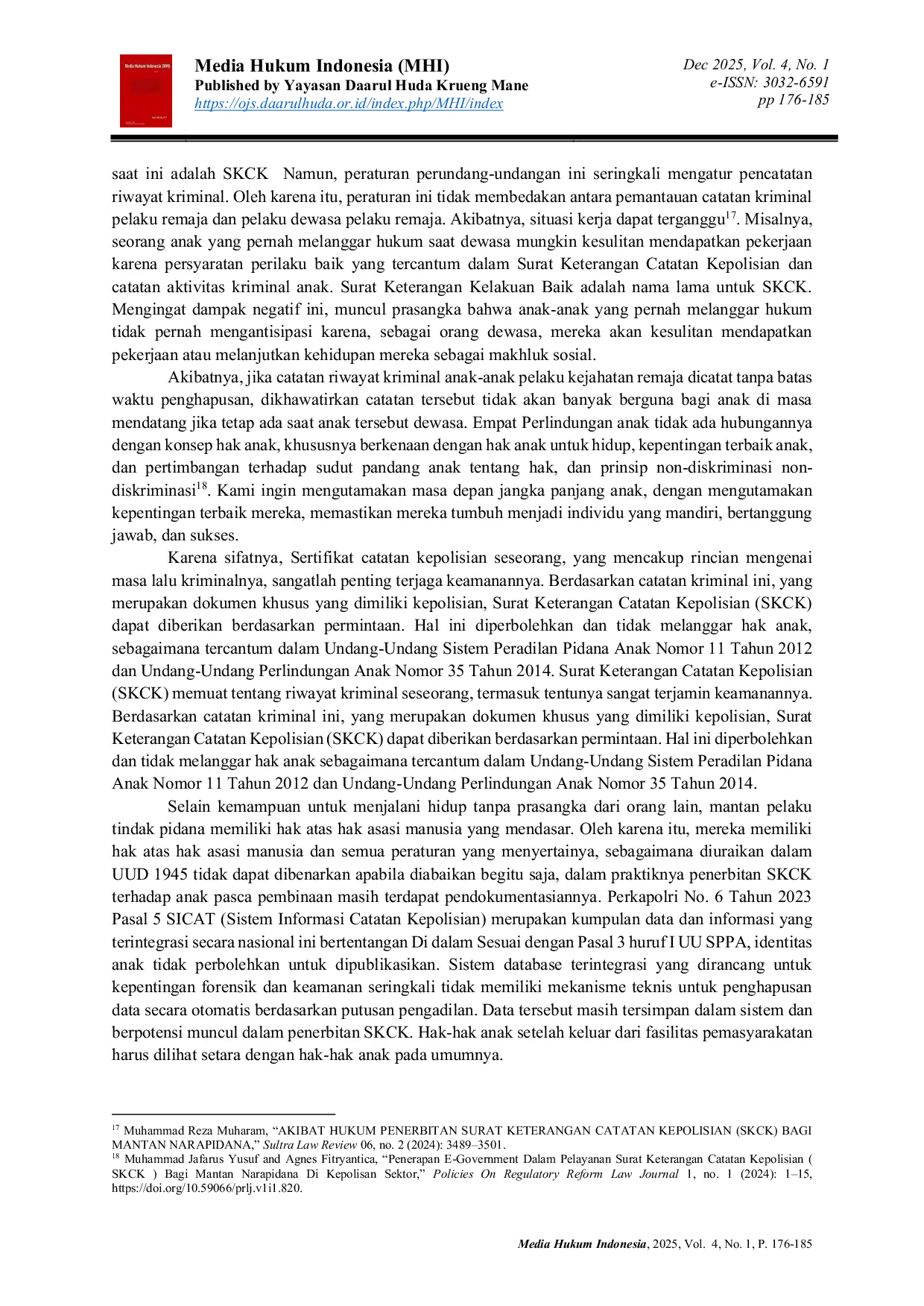
DAARULHUDADAARULHUDA Penelitian ini diharapkan dapat membantu kemajuan hukum pidana serta pemahaman yang lebih mendalam mengenai pencatatan kriminal anak dalam surat keteranganPenelitian ini diharapkan dapat membantu kemajuan hukum pidana serta pemahaman yang lebih mendalam mengenai pencatatan kriminal anak dalam surat keterangan

UNTAGUNTAG Dalam konteks masyarakat NTT yang memiliki budaya patriarki dan cara mendidik anak yang cenderung otoriter. Pendapat anak sering tidak dianggap, dan pendapatDalam konteks masyarakat NTT yang memiliki budaya patriarki dan cara mendidik anak yang cenderung otoriter. Pendapat anak sering tidak dianggap, dan pendapat
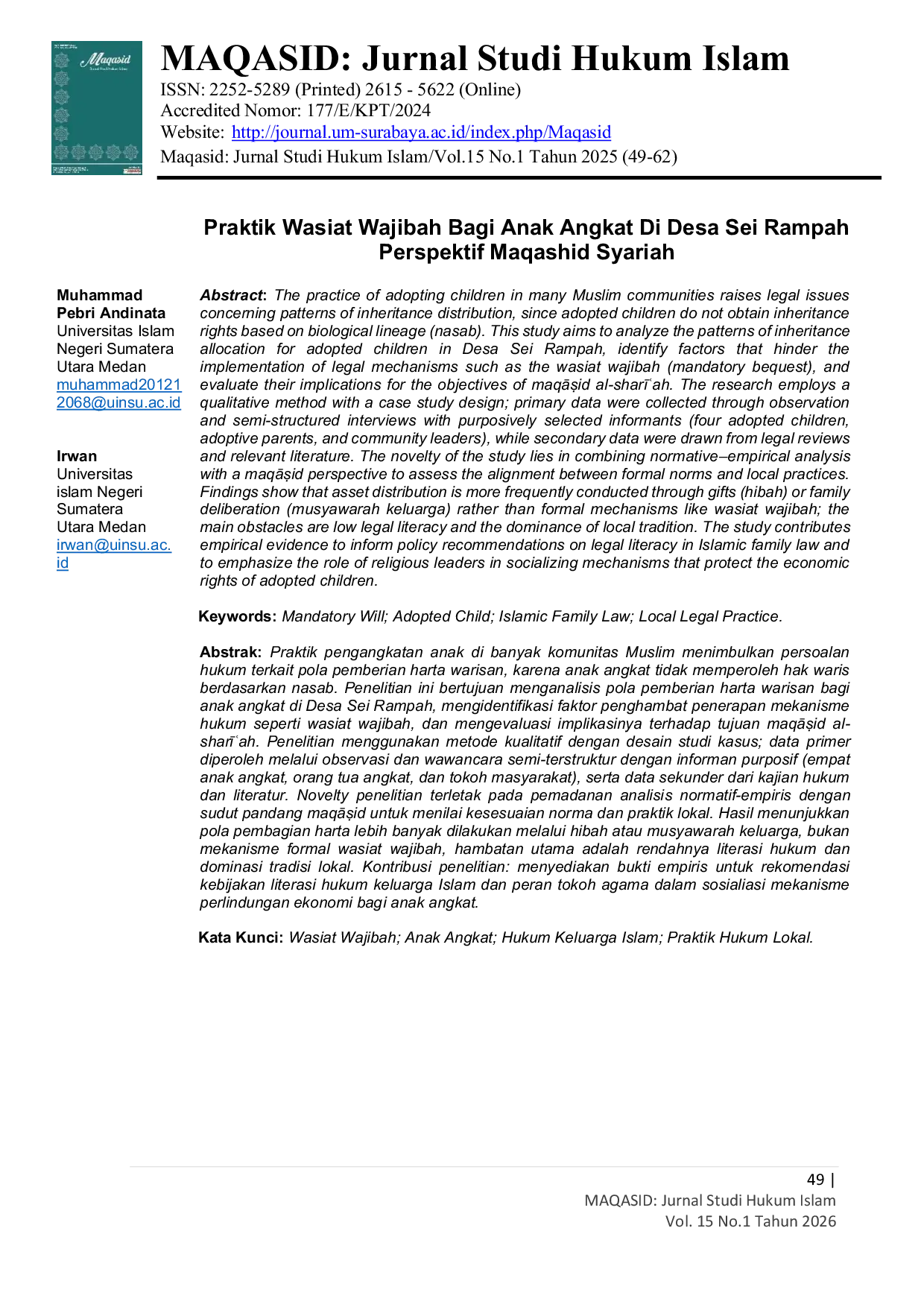
UM SURABAYAUM SURABAYA Penelitian ini bertujuan menganalisis pola pemberian harta warisan bagi anak angkat di Desa Sei Rampah, mengidentifikasi faktor penghambat penerapan mekanismePenelitian ini bertujuan menganalisis pola pemberian harta warisan bagi anak angkat di Desa Sei Rampah, mengidentifikasi faktor penghambat penerapan mekanisme

DAARULHUDADAARULHUDA Undang-Undang Nomor 16 Tahun 2019 merupakan kemajuan konstitusional, namun instrumen dispensasi nikah masih menjadi celah regulasi yang memperkuat perampasanUndang-Undang Nomor 16 Tahun 2019 merupakan kemajuan konstitusional, namun instrumen dispensasi nikah masih menjadi celah regulasi yang memperkuat perampasan
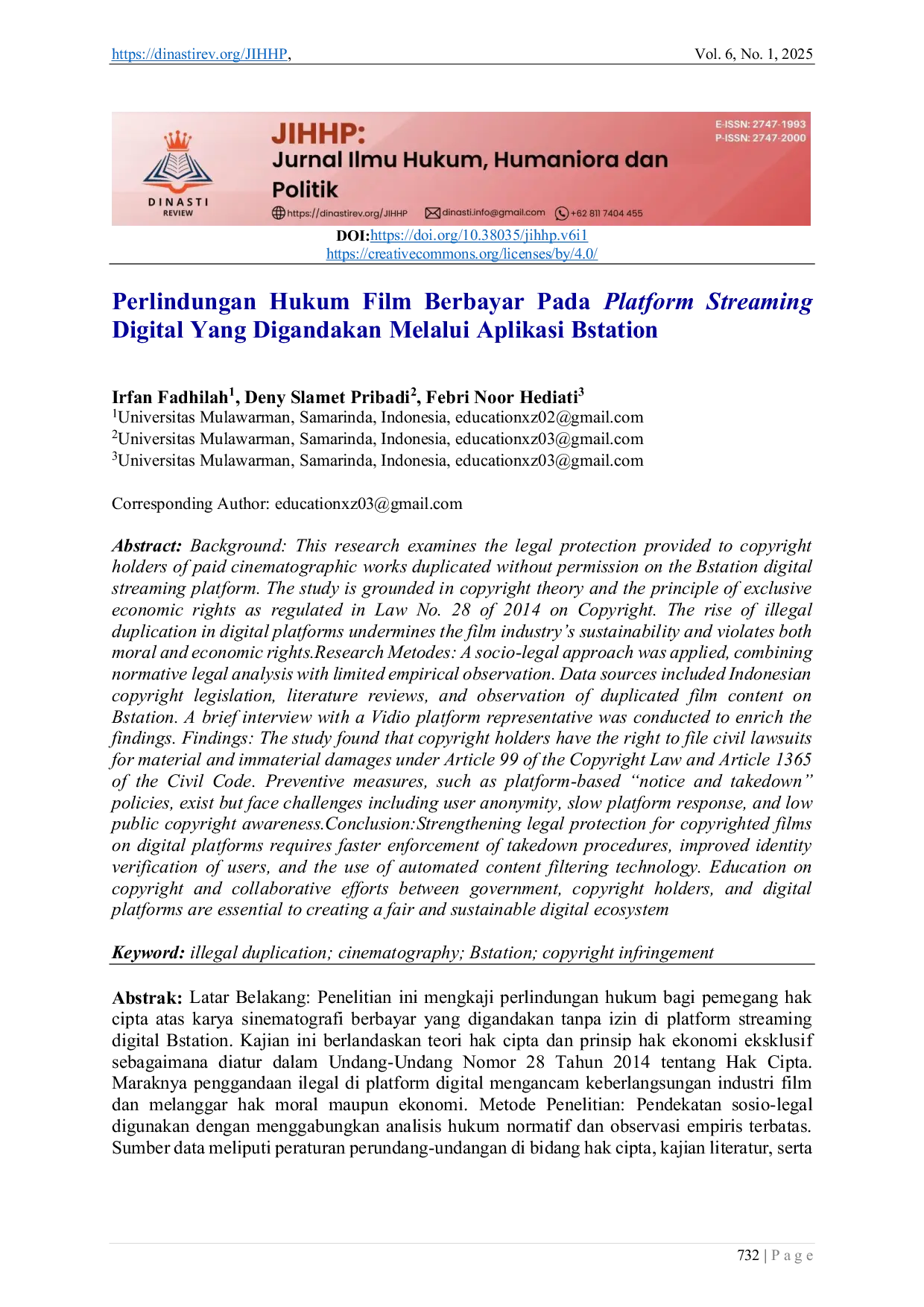
DINASTIREVDINASTIREV Maraknya penggandaan ilegal di platform digital mengancam keberlangsungan industri film dan melanggar hak moral maupun ekonomi. Metode Penelitian: PendekatanMaraknya penggandaan ilegal di platform digital mengancam keberlangsungan industri film dan melanggar hak moral maupun ekonomi. Metode Penelitian: Pendekatan
IAIN LANGSAIAIN LANGSA it upholds the protection of religion (ḥifẓ al-dīn) by ensuring that marriage is not solely based on social norms but also on spiritual and moralit upholds the protection of religion (ḥifẓ al-dīn) by ensuring that marriage is not solely based on social norms but also on spiritual and moral
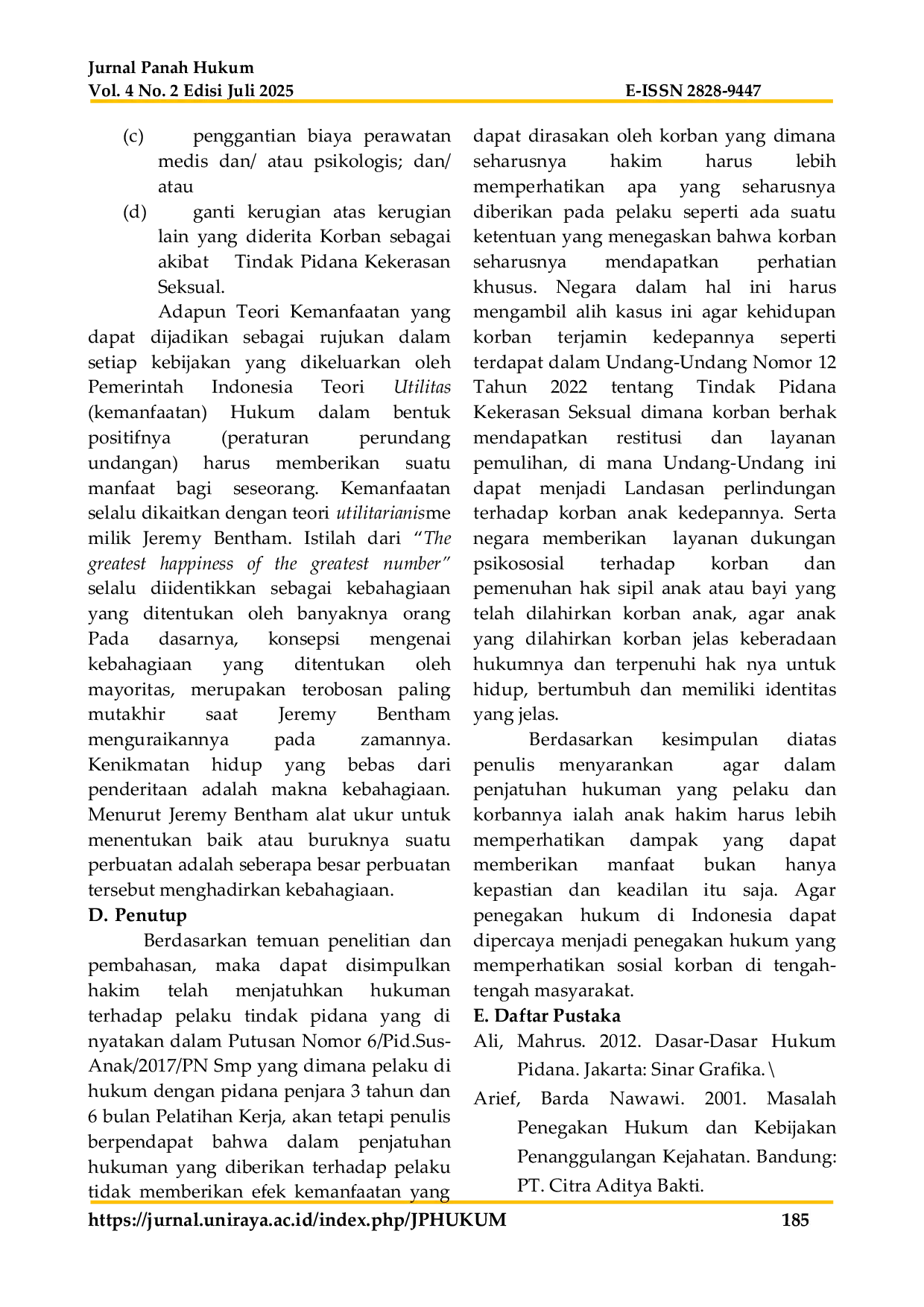
UNIRAYAUNIRAYA Sus-Anak/2017/PN Smp). Metode yang digunakan adalah penelitian hukum normatif dengan pendekatan perundang‑undangan, kasus, dan analisis, serta pengumpulanSus-Anak/2017/PN Smp). Metode yang digunakan adalah penelitian hukum normatif dengan pendekatan perundang‑undangan, kasus, dan analisis, serta pengumpulan
Useful /

UIN SGDUIN SGD Data dikumpulkan melalui kuesioner yang dibagikan kepada tutor di 10 Lembaga Kursus dan Pelatihan (LKP) di Kampung Inggris, Pare, Kediri, Indonesia. DariData dikumpulkan melalui kuesioner yang dibagikan kepada tutor di 10 Lembaga Kursus dan Pelatihan (LKP) di Kampung Inggris, Pare, Kediri, Indonesia. Dari

UIN SGDUIN SGD Metode studi kasus kualitatif memanfaatkan wawancara mendalam, observasi, dan analisis dokumen. Temuan menunjukkan bahwa BP4 menerapkan model bimbinganMetode studi kasus kualitatif memanfaatkan wawancara mendalam, observasi, dan analisis dokumen. Temuan menunjukkan bahwa BP4 menerapkan model bimbingan
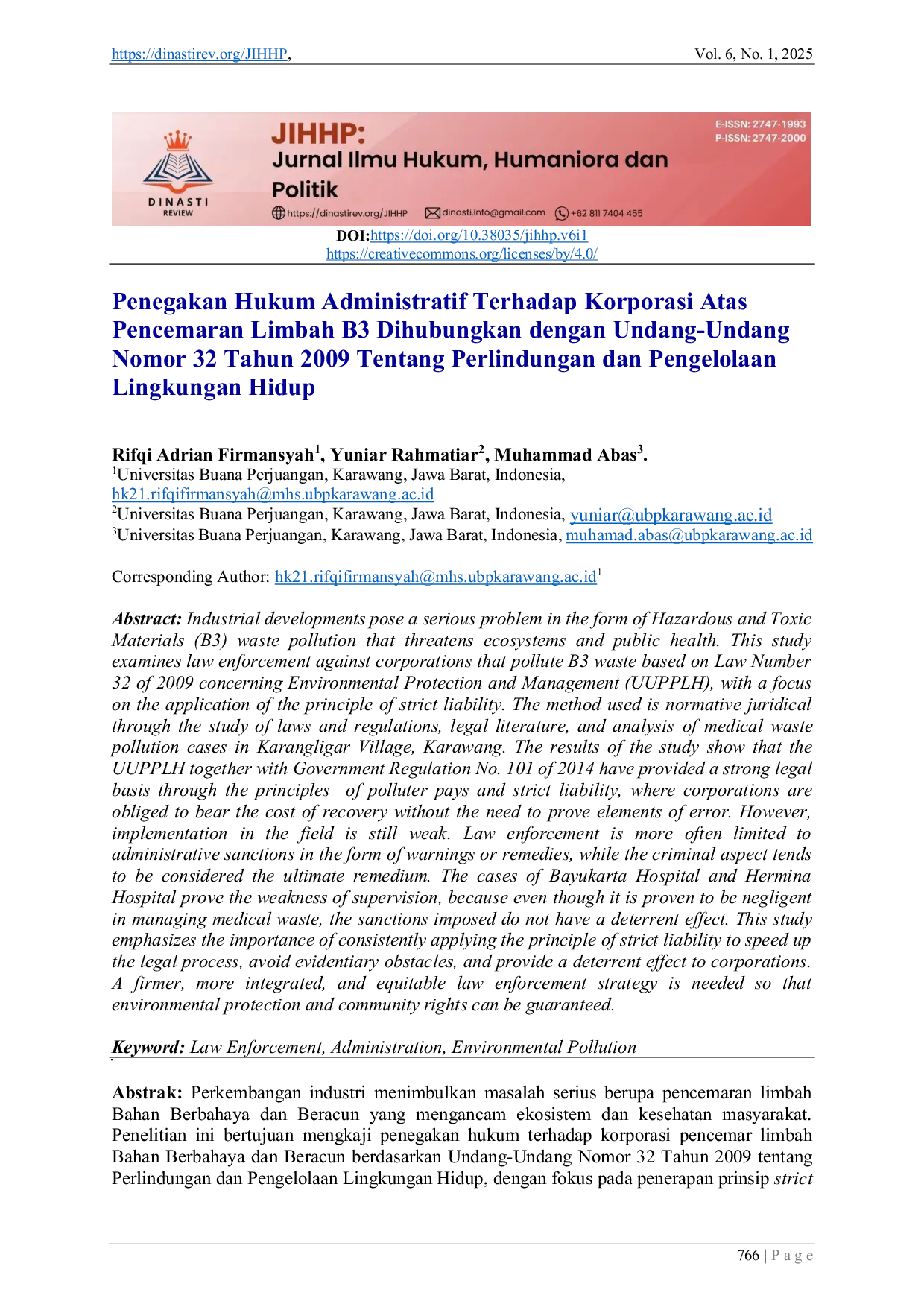
DINASTIREVDINASTIREV Penerapan prinsip strict liability secara konsisten akan mendorong korporasi menanggung biaya pemulihan lingkungan dan ganti rugi, mewujudkan efek jeraPenerapan prinsip strict liability secara konsisten akan mendorong korporasi menanggung biaya pemulihan lingkungan dan ganti rugi, mewujudkan efek jera
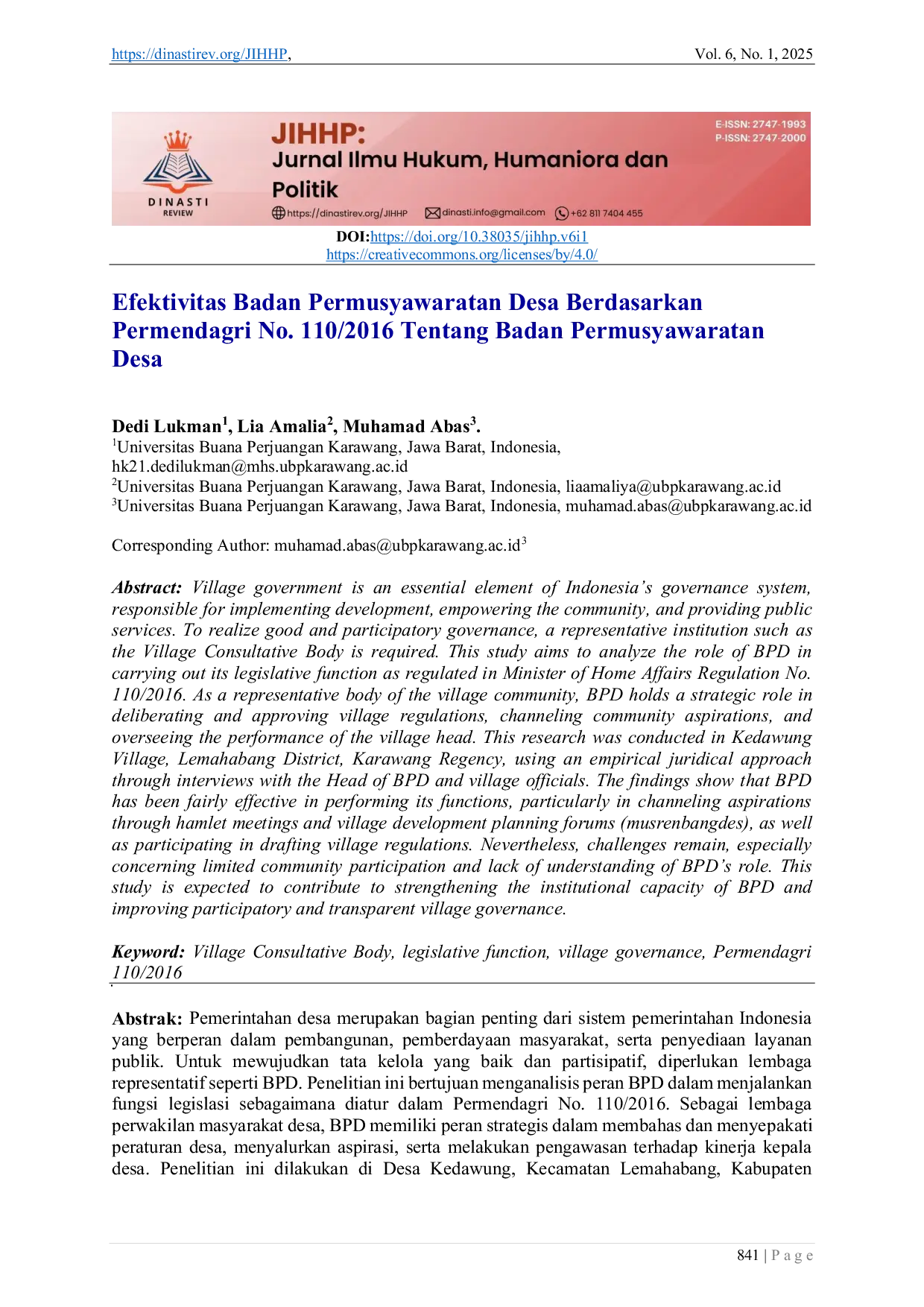
DINASTIREVDINASTIREV Efektivitas BPD ini didukung oleh lima faktor Soerjono Soekanto, di mana substansi hukum, penegak hukum, dan kebudayaan menunjukkan kinerja yang baik,Efektivitas BPD ini didukung oleh lima faktor Soerjono Soekanto, di mana substansi hukum, penegak hukum, dan kebudayaan menunjukkan kinerja yang baik,