INASNACCINASNACC
Jurnal neuroanestesi indonesiaJurnal neuroanestesi indonesiaHerpes simplex viruses (HSV), including HSV-1 and HSV-2, are neurotropic viruses capable of establishing lifelong latency in sensory ganglia and reactivating under various triggers, including traumatic brain injury (TBI). TBI induces secondary injury cascades such as neuroinflammation, excitotoxicity, and blood-brain barrier disruption, which create a conducive environment for HSV reactivation. The reactivation of HSV after TBI, particularly HSV-1 and HSV-2, can lead to significant neurological consequences, including encephalitis, cognitive decline, and the development of neurodegenerative diseases like Alzheimers disease and Chronic Traumatic Encephalopathy. Current therapeutic approaches focus on antiviral agents like acyclovir and valacyclovir, which manage acute HSV infection but are less effective in preventing long-term neurological damage. Emerging research highlights the potential of anti-inflammatory and neuroprotective strategies to complement antiviral therapies, aiming to reduce the neuronal damage caused by viral reactivation and inflammation. However, gaps remain in understanding the precise mechanisms linking TBI-induced neuroinflammation to HSV reactivation and its long-term impact on neurological health. This review synthesizes the current literature on the pathophysiology of HSV reactivation following TBI, and their contributions to acute and chronic neurological outcomes.
In conclusion, the reactivation of HSV following TBI presents significant challenges in both acute and chronic neurological outcomes.Neuroinflammation and immune dysregulation, which are exacerbated by TBI, play crucial roles in facilitating HSV reactivation and subsequent neurodegenerative processes such as AD and CTE.Although emerging research points to the potential of novel therapies including immunomodulatory treatments and vaccines targeting HSV latency, several gaps of the precise mechanisms linking TBI to HSV reactivation remains undiscovered.Further research is essential to uncover these mechanisms and develop effective treatments to mitigate both the acute and long-term neurological consequences of HSV reactivation after TBI.
Penelitian lebih lanjut diperlukan untuk mengurai mekanisme pasti yang menghubungkan cedera otak traumatis (TBI) dengan reaktivasi virus herpes simpleks (HSV), terutama dalam konteks disfungsi kekebalan tubuh. Sebagai contoh, studi prospektif yang melibatkan pemantauan biomarker inflamasi dan viral load pada pasien TBI dapat membantu mengidentifikasi jendela waktu optimal untuk intervensi antivirus dan neuroprotektif. Selain itu, penelitian yang berfokus pada pengembangan vaksin yang secara khusus menargetkan pencegahan infeksi HSV atau mengurangi kemampuannya untuk memasuki keadaan laten akan sangat berharga. Terakhir, eksplorasi terapi yang ditargetkan pada reservoir viral laten, seperti ganglion trigeminal, dapat membantu menghilangkan virus atau mencegah reaktivasi setelah trauma, membuka jalan bagi strategi pengobatan yang lebih efektif dan personal.
- Simultaneous VZV and HSV-1 Reactivation after Minor Head Injury | European Journal of Case Reports in... ejcrim.com/index.php/EJCRIM/article/view/1746Simultaneous VZV and HSV 1 Reactivation after Minor Head Injury European Journal of Case Reports in ejcrim index php EJCRIM article view 1746
- Association of APOE Genotypes and Chronic Traumatic Encephalopathy | Neurogenetics | JAMA Neurology |... doi.org/10.1001/jamaneurol.2022.1634Association of APOE Genotypes and Chronic Traumatic Encephalopathy Neurogenetics JAMA Neurology doi 10 1001 jamaneurol 2022 1634
- Repetitive injury induces phenotypes associated with Alzheimer’s disease by reactivating HSV-1... doi.org/10.1126/scisignal.ado6430Repetitive injury induces phenotypes associated with AlzheimerAos disease by reactivating HSV 1 doi 10 1126 scisignal ado6430
| File size | 217.82 KB |
| Pages | 6 |
| DMCA | Report |
Related /
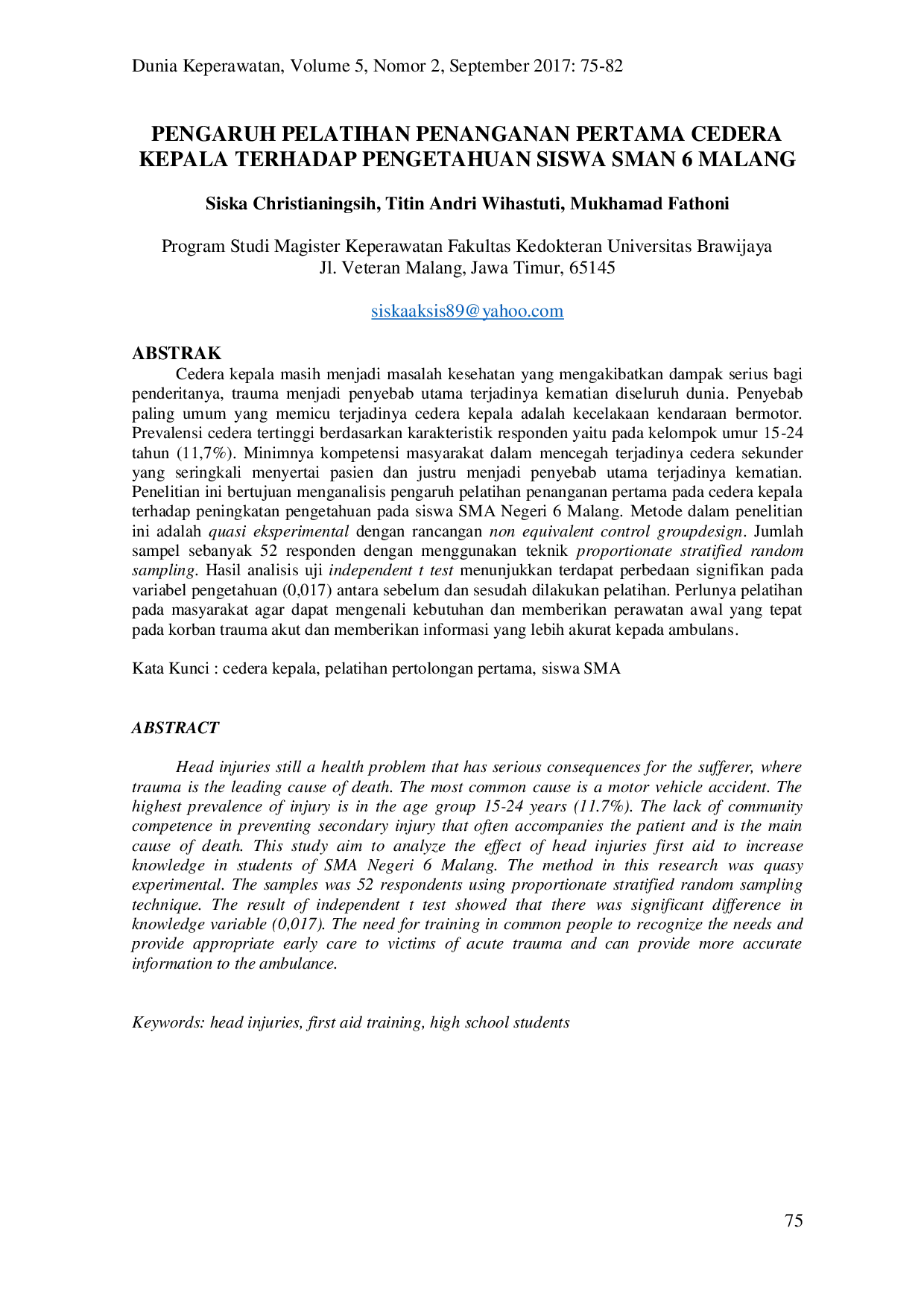
LMULMU Jumlah sampel sebanyak 52 responden dengan menggunakan teknik proportionate stratified random sampling. Hasil analisis uji independent t test menunjukkanJumlah sampel sebanyak 52 responden dengan menggunakan teknik proportionate stratified random sampling. Hasil analisis uji independent t test menunjukkan
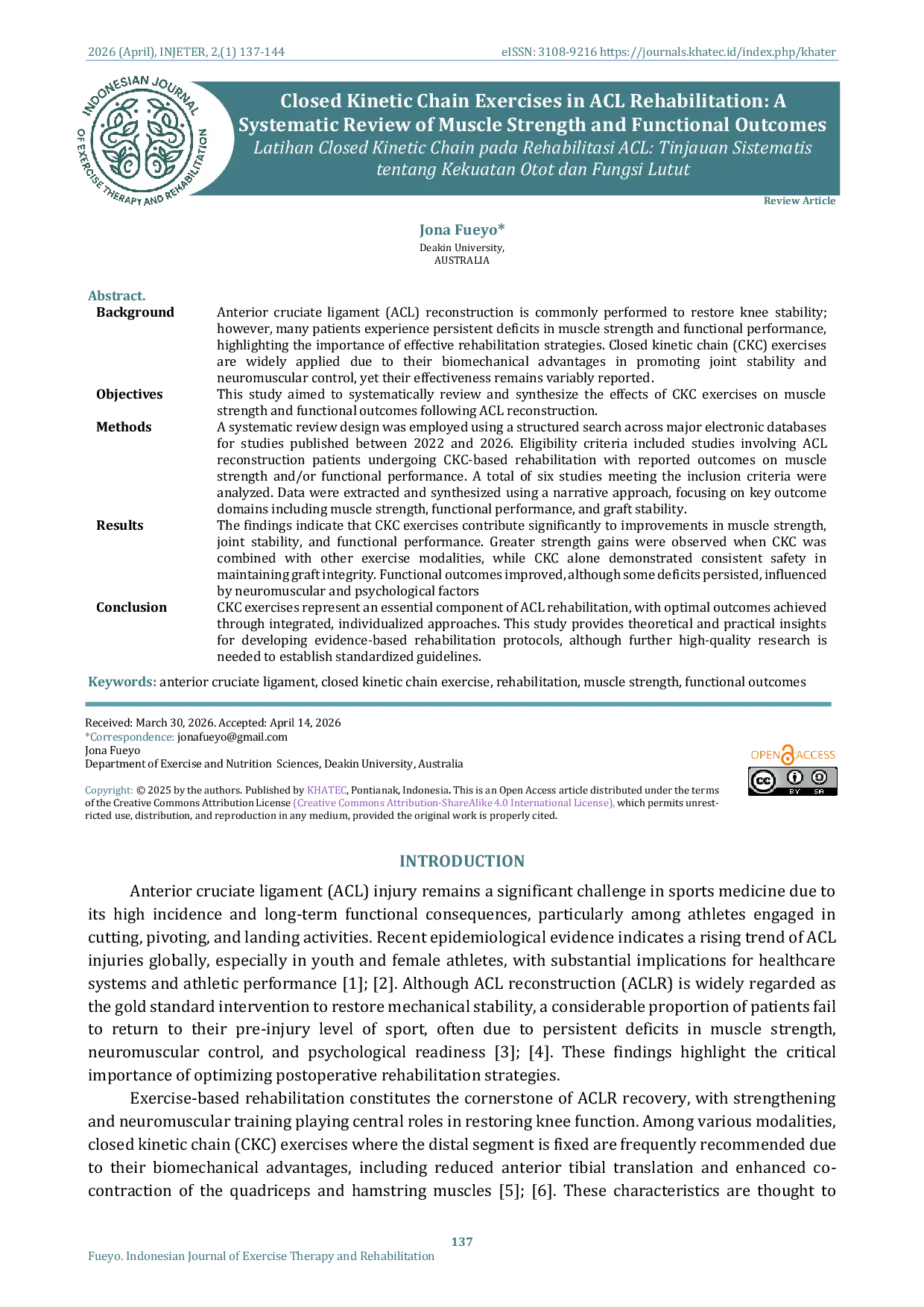
KHATECKHATEC Tujuan: Penelitian ini bertujuan untuk meninjau secara sistematis dan mensintesis efek latihan CKC terhadap kekuatan otot dan hasil fungsional setelahTujuan: Penelitian ini bertujuan untuk meninjau secara sistematis dan mensintesis efek latihan CKC terhadap kekuatan otot dan hasil fungsional setelah
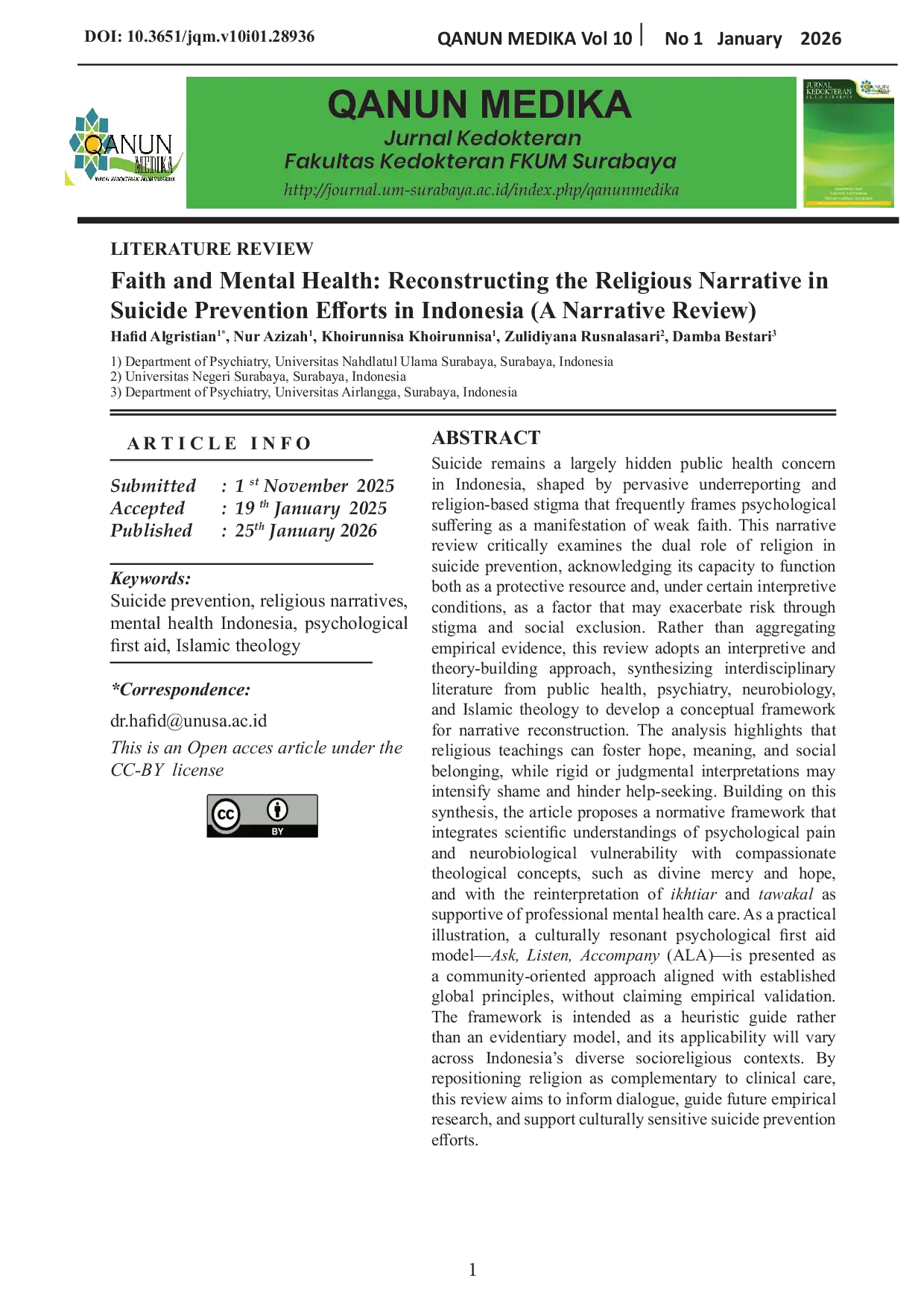
UM SURABAYAUM SURABAYA Sekitar 85% kematian terjadi dalam 2 minggu pertama setelah cedera. Salah satu komplikasi dari cedera otak yang parah adalah diabetes insipidus. TidakSekitar 85% kematian terjadi dalam 2 minggu pertama setelah cedera. Salah satu komplikasi dari cedera otak yang parah adalah diabetes insipidus. Tidak
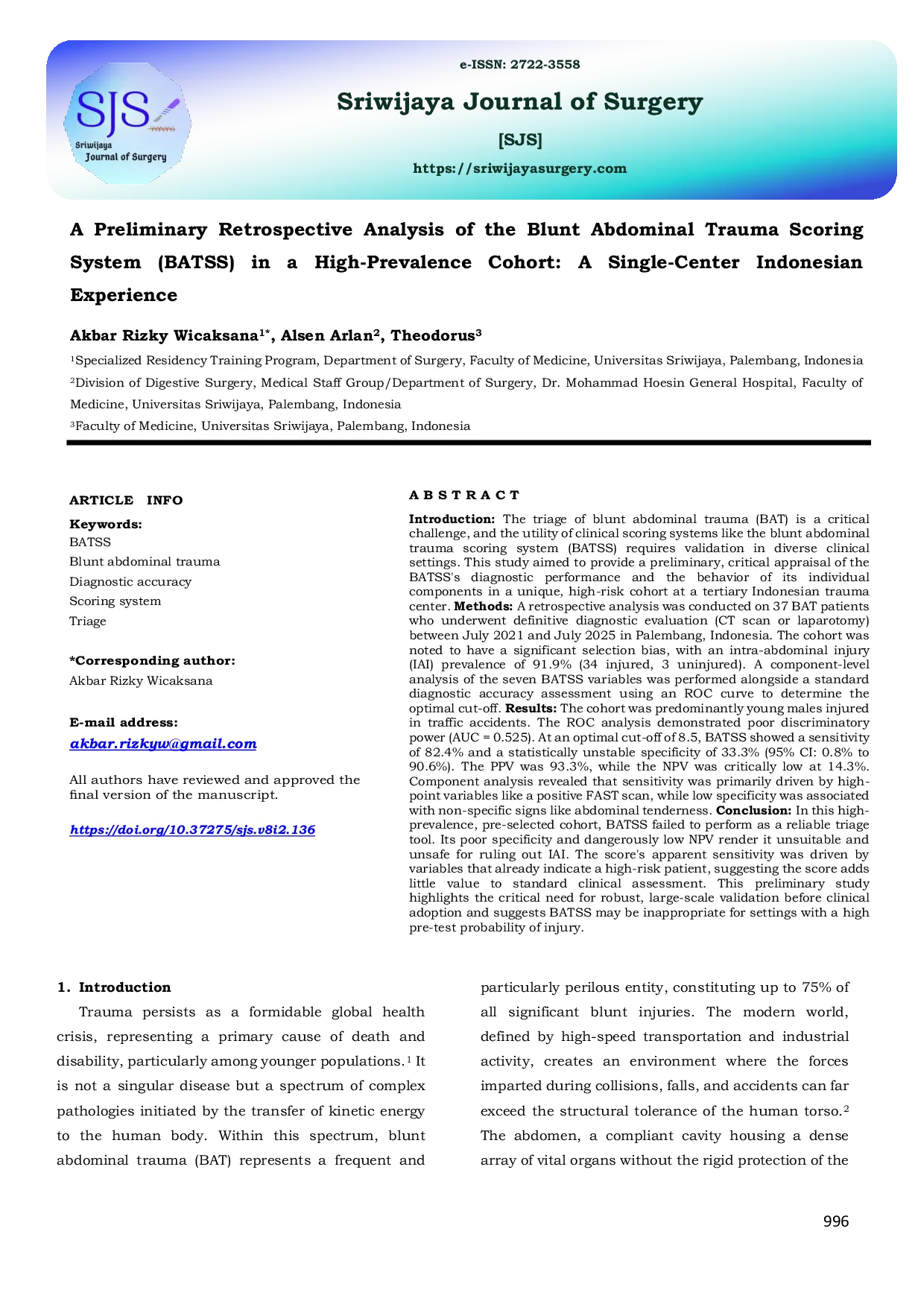
SRIWIJAYASURGERYSRIWIJAYASURGERY Dalam kohort prevalensi tinggi, pra-seleksi, BATSS gagal berfungsi sebagai alat triase yang andal. Studi pendahuluan ini menekankan kebutuhan kritis akanDalam kohort prevalensi tinggi, pra-seleksi, BATSS gagal berfungsi sebagai alat triase yang andal. Studi pendahuluan ini menekankan kebutuhan kritis akan

SRIWIJAYASURGERYSRIWIJAYASURGERY Penelitian ini menunjukkan bahwa peningkatan serum laktat pada saat masuk rumah sakit merupakan prediktor kuat dan independen dari hasil fungsional in-hospitalPenelitian ini menunjukkan bahwa peningkatan serum laktat pada saat masuk rumah sakit merupakan prediktor kuat dan independen dari hasil fungsional in-hospital
INASNACCINASNACC Our goal of this study was to find out what happened to IL-6 and IL-10 levels in blood of the TBI rat model when they were given pegagan extract (CentellaOur goal of this study was to find out what happened to IL-6 and IL-10 levels in blood of the TBI rat model when they were given pegagan extract (Centella
INASNACCINASNACC An increase in ICP will cause a decrease in CPP, while a reduction in CPP will cause ischemia, which will worsen the high ICP. However, increasing theAn increase in ICP will cause a decrease in CPP, while a reduction in CPP will cause ischemia, which will worsen the high ICP. However, increasing the
INASNACCINASNACC Penggunaan ketamin tidak menunjukkan bukti bahaya pada pasien dengan cedera kepala traumatis. Ketamin menunjukkan potensi sebagai agen terapeutik dalamPenggunaan ketamin tidak menunjukkan bukti bahaya pada pasien dengan cedera kepala traumatis. Ketamin menunjukkan potensi sebagai agen terapeutik dalam
Useful /

LMULMU Puzzle adalah salah satu bentuk permainan yang diduga mampu menurunkan tingkat kecemasan pada anak usia prasekolah. Tujuan penelitian ini yaitu untuk mengetahuiPuzzle adalah salah satu bentuk permainan yang diduga mampu menurunkan tingkat kecemasan pada anak usia prasekolah. Tujuan penelitian ini yaitu untuk mengetahui
UNIDHAUNIDHA Sistem yang dikembangkan terdiri atas beberapa modul utama seperti entri data aset, pengelolaan ruangan, pelacakan perpindahan aset, serta pembuatan laporanSistem yang dikembangkan terdiri atas beberapa modul utama seperti entri data aset, pengelolaan ruangan, pelacakan perpindahan aset, serta pembuatan laporan
UM SURABAYAUM SURABAYA Penyebab kasus kematian mendadak banyak ditemukan pada kematian terkait sistem kardiovaskular, sistem respiratori, sistem saraf pusat, sistem pencernaanPenyebab kasus kematian mendadak banyak ditemukan pada kematian terkait sistem kardiovaskular, sistem respiratori, sistem saraf pusat, sistem pencernaan

JBE UPIYPTKJBE UPIYPTK Hasil penelitian yang didapatkan berdasarkan Uji Parsial tedapat pengaruh yang signifikan antara Kepemimpinan terhadap Motivasi. Terdapat pengaruh yangHasil penelitian yang didapatkan berdasarkan Uji Parsial tedapat pengaruh yang signifikan antara Kepemimpinan terhadap Motivasi. Terdapat pengaruh yang