MUTIARAHATIMOESLEMMUTIARAHATIMOESLEM
Ahad: Multidisciplinary Journal of Islamic StudiesAhad: Multidisciplinary Journal of Islamic StudiesThe transformation of student management in Islamic educational institutions is a crucial necessity in facing the era of Society 5.0, which is characterized by the integration of advanced technologies such as Artificial Intelligence (AI), the Internet of Things (IoT), and big data. These developments affect various aspects of life, including education, which is currently challenged by the lack of technological adaptation in student management and the continued use of conventional teaching methods. This study aims to explore innovative strategies to optimize student management in order to enhance the quality of Islamic education in alignment with contemporary developments. The research method used is library research with a descriptive qualitative approach, collecting data through analysis of various literature sources, including journals, articles, and books relevant to the transformation of Islamic education and technology in the Society 5.0 era. The findings indicate that technology integration can improve the efficiency, accuracy, and quality of educational services. It enables better student data management, personalized learning, and data-driven decision-making. Moreover, the use of analytical tools and digital platforms supports more interactive and engaging learning processes. However, this transformation requires strong support from competent educators, adequate facilities, and a balanced approach between modern technology and Islamic values. This study emphasizes the importance of innovation in student management to address the challenges of Society 5.0 without compromising the identity of Islamic education. The implementation of technology-based strategies is expected to improve the quality of Islamic education while shaping a generation that is adaptive, competent, and morally upright.
The integration of technology in student management within Islamic education is essential for navigating the challenges of Society 5.This transformation enhances efficiency, accuracy, and the overall quality of educational services through improved data management, personalized learning, and data-driven decision-making.However, successful implementation requires competent educators, adequate resources, and a balanced approach that integrates modern technology with Islamic values to maintain the identity of Islamic education.
Penelitian lebih lanjut perlu dilakukan untuk mengkaji secara mendalam dampak implementasi teknologi terhadap kualitas pembelajaran dan karakter siswa di lembaga pendidikan Islam. Hal ini dapat dilakukan dengan membandingkan hasil belajar dan perkembangan karakter siswa antara lembaga yang telah mengadopsi teknologi secara masif dengan lembaga yang masih menggunakan metode konvensional. Selain itu, penelitian juga dapat difokuskan pada pengembangan model pelatihan yang efektif bagi guru-guru untuk meningkatkan kompetensi mereka dalam memanfaatkan teknologi dalam pembelajaran. Pertanyaan penelitian yang menarik adalah bagaimana model pelatihan yang paling efektif dapat dirancang untuk membekali guru dengan keterampilan yang dibutuhkan untuk mengintegrasikan teknologi ke dalam kurikulum dan metode pengajaran mereka. Lebih lanjut, studi komparatif mengenai penerapan manajemen peserta didik berbasis teknologi di berbagai konteks geografis dan sosial-ekonomi dapat memberikan wawasan berharga tentang faktor-faktor yang mempengaruhi keberhasilan implementasi teknologi, serta tantangan-tantangan yang mungkin timbul. Penelitian ini diharapkan dapat memberikan rekomendasi praktis bagi lembaga pendidikan Islam dalam merancang strategi implementasi teknologi yang sesuai dengan kebutuhan dan karakteristik masing-masing.
| File size | 236.98 KB |
| Pages | 13 |
| DMCA | Report |
Related /

EDUJAVAREEDUJAVARE Pendidikan Agama Islam (PAI) memainkan peran strategis dalam menanamkan nilai-nilai ini melalui integrasi perspektif multikultural dalam proses pembelajaran.Pendidikan Agama Islam (PAI) memainkan peran strategis dalam menanamkan nilai-nilai ini melalui integrasi perspektif multikultural dalam proses pembelajaran.

IAIN PALOPOIAIN PALOPO Kurikulum ISMUBA berkontribusi signifikan terhadap penguatan identitas kelembagaan, peningkatan kualitas karakter keislaman siswa, serta memperkuat budayaKurikulum ISMUBA berkontribusi signifikan terhadap penguatan identitas kelembagaan, peningkatan kualitas karakter keislaman siswa, serta memperkuat budaya

IAIN PALOPOIAIN PALOPO Penelitian ini mengkaji integrasi nilai-nilai Islam dalam manajemen Pendidikan berbasis ISMUBA (Al-Islam, Kemuhammadiyahan dan Bahasa Arab). Tujuan penelitianPenelitian ini mengkaji integrasi nilai-nilai Islam dalam manajemen Pendidikan berbasis ISMUBA (Al-Islam, Kemuhammadiyahan dan Bahasa Arab). Tujuan penelitian

IAIN PALOPOIAIN PALOPO Oleh karena itu, penting bagi pemerintah dan masyarakat untuk meningkatkan aksesibilitas, inklusi sosial, dan dukungan psikososial. Studi ini menekankanOleh karena itu, penting bagi pemerintah dan masyarakat untuk meningkatkan aksesibilitas, inklusi sosial, dan dukungan psikososial. Studi ini menekankan

IAIN PALOPOIAIN PALOPO Peran orang tua sangat krusial dalam menanamkan nilai-nilai ini, yaitu dengan memberikan pendidikan, memelihara moral, menjaga kesehatan mental, dan mengajarkanPeran orang tua sangat krusial dalam menanamkan nilai-nilai ini, yaitu dengan memberikan pendidikan, memelihara moral, menjaga kesehatan mental, dan mengajarkan

IAIN PALOPOIAIN PALOPO Sehingga penyandang disabilitas fisik menunjukkan tekad yang kuat untuk mandiri dan berpartisipasi aktif dalam masyarakat meskipun menghadapi berbagaiSehingga penyandang disabilitas fisik menunjukkan tekad yang kuat untuk mandiri dan berpartisipasi aktif dalam masyarakat meskipun menghadapi berbagai

NUPROBOLINGGONUPROBOLINGGO Penelitian ini bertujuan untuk meningkatkan pemahaman kita tentang peran keluarga dalam menghadapi tantangan globalisasi dan bagaimana pola asuh berbasisPenelitian ini bertujuan untuk meningkatkan pemahaman kita tentang peran keluarga dalam menghadapi tantangan globalisasi dan bagaimana pola asuh berbasis
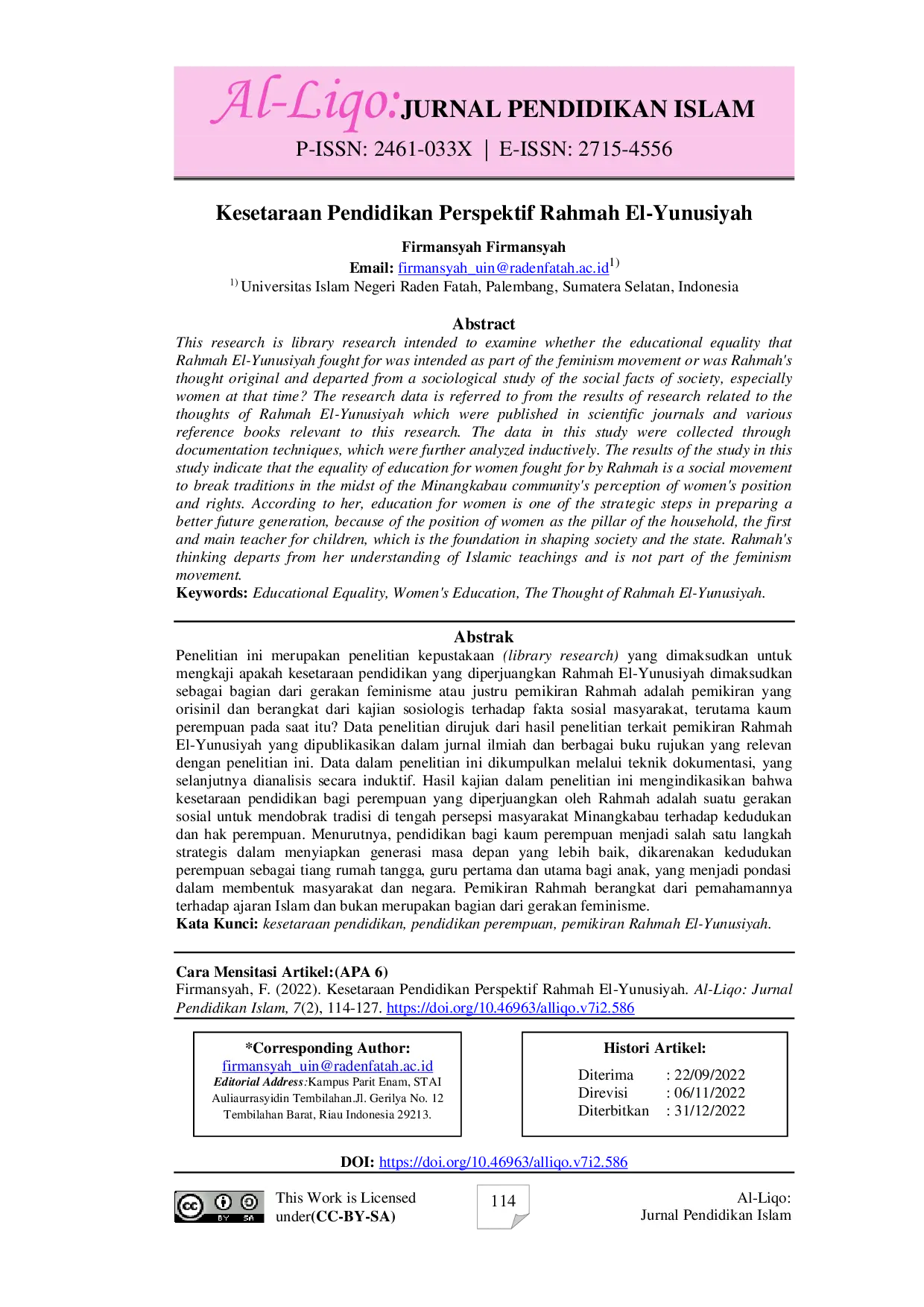
STAI TBHSTAI TBH Penelitian ini menegaskan pemikiran Rahmah sebagai pionir pendidikan Islam perempuan dari perspektif sosiologis, mendukung teori interaksionisme simbolikPenelitian ini menegaskan pemikiran Rahmah sebagai pionir pendidikan Islam perempuan dari perspektif sosiologis, mendukung teori interaksionisme simbolik
Useful /

IAIN PALOPOIAIN PALOPO Manajemen lembaga pendidikan Islam adalah pendekatan holistik yang mengintegrasikan prinsip manajerial modern dengan nilai-nilai Islami seperti amanahManajemen lembaga pendidikan Islam adalah pendekatan holistik yang mengintegrasikan prinsip manajerial modern dengan nilai-nilai Islami seperti amanah

IAIN PALOPOIAIN PALOPO Metode penelitian yang digunakan adalah deskriptif kualitatif dengan subjek pembelajar BIPA tingkat pemula. Teknik pengumpulan data dengan observasi pustaka.Metode penelitian yang digunakan adalah deskriptif kualitatif dengan subjek pembelajar BIPA tingkat pemula. Teknik pengumpulan data dengan observasi pustaka.
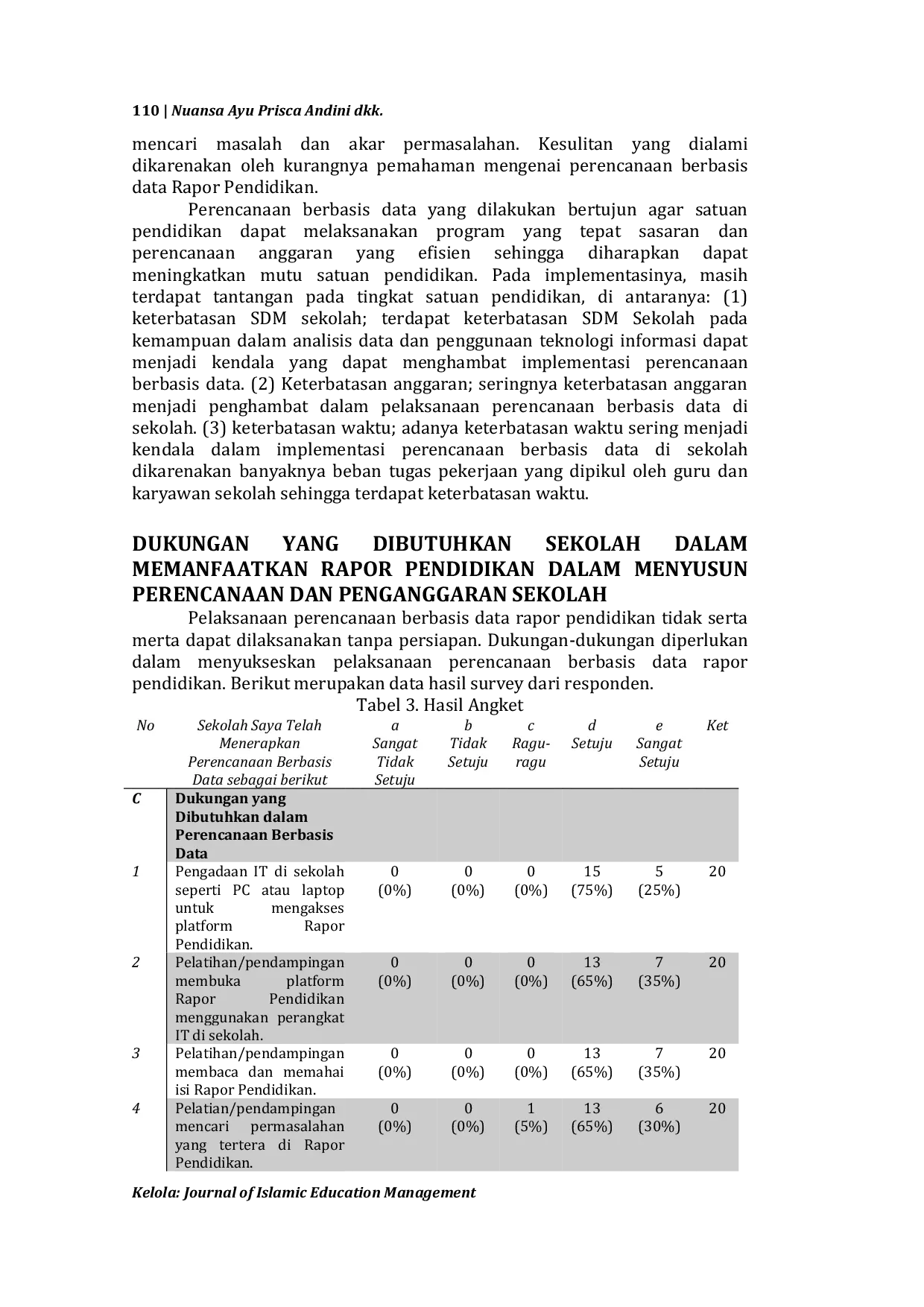
IAIN PALOPOIAIN PALOPO Hasil penelitian menunjukkan bahwa peluang dalam perencanaan berbasis data Rapor Pendidikan yaitu data yang didapatkan merupakan data yang akurat dan terkiniHasil penelitian menunjukkan bahwa peluang dalam perencanaan berbasis data Rapor Pendidikan yaitu data yang didapatkan merupakan data yang akurat dan terkini

IAIN PALOPOIAIN PALOPO Dengan pengelolaan keuangan yang terstruktur dan transparan, pondok pesantren mampu mengalokasikan anggaran secara efektif untuk memenuhi kebutuhan fasilitasDengan pengelolaan keuangan yang terstruktur dan transparan, pondok pesantren mampu mengalokasikan anggaran secara efektif untuk memenuhi kebutuhan fasilitas