MGEDUKASIAMGEDUKASIA
Journal of Indonesian Primary SchoolJournal of Indonesian Primary SchoolThis study focused on the role of school-society collaboration in the development of primary schools, emphasizing its influence on educational outcomes and community advancement. It provides an overview of school-society collaboration, tracing its historical evolution and theoretical foundations, while highlighting its significance in fostering robust educational frameworks. The study identifies key stakeholders—families, local communities, governments, private sector entities, and NGOs—and examines their contributions to the collaborative ecosystem. Mechanisms facilitating collaboration, such as parent-teacher associations, community programs, and partnerships with local businesses, are analyzed to illustrate their impact on educational improvement. The benefits of such collaboration include enhanced student performance, social and emotional development, and strengthened community identity and cohesion. However, challenges such as socioeconomic barriers, communication gaps, and policy-related constraints are acknowledged, necessitating targeted interventions. Recommendations focus on strengthening partnerships, promoting inclusivity, developing sustainable models, and building stakeholder capacity to ensure effective collaboration. This study highlighted the importance of integrating collective responsibility in advancing primary education and fostering a shared commitment to societal development.
Effective school-society collaboration is essential for improving the quality of education, fostering community engagement, and achieving sustainable development.This study highlights the significance of collaborative efforts between schools, families, local communities, policymakers, and other stakeholders in fostering an environment conducive to quality education.The integration of societal resources, cultural knowledge, and community engagement plays a pivotal role in enhancing educational outcomes, promoting social and emotional development, and strengthening community cohesion.Effective collaboration is vital for improving school performance and ensuring that educational programs are both relevant and accessible.
Berdasarkan penelitian ini, beberapa saran penelitian lanjutan dapat diajukan untuk memperdalam pemahaman tentang kolaborasi sekolah-masyarakat dan meningkatkan efektivitasnya. Pertama, penelitian kuantitatif dapat dilakukan untuk mengukur secara empiris dampak berbagai model kolaborasi sekolah-masyarakat terhadap hasil belajar siswa, dengan mempertimbangkan faktor-faktor mediasi seperti motivasi belajar dan iklim sekolah. Kedua, studi kualitatif mendalam dapat mengeksplorasi persepsi dan pengalaman berbagai pemangku kepentingan (guru, orang tua, siswa, tokoh masyarakat) terkait tantangan dan peluang dalam membangun kolaborasi yang berkelanjutan. Ketiga, penelitian komparatif dapat membandingkan efektivitas berbagai pendekatan kolaborasi sekolah-masyarakat di berbagai konteks sosial-ekonomi dan budaya, untuk mengidentifikasi praktik-praktik terbaik yang dapat direplikasi dan diadopsi secara luas.
| File size | 491.68 KB |
| Pages | 14 |
| DMCA | Report |
Related /

IAIN PALOPOIAIN PALOPO Hasil penelitian menunjukkan bahwa pemanfaatan Rapor Pendidikan dalam perencanaan berbasis data menjadi dasar dalam menemukan masalah, melakukan refleksiHasil penelitian menunjukkan bahwa pemanfaatan Rapor Pendidikan dalam perencanaan berbasis data menjadi dasar dalam menemukan masalah, melakukan refleksi

IAIN KEDIRIIAIN KEDIRI Temuan menunjukkan bahwa pendekatan pembelajaran mendalam secara signifikan memengaruhi pembelajaran yang dirasakan dan memiliki efek substansial padaTemuan menunjukkan bahwa pendekatan pembelajaran mendalam secara signifikan memengaruhi pembelajaran yang dirasakan dan memiliki efek substansial pada

IAIN KEDIRIIAIN KEDIRI Integrasi Model Glickman ke dalam sistem digital memungkinkan pimpinan melakukan pemetaan tipologi guru secara presisi untuk menentukan gaya pembinaanIntegrasi Model Glickman ke dalam sistem digital memungkinkan pimpinan melakukan pemetaan tipologi guru secara presisi untuk menentukan gaya pembinaan

IAIN PALOPOIAIN PALOPO Manajemen lembaga pendidikan Islam adalah pendekatan holistik yang mengintegrasikan prinsip manajerial modern dengan nilai-nilai Islami seperti amanahManajemen lembaga pendidikan Islam adalah pendekatan holistik yang mengintegrasikan prinsip manajerial modern dengan nilai-nilai Islami seperti amanah

IAIN PALOPOIAIN PALOPO Metode penelitian yang digunakan adalah pendekatan kualitatif dengan teknik pengumpulan data melalui observasi, wawancara mendalam, dan studi dokumentasi.Metode penelitian yang digunakan adalah pendekatan kualitatif dengan teknik pengumpulan data melalui observasi, wawancara mendalam, dan studi dokumentasi.

IAIN PALOPOIAIN PALOPO (2) faktor-faktor seperti penerimaan diri dan makna hidup yang positif, sumber dukungan motivasi, peran kemandirian, kegiatan positif, dan figur inspirasi.(2) faktor-faktor seperti penerimaan diri dan makna hidup yang positif, sumber dukungan motivasi, peran kemandirian, kegiatan positif, dan figur inspirasi.

IAIN PALOPOIAIN PALOPO Sehingga penyandang disabilitas fisik menunjukkan tekad yang kuat untuk mandiri dan berpartisipasi aktif dalam masyarakat meskipun menghadapi berbagaiSehingga penyandang disabilitas fisik menunjukkan tekad yang kuat untuk mandiri dan berpartisipasi aktif dalam masyarakat meskipun menghadapi berbagai

NUPROBOLINGGONUPROBOLINGGO Hak-hak anak berlaku sejak lahir, bahkan saat masih dalam kandungan, dan orang tua serta masyarakat bertanggung jawab untuk memenuhinya. Keluarga adalahHak-hak anak berlaku sejak lahir, bahkan saat masih dalam kandungan, dan orang tua serta masyarakat bertanggung jawab untuk memenuhinya. Keluarga adalah
Useful /

IAIN KEDIRIIAIN KEDIRI Model pembelajaran kreatif berbasis etnosains secara signifikan meningkatkan kemampuan pemecahan masalah siswa dibandingkan model konvensional, sebagaimanaModel pembelajaran kreatif berbasis etnosains secara signifikan meningkatkan kemampuan pemecahan masalah siswa dibandingkan model konvensional, sebagaimana

IAIN KEDIRIIAIN KEDIRI Penelitian ini mengkaji pengaruh interaksi dosen terhadap hasil belajar mahasiswa dengan motivasi belajar sebagai variabel mediasi. Desain kuantitatifPenelitian ini mengkaji pengaruh interaksi dosen terhadap hasil belajar mahasiswa dengan motivasi belajar sebagai variabel mediasi. Desain kuantitatif

MGEDUKASIAMGEDUKASIA Secara umum, preferensi mahasiswa dari berbagai latar belakang pendidikan menunjukkan kesamaan dalam penggunaan media pembelajaran daring, tanpa perbedaanSecara umum, preferensi mahasiswa dari berbagai latar belakang pendidikan menunjukkan kesamaan dalam penggunaan media pembelajaran daring, tanpa perbedaan
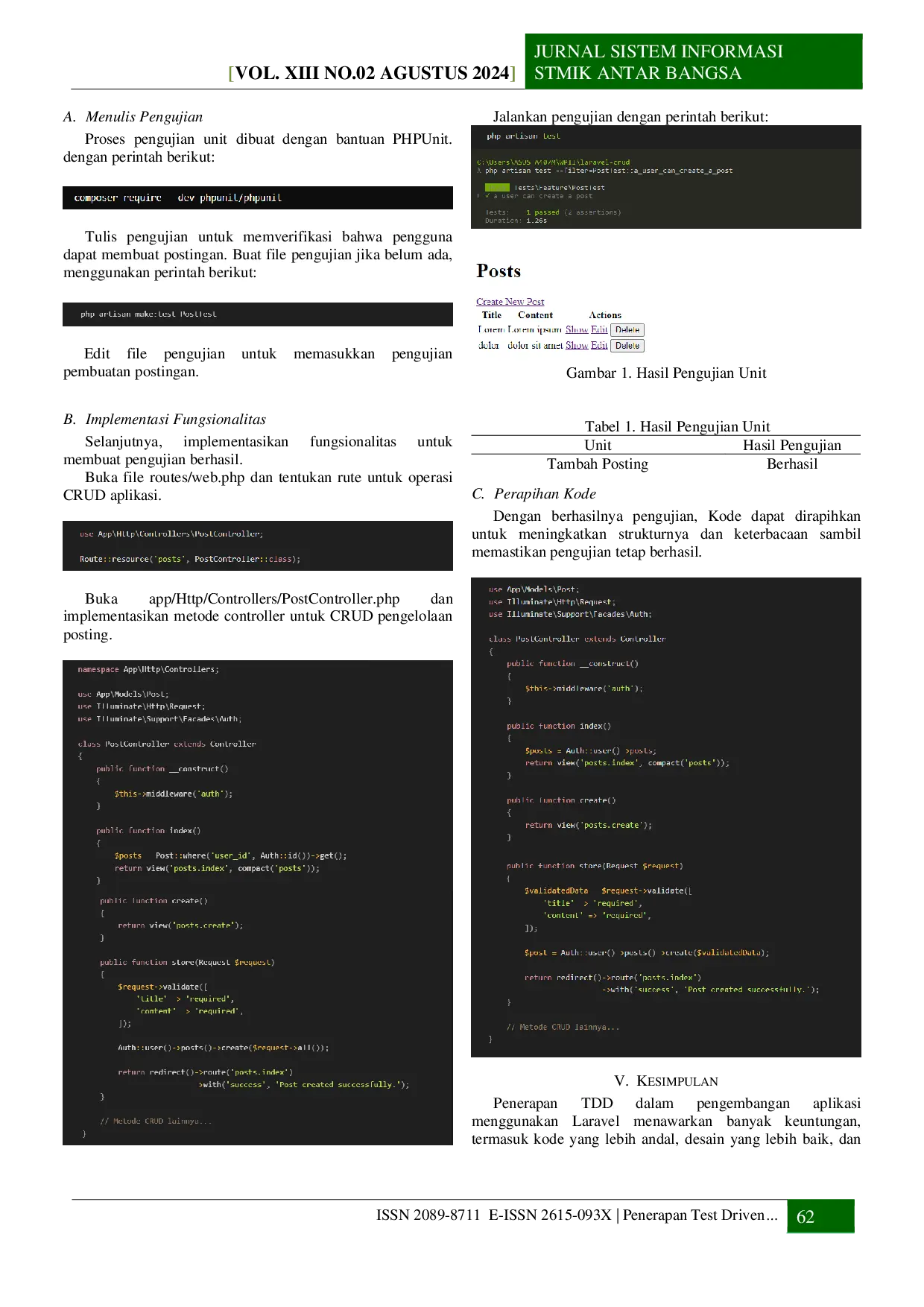
ANTARBANGSAANTARBANGSA Jurnal ini membahas konsep TDD, keuntungan dan tantangannya, serta penerapannya dalam pengembangan aplikasi dengan Laravel. Studi kasus sederhana jugaJurnal ini membahas konsep TDD, keuntungan dan tantangannya, serta penerapannya dalam pengembangan aplikasi dengan Laravel. Studi kasus sederhana juga