PNLPNL
Jurnal Sains dan Teknologi ReaksiJurnal Sains dan Teknologi ReaksiGlycerin water produced from the hydrolysis process in the splitting column still contains impurities such as oil or fatty acids that are carried along with glycerin water or other impurities found in the raw oil itself such as solid particles and gum. Oil or fatty acids that are still present in glycerin water must be removed or lowered to the maximum permissible limit before further processing in glycerin evaporation units and glycerin distillation units. The quality standard set for glycerin water is the value of fatty acid ester (FAE) in glycerin water. Glycerin water will be treated first in the glycerin water pretreatment unit to remove the oil and fatty acid content. Oil separator vessel (102D1) is one of the tools in the glycerin water pretreatment unit, is one of the important ones to control in the glycerin water pretreatment unit. Where in this oil separator vessel there will be an initial separation between oil and fatty acid with glycerin water. Optimization of separation in oil separator will determine the decrease in FAE value in (102D1) treated glycerin water end product. Observations were made on the oil separator vessel, namely temperature and pH to see both parameters of this process against the decrease in the value of fatty acid ester, data collection for temperature and pH was carried out 3 times a day for 6 days for each still paremeter to determine the value of fatty acid ester. From the observed data on the oil separator device, there are two parameters that determine the separation of oil and fatty acid from glycerin water, namely temperature and pH. The results obtained that temperature and pH greatly affect the value of fatty acids, where the higher the temperature, the lower the FAE value, from the observation data the optimum temperature is 90 – 95 oC. pH also greatly affects the value of fatty acid ester after oil separator, where the clovers pH is low in its fatty acid ester value. From the observed data, the optimum pH is pH 2 – 3.5.
Suhu dan pH adalah parameter proses yang sangat mempengaruhi bejana pemisah minyak 102D1, suhu katalis rendah dalam nilai FAE-nya dan katalis pH rendah dalam nilai FAE-nya.Suhu optimum dalam bejana pemisah minyak 102D1 adalah 90 – 95 oC dan pH optimum adalah 2 – 3,5.Untuk menjaga kinerja pemisah minyak yang optimal, perlu membersihkan bejana secara berkala setiap tahun, terutama pada struktur pengemas dan secara rutin membuang minyak yang terpisah di permukaan sebanyak 2 kali per shift.
Berdasarkan latar belakang penelitian mengenai optimasi proses pemisahan minyak dan lemak pada unit pretreatment glycerin water, terdapat beberapa saran penelitian lanjutan yang dapat dikembangkan. Pertama, perlu dilakukan penelitian lebih lanjut mengenai pengaruh jenis dan konsentrasi bahan kimia koagulan selain HCl terhadap efisiensi pemisahan minyak dan lemak, dengan mempertimbangkan aspek ekonomi dan lingkungan. Kedua, pengembangan sistem kontrol otomatis untuk pengaturan pH secara real-time pada unit pemisah minyak dapat meningkatkan stabilitas proses dan kualitas produk. Ketiga, penelitian mengenai pengaruh variasi desain bejana pemisah minyak, seperti perubahan konfigurasi baffle atau penggunaan media pengisi, terhadap kinerja pemisahan juga perlu dilakukan untuk mengoptimalkan proses secara keseluruhan.
| File size | 273.5 KB |
| Pages | 6 |
| DMCA | Report |
Related /
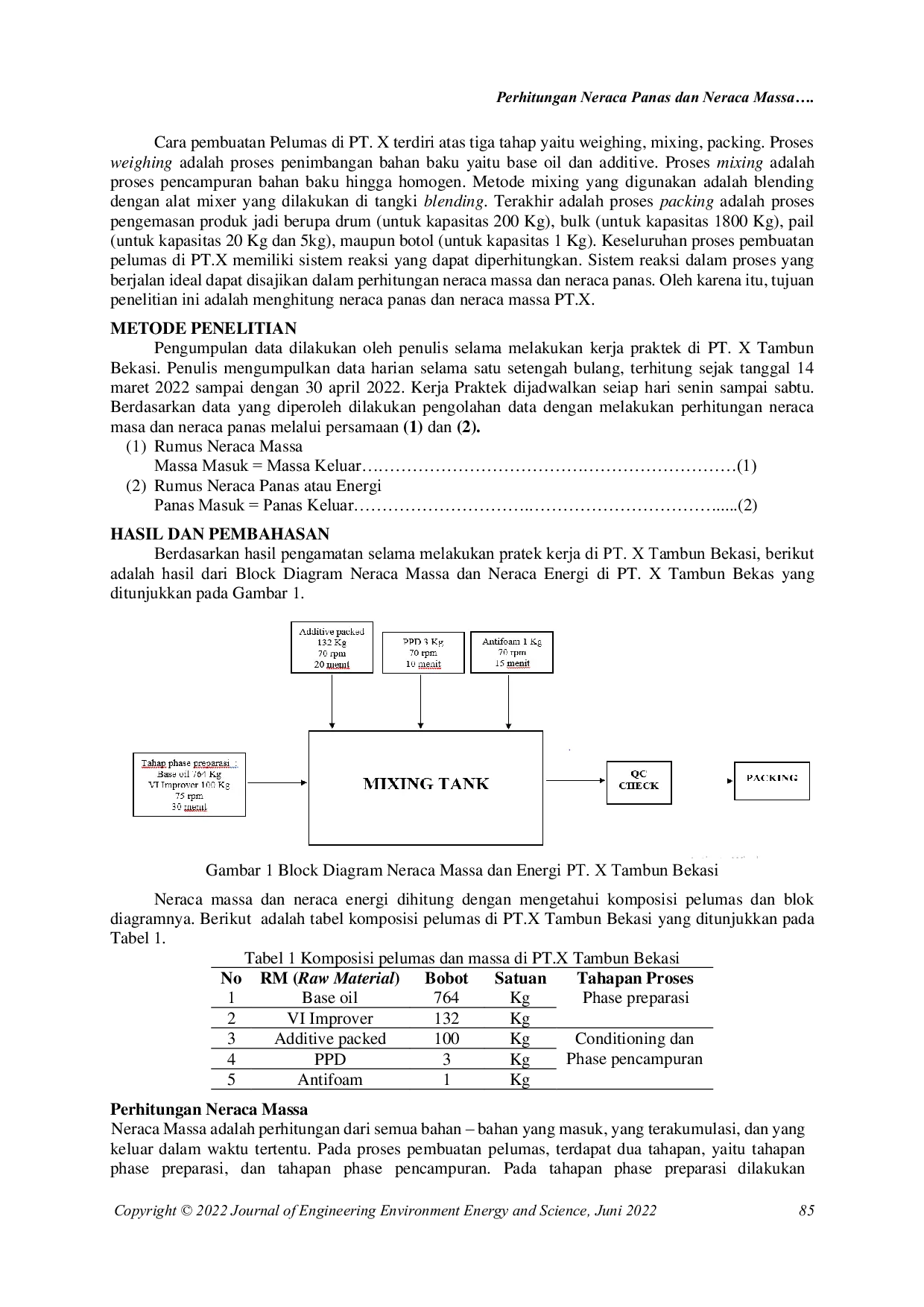
UBHARAJAYAUBHARAJAYA Hasil perhitungan neraca energi yang dibutuhkan dan dilepaskan adalah sama yaitu 41000 J/jam, dan jumlah uap yang dibutuhkan untuk memanaskan sampai suhuHasil perhitungan neraca energi yang dibutuhkan dan dilepaskan adalah sama yaitu 41000 J/jam, dan jumlah uap yang dibutuhkan untuk memanaskan sampai suhu
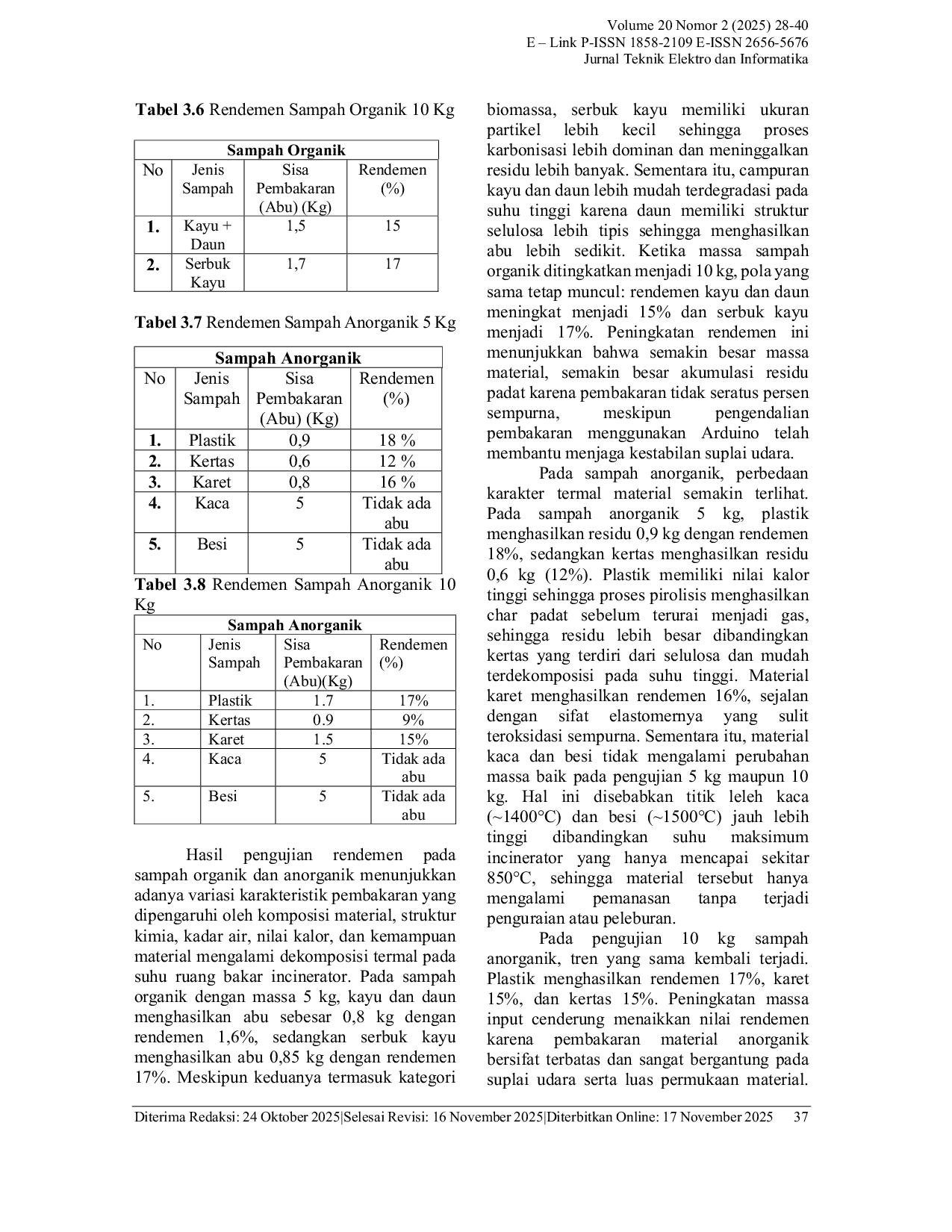
UMGUMG Sistem ini merupakan pendekatan teknis yang efisien, ekonomis, dan layak diterapkan untuk pengelolaan sampah rumah tangga skala kecil sebagai alternatifSistem ini merupakan pendekatan teknis yang efisien, ekonomis, dan layak diterapkan untuk pengelolaan sampah rumah tangga skala kecil sebagai alternatif

UNTAGUNTAG Dari perhitungan tersebut, total kebutuhan air bersih adalah 139,6 [m³/hari]. Total beban unit fasilitas sanitasi di gedung ini adalah 45 unit, dan totalDari perhitungan tersebut, total kebutuhan air bersih adalah 139,6 [m³/hari]. Total beban unit fasilitas sanitasi di gedung ini adalah 45 unit, dan total

UNTARUNTAR Industri manufaktur memiliki kontribusi signifikan terhadap peningkatan emisi karbon dan pencemaran lingkungan, salah satunya berasal dari proses produksiIndustri manufaktur memiliki kontribusi signifikan terhadap peningkatan emisi karbon dan pencemaran lingkungan, salah satunya berasal dari proses produksi

POLBANGTANBOGORPOLBANGTANBOGOR Selain efektif untuk proses penjernihan air, biji kelor dan arang aktif juga aman bagi tanaman, terkhusus hidroponik. Biji kelor dan arang aktif mampuSelain efektif untuk proses penjernihan air, biji kelor dan arang aktif juga aman bagi tanaman, terkhusus hidroponik. Biji kelor dan arang aktif mampu
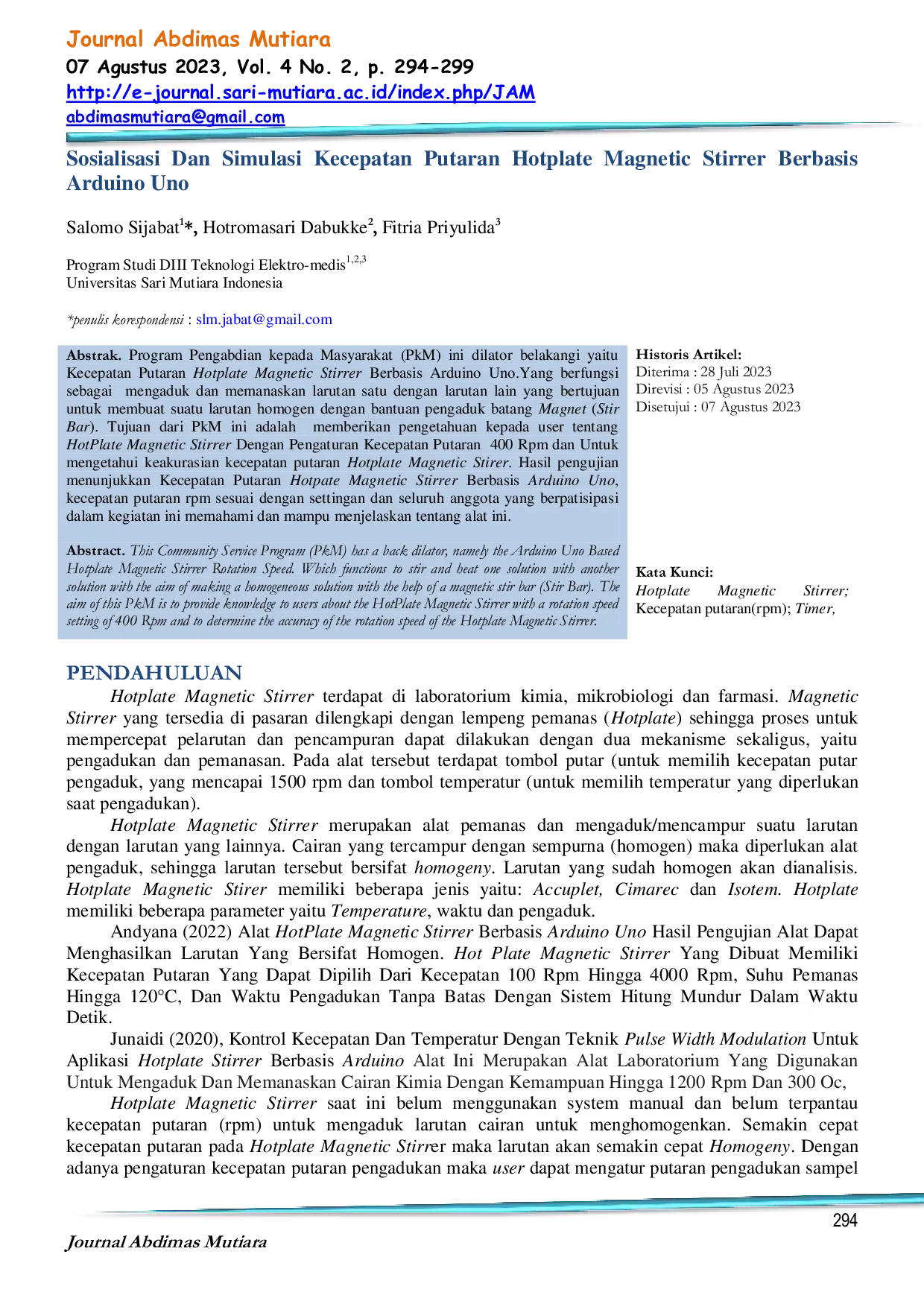
SARI MUTIARASARI MUTIARA Hasil pengujian menunjukkan Kecepatan Putaran Hotpate Magnetic Stirrer Berbasis Arduino Uno, kecepatan putaran rpm sesuai dengan settingan dan seluruhHasil pengujian menunjukkan Kecepatan Putaran Hotpate Magnetic Stirrer Berbasis Arduino Uno, kecepatan putaran rpm sesuai dengan settingan dan seluruh
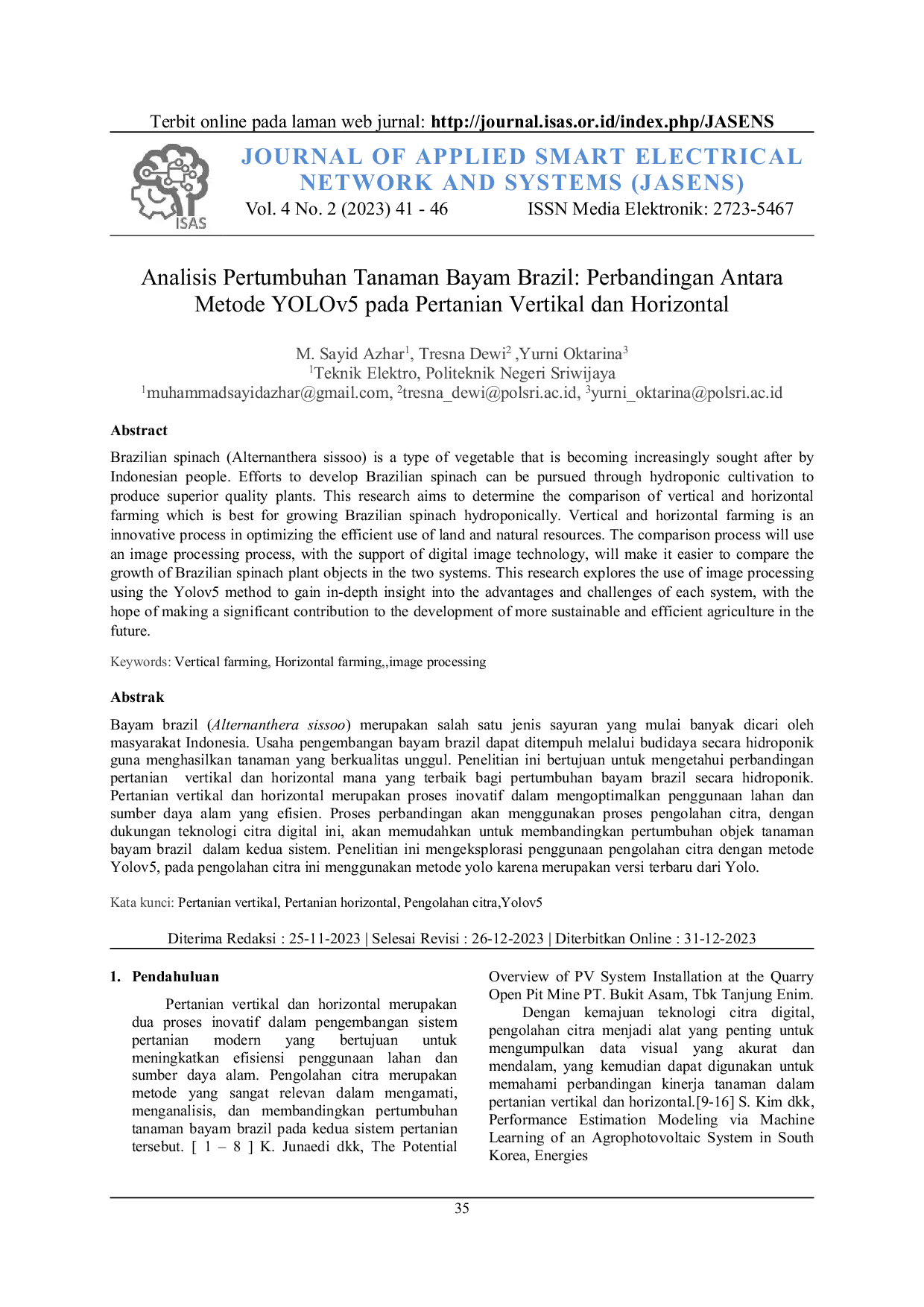
ISASISAS Brazilian spinach (Alternanthera sissoo) is a type of vegetable that is becoming increasingly sought after by Indonesian people. Efforts to develop BrazilianBrazilian spinach (Alternanthera sissoo) is a type of vegetable that is becoming increasingly sought after by Indonesian people. Efforts to develop Brazilian

UPSUPS Upaya yang ditawarkan adalah pemanfaatan sampah sebagai media pembakaran pada ketel uap yang dapat diaplikasikan sebagai pemasakan bahan makanan atau pembangkitUpaya yang ditawarkan adalah pemanfaatan sampah sebagai media pembakaran pada ketel uap yang dapat diaplikasikan sebagai pemasakan bahan makanan atau pembangkit
Useful /
FHUKIFHUKI The findings indicate that political parties play a strategic role in legislation, budgeting, and oversight functions; nevertheless, their effectivenessThe findings indicate that political parties play a strategic role in legislation, budgeting, and oversight functions; nevertheless, their effectiveness

PNLPNL Proses adsorpsi dilakukan dengan mengkontakkan minyak goreng bekas dan adsorben dalam komposisi. Karena hal ini, muncul ide untuk menggunakan noni sebagaiProses adsorpsi dilakukan dengan mengkontakkan minyak goreng bekas dan adsorben dalam komposisi. Karena hal ini, muncul ide untuk menggunakan noni sebagai

PNLPNL Variabel yang digunakan adalah variasi ukuran partikel karbon aktif yaitu 100 mesh, 120 mesh, 140 mesh, dan 160 mesh dengan waktu adsorpsi 3 jam, 5 jam,Variabel yang digunakan adalah variasi ukuran partikel karbon aktif yaitu 100 mesh, 120 mesh, 140 mesh, dan 160 mesh dengan waktu adsorpsi 3 jam, 5 jam,

PNLPNL Baik poliuretan (PU) murni maupun nanokomposit PU/lempung memiliki sifat mekanik, termasuk sifat mekanik dinamis, yang diuji. Dengan penambahan montmorilonitBaik poliuretan (PU) murni maupun nanokomposit PU/lempung memiliki sifat mekanik, termasuk sifat mekanik dinamis, yang diuji. Dengan penambahan montmorilonit