UNDANAUNDANA
Buletin Ilmiah IMPASBuletin Ilmiah IMPASMSMEs are important in the national economy, including the processed food sector such as tempeh. The purpose of this study is to analyze the production elasticity of tempeh in three MSMEs in Kupang City and to analyze the income of these three MSMEs before and during the COVID-19 pandemic. The selection of locations was purposive for three MSMEs in Kupang City, namely Nemter, Putri Tunggal, and Seumur Hidup MSMEs. The analysis was conducted quantitatively and descriptively. The data used were primary and secondary data, collected through interviews, observations, and documentation. Data analysis was conducted using production elasticity formulas and income calculation formulas. From this study, it can be concluded that the highest production elasticity before the COVID-19 pandemic was obtained in Nemter MSMEs on capital input with a value of 2.03. The production elasticity experienced in Putri Tunggal MSMEs had the highest variation in labor input with a value of 1.13 and the lowest production elasticity in capital input with a value of -0.67. Meanwhile, the highest production elasticity at UMKM Seumur Hidup was observed in raw material inputs with a value of 1.02, and the lowest production elasticity was in capital inputs with a value of -0.02. Production elasticity during the Covid-19 period in Nemter MSMEs was 1.72, the highest value for capital input, and the lowest elasticity was found in labor input at 1.23. Production elasticity in Putri Tunggal MSMEs had the highest value for capital input at 1.69 and the lowest value for raw material input at 1.01. At the Seumur Hidup SME, the highest production elasticity was observed in raw material inputs at 1.49, while the lowest was in capital inputs at -2.24. Revenue received by the Nemter SME before the COVID-19 pandemic was IDR 53,031,980, and during the pandemic, it was IDR 36,303,817. Meanwhile, the income from the Putri Tunggal SME before the COVID-19 pandemic was IDR 72,035,466 and during the COVID-19 pandemic was IDR 52,021,675. Furthermore, the income obtained by the Seumur Hidup SME before the COVID-19 pandemic was IDR 30,195,550 and during the COVID-19 pandemic was IDR 44,114,278.
The study concludes that before the COVID-19 pandemic, Nemter MSME exhibited the highest production elasticity for capital input, while Putri Tunggal MSME showed the highest variation in labor input, and Seumur Hidup MSME had the highest elasticity for raw materials.During the COVID-19 period, production elasticity patterns shifted, with capital input remaining prominent in Nemter and Putri Tunggal MSMEs, and raw materials still being key for Seumur Hidup MSME.The research also revealed a decline in revenue for all three MSMEs during the pandemic, with varying degrees of impact on each enterprise.
Penelitian lanjutan perlu dilakukan untuk mengkaji lebih dalam dampak perubahan harga bahan baku, khususnya kedelai, terhadap profitabilitas usaha tempe skala mikro. Hal ini dapat dilakukan dengan menganalisis sensitivitas profit terhadap fluktuasi harga kedelai dan mengidentifikasi strategi mitigasi risiko yang efektif bagi pelaku usaha. Selain itu, penelitian dapat difokuskan pada pengembangan model bisnis yang lebih adaptif terhadap guncangan eksternal, seperti pandemi, dengan memanfaatkan teknologi digital untuk memperluas jangkauan pasar dan meningkatkan efisiensi operasional. Terakhir, studi komparatif antara berbagai wilayah di Indonesia dapat dilakukan untuk mengidentifikasi praktik-praktik terbaik dalam pengelolaan usaha tempe skala mikro, termasuk aspek pemasaran, manajemen keuangan, dan akses terhadap sumber daya, guna memberikan rekomendasi kebijakan yang lebih komprehensif bagi pemerintah dan pemangku kepentingan terkait.
| File size | 280.33 KB |
| Pages | 10 |
| DMCA | Report |
Related /
IBRAHIMYIBRAHIMY Berdasarkan analisis, lima produk olahan perikanan yaitu Sarden GAGA, Saus Ikan Finna, Cedea Chikuwa, Bonroa Abon Ikan Cakalang, dan Minyak Ikan AlamiBerdasarkan analisis, lima produk olahan perikanan yaitu Sarden GAGA, Saus Ikan Finna, Cedea Chikuwa, Bonroa Abon Ikan Cakalang, dan Minyak Ikan Alami
UNAIM WAMENAUNAIM WAMENA Teknik Analisa data dalam menghitung tingkat Inflasi dapat dihasilkan dengan menghitung Angka Indeks Harga dengan metode Relatif Harga. Distribusi pendapatanTeknik Analisa data dalam menghitung tingkat Inflasi dapat dihasilkan dengan menghitung Angka Indeks Harga dengan metode Relatif Harga. Distribusi pendapatan

FEB UMIFEB UMI Ketidakstabilan harga ini berdampak pada penurunan pendapatan pedagang, terutama pedagang eceran yang mengalami penurunan pendapatan mencapai 19%-27%.Ketidakstabilan harga ini berdampak pada penurunan pendapatan pedagang, terutama pedagang eceran yang mengalami penurunan pendapatan mencapai 19%-27%.
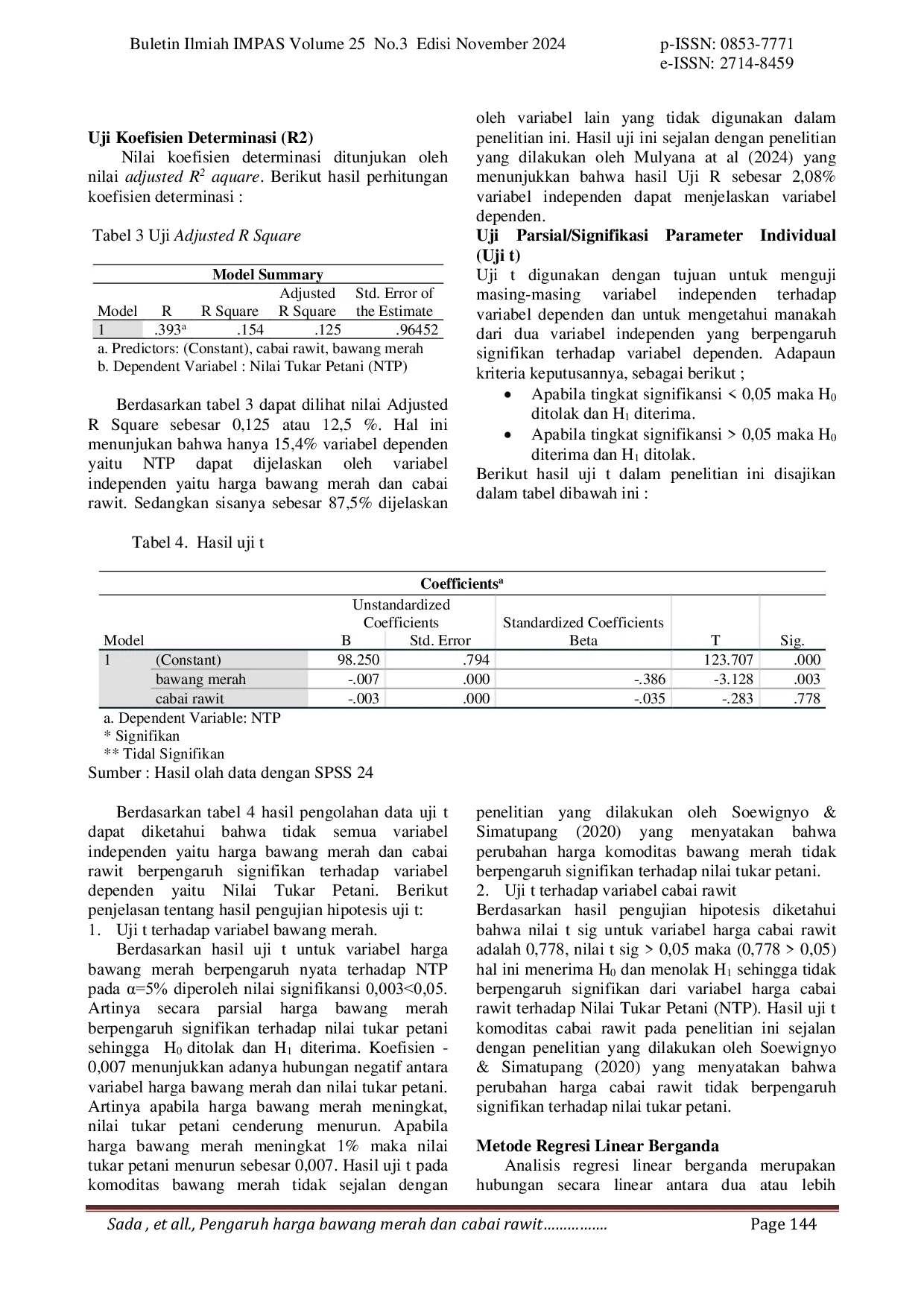
UNDANAUNDANA Data yang digunakan adalah data sekunder berupa data harga bawang merah dan cabai rawit tahun 2019-2023 yang diperoleh dari BPS Privinsi NTT. FluktuasiData yang digunakan adalah data sekunder berupa data harga bawang merah dan cabai rawit tahun 2019-2023 yang diperoleh dari BPS Privinsi NTT. Fluktuasi
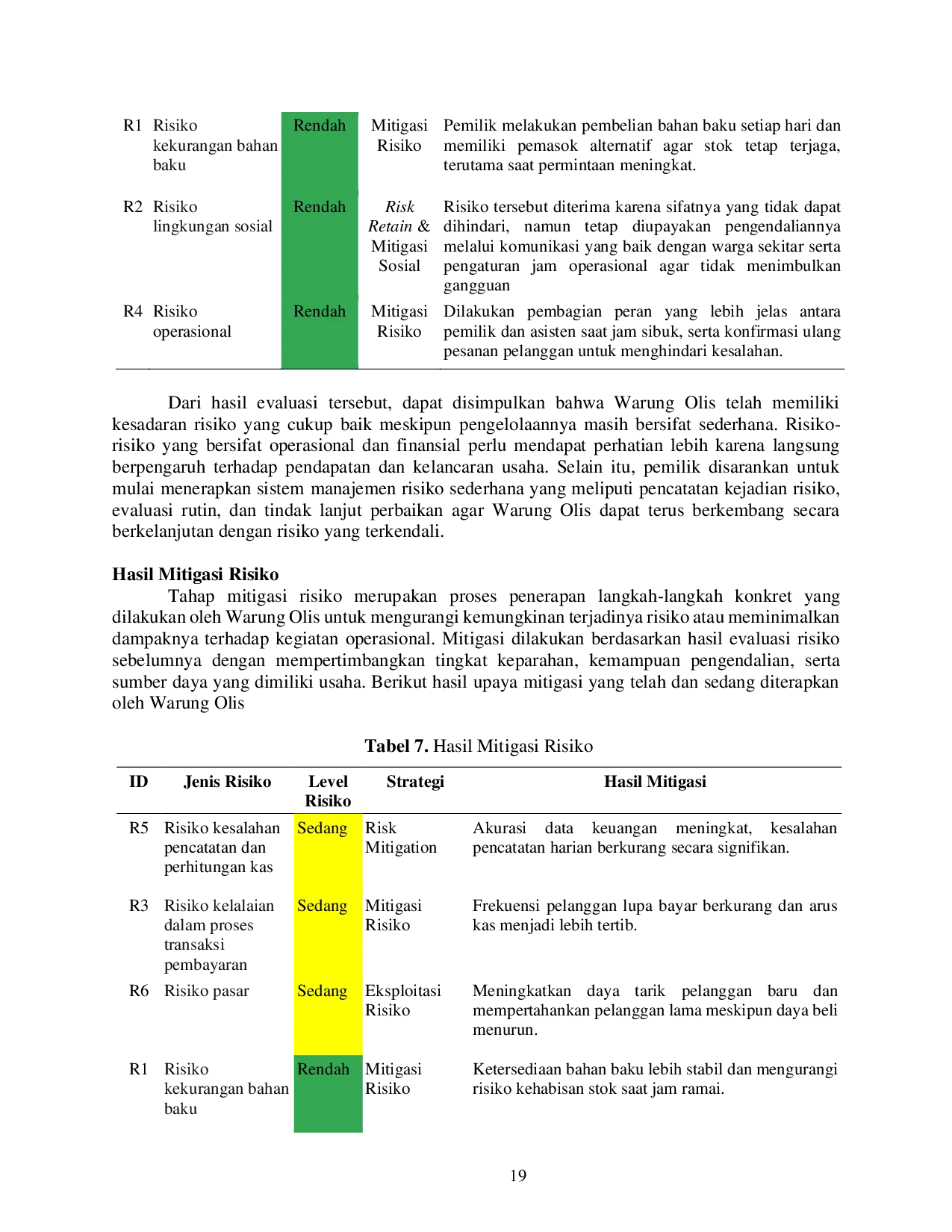
STIETRIBHAKTISTIETRIBHAKTI Mitigasi utama yang diterapkan adalah penggunaan aplikasi pencatatan keuangan digital, pencatatan transaksi langsung saat pemesanan, inovasi menu, danMitigasi utama yang diterapkan adalah penggunaan aplikasi pencatatan keuangan digital, pencatatan transaksi langsung saat pemesanan, inovasi menu, dan

YALAMQAYALAMQA Pemerintah dan pemangku kepentingan lokal perlu menciptakan akses yang setara bagi perempuan terhadap lahan, teknologi pertanian, modal, dan pasar hasilPemerintah dan pemangku kepentingan lokal perlu menciptakan akses yang setara bagi perempuan terhadap lahan, teknologi pertanian, modal, dan pasar hasil

IAIN PONOROGOIAIN PONOROGO Sebaliknya, MSCI World menunjukkan respons signifikan tambahan terhadap pergerakan harga minyak, yang mencerminkan hubungan erat dengan sektor energi global.Sebaliknya, MSCI World menunjukkan respons signifikan tambahan terhadap pergerakan harga minyak, yang mencerminkan hubungan erat dengan sektor energi global.

IAIN PONOROGOIAIN PONOROGO 75/DSN MUI/VII/2009 tentang Jual Beli Emas tidak tunai di aplikasi Shopee hukumnya boleh (Mubah). Status kepemilikan akan emas virtual yang dibeli secara75/DSN MUI/VII/2009 tentang Jual Beli Emas tidak tunai di aplikasi Shopee hukumnya boleh (Mubah). Status kepemilikan akan emas virtual yang dibeli secara
Useful /

UNDANAUNDANA The sampling technique used a non-probability sampling technique, namely a case study technique. The data used in this study are primary and secondaryThe sampling technique used a non-probability sampling technique, namely a case study technique. The data used in this study are primary and secondary

UINMADURAUINMADURA Berdasarkan analisis data yang telah dilakukan, dapat disimpulkan bahwa terdapat interaksi antara karakter dalam cerpen dengan lingkungan mereka. PadaBerdasarkan analisis data yang telah dilakukan, dapat disimpulkan bahwa terdapat interaksi antara karakter dalam cerpen dengan lingkungan mereka. Pada

UINMADURAUINMADURA Cerpen-cerpen ini tidak hanya menggambarkan kerusakan fisik tetapi juga dampak emosional dan sosial yang dirasakan oleh tokoh-tokohnya, sehingga mampuCerpen-cerpen ini tidak hanya menggambarkan kerusakan fisik tetapi juga dampak emosional dan sosial yang dirasakan oleh tokoh-tokohnya, sehingga mampu
PELITABANGSAPELITABANGSA Hasil identifikasi dari menggunakan SNQ pada operator penyusunan barang jadi keluhan yang paling tinggi adalah pada punggung, bahu kanan, bahu kiri, lututHasil identifikasi dari menggunakan SNQ pada operator penyusunan barang jadi keluhan yang paling tinggi adalah pada punggung, bahu kanan, bahu kiri, lutut