ITSITS
(IJCSAM) International Journal of Computing Science and Applied Mathematics(IJCSAM) International Journal of Computing Science and Applied MathematicsGender inequality is a condition of discrimination caused by social systems and structures. The main objective of this research is to identify factors that influence gender inequality in each province in Indonesia and obtain classification accuracy values using Geographically Weighted Ordinal Logistic Regression (GWOLR). The dataset used in this research consists of a response variable, namely the gender inequality index where the index value is divided into ordinal categories (low, medium, and high) and four predictor variables from the dimensions of health, education, human empowerment, social-culture, and work. The results of this study show that the classification accuracy of the GWOLR model is 85%. The mapping of provinces in Indonesia based on influential variables forms three groups. The first group (brown) is influenced by the percentage of women who give birth with the assistance of health workers (X1) and the female Human Development Index (HDI) (X3). The second group (blue) is influenced by the ratio of womens Pure Participation Rate (APM) (X2) and the percentage of rape crimes against women (X4). The third group (red) is influenced by the percentage of women who give birth with the assistance of health workers (X1), the ratio of womens Pure Participation Rate (APM) (X2), the percentage of womens Human Development Index (HDI) ratio (X3), and the percentage of womens rape crimes (X4).
The factors influencing the Gender Inequality Index can be categorized into health, education, community empowerment, and socio-cultural dimensions.The mapping of Indonesian provinces based on influential variables reveals three distinct groups.The study demonstrates that the Geographically Weighted Ordinal Logistic Regression (GWOLR) model provides a more accurate classification compared to the ordinal logistic regression model, with a classification accuracy of 85%.
Further research could investigate the dynamic relationship between gender inequality and economic development across different regions of Indonesia, potentially utilizing time-series data to understand evolving patterns. Another avenue for exploration is a comparative study examining the effectiveness of various government interventions aimed at reducing gender disparities in specific provinces, focusing on identifying best practices and challenges. Finally, a qualitative study could delve deeper into the socio-cultural factors contributing to gender inequality in Indonesia, employing interviews and focus groups to gain nuanced insights into local contexts and perceptions, which could inform more targeted and culturally sensitive policy recommendations. These studies, building upon the spatial analysis presented in this paper, will contribute to a more comprehensive understanding of gender inequality in Indonesia and support the development of effective strategies for promoting gender equality and empowerment.
- Hypothesis testing of Geographically weighted bivariate logistic regression - IOPscience. hypothesis... doi.org/10.1088/1742-6596/1417/1/012008Hypothesis testing of Geographically weighted bivariate logistic regression IOPscience hypothesis doi 10 1088 1742 6596 1417 1 012008
- On Subspace-ergodic Operators | Journal of Mathematical and Fundamental Sciences. subspace ergodic operators... doi.org/10.5614/j.math.fund.sci.2020.52.3.5On Subspace ergodic Operators Journal of Mathematical and Fundamental Sciences subspace ergodic operators doi 10 5614 j math fund sci 2020 52 3 5
| File size | 324.45 KB |
| Pages | 6 |
| DMCA | Report |
Related /
POLIWANGIPOLIWANGI Pendekatan penelitian kuantitatif digunakan dengan pengumpulan data melalui kuesioner daring yang dibagikan kepada 100 responden yang pernah mengaksesPendekatan penelitian kuantitatif digunakan dengan pengumpulan data melalui kuesioner daring yang dibagikan kepada 100 responden yang pernah mengakses
UCUC Penelitian ini menggunakan pendekatan kualitatif melalui analisis video TikTok yang relevan. Hasilnya menunjukkan bahwa Dr. Amira efektif memanfaatkanPenelitian ini menggunakan pendekatan kualitatif melalui analisis video TikTok yang relevan. Hasilnya menunjukkan bahwa Dr. Amira efektif memanfaatkan

STIBAIEC JAKARTASTIBAIEC JAKARTA Penelitian ini merekomendasikan pentingnya advokasi kebijakan berbasis kemanusiaan dalam menangani kasus serupa serta melindungi hak komunitas terpinggirkanPenelitian ini merekomendasikan pentingnya advokasi kebijakan berbasis kemanusiaan dalam menangani kasus serupa serta melindungi hak komunitas terpinggirkan

DIM UNPASDIM UNPAS Studi ini bertujuan untuk mengeksplorasi potensi dan tantangan pengembangan wellness tourism di Lombok serta kontribusinya terhadap pariwisata berkelanjutanStudi ini bertujuan untuk mengeksplorasi potensi dan tantangan pengembangan wellness tourism di Lombok serta kontribusinya terhadap pariwisata berkelanjutan
STIEBANKBPDJATENGSTIEBANKBPDJATENG Hasil menunjukkan bahwa kesenjangan jam kerja di sektor digital relatif lebih kecil dan sebagian besar dapat dijelaskan oleh perbedaan karakteristik individu,Hasil menunjukkan bahwa kesenjangan jam kerja di sektor digital relatif lebih kecil dan sebagian besar dapat dijelaskan oleh perbedaan karakteristik individu,

STIEBANKBPDJATENGSTIEBANKBPDJATENG Penelitian ini mengkaji kecemasan, depresi, dan dukungan sosial terhadap motivasi penyelesaian studi, dengan sampel 77 mahasiswa menggunakan teknik proportionatePenelitian ini mengkaji kecemasan, depresi, dan dukungan sosial terhadap motivasi penyelesaian studi, dengan sampel 77 mahasiswa menggunakan teknik proportionate

BAJANGJOURNALBAJANGJOURNAL This tradition, which has been going on for generations, provides challenges in efforts to develop sustainable ecotourism. This research aims to understandThis tradition, which has been going on for generations, provides challenges in efforts to develop sustainable ecotourism. This research aims to understand

IAIN GORONTALOIAIN GORONTALO Peter L. Berger menawarkan konsep dalam teorinya ke dalam tiga hal yaitu eksternalisasi, objektivikasi, dan internalisasi. Hasil yang didapatkan dalamPeter L. Berger menawarkan konsep dalam teorinya ke dalam tiga hal yaitu eksternalisasi, objektivikasi, dan internalisasi. Hasil yang didapatkan dalam
Useful /

IAIN GORONTALOIAIN GORONTALO This research is based on the interest of the researcher in the perspectives of the madrasa Santris in understanding their Islamic history in Nusantara.This research is based on the interest of the researcher in the perspectives of the madrasa Santris in understanding their Islamic history in Nusantara.
ALSHOBARALSHOBAR Penelitian ini bertujuan untuk mengkaji penerapan nilai-nilai Pancasila dalam aktivitas sehari-hari. Penelitian ini menggunakan metode studi literaturPenelitian ini bertujuan untuk mengkaji penerapan nilai-nilai Pancasila dalam aktivitas sehari-hari. Penelitian ini menggunakan metode studi literatur
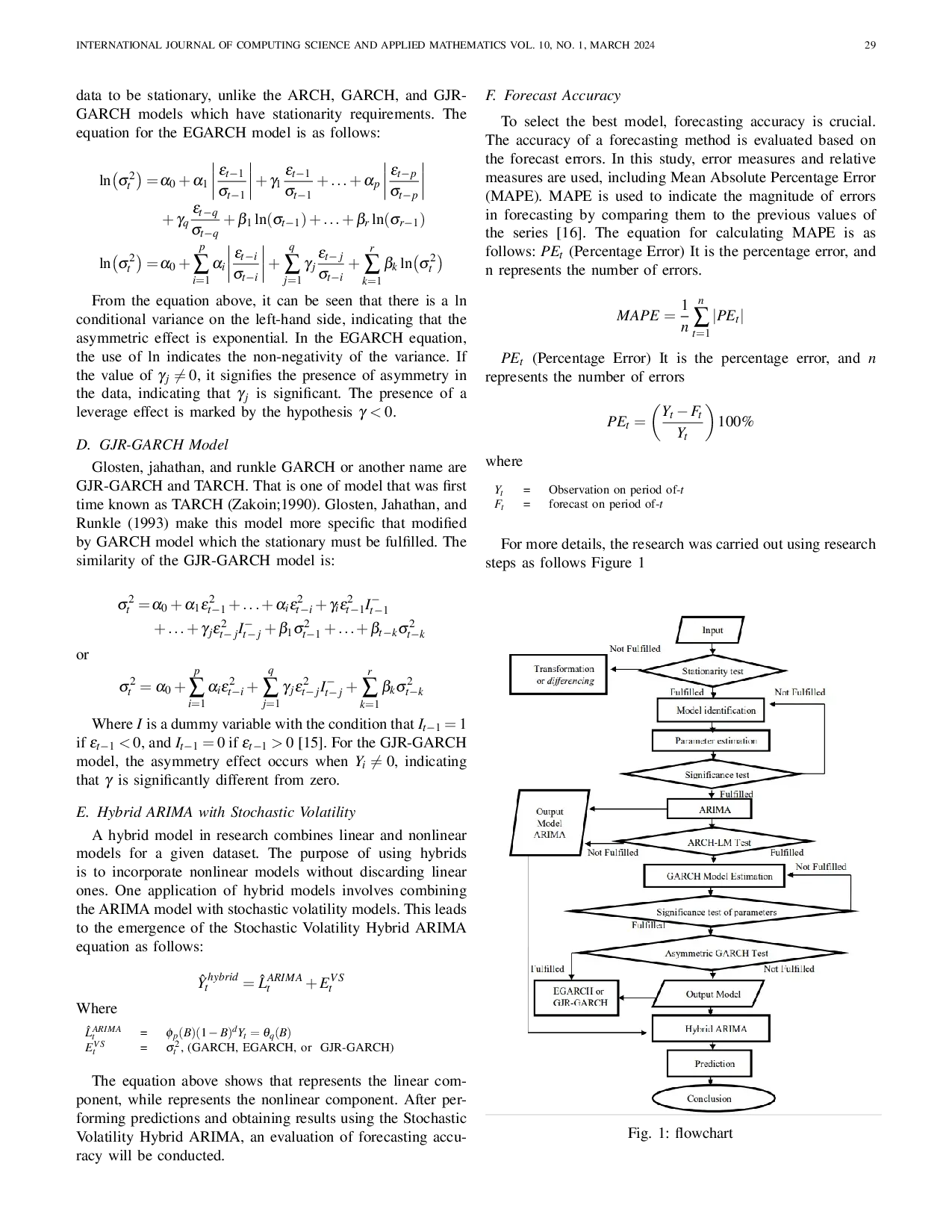
ITSITS One mathematical model that can be used to predict Indonesias non-oil and gas export values is the combination of the ARIMA model and the stochastic volatilityOne mathematical model that can be used to predict Indonesias non-oil and gas export values is the combination of the ARIMA model and the stochastic volatility

ITSITS However, the attempt usually provide that as difficult task. In this paper, we attempt to search the solution of Kropki puzzle without dot clues givenHowever, the attempt usually provide that as difficult task. In this paper, we attempt to search the solution of Kropki puzzle without dot clues given