UNESAUNESA
Journal of Digitalization in Physics EducationJournal of Digitalization in Physics EducationThe STEAM approach plays a crucial role in enhancing 21st-century skills in students, preparing them for future challenges. This study analyzes the impact of the STEAM approach on improving these skills in physics learning. Employing a literature review methodology with a qualitative approach, the research utilizes national and international journals published between 2020-2024 as data sources, collected through Google Scholar and Scopus. Data analysis involves qualitative descriptive analysis through literature study. The findings indicate that the STEAM approach significantly and positively impacts various 21st-century skills, including creativity, conceptual understanding, critical thinking, argumentation, and problem-solving, with creative thinking being the most frequently measured skill. The STEAM approach is often integrated with learning models such as STEAM Learning and Project-Based Learning (PjBL). This research aims to provide strategic insights for educators in designing innovative and practical learning experiences, particularly by leveraging the STEAM approach to meet the demands of 21st-century education.
The study confirms that implementing the STEAM approach in physics learning significantly enhances students 21st-century skills, encompassing creativity, critical thinking, and conceptual understanding.The integration of STEAM with learning models like STEAM Learning and Project-Based Learning (PjBL) proves particularly effective.These findings underscore the importance of incorporating STEAM into the curriculum to equip students with the necessary skills for future success.
Future research should investigate the effectiveness of STEAM integration across diverse educational contexts and levels, exploring the development of tailored learning materials and assessing the impact on specific student demographics. Further studies could focus on identifying and evaluating the most effective learning models to complement the STEAM approach, such as hybrid learning or blended learning, and their impact on student engagement and learning outcomes. Additionally, research is needed to explore the role of teacher training and professional development in successfully implementing STEAM, including strategies for overcoming challenges related to curriculum integration and resource availability. These investigations will contribute to a more comprehensive understanding of how to optimize the STEAM approach for maximizing student learning and preparing them for the challenges of the 21st century.
- IMPLEMENTASI STEAM (SCIENCE, TECHNOLOGY, ENGINEERING, ART AND MATHEMATICS) DALAM PEMBELAJARAN ABAD 21... jurnal.unma.ac.id/index.php/BE/article/view/2105IMPLEMENTASI STEAM SCIENCE TECHNOLOGY ENGINEERING ART AND MATHEMATICS DALAM PEMBELAJARAN ABAD 21 jurnal unma ac index php BE article view 2105
- Spectra-Plus Assisted STEAM Approach 21st Century Skills Orientation in Learning Physics | Ideguru: Jurnal... jurnal-dikpora.jogjaprov.go.id/index.php/jurnalideguru/article/view/243Spectra Plus Assisted STEAM Approach 21st Century Skills Orientation in Learning Physics Ideguru Jurnal jurnal dikpora jogjaprov go index php jurnalideguru article view 243
- Radware Bot Manager Captcha. radware bot manager captcha apologize ensure keep safe please confirm human... doi.org/10.1088/1742-6596/1776/1/012021Radware Bot Manager Captcha radware bot manager captcha apologize ensure keep safe please confirm human doi 10 1088 1742 6596 1776 1 012021
- Pengaruh Penerapan Problem Based Learning (PBL) Terhadap Keterampilan Abad 21 | Ar-Riyadhiyyat: Journal... doi.org/10.47766/arriyadhiyyat.v5i1.2900Pengaruh Penerapan Problem Based Learning PBL Terhadap Keterampilan Abad 21 Ar Riyadhiyyat Journal doi 10 47766 arriyadhiyyat v5i1 2900
| File size | 631.46 KB |
| Pages | 17 |
| DMCA | Report |
Related /
YRPIPKUYRPIPKU Berbagai model pembelajaran mesin, termasuk regresi logistik, k‑nearest neighbors, support vector machine, decision tree, random forest, dan Naive Bayes,Berbagai model pembelajaran mesin, termasuk regresi logistik, k‑nearest neighbors, support vector machine, decision tree, random forest, dan Naive Bayes,
YRPIPKUYRPIPKU Sebelum 2016 tidak ada standar yang disepakati untuk sertifikasi emisi CO₂ pesawat, meninggalkan celah besar dalam kebijakan global untuk aviasi. ICAOSebelum 2016 tidak ada standar yang disepakati untuk sertifikasi emisi CO₂ pesawat, meninggalkan celah besar dalam kebijakan global untuk aviasi. ICAO

YRPIPKUYRPIPKU Dengan informasi tersebut, perusahaan dapat membuat keputusan strategis, mengikuti perkembangan sektor, serta mengintegrasikan metodologi dan teknologiDengan informasi tersebut, perusahaan dapat membuat keputusan strategis, mengikuti perkembangan sektor, serta mengintegrasikan metodologi dan teknologi
YRPIPKUYRPIPKU JST memiliki salah satu tugasnya, yaitu prediksi. Multilayer perceptron (MLP) adalah salah satu metode JST yang dapat memprediksi semua jenis data. ProsesJST memiliki salah satu tugasnya, yaitu prediksi. Multilayer perceptron (MLP) adalah salah satu metode JST yang dapat memprediksi semua jenis data. Proses
YRPIPKUYRPIPKU Namun, biaya tinggi perangkat VR dan kebutuhan keterampilan teknis menjadi hambatan utama aksesibilitas, serta muncul pertanyaan mengenai keautentikanNamun, biaya tinggi perangkat VR dan kebutuhan keterampilan teknis menjadi hambatan utama aksesibilitas, serta muncul pertanyaan mengenai keautentikan
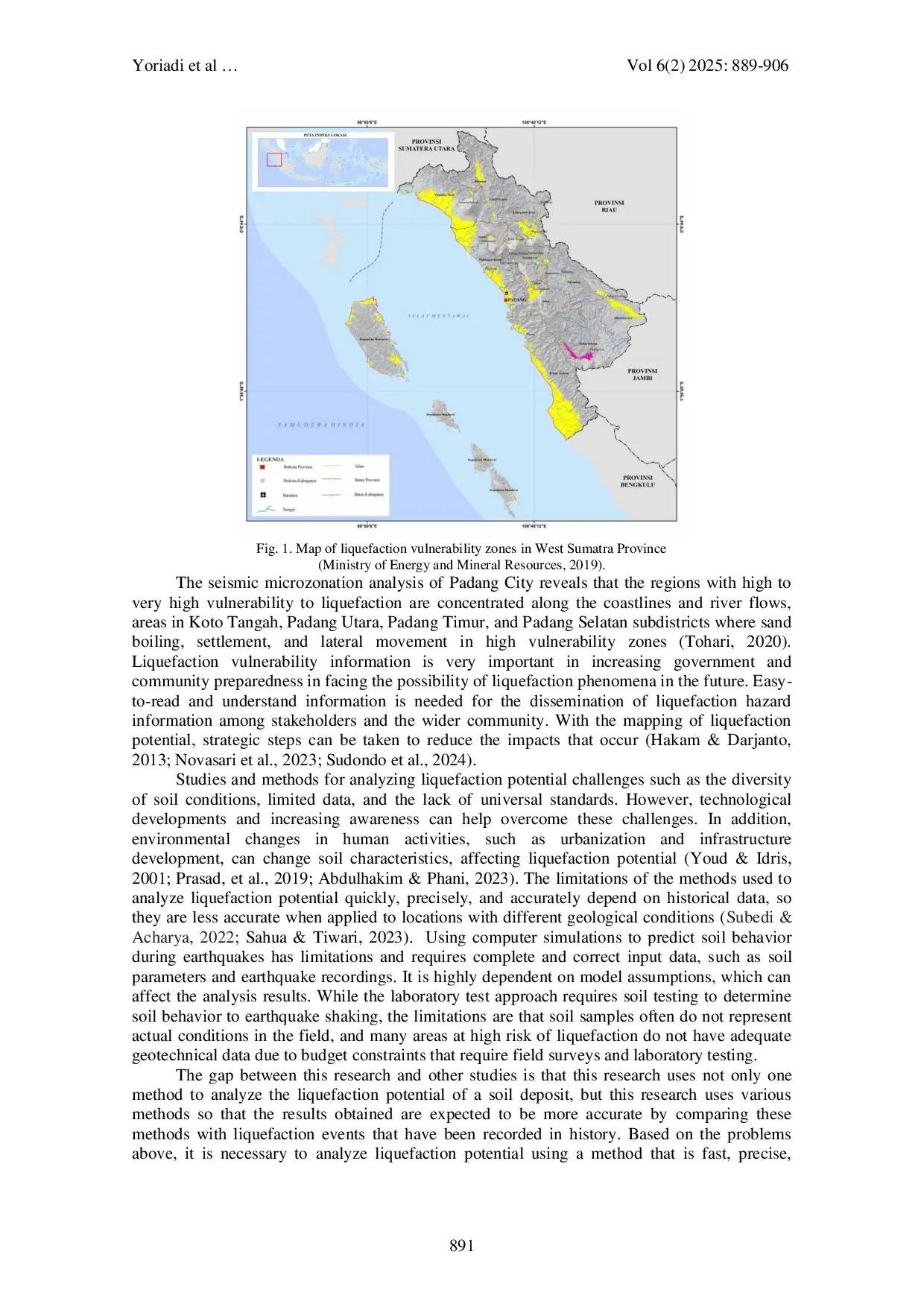
YRPIPKUYRPIPKU Hasil analisis dengan metode Hakam (2020) menyerupai metode Seed & Idriss (1971). Dapat disimpulkan bahwa di antara keempat metode, metode yang palingHasil analisis dengan metode Hakam (2020) menyerupai metode Seed & Idriss (1971). Dapat disimpulkan bahwa di antara keempat metode, metode yang paling

YRPIPKUYRPIPKU Hasil menunjukkan bahwa PVA-CA memiliki potensi tinggi sebagai adsorben untuk mengurangi pencemaran logam berat, dengan proses desorpsi lebih efektif menggunakanHasil menunjukkan bahwa PVA-CA memiliki potensi tinggi sebagai adsorben untuk mengurangi pencemaran logam berat, dengan proses desorpsi lebih efektif menggunakan
YRPIPKUYRPIPKU Beamforming digital dengan ukuran array menengah (128 antena) menghasilkan efisiensi energi tertinggi, sedangkan beamforming hybrid dengan array terbesarBeamforming digital dengan ukuran array menengah (128 antena) menghasilkan efisiensi energi tertinggi, sedangkan beamforming hybrid dengan array terbesar
Useful /

LSPRLSPR Integrasi perspektif PR dengan pendekatan agenda-setting dan framing, mendorong pemahaman yang lebih kuat tentang produksi berita lingkungan sebagai prosesIntegrasi perspektif PR dengan pendekatan agenda-setting dan framing, mendorong pemahaman yang lebih kuat tentang produksi berita lingkungan sebagai proses
UNESAUNESA Tujuan penelitian ini adalah untuk mengetahui apakah pertimbangan Hakim Mahkamah Agung dalam menentukan alasan pemutusan hubungan kerja tepat dan untukTujuan penelitian ini adalah untuk mengetahui apakah pertimbangan Hakim Mahkamah Agung dalam menentukan alasan pemutusan hubungan kerja tepat dan untuk

UNESAUNESA Sebagai akibat dari pemutusan hubungan kerja, pemberi kerja harus membayar pesangon, uang penghargaan masa kerja, dan uang pengganti hak sesuai denganSebagai akibat dari pemutusan hubungan kerja, pemberi kerja harus membayar pesangon, uang penghargaan masa kerja, dan uang pengganti hak sesuai dengan

UNESAUNESA Sus-PHI/2024. This layoff is carried out by injuring labor law due to the offer of layoff compensation that is not in accordance with applicable regulations.Sus-PHI/2024. This layoff is carried out by injuring labor law due to the offer of layoff compensation that is not in accordance with applicable regulations.