UMSUMS
Jurnal KesehatanJurnal KesehatanIntroduction: HIV-positive patients require adherence to Antiretroviral therapy (ART) to control their disease. However, in Ternate City, ARV adherence remains low due to side effect fears, stigma, depression, and limited health service access. Therefore, this study analyzes the correlation between self-efficacy, action planning, and coping planning with ARV adherence in HIV-positive patients in Ternate City, North Maluku. Method: An observational, cross-sectional study used stratified random sampling of HIV-positive patients at five service centers, with data analyzed using the Spearman test. Results: Most respondents were aged 19-49 (94.9%), male (69.1%), held a high school education (57.3%), were self-employed (24.2%), and earned under 1 million rupiah per month (33.1%). Furthermore, self-efficacy (p=0.000; r=0.404), action planning (p=0.000; r=0.399), and coping planning (p=0.000; r=0.265) were significantly associated with ARV adherence. Conclusion: These findings suggest that self-efficacy, action planning, and coping planning benefit ARV adherence in HIV-positive patients.
Self-efficacy, action planning, and coping planning are significantly associated with ARV therapy adherence in HIV-positive patients in Ternate, Indonesia.These factors contribute to patients confidence, intention, and ability to overcome obstacles in adhering to their treatment.Therefore, interventions aimed at improving these aspects can enhance ARV adherence and ultimately improve health outcomes for individuals living with HIV.
Penelitian lebih lanjut perlu dilakukan untuk mengembangkan intervensi yang secara khusus menargetkan peningkatan self-efficacy, perencanaan tindakan, dan perencanaan mengatasi pada pasien HIV/AIDS di Ternate. Studi ini dapat berupa pengembangan program pelatihan yang disesuaikan dengan kebutuhan lokal, dengan fokus pada strategi praktis untuk mengatasi hambatan dalam kepatuhan pengobatan ARV. Selain itu, penelitian perlu mengeksplorasi peran dukungan sosial dan keluarga dalam memengaruhi ketiga faktor tersebut, serta bagaimana dukungan tersebut dapat dioptimalkan untuk meningkatkan kepatuhan pengobatan. Terakhir, penelitian kualitatif dapat dilakukan untuk memahami secara mendalam pengalaman dan persepsi pasien terkait dengan self-efficacy, perencanaan tindakan, dan perencanaan mengatasi, sehingga intervensi yang dikembangkan lebih relevan dan efektif. Penelitian-penelitian ini diharapkan dapat memberikan kontribusi signifikan dalam upaya pengendalian HIV/AIDS di Indonesia, khususnya di wilayah Ternate, dengan meningkatkan kualitas hidup dan kesehatan pasien.
- The relationship between the theory of planned behavior and medication adherence in patients with epilepsy... linkinghub.elsevier.com/retrieve/pii/S1525505016301159The relationship between the theory of planned behavior and medication adherence in patients with epilepsy linkinghub elsevier retrieve pii S1525505016301159
- Disclosure and Self-Efficacy Among HIV-Positive Men Who Have Sex with Men: A Comparison Between Older... doi.org/10.1089/apc.2015.0133Disclosure and Self Efficacy Among HIV Positive Men Who Have Sex with Men A Comparison Between Older doi 10 1089 apc 2015 0133
- The relationship between the theory of planned behavior and medication adherence in patients with epilepsy... epilepsybehavior.com/retrieve/pii/S1525505016301159The relationship between the theory of planned behavior and medication adherence in patients with epilepsy epilepsybehavior retrieve pii S1525505016301159
| File size | 389.77 KB |
| Pages | 12 |
| DMCA | Report |
Related /

IBSIBS Penelitian ini menggunakan data sekunder yang berupa annual report 26 perusahaan perbankan yang terdaftar di Bursa Efek Indonesia tahun 2011-2018. MetodePenelitian ini menggunakan data sekunder yang berupa annual report 26 perusahaan perbankan yang terdaftar di Bursa Efek Indonesia tahun 2011-2018. Metode

UNRAMUNRAM Metode kegiatan dilakukan dengan pendekatan deskriptif kualitatif melalui observasi, sosialisasi, pelatihan teknis, serta evaluasi partisipatif. ProsesMetode kegiatan dilakukan dengan pendekatan deskriptif kualitatif melalui observasi, sosialisasi, pelatihan teknis, serta evaluasi partisipatif. Proses

ARSILMEDIAARSILMEDIA Metode ini bertujuan untuk menentukan hubungan antara dua atau lebih variabel dan jenis data yang digunakan adalah kuantitatif. Data yang digunakan adalahMetode ini bertujuan untuk menentukan hubungan antara dua atau lebih variabel dan jenis data yang digunakan adalah kuantitatif. Data yang digunakan adalah

BAJANGJOURNALBAJANGJOURNAL Penelitian ini dilakukan untuk mendapatkan kejelasan, titik terang, serta proyeksi mengenai logika dalam penyelesaian sengketa dimana para pihaknya semuaPenelitian ini dilakukan untuk mendapatkan kejelasan, titik terang, serta proyeksi mengenai logika dalam penyelesaian sengketa dimana para pihaknya semua

BAJANGJOURNALBAJANGJOURNAL Ketidakefisienan melakukan manajemen logistik memberikan dampak negatif terhadap rumah sakit baik dari segi medis maupun non medis. Proses manajemen logistikKetidakefisienan melakukan manajemen logistik memberikan dampak negatif terhadap rumah sakit baik dari segi medis maupun non medis. Proses manajemen logistik
BAJANGJOURNALBAJANGJOURNAL Logistik Non Medis (sub bagian perbekalan umum dan inventaris) RS Islam Surabaya Jemursari menjalankan proses manajemen meliputi perencanaan, penerimaan,Logistik Non Medis (sub bagian perbekalan umum dan inventaris) RS Islam Surabaya Jemursari menjalankan proses manajemen meliputi perencanaan, penerimaan,

BAJANGJOURNALBAJANGJOURNAL Pada masa ini terjadi kematangan reproduksi dengan munculnya tanda‑tanda pubertas; pada remaja putri, pubertas ditandai dengan menarche. Data RISKESDASPada masa ini terjadi kematangan reproduksi dengan munculnya tanda‑tanda pubertas; pada remaja putri, pubertas ditandai dengan menarche. Data RISKESDAS
OJS INDONESIAOJS INDONESIA Sebagai akuntan publik dan auditor, mereka perlu memahami dan mengikuti kode etik profes yang berkaitan dengan tanggungjawab profesional, kompetensi, danSebagai akuntan publik dan auditor, mereka perlu memahami dan mengikuti kode etik profes yang berkaitan dengan tanggungjawab profesional, kompetensi, dan
Useful /
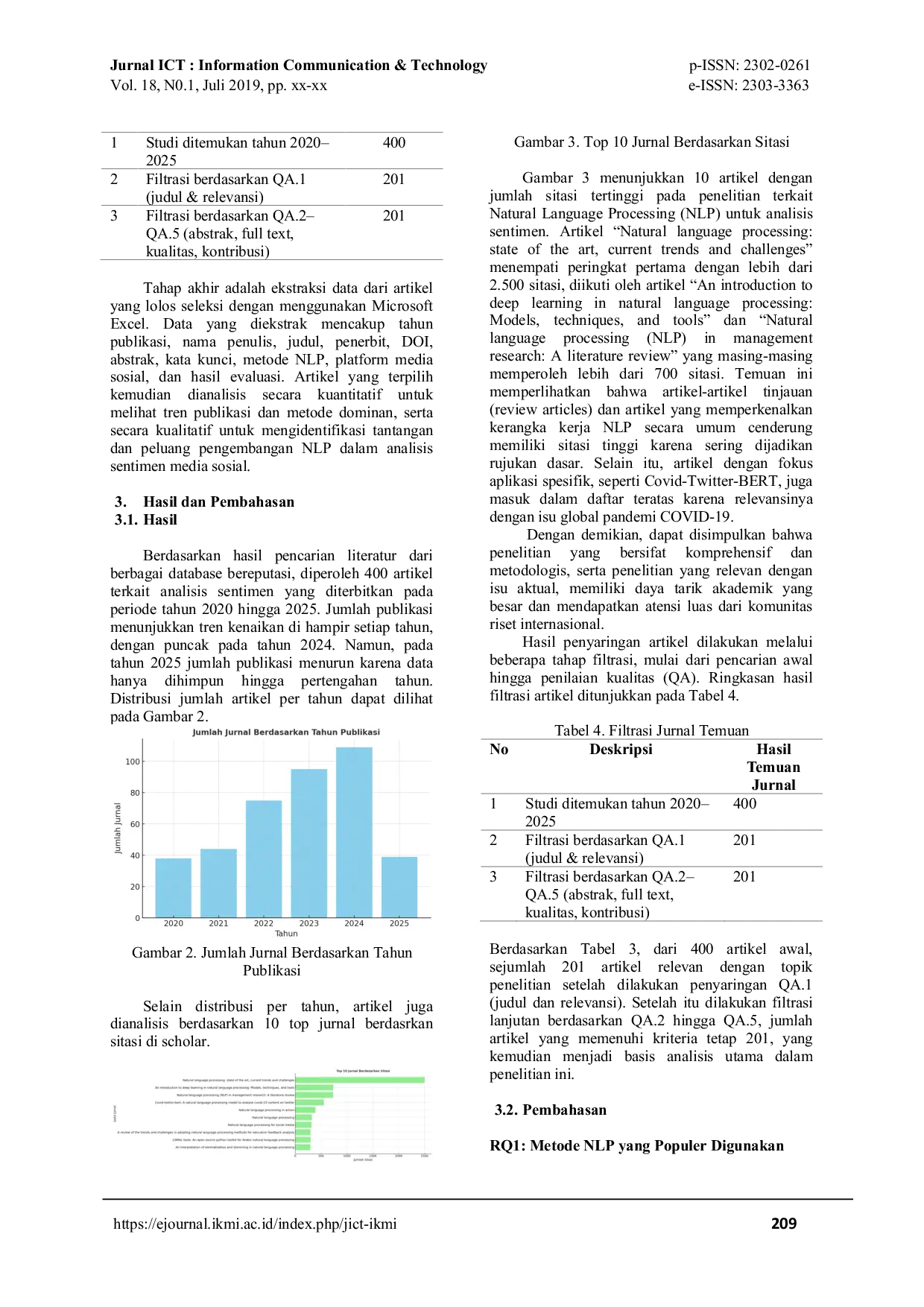
IKMIIKMI Melalui proses penyaringan berdasarkan kriteria inklusi, eksklusi, serta penilaian kualitas, sebanyak 201 artikel dinyatakan relevan untuk dianalisis lebihMelalui proses penyaringan berdasarkan kriteria inklusi, eksklusi, serta penilaian kualitas, sebanyak 201 artikel dinyatakan relevan untuk dianalisis lebih

STT ABDIELSTT ABDIEL Dengan pendekatan hermeneutika feminis, artikel ini bertujuan menggugat normalisasi kontrol atas tubuh perempuan dalam teks-teks keagamaan dan budaya populer,Dengan pendekatan hermeneutika feminis, artikel ini bertujuan menggugat normalisasi kontrol atas tubuh perempuan dalam teks-teks keagamaan dan budaya populer,

STT ABDIELSTT ABDIEL Klenteng Sam Poo Kong menghadirkan dialog sosial antar umat beragama, pariwisata, pengobatan gratis, kegiatan budaya, dan bakti sosial. Dialog ini didasariKlenteng Sam Poo Kong menghadirkan dialog sosial antar umat beragama, pariwisata, pengobatan gratis, kegiatan budaya, dan bakti sosial. Dialog ini didasari

ARSILMEDIAARSILMEDIA What is examined is whether the value of natural beauty, educational value, facilities and infrastructure, tourists, promotions, fees, handicrafts, andWhat is examined is whether the value of natural beauty, educational value, facilities and infrastructure, tourists, promotions, fees, handicrafts, and