UNIRAYAUNIRAYA
Research on English Language EducationResearch on English Language EducationThis research aimed to know how the English learning quality during the pandemic of students at SMP Negeri 1 Telukdalam. The total participants were nine participants; three participants from seventh grade, three participants from eighth grade and three participants from ninth grade. The research used a qualitative research approach which used a descriptive type of research to describe the English learning quality by using seven indicators of learning quality by Departemen Pendidikan Nasional. The technique of data collection in the research were interviewing the students and English teachers and observation using field notes in the English teaching-learning process in the class. The result shows that the students in SMP Negeri 1 Teluk Dalam did not fulfill the learning quality indicators. There are three indicators that were unfulfilled, namely the Students Activity indicator, Material indicator, and Students outcome indicator. Based on the result of the research, it can be concluded that the English learning quality during the pandemic covid-19 of students at SMP Negeri 1 Teluk Dalam is unfulfilled in some indicators. The researcher suggests that the English teachers should be able to explore the class in online or offline class to improve the learning to reach the indicators of learning quality, and also for the students should be able to adapt with any situation in learning even in online or offline class.
Based on the analysis of the research findings, it can be concluded that the learning quality during the pandemic is unfulfilled in several indicators, specifically student activity, material, and learning outcomes.This lack of fulfillment stems from the challenges of adapting to online learning and the subsequent difficulties students face in maintaining motivation and accessing resources in the offline setting.Therefore, addressing these issues is crucial to ensure effective English language learning in the context of ongoing and potential future disruptions.
Based on the research findings, several avenues for future research emerge. Firstly, a comparative study could investigate the long-term impact of the shift between online and offline learning on students English proficiency and learning habits. This would involve tracking students progress over an extended period and analyzing the correlation between learning modalities and academic outcomes. Secondly, research could explore the effectiveness of different pedagogical approaches and technological tools in enhancing student engagement and motivation in both online and offline learning environments. This could include investigating the use of gamification, virtual reality, or personalized learning platforms. Finally, a study focusing on the role of teacher training and professional development in equipping educators with the skills and knowledge to effectively navigate the challenges of blended learning and ensure high-quality English language instruction is needed. This research should investigate the specific training needs of teachers and evaluate the impact of different professional development programs on their teaching practices and student outcomes. These investigations, totaling over 150 words, will contribute to a deeper understanding of the complexities of English language education in a post-pandemic world and inform the development of more effective and equitable learning strategies.
| File size | 591.61 KB |
| Pages | 9 |
| DMCA | Report |
Related /
YRPIPKUYRPIPKU Hasil penelitian menyoroti potensi penggabungan data sensor multidimensi dengan analitik lanjutan untuk mendeteksi kerusakan secara dini, meminimalkanHasil penelitian menyoroti potensi penggabungan data sensor multidimensi dengan analitik lanjutan untuk mendeteksi kerusakan secara dini, meminimalkan
YRPIPKUYRPIPKU Studi ini fokus pada standar ICAO, peran Area Kontrol Emisi (ECA), dan pemodelan kuantitatif pengurangan emisi melalui inovasi teknologi dan bahan bakar.Studi ini fokus pada standar ICAO, peran Area Kontrol Emisi (ECA), dan pemodelan kuantitatif pengurangan emisi melalui inovasi teknologi dan bahan bakar.

YRPIPKUYRPIPKU Selain itu, analisis ini memungkinkan identifikasi bidang penelitian kunci, perbandingan dengan standar industri, dan adopsi solusi mutakhir guna meningkatkanSelain itu, analisis ini memungkinkan identifikasi bidang penelitian kunci, perbandingan dengan standar industri, dan adopsi solusi mutakhir guna meningkatkan
YRPIPKUYRPIPKU Multilayer perceptron (MLP) adalah salah satu metode JST yang dapat memprediksi semua jenis data. Proses prediksi perlu ditinjau ulang karena tidak selaluMultilayer perceptron (MLP) adalah salah satu metode JST yang dapat memprediksi semua jenis data. Proses prediksi perlu ditinjau ulang karena tidak selalu
YRPIPKUYRPIPKU Implikasi teoretis mencakup kontribusi pada pemahaman transformasi digital dalam pariwisata, khususnya bagaimana teknologi imersif membentuk perilaku perjalanan.Implikasi teoretis mencakup kontribusi pada pemahaman transformasi digital dalam pariwisata, khususnya bagaimana teknologi imersif membentuk perilaku perjalanan.
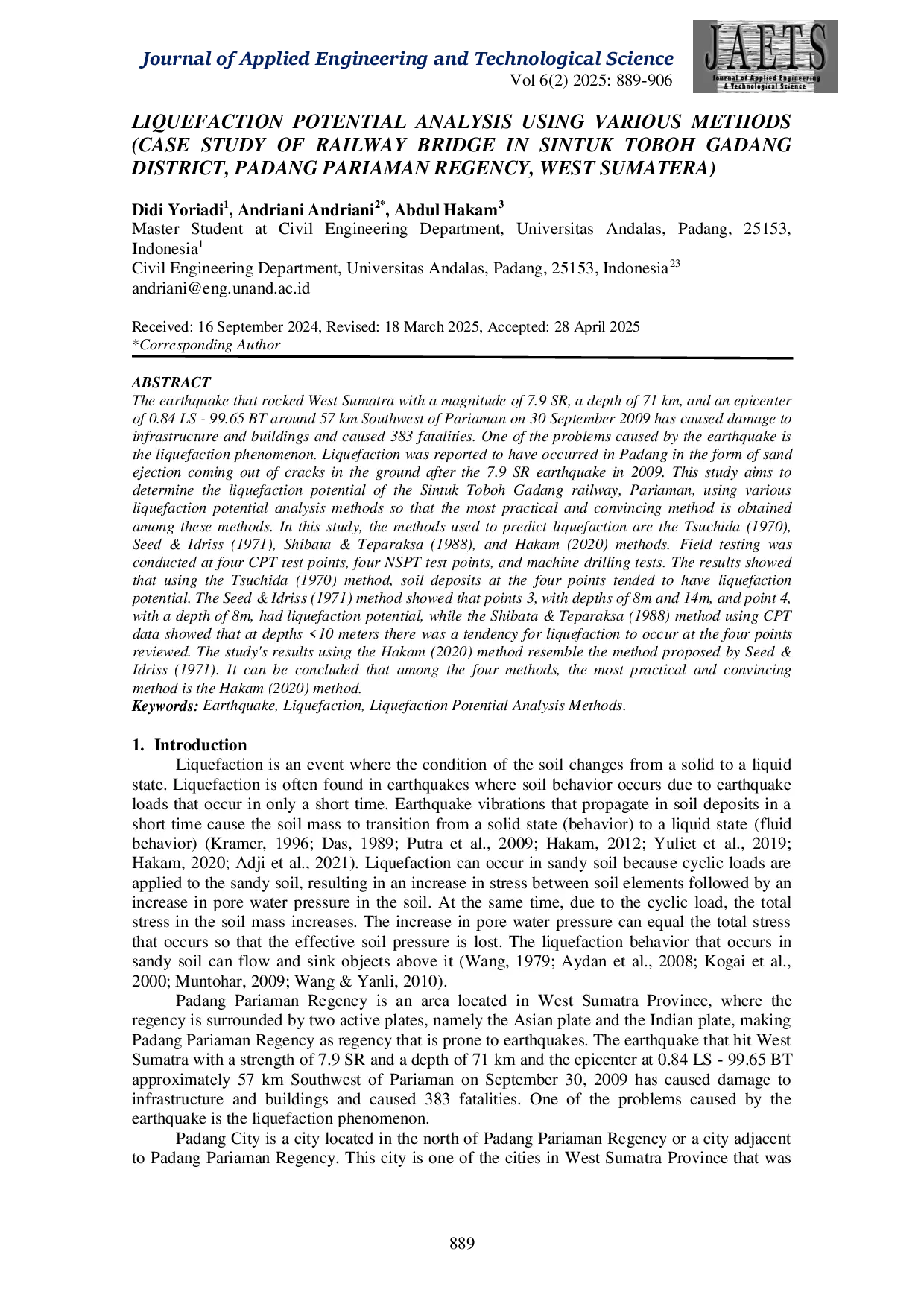
YRPIPKUYRPIPKU Metode Seed & Idriss (1971) mengindikasikan bahwa titik 3 pada kedalaman 8 m dan 14 m, serta titik 4 pada kedalaman 8 m, berpotensi likuifaksi, sedangkanMetode Seed & Idriss (1971) mengindikasikan bahwa titik 3 pada kedalaman 8 m dan 14 m, serta titik 4 pada kedalaman 8 m, berpotensi likuifaksi, sedangkan

YRPIPKUYRPIPKU Hasil menunjukkan bahwa PVA-CA memiliki potensi tinggi sebagai adsorben untuk mengurangi pencemaran logam berat, dengan proses desorpsi lebih efektif menggunakanHasil menunjukkan bahwa PVA-CA memiliki potensi tinggi sebagai adsorben untuk mengurangi pencemaran logam berat, dengan proses desorpsi lebih efektif menggunakan
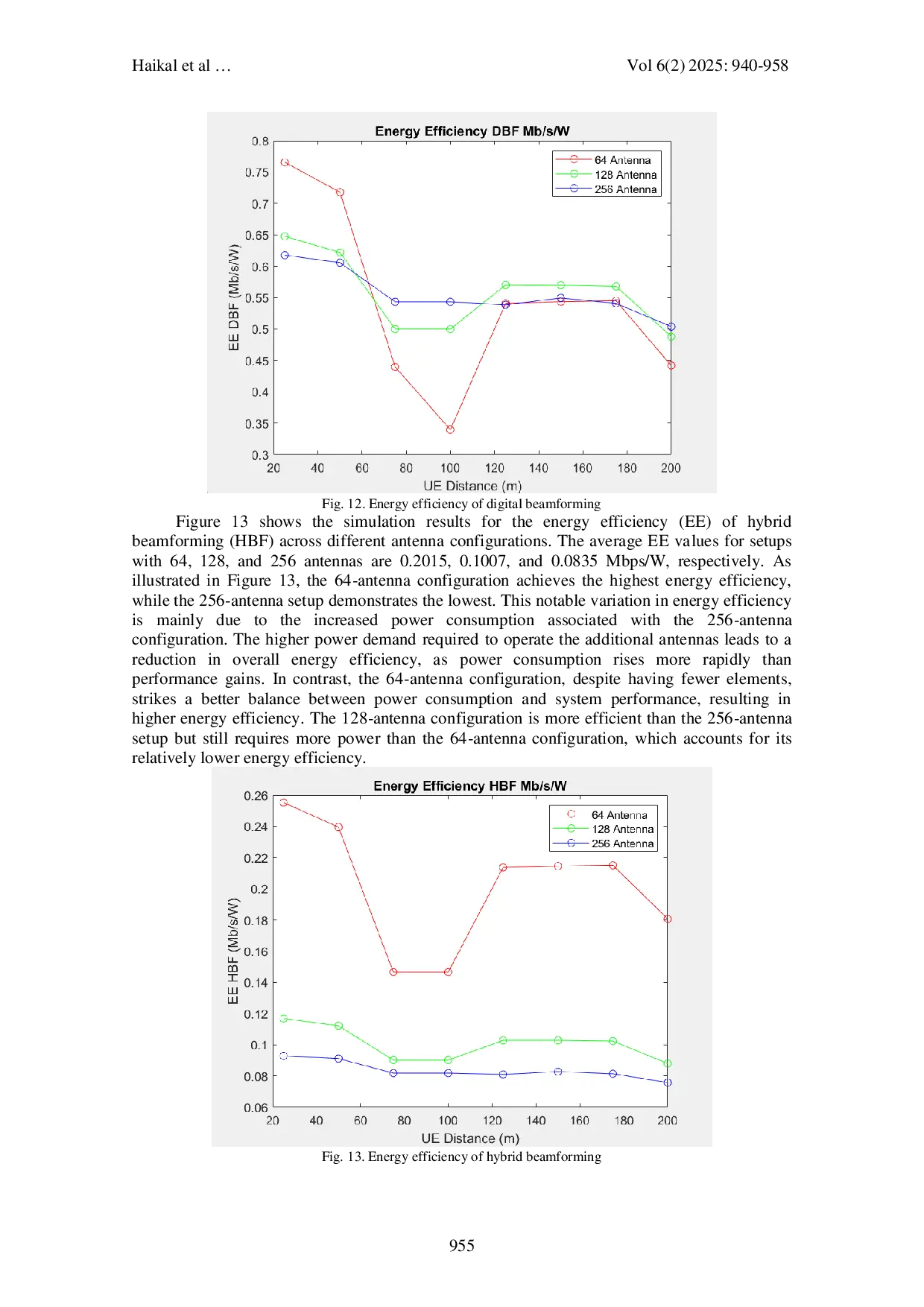
YRPIPKUYRPIPKU Simulasi dilakukan dalam lingkungan komunikasi sub-THz menggunakan beamforming analog, digital, dan hybrid pada berbagai konfigurasi antena stasiun basisSimulasi dilakukan dalam lingkungan komunikasi sub-THz menggunakan beamforming analog, digital, dan hybrid pada berbagai konfigurasi antena stasiun basis
Useful /
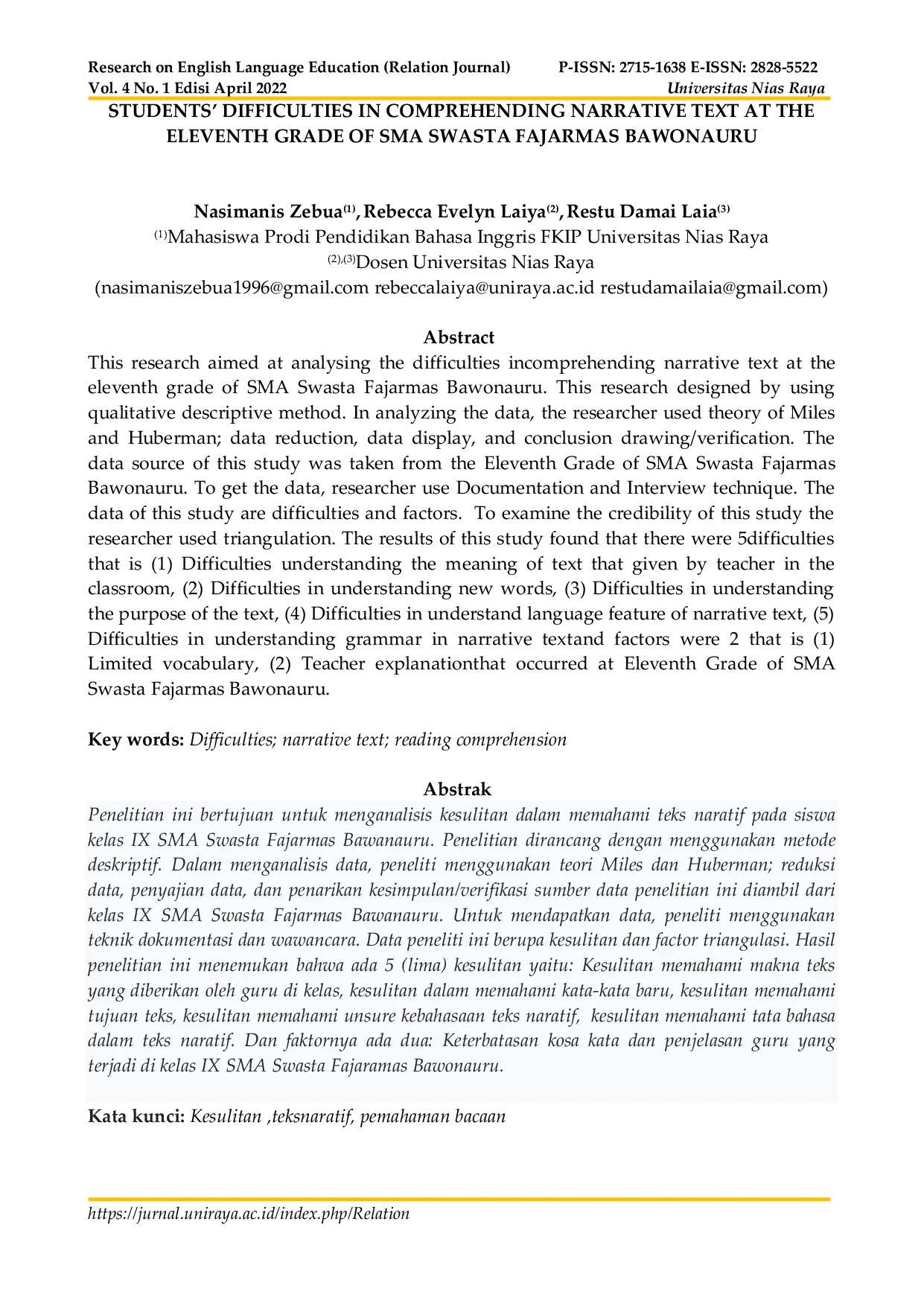
UNIRAYAUNIRAYA This research aimed at analysing the difficulties in comprehending narrative text at the eleventh grade of SMA Swasta Fajarmas Bawonauru. This researchThis research aimed at analysing the difficulties in comprehending narrative text at the eleventh grade of SMA Swasta Fajarmas Bawonauru. This research

UNIRAYAUNIRAYA Sumber Penelitian ini adalah 3 lirik lagu Rich Brian yang berjudul “Dat stick, “Who that be, dan“Glow like that. Data di analisis dengan menggunakanSumber Penelitian ini adalah 3 lirik lagu Rich Brian yang berjudul “Dat stick, “Who that be, dan“Glow like that. Data di analisis dengan menggunakan

UNIRAYAUNIRAYA Penelitian ini bertujuan untuk menganalisis makna konotatif dan jenis makna konotatif yang terdapat pada 12 lirik lagu linkin park. Penelitian ini di rancangPenelitian ini bertujuan untuk menganalisis makna konotatif dan jenis makna konotatif yang terdapat pada 12 lirik lagu linkin park. Penelitian ini di rancang
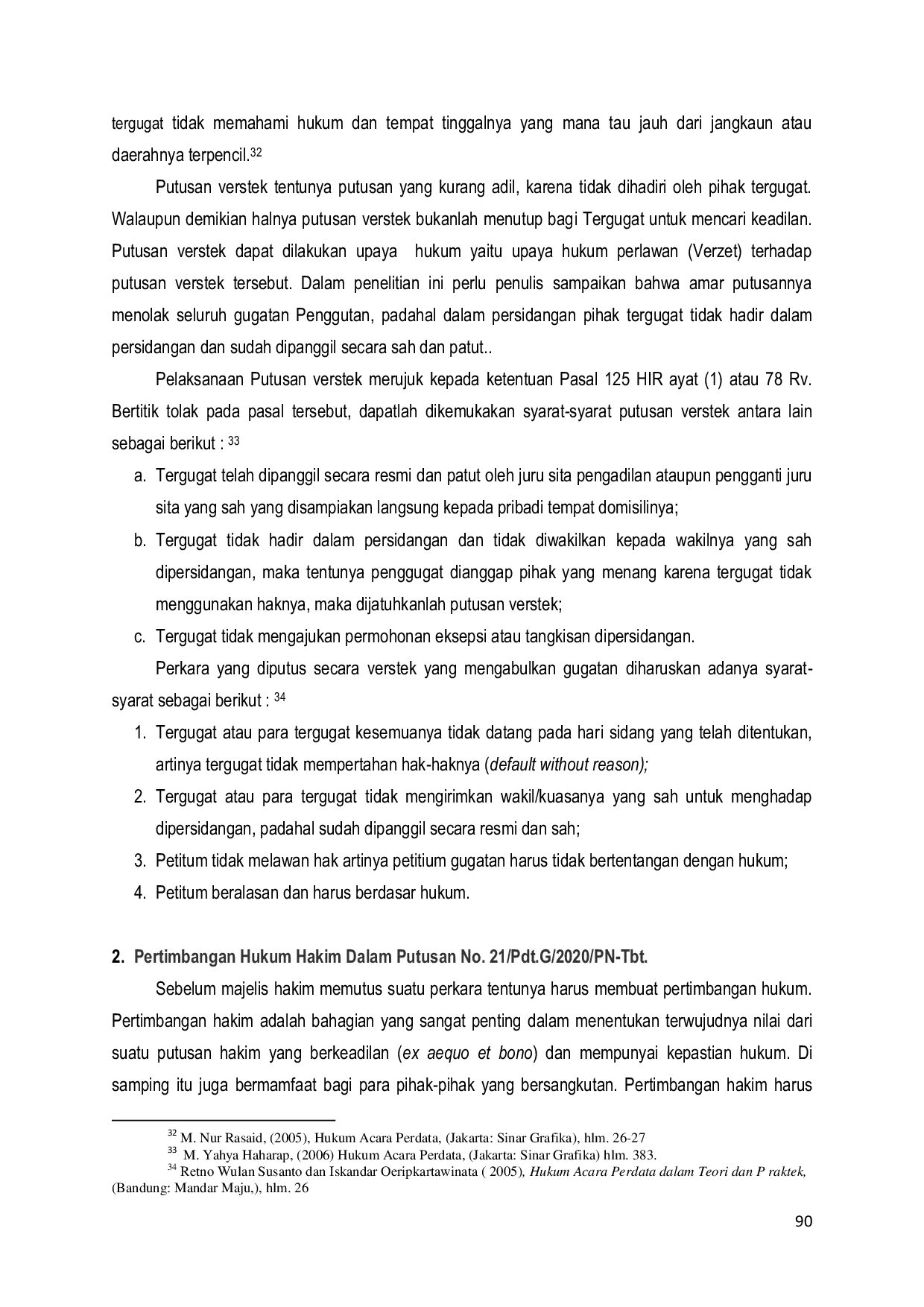
DHARMAWANGSADHARMAWANGSA Jenis penelitian adalah penelitian yang memfokuskan kepada studi kasus. Kesimpulan yang dihasilkan perlu adanya pengaturan hukum yang pasti, jika tergugatJenis penelitian adalah penelitian yang memfokuskan kepada studi kasus. Kesimpulan yang dihasilkan perlu adanya pengaturan hukum yang pasti, jika tergugat