ACADEMICAREVIEWACADEMICAREVIEW
JURNAL HURRIAH: Jurnal Evaluasi Pendidikan dan PenelitianJURNAL HURRIAH: Jurnal Evaluasi Pendidikan dan PenelitianSmall-scale gold mining activities in Dava Village predominantly rely on mercury (Hg) during the amalgamation process, posing a significant risk of groundwater contamination in surrounding residential areas. This study aims to analyze mercury concentrations in well water using nine sampling points representing locations near tailings disposal sites, amalgam burning areas, and residential zones. Mercury concentrations were measured using Atomic Absorption Spectrophotometry (AAS). The results of the study showed that all samples exceeded the water quality standards in accordance with the Minister of Health Regulation No. 2 of 2023 for mercury (<0.001 ppm), with the highest concentrations detected at sampling points S6, S9, and S2, which are located closest to mining activities. The spatial distribution demonstrates a strong correlation between artisanal gold mining practices and elevated Hg contamination in shallow aquifers. Mercury mobility and accumulation are influenced by environmental factors such as open tailings infiltration, surface runoff, atmospheric deposition from amalgam burning, and pH variations. Prolonged exposure to mercury-contaminated water poses serious health risks, including neurological disorders, kidney damage, and developmental impairments. These findings confirm that traditional gold processing without proper waste management presents substantial threats to environmental quality and public health. Therefore, mitigation measures such as reducing mercury use, improving tailings management, and implementing regular groundwater quality monitoring are urgently required to minimize future exposure.
This study demonstrates a strong association between gold processing activities and elevated mercury concentrations in groundwater, indicating substantial environmental contamination.The spatial distribution of mercury suggests that post-processing land conditions, including unmanaged tailings disposal, seepage from processing ponds, and atmospheric deposition from amalgam burning, contribute to mercury input into shallow aquifers.Effective mitigation measures, such as mercury reduction strategies, improved tailings management, and routine groundwater monitoring, are essential to minimize long-term exposure risks and support sustainable environmental management.
Penelitian lebih lanjut perlu dilakukan untuk memahami secara komprehensif dampak jangka panjang paparan merkuri dari kegiatan penambangan emas skala kecil terhadap kesehatan masyarakat di Desa Dava. Studi ini dapat dilakukan dengan membandingkan tingkat merkuri dalam sampel biologis (rambut, darah, urin) dari kelompok terpapar (penambang dan penduduk sekitar) dengan kelompok kontrol yang tidak terpapar. Selain itu, penelitian perlu menginvestigasi efektivitas berbagai metode remediasi untuk mengurangi konsentrasi merkuri dalam air tanah yang terkontaminasi, seperti penggunaan bahan adsorben alami atau teknologi fitoremediasi. Terakhir, penting untuk mengembangkan model prediksi penyebaran merkuri di lingkungan berdasarkan data hidrologi, geokimia, dan meteorologi untuk mengidentifikasi area yang paling rentan dan merancang strategi pencegahan yang lebih efektif.
| File size | 956.77 KB |
| Pages | 9 |
| DMCA | Report |
Related /
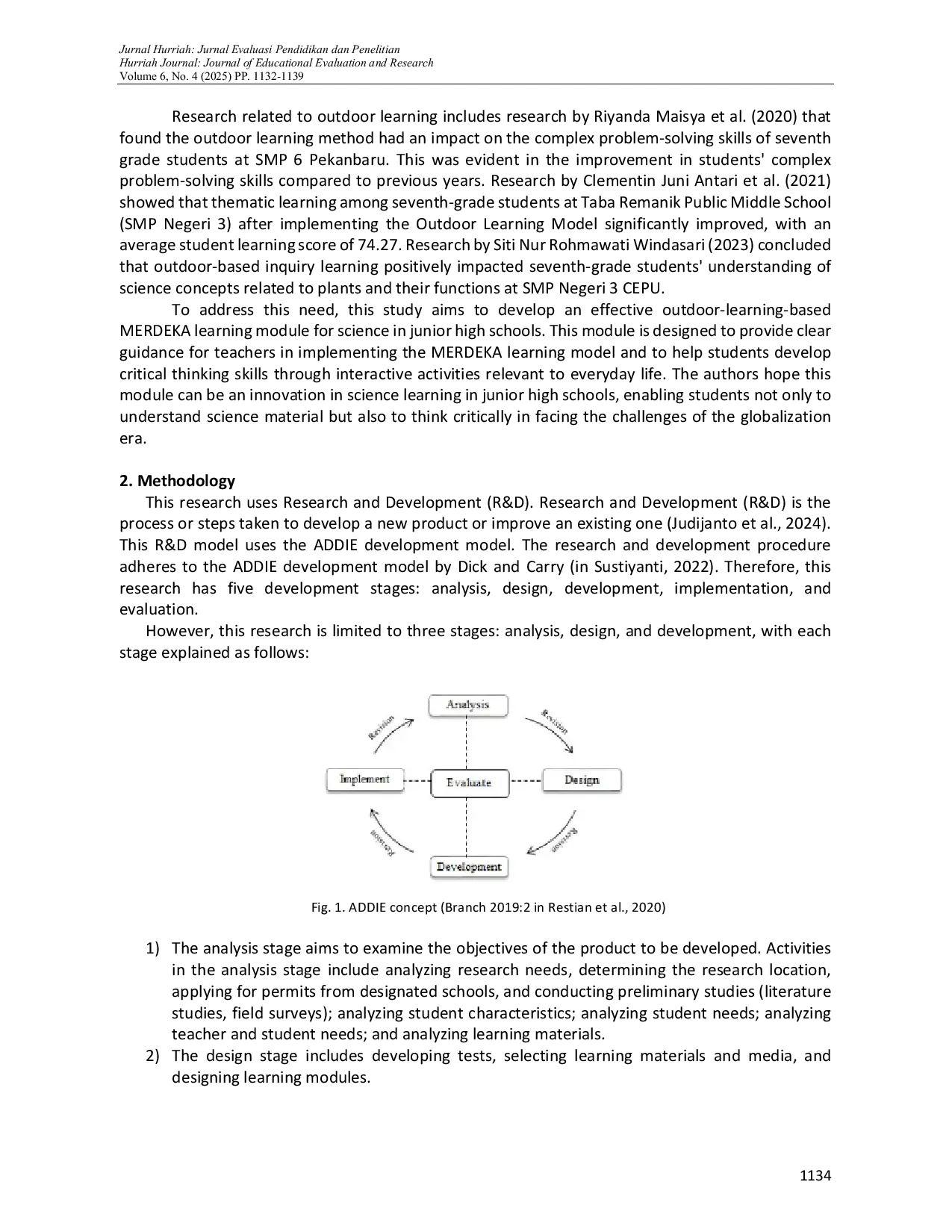
ACADEMICAREVIEWACADEMICAREVIEW Modul ini memberikan panduan yang jelas dan terperinci untuk implementasi pembelajaran di luar kelas dengan alur MERDEKA. Hasil penelitian menunjukkanModul ini memberikan panduan yang jelas dan terperinci untuk implementasi pembelajaran di luar kelas dengan alur MERDEKA. Hasil penelitian menunjukkan

ACADEMICAREVIEWACADEMICAREVIEW 2). To analyze the ability of PAI teachers in selecting appropriate learning media to improve student achievement at SMP Negeri 1 Rantau Selamat. 3). To2). To analyze the ability of PAI teachers in selecting appropriate learning media to improve student achievement at SMP Negeri 1 Rantau Selamat. 3). To
ACADEMICAREVIEWACADEMICAREVIEW Namun, hambatan utama seperti keterbatasan sarana dan infrastruktur, perbedaan kemampuan teknis guru, serta rendahnya kesiapan siswa dalam pembelajaranNamun, hambatan utama seperti keterbatasan sarana dan infrastruktur, perbedaan kemampuan teknis guru, serta rendahnya kesiapan siswa dalam pembelajaran

ACADEMICAREVIEWACADEMICAREVIEW Metode penelitian kualitatif digunakan dengan data yang dikumpulkan melalui wawancara, observasi, dan dokumentasi. Hasil menunjukkan bahwa guru pendidikanMetode penelitian kualitatif digunakan dengan data yang dikumpulkan melalui wawancara, observasi, dan dokumentasi. Hasil menunjukkan bahwa guru pendidikan
ACADEMICAREVIEWACADEMICAREVIEW Namun, faktor penghambat seperti keterbatasan waktu, kesulitan dalam penguasaan teknologi, dan variasi motivasi serta disiplin siswa menjadi tantanganNamun, faktor penghambat seperti keterbatasan waktu, kesulitan dalam penguasaan teknologi, dan variasi motivasi serta disiplin siswa menjadi tantangan
INABAINABA PT Unilever Indonesia Tbk mengalami permasalahan dengan penurunan harga saham. Kinerja perusahaan merupakan faktor yang dapat menyebabkan penurunan hargaPT Unilever Indonesia Tbk mengalami permasalahan dengan penurunan harga saham. Kinerja perusahaan merupakan faktor yang dapat menyebabkan penurunan harga

UMPRUMPR Penelitian ini bertujuan untuk megkaji Lamut sebagai bentuk bahan ajar yang bisa diajarkan pada lingkungan siswa. Siswa merupakan sasaran yang tepat untukPenelitian ini bertujuan untuk megkaji Lamut sebagai bentuk bahan ajar yang bisa diajarkan pada lingkungan siswa. Siswa merupakan sasaran yang tepat untuk
INABAINABA Specifically, a lack of commitment, stemming from inadequate training and limited career development opportunities, was found to be a primary driver ofSpecifically, a lack of commitment, stemming from inadequate training and limited career development opportunities, was found to be a primary driver of
Useful /
UntikaUntika Penelitian ini bertujuan untuk menganalisis pertanggungjawaban pidana notaris atas pemalsuan akta otentik yang didasarkan pada keterangan palsu atau manipulatif,Penelitian ini bertujuan untuk menganalisis pertanggungjawaban pidana notaris atas pemalsuan akta otentik yang didasarkan pada keterangan palsu atau manipulatif,

UMPRUMPR Konten digital yang dikemas dengan memerhatikan karakteristik kebutuhan anak-anak memungkinkan mereka belajar secara interaktif dan menyenangkan. PesanKonten digital yang dikemas dengan memerhatikan karakteristik kebutuhan anak-anak memungkinkan mereka belajar secara interaktif dan menyenangkan. Pesan

AFEBIAFEBI Temuan menunjukkan bahwa tingkat divergensi dalam pembiayaan kontrak Mudaraba dan Musyarakah cenderung lebih kecil dibandingkan tingkat konvergensi, yangTemuan menunjukkan bahwa tingkat divergensi dalam pembiayaan kontrak Mudaraba dan Musyarakah cenderung lebih kecil dibandingkan tingkat konvergensi, yang

UJBUJB Perkawinan yang dilangsungkan di luar negeri dapat dianggap sah jika dilaporkan ke Kantor Catatan Sipil dalam waktu 1 tahun setelah kembali ke Indonesia.Perkawinan yang dilangsungkan di luar negeri dapat dianggap sah jika dilaporkan ke Kantor Catatan Sipil dalam waktu 1 tahun setelah kembali ke Indonesia.