UINMYBATUSANGKARUINMYBATUSANGKAR
Indonesian Journal of Early Childhood Educational ResearchIndonesian Journal of Early Childhood Educational ResearchThis study aims to examine the effect of natural material-based ecoprint activities on the fine motor skills of 5–6 year old children. A mixed methods approach was employed using a quasi-experimental design. The research subjects consisted of 28 children from Group B at State Kindergarten of 8 Wita Ponda, divided into an experimental group and a control group. The experimental group received treatment through ecoprint activities for ten days, while the control group engaged in regular activities without similar interventions. Data were collected through fine motor skills tests (pretest and posttest), observations, documentation, and interviews. Quantitative data were analyzed using the paired sample t-test and N-Gain Score, while qualitative data were analyzed thematically. The findings revealed a significant improvement in the fine motor skills of children in the experimental group compared to the control group, with a p-value < 0.05 and an average N-Gain Score of 68.4%, categorized as moderately effective. Interviews with teachers and the principal affirmed that ecoprint activities provided enjoyable learning experiences, enhanced hand and finger coordination, and fostered children‟s environmental awareness. Therefore, ecoprint is considered a viable alternative learning method to holistically develop fine motor skills in early childhood education.
The research concludes that ecoprint activities effectively enhance fine motor skills in early childhood by actively engaging children in a creative process that stimulates hand-eye coordination and finger dexterity.The study demonstrates a statistically significant improvement in fine motor skills among children participating in ecoprint activities compared to those who did not.Therefore, incorporating ecoprint into thematic learning strategies in early childhood education is recommended to foster holistic development, including motor skills, cognitive abilities, emotional well-being, and environmental awareness.
Further research should investigate the long-term effects of ecoprint activities on childrens fine motor skill development and academic performance in subsequent school years, potentially tracking their progress through elementary school to assess sustained benefits. Additionally, studies could explore the optimal duration and frequency of ecoprint interventions to maximize their impact on fine motor skills, considering factors like age, developmental stage, and individual learning styles. Finally, research is needed to examine the potential of ecoprint activities to promote environmental awareness and sustainable practices among young children, investigating how these activities can foster a deeper connection with nature and encourage responsible environmental stewardship, potentially through comparative studies with other nature-based learning approaches.
- Implementasi Media Loose Parts untuk Mengembangkan Aspek Motorik Halus Anak Usia Dini | Aulad: Journal... aulad.org/index.php/aulad/article/view/301Implementasi Media Loose Parts untuk Mengembangkan Aspek Motorik Halus Anak Usia Dini Aulad Journal aulad index php aulad article view 301
- Login | Early Childhood Islamic Education Journal. early childhood islamic education journal required... e-journal.iaingorontalo.ac.id/index.php/ecie/article/view/35Login Early Childhood Islamic Education Journal early childhood islamic education journal required e journal iaingorontalo ac index php ecie article view 35
- Pengembangan Kecerdasan Naturalis Anak Usia Dini melalui Model Pendidikan Lingkungan Unesco | Ideas:... jurnal.ideaspublishing.co.id/index.php/ideas/article/view/449Pengembangan Kecerdasan Naturalis Anak Usia Dini melalui Model Pendidikan Lingkungan Unesco Ideas jurnaleaspublishing index php ideas article view 449
| File size | 715.8 KB |
| Pages | 13 |
| DMCA | Report |
Related /
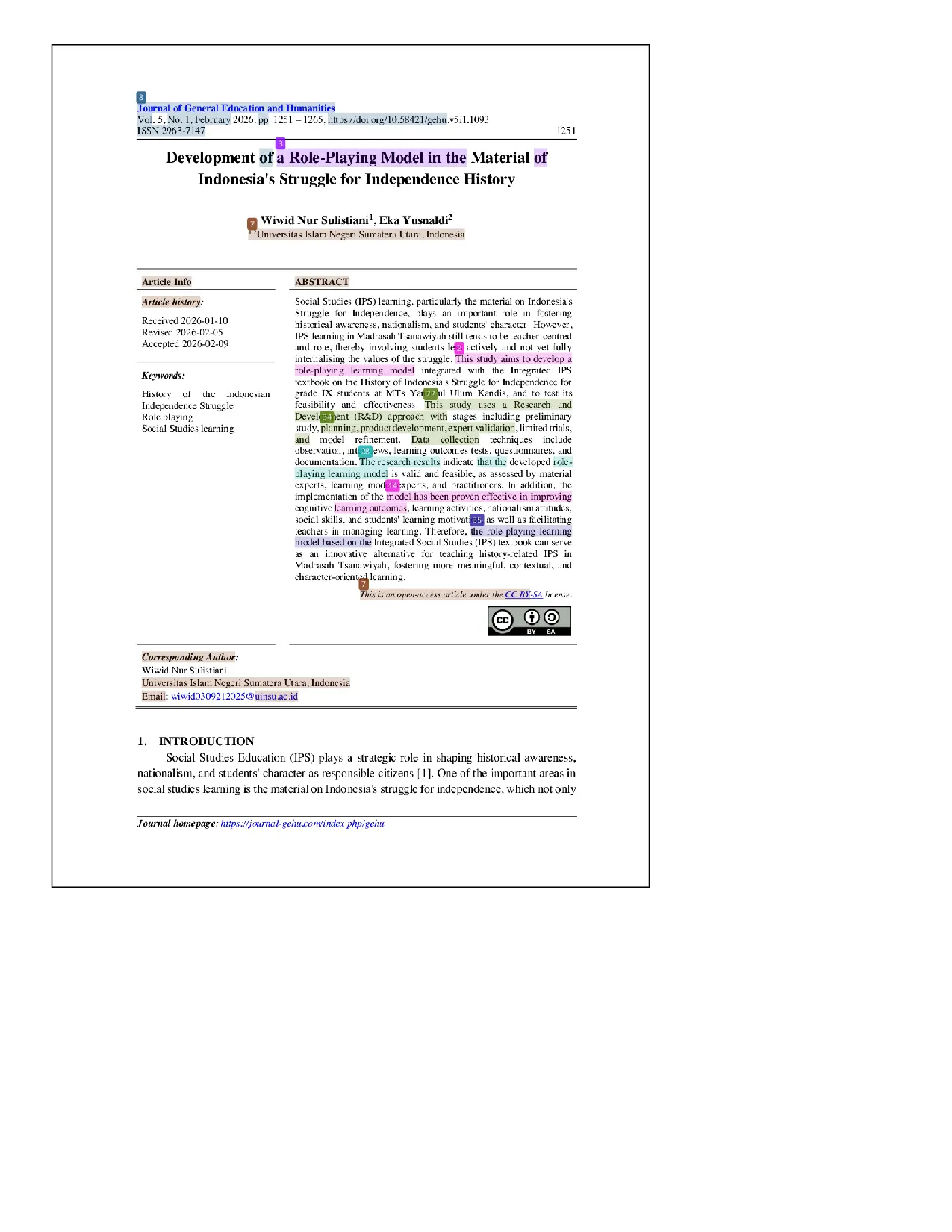
JOURNAL GEHUJOURNAL GEHU Abstrak dalam bahasa Inggris tidak ditemukan. Oleh karena itu, abstrak bahasa Inggris diterjemahkan ke dalam bahasa Indonesia formal akademik: PenelitianAbstrak dalam bahasa Inggris tidak ditemukan. Oleh karena itu, abstrak bahasa Inggris diterjemahkan ke dalam bahasa Indonesia formal akademik: Penelitian
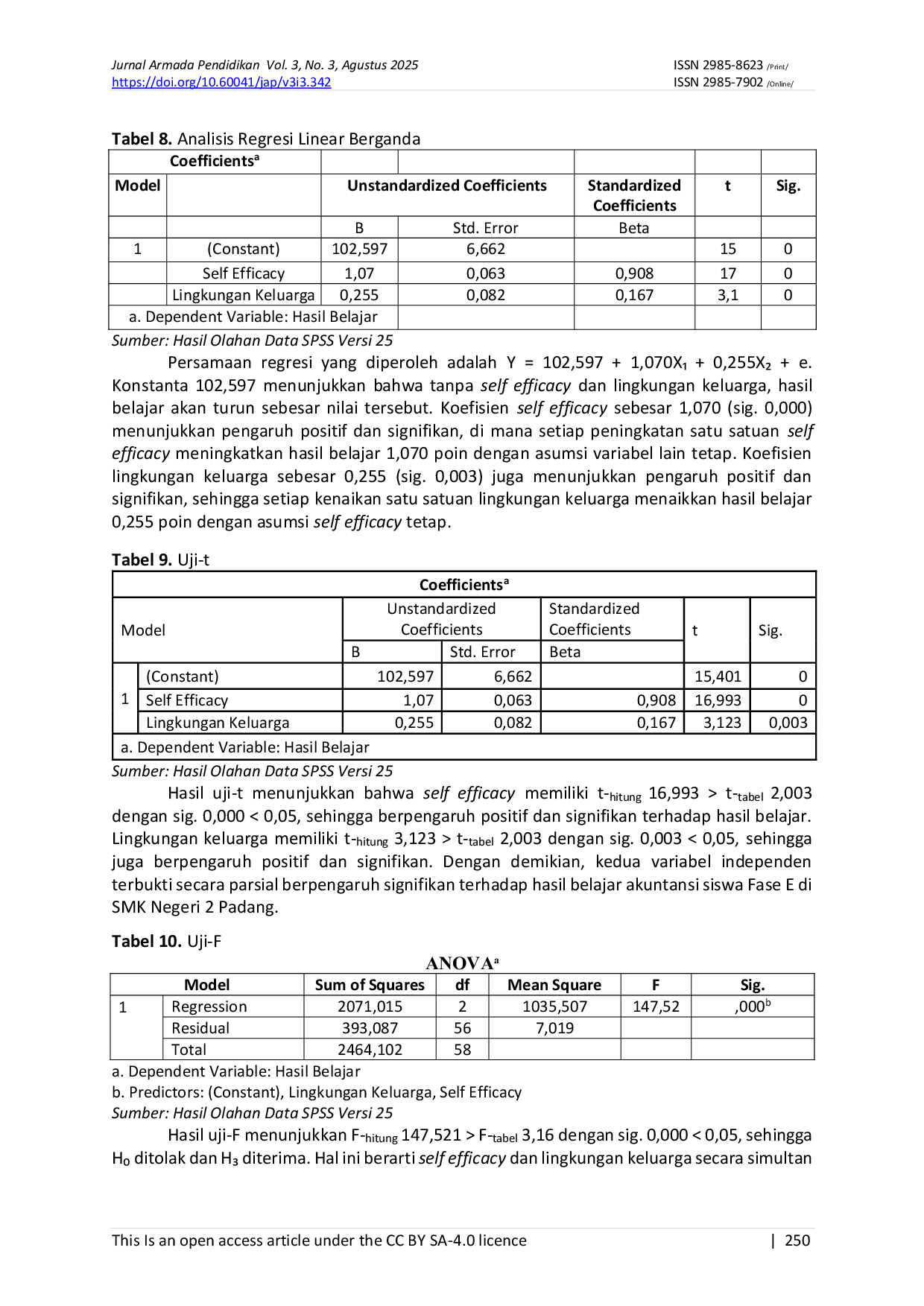
KILAUPUBLISHINGKILAUPUBLISHING (1) self-efficacy berpengaruh positif dan signifikan terhadap hasil belajar akuntansi siswa fase E di SMK Negeri 2 Padang. (2) Lingkungan keluarga berpengaruh(1) self-efficacy berpengaruh positif dan signifikan terhadap hasil belajar akuntansi siswa fase E di SMK Negeri 2 Padang. (2) Lingkungan keluarga berpengaruh
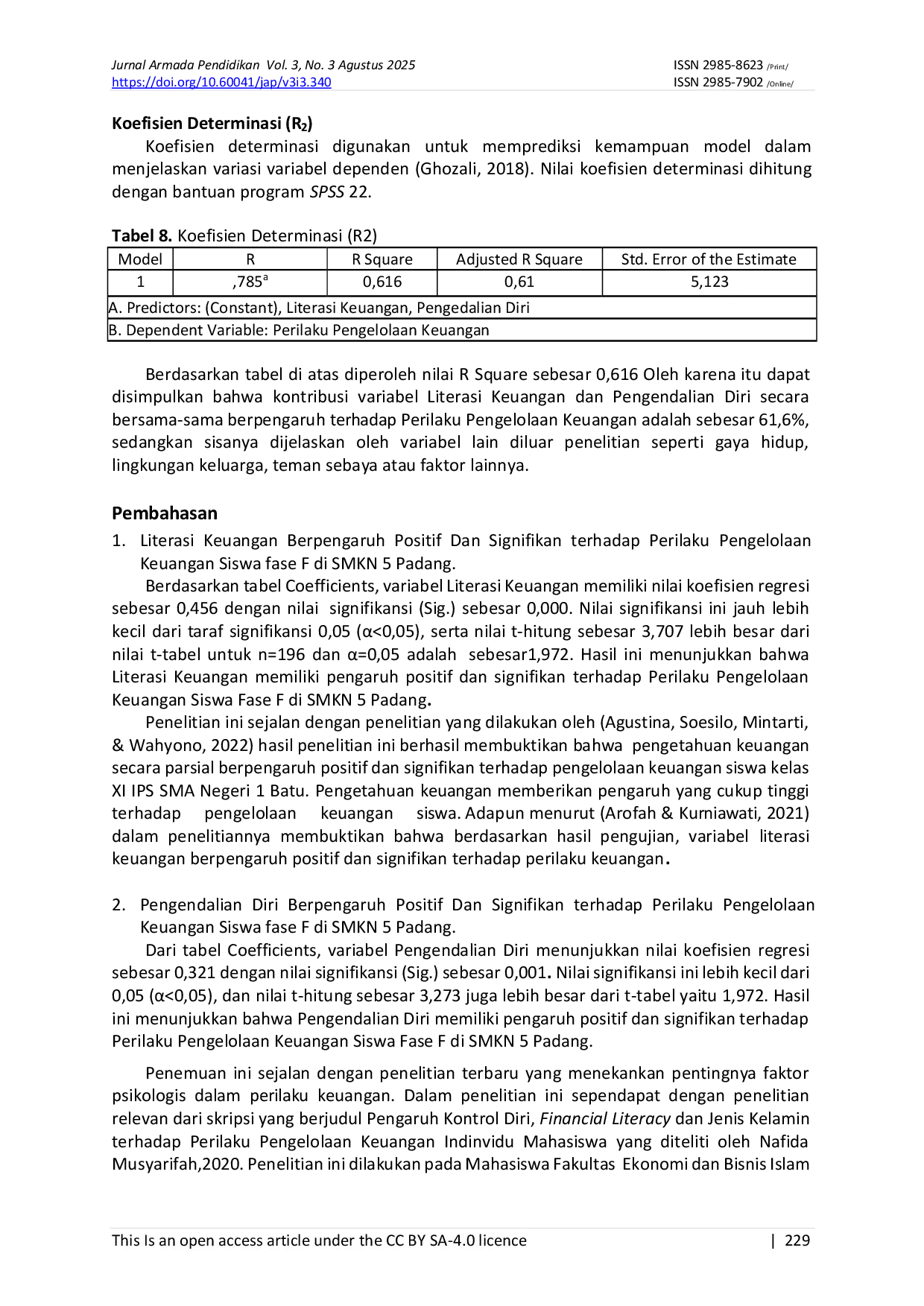
KILAUPUBLISHINGKILAUPUBLISHING Penelitian ini bertujuan untuk mengetahui. Metode yang digunakan adalah pendekatan kuantitatif dengan populasi seluruh siswa Fase F berjumlah 383 orangPenelitian ini bertujuan untuk mengetahui. Metode yang digunakan adalah pendekatan kuantitatif dengan populasi seluruh siswa Fase F berjumlah 383 orang

KILAUPUBLISHINGKILAUPUBLISHING Data dikumpulkan menggunakan angket yang telah diuji validitas dan reliabilitasnya, kemudian dianalisis dengan regresi linier berganda menggunakan bantuanData dikumpulkan menggunakan angket yang telah diuji validitas dan reliabilitasnya, kemudian dianalisis dengan regresi linier berganda menggunakan bantuan

KILAUPUBLISHINGKILAUPUBLISHING Instrumen penelitian yang digunakan berupa kuesioner tertutup. Analisis data menggunakan uji regresi linear berganda dengan uji hipotesis melalui uji tInstrumen penelitian yang digunakan berupa kuesioner tertutup. Analisis data menggunakan uji regresi linear berganda dengan uji hipotesis melalui uji t
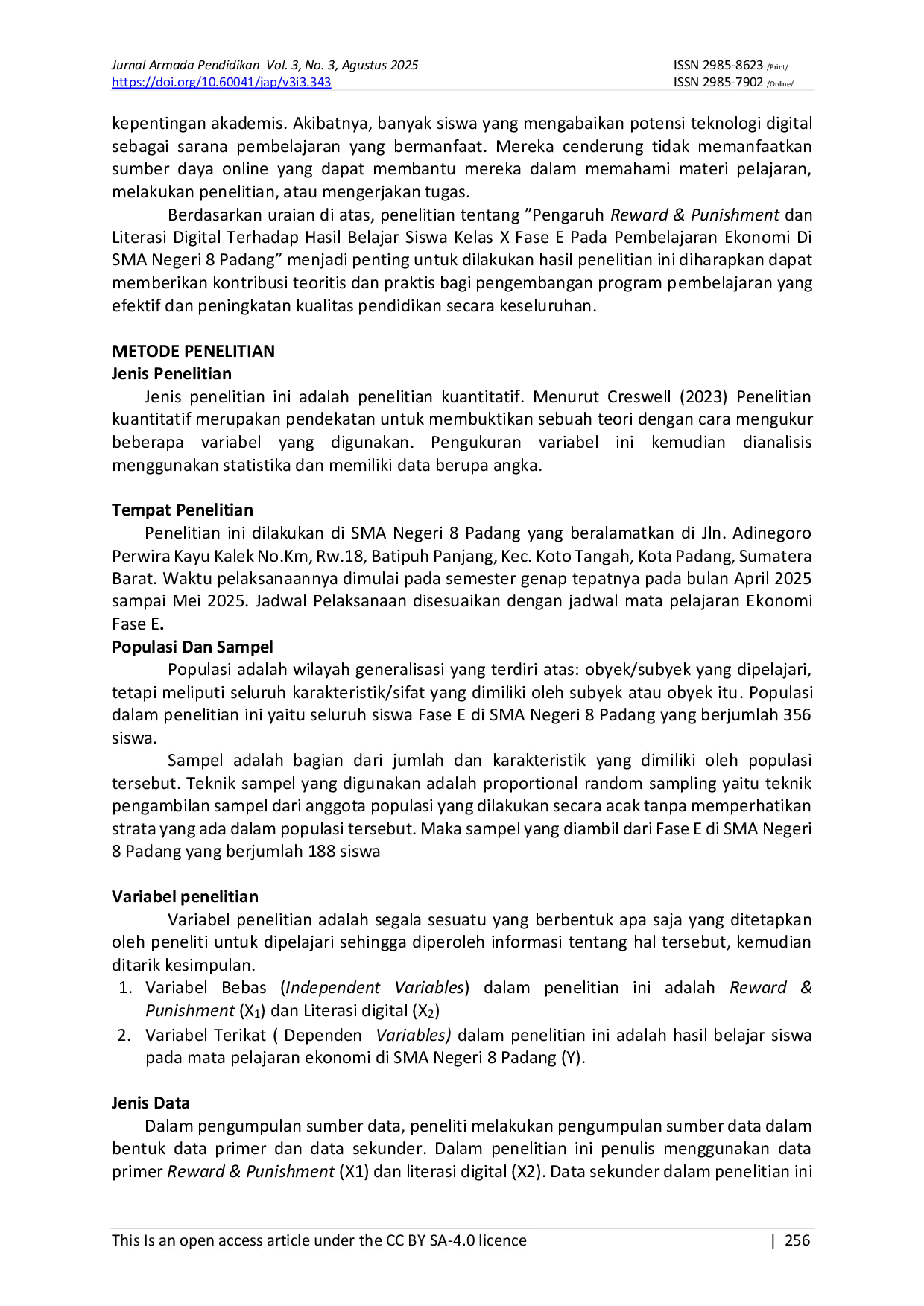
KILAUPUBLISHINGKILAUPUBLISHING Teknik pengambilan sampel menggunakan proportional random sampling, sehingga diperoleh sampel sebanyak 188 siswa. Teknik pengumpulan data dilakukan melaluiTeknik pengambilan sampel menggunakan proportional random sampling, sehingga diperoleh sampel sebanyak 188 siswa. Teknik pengumpulan data dilakukan melalui
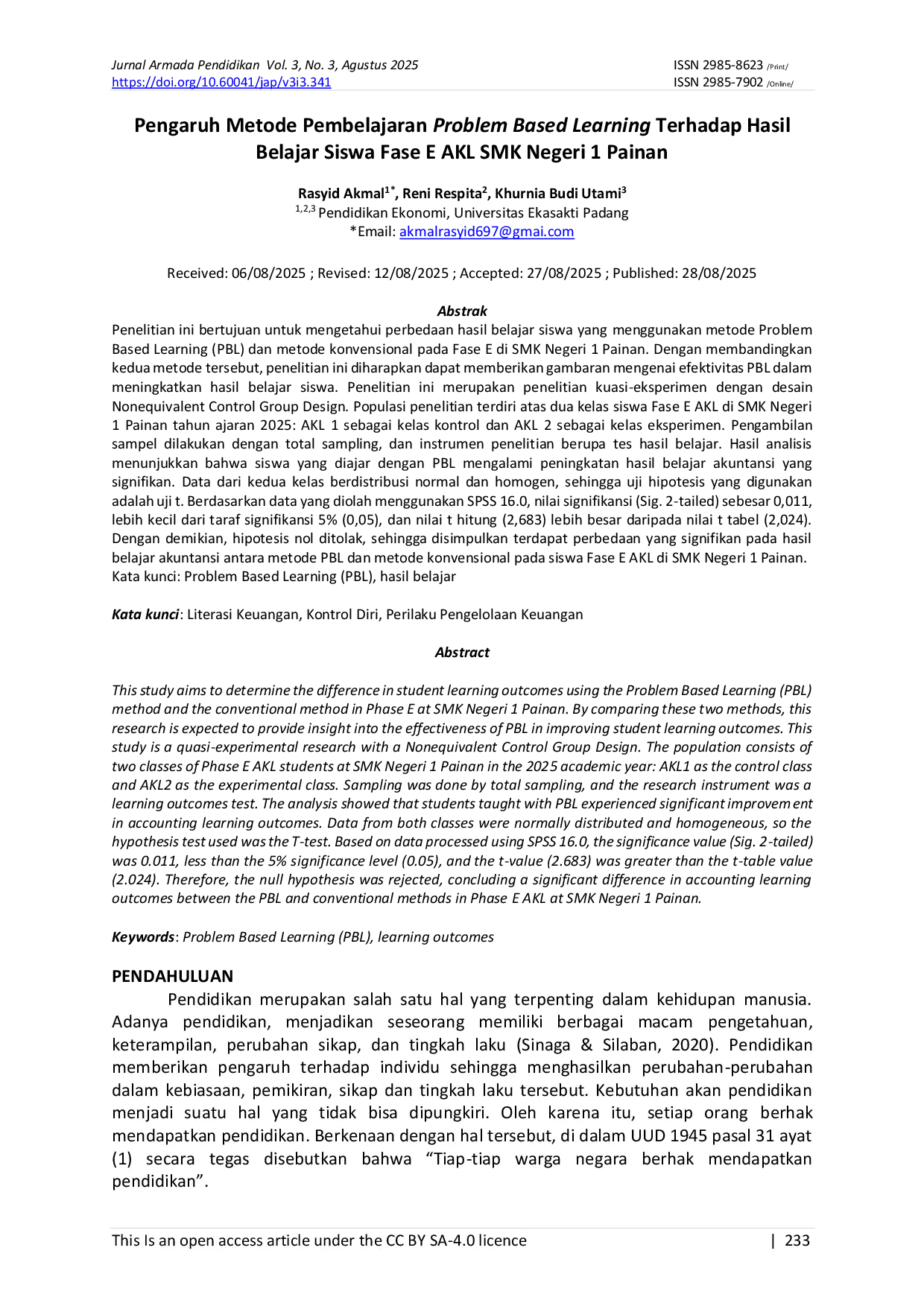
KILAUPUBLISHINGKILAUPUBLISHING Pengambilan sampel dilakukan dengan total sampling, dan instrumen penelitian berupa tes hasil belajar. Hasil analisis menunjukkan bahwa siswa yang diajarPengambilan sampel dilakukan dengan total sampling, dan instrumen penelitian berupa tes hasil belajar. Hasil analisis menunjukkan bahwa siswa yang diajar

KILAUPUBLISHINGKILAUPUBLISHING Teknik pengambilan sampel yang digunakan adalah total sampling, yaitu jumlah sampel sama dengan jumlah populasi. Hasil penelitian menunjukkan bahwa: (1)Teknik pengambilan sampel yang digunakan adalah total sampling, yaitu jumlah sampel sama dengan jumlah populasi. Hasil penelitian menunjukkan bahwa: (1)
Useful /
JOURNAL GEHUJOURNAL GEHU Rendahnya budaya literasi di kalangan siswa sekolah dasar di Indonesia sangat menghambat kemampuan membaca dan hasil belajar sains dalam mata pelajaranRendahnya budaya literasi di kalangan siswa sekolah dasar di Indonesia sangat menghambat kemampuan membaca dan hasil belajar sains dalam mata pelajaran

JOURNAL GEHUJOURNAL GEHU Pengumpulan data dilakukan melalui wawancara mendalam, observasi partisipatif, dan analisis dokumen yang melibatkan kepala sekolah, guru, serta pengawasPengumpulan data dilakukan melalui wawancara mendalam, observasi partisipatif, dan analisis dokumen yang melibatkan kepala sekolah, guru, serta pengawas

NEWINERANEWINERA Metode yang digunakan dalam penelitian ini adalah studi literatur dengan menggunakan buku, laporan, artikel, jurnal, dan sumber literatur lainnya yangMetode yang digunakan dalam penelitian ini adalah studi literatur dengan menggunakan buku, laporan, artikel, jurnal, dan sumber literatur lainnya yang

NEWINERANEWINERA Selama lebih dari sepuluh tahun, sekitar 250.000 pengungsi Vietnam tinggal di daerah ini mencari keselamatan dari konflik dan ketidakstabilan politik diSelama lebih dari sepuluh tahun, sekitar 250.000 pengungsi Vietnam tinggal di daerah ini mencari keselamatan dari konflik dan ketidakstabilan politik di