UNISSULAUNISSULA
International Conference on Education, Technology, and Social SciencesInternational Conference on Education, Technology, and Social SciencesThe stages of development and achievement levels of students in both cognitive and non-cognitive aspects underlie the learning principles established by the Indonesian government. This means that learning should consider childrens learning needs, reflecting their diverse characteristics and developmental progress. However, the New Student Admission System (SPMB) for entering elementary school in Indonesia is solely determined by the childs age at the time of enrollment, resulting in schools unable to obtain a comprehensive profile of the childs development. This leads to schools being less prepared to adjust their learning services according to the profiles of the students. Therefore, a comprehensive assessment needs to be developed to obtain a holistic profile of the children to assist the success of school transition. This study aims to develop a holistic diagnostic assessment for school readiness (HDASR) covering cognitive, affective, and psychomotor domains to evaluate the school readiness of the children entering the first grade of elementary school. The study was conducted from August 2024 to January 2025 at Bintang Juara Islamic Elementary School. The ADDIE (Analysis, Design, Develop, Implement, Evaluate) model design was used in developing the instrument and the data were collected through interview, Focus Group Discussion, and observation. The result of this study is a Holistic Diagnostic Assessment for School Readiness (HDASR) instrument, designed to obtain a comprehensive profile of the children before they enter elementary school which offers valuable benefits by enhancing the understanding of individual developmental profiles and supporting personalized educational interventions. By integrating multiple domains of assessment, teachers can better address the diverse needs of learners and promote more effective teaching strategies.
The Holistic Diagnostic Assessment for School Readiness (HDASR) instrument has demonstrated its reliability and validity, proving its suitability for measuring school readiness in children aged 6-8 across cognitive, affective, and psychomotor domains.The instrument effectively identifies areas of student strength and developmental need, offering practical value for educators in tailoring instruction and interventions.Further research is recommended to refine the instrument, expand its applicability across diverse educational settings, and explore its predictive capabilities through longitudinal analysis.
Berdasarkan hasil penelitian ini, beberapa saran penelitian lanjutan dapat diajukan. Pertama, perlu dilakukan validasi silang instrumen HDASR dengan melibatkan sampel yang lebih besar dan beragam dari berbagai sekolah dan wilayah untuk menguji adaptabilitasnya dalam konteks pendidikan yang berbeda. Kedua, penelitian lebih lanjut dapat menggabungkan pendekatan kualitatif, seperti wawancara dengan guru dan orang tua, serta observasi kelas, untuk memberikan pemahaman yang lebih mendalam tentang kesiapan belajar anak dan faktor-faktor yang mempengaruhinya. Ketiga, studi longitudinal dapat dilakukan untuk menguji validitas prediktif instrumen HDASR dengan mengukur kemampuannya dalam memprediksi prestasi akademik, ketekunan dalam program STEM, atau pertumbuhan sosio-emosional anak dari waktu ke waktu. Penelitian-penelitian ini akan memperkuat dasar empiris instrumen HDASR dan berkontribusi pada pengembangan praktik asesmen yang lebih komprehensif dan efektif dalam pendidikan anak usia dini, sehingga dapat mendukung pembelajaran yang lebih inklusif dan berpusat pada peserta didik.
- Sedang Dalam Perbaikan - Jurnal UNIMED. perbaikan jurnal unimed ac pembaruan universitas negeri medan... jurnal.unimed.ac.id/maintenanceSedang Dalam Perbaikan Jurnal UNIMED perbaikan jurnal unimed ac pembaruan universitas negeri medan jurnal unimed ac maintenance
- Three Approaches to Qualitative Content Analysis - Hsiu-Fang Hsieh, Sarah E. Shannon, 2005. three approaches... journals.sagepub.com/doi/10.1177/1049732305276687Three Approaches to Qualitative Content Analysis Hsiu Fang Hsieh Sarah E Shannon 2005 three approaches journals sagepub doi 10 1177 1049732305276687
- How is Piaget's Theory Used to Test The Cognitive Readiness of Early Childhood in School? | Indonesian... journal.unnes.ac.id/sju/index.php/ijeces/article/view/37675How is Piagets Theory Used to Test The Cognitive Readiness of Early Childhood in School Indonesian journal unnes ac sju index php ijeces article view 37675
- Interrater reliability: the kappa statistic - Biochemia Medica. interrater reliability kappa statistic... doi.org/10.11613/BM.2012.031Interrater reliability the kappa statistic Biochemia Medica interrater reliability kappa statistic doi 10 11613 BM 2012 031
- APA PsycNet. psycnet loading doi.org/10.1037/cjbs2007001APA PsycNet psycnet loading doi 10 1037 cjbs2007001
| File size | 206.16 KB |
| Pages | 10 |
| DMCA | Report |
Related /

KILAUPUBLISHINGKILAUPUBLISHING Berdasarkan hasil penelitian tersebut maka dapat disimpulkan penerapan model Problem Based Learning belum memberikan kontribusi yang seignifikan terhadapBerdasarkan hasil penelitian tersebut maka dapat disimpulkan penerapan model Problem Based Learning belum memberikan kontribusi yang seignifikan terhadap

USKUSK Artikel juga mendiskusikan rubrik Kerangka Referensi Umum Bahasa Eropa (CEFR) dan memberikan wawasan tentang pemilihan serta kategorisasi pengukuran kemampuanArtikel juga mendiskusikan rubrik Kerangka Referensi Umum Bahasa Eropa (CEFR) dan memberikan wawasan tentang pemilihan serta kategorisasi pengukuran kemampuan
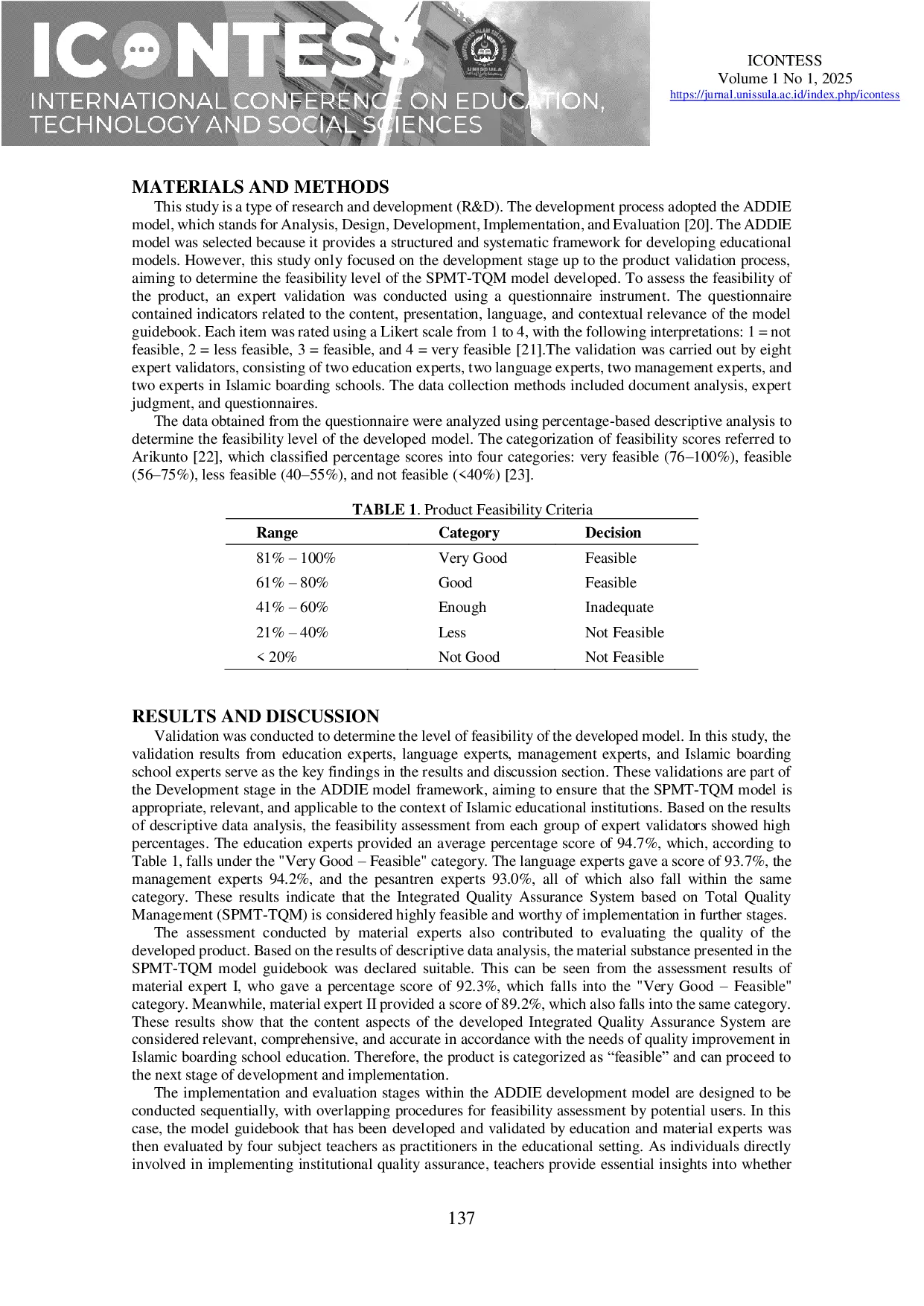
UNISSULAUNISSULA Penelitian ini bertujuan untuk mengembangkan buku panduan praktis dan dapat diterapkan untuk menerapkan SPMT-TQM sebagai model penjaminan mutu guna meningkatkanPenelitian ini bertujuan untuk mengembangkan buku panduan praktis dan dapat diterapkan untuk menerapkan SPMT-TQM sebagai model penjaminan mutu guna meningkatkan

MANDALANURSAMANDALANURSA Fondasi teoritis penelitian ini merujuk pada konsep Tata Kelola Agile dari Luna et al. (2015), yang mencakup enam prinsip utama: Tata Kelola Cukup BaikFondasi teoritis penelitian ini merujuk pada konsep Tata Kelola Agile dari Luna et al. (2015), yang mencakup enam prinsip utama: Tata Kelola Cukup Baik

UNSUDAUNSUDA Hanya hadis mutawātir yang diberikan kepercayaan mutlak akan kesahihannya sebagai kedatang Nabi, sedangkan hadis lain yang tidak mutawātir, meskipunHanya hadis mutawātir yang diberikan kepercayaan mutlak akan kesahihannya sebagai kedatang Nabi, sedangkan hadis lain yang tidak mutawātir, meskipun

UACUAC Latihan bermain peran juga terbukti efektif dalam meningkatkan kepercayaan diri siswa dan pembelajaran interaktif. Namun, tantangan seperti tingkat keterlibatanLatihan bermain peran juga terbukti efektif dalam meningkatkan kepercayaan diri siswa dan pembelajaran interaktif. Namun, tantangan seperti tingkat keterlibatan
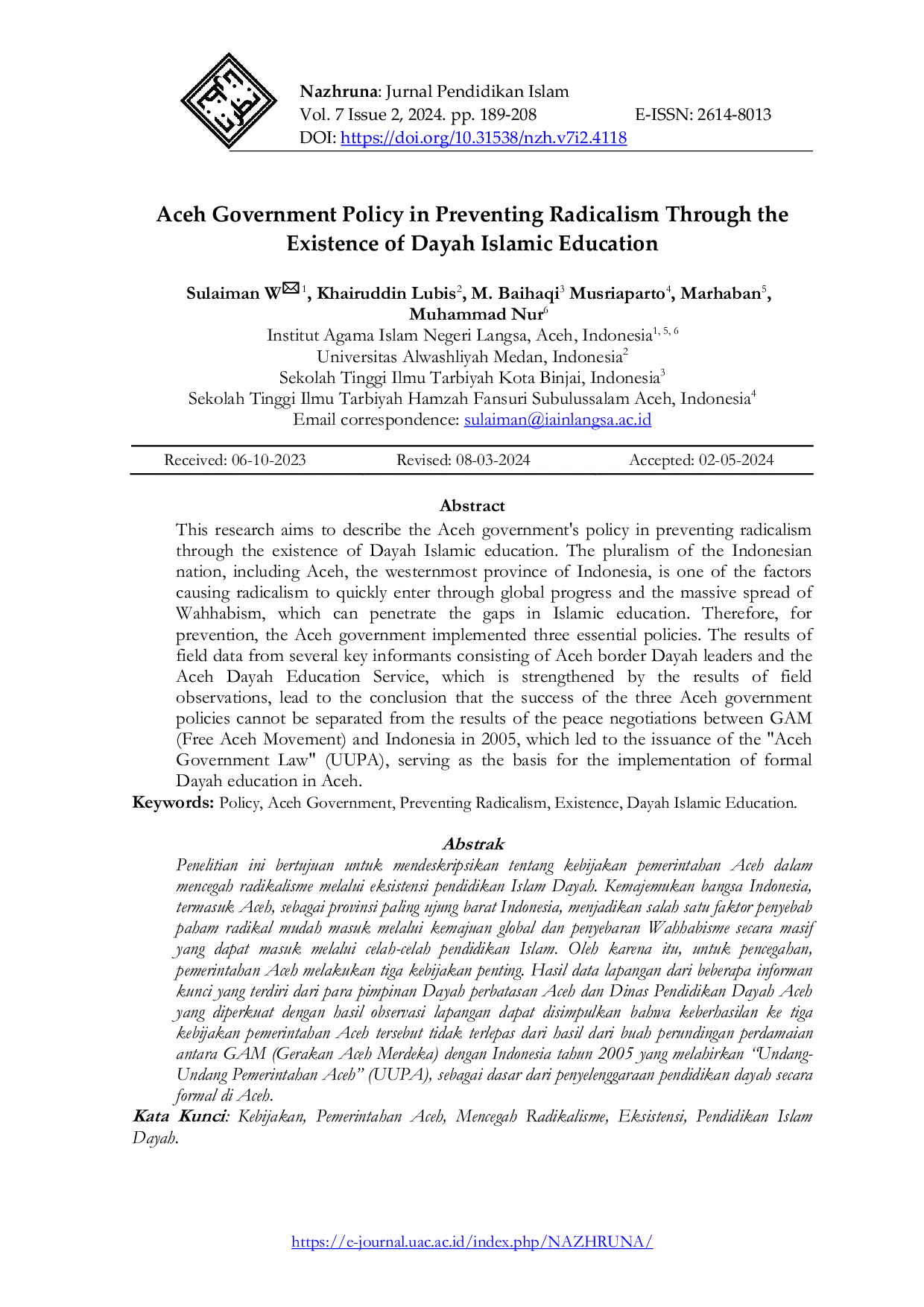
UACUAC Kemajemukan bangsa Indonesia, termasuk Aceh, sebagai provinsi paling ujung barat Indonesia, menjadikan salah satu faktor penyebab paham radikal mudah masukKemajemukan bangsa Indonesia, termasuk Aceh, sebagai provinsi paling ujung barat Indonesia, menjadikan salah satu faktor penyebab paham radikal mudah masuk

UNDIKMAUNDIKMA The data validity technique in this study uses triangulation of methods, namely questionnaires, interviews, and observations. The conclusion of this studyThe data validity technique in this study uses triangulation of methods, namely questionnaires, interviews, and observations. The conclusion of this study
Useful /

ACTAMEDINDONESACTAMEDINDONES Pada kelompok NAC saat admisi dan pasca 72 jam, didapatkan perbedaan kadar HsCRP, MPO, dan Gal-3 yang bermakna dengan nilai p secara berurutan 0,0001,Pada kelompok NAC saat admisi dan pasca 72 jam, didapatkan perbedaan kadar HsCRP, MPO, dan Gal-3 yang bermakna dengan nilai p secara berurutan 0,0001,

UNDIKMAUNDIKMA Media GeoGebra mampu memvisualisasikan secara realistis, sehingga individu dapat memahaminya dengan efektif. Penelitian ini bertujuan untuk menentukanMedia GeoGebra mampu memvisualisasikan secara realistis, sehingga individu dapat memahaminya dengan efektif. Penelitian ini bertujuan untuk menentukan

UNDIKMAUNDIKMA Analisis data meliputi reduksi, kategorisasi, sintesis, dan penarikan kesimpulan. Hasil menunjukkan gender tidak berpengaruh signifikan terhadap kemampuanAnalisis data meliputi reduksi, kategorisasi, sintesis, dan penarikan kesimpulan. Hasil menunjukkan gender tidak berpengaruh signifikan terhadap kemampuan

UNDIKMAUNDIKMA Kelas terbalik berdasarkan model pembelajaran inquiry terpandu menggunakan aplikasi Discord pada materi laju reaksi terbukti dapat dikembangkan dan validKelas terbalik berdasarkan model pembelajaran inquiry terpandu menggunakan aplikasi Discord pada materi laju reaksi terbukti dapat dikembangkan dan valid