UINSAIDUINSAID
Academica : Journal of Multidisciplinary StudiesAcademica : Journal of Multidisciplinary StudiesDespite the constitutional recognition of Acehs special autonomy, scholarly debates persist regarding the compatibility of Acehs Qanun regulations with the broader framework of the Unitary State of the Republic of Indonesia (NKRI), particularly when assessed through Quranic normative principles. This study aims to examine the extent to which the implementation of Qanun in Aceh Province aligns with the framework of the Maqāṣid al-Quran while remaining consistent with the foundational principles of the Indonesian state. Using a qualitative library research approach, this study analyzes legal documents, regional regulations, and scholarly works related to the Qanun, with particular attention to regulations concerning Islamic criminal law, Islamic financial institutions, and educational governance. The analysis focuses on how these regulations function in promoting public welfare, justice, and social order within Acehnese society. The findings reveal that the Qanun of Aceh generally reflects the objectives of the Maqāṣid al-Quran, particularly in safeguarding public interests, strengthening moral and social responsibility, and supporting community-based development. Although challenges remain, especially regarding human rights discourse and legal harmonization, the Qanun continues to operate within the constitutional framework of the NKRI. This study contributes to the discourse on Islamic law and constitutional pluralism in Indonesia by demonstrating that regionally based Sharīa regulations can coexist with national legal systems and serve as a model of local wisdom that reinforces national unity rather than undermining it.
Qanun Aceh constitutes a set of regional regulations enacted within the framework of Acehs special autonomy as an effort to integrate Islamic law with the needs of modern society under the constitutional structure of the Unitary State of the Republic of Indonesia (NKRI).The historical development of Qanun in Aceh reflects the provinces long-standing commitment to preserving its cultural and religious identity in everyday social life.Since the enactment of Law Number 18 of 2001, reinforced by the Helsinki Memorandum of Understanding and Law Number 11 of 2006, Aceh has been granted the authority to formulate regulations grounded in Islamic values, encompassing various domains such as criminal law, economic affairs, and education.The implementation of Qanun in Aceh is fundamentally based on the principles of Maqāṣid al-Quran, whereby each regulation is conceptually rooted in the Quran, even when specific verses are not explicitly cited.Qanun Aceh aims to promote public welfare (maṣlaḥah) and prevent social harm within Acehnese society.Qanun Jināyah, regulations on Islamic financial institutions, and the organization of education serve as concrete examples of Qanun formulated with due consideration for social welfare, security, and collective interests.Although certain Qanun have generated debate, particularly concerning human rights issues, the Aceh government continues to uphold these regulations as a form of respect for the aspirations, beliefs, and historical traditions of the Acehnese people that date back to the pre-modern era.The compatibility of Qanun with the fundamental principles of NKRI demonstrates that the implementation of Islamic law in Aceh can be accommodated within Indonesias national legal system without undermining diversity or national unity.Acehs effort to apply Qanun within the framework of Maqāṣid al-Quran may serve as a model of regional autonomy that respects pluralism while prioritizing social justice and public welfare.The continued implementation of Qanun is expected to generate broader benefits for Acehnese society and to inspire the development of legal policies grounded in local wisdom within the Indonesian context.
To further enhance the effectiveness of Qanun in Aceh, future research could explore the potential for collaborative efforts between religious scholars and legal experts to address the challenges of translating abstract maqāṣid principles into concrete policies applicable to all social groups. Additionally, a comparative study of the implementation of Qanun in Aceh with other regions in Indonesia could provide valuable insights into the successful integration of Islamic law within a diverse national context. Finally, examining the impact of Qanun on community development and welfare, particularly in relation to poverty alleviation, education, and public health, would contribute to a comprehensive understanding of the role of Qanun in promoting social justice and public welfare.
- KEDUDUKAN QANUN DALAM PANDANGAN UNDANG-UNDANG NO. 12 TAHUN 2011 TENTANG PEMBENTUKAN PERATURAN PERUNDANG-UNDANGAN... journal.iainlangsa.ac.id/index.php/politica/article/view/2733KEDUDUKAN QANUN DALAM PANDANGAN UNDANG UNDANG NO 12 TAHUN 2011 TENTANG PEMBENTUKAN PERATURAN PERUNDANG UNDANGAN journal iainlangsa ac index php politica article view 2733
- Kedudukan Qanun dalam Sistem Pemerintahan Daerah dan Mekanisme Pengawasannya | Jurnal Hukum IUS QUIA... journal.uii.ac.id/index.php/IUSTUM/article/view/4227Kedudukan Qanun dalam Sistem Pemerintahan Daerah dan Mekanisme Pengawasannya Jurnal Hukum IUS QUIA journal uii ac index php IUSTUM article view 4227
- Pemikiran Ibn Āsyūr Tentang Qawai’d Al-Maqāṣid Al-Lughawiyah Serta Implikasinya Dalam Menafsirkan... ejournal.uin-suska.ac.id/index.php/Anida/article/view/19275Pemikiran Ibn Asyr Tentang QawaiAod Al MaqAid Al Lughawiyah Serta Implikasinya Dalam Menafsirkan ejournal uin suska ac index php Anida article view 19275
- PERSEPSI NON MUSLIM TERHADAP PENERAPAN SYARI’AT ISLAM DI ACEH | Kalam: Jurnal Agama dan Sosial... doi.org/10.47574/kalam.v8i1.87PERSEPSI NON MUSLIM TERHADAP PENERAPAN SYARIAoAT ISLAM DI ACEH Kalam Jurnal Agama dan Sosial doi 10 47574 kalam v8i1 87
| File size | 1.08 MB |
| Pages | 11 |
| DMCA | Report |
Related /
OUTLINEPUBLISHEROUTLINEPUBLISHER Penerapan Standar Akuntansi Pemerintahan Berbasis Akrual di Kota Medan telah berjalan cukup baik dan sesuai standar. Sistem ini memberikan gambaran keuanganPenerapan Standar Akuntansi Pemerintahan Berbasis Akrual di Kota Medan telah berjalan cukup baik dan sesuai standar. Sistem ini memberikan gambaran keuangan

UIN ANTASARIUIN ANTASARI Penelitian ini bertujuan untuk menganalisis penerapan kedua prinsip tersebut dalam Peraturan Daerah Kabupaten Bandung Nomor 6 Tahun 2020 tentang PariwisataPenelitian ini bertujuan untuk menganalisis penerapan kedua prinsip tersebut dalam Peraturan Daerah Kabupaten Bandung Nomor 6 Tahun 2020 tentang Pariwisata

IAIN SUIAIN SU The research concludes that the phenomenon of sex in the car in Aceh constitutes a moral and sharia law violation categorized as *jarimah tazīr*. ThisThe research concludes that the phenomenon of sex in the car in Aceh constitutes a moral and sharia law violation categorized as *jarimah tazīr*. This

UIN SGDUIN SGD Keterlibatan masyarakat sipil yang efektif dalam kerangka hukum ini tidak hanya akan meningkatkan kualitas kebijakan pembagian wilayah, tetapi juga memperkuatKeterlibatan masyarakat sipil yang efektif dalam kerangka hukum ini tidak hanya akan meningkatkan kualitas kebijakan pembagian wilayah, tetapi juga memperkuat
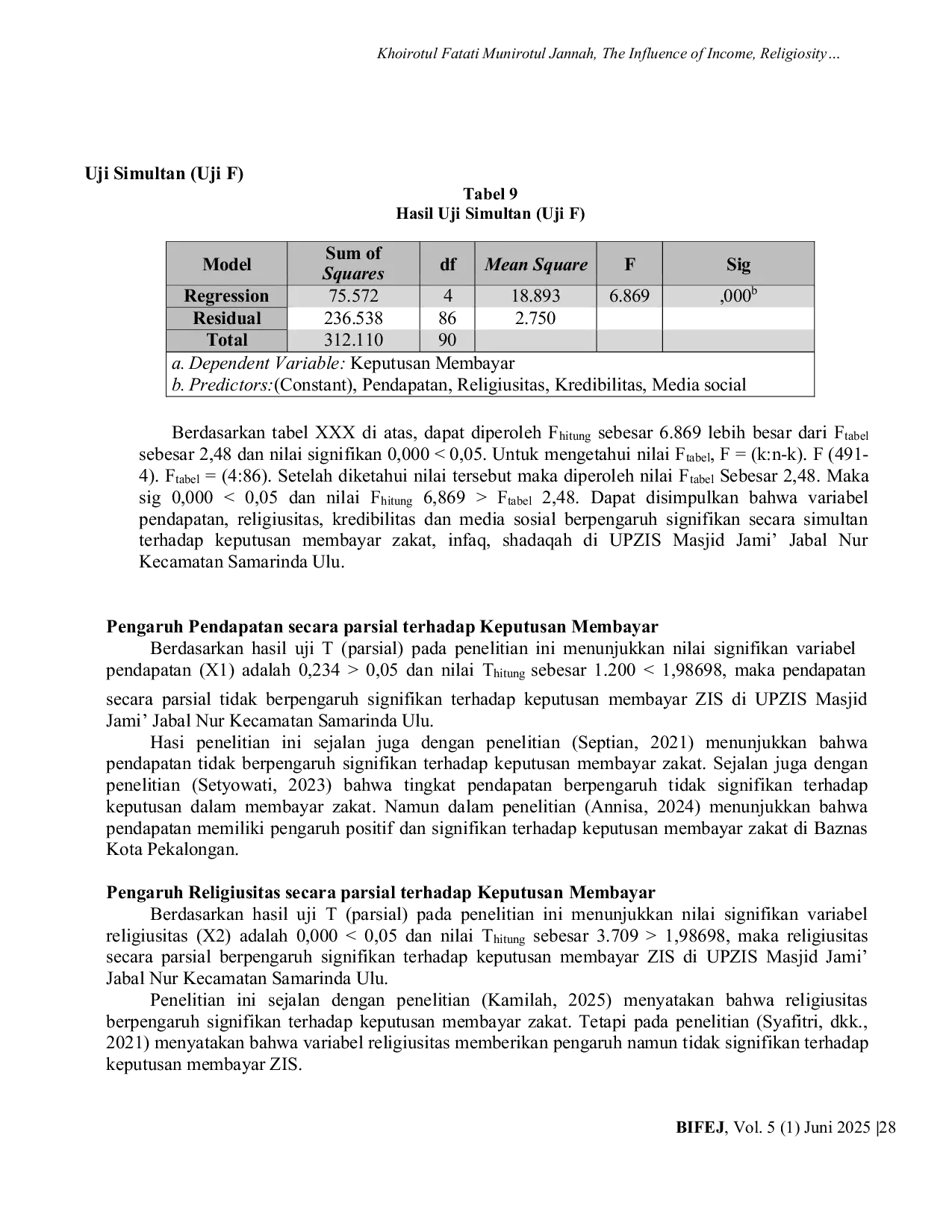
UINSIUINSI 8% is influenced by other factors outside the scope of this study. Based on the data analysis and discussion, it can be concluded that the religiosity8% is influenced by other factors outside the scope of this study. Based on the data analysis and discussion, it can be concluded that the religiosity
IAIN MADURAIAIN MADURA Stigma menyalahkan korban, seperti Mengapa korban membiarkan diri mereka dilecehkan, masih bertahan tidak hanya dalam yudisial tetapi juga dalam lingkunganStigma menyalahkan korban, seperti Mengapa korban membiarkan diri mereka dilecehkan, masih bertahan tidak hanya dalam yudisial tetapi juga dalam lingkungan
STIBASTIBA Penelitian ini menyimpulkan bahwa pedagang temporer di Desa Tompobulu, Kecamatan Bulupoddo, Kabupaten Sinjai, masih menerapkan konsep kejujuran (Ash-Shiddiq)Penelitian ini menyimpulkan bahwa pedagang temporer di Desa Tompobulu, Kecamatan Bulupoddo, Kabupaten Sinjai, masih menerapkan konsep kejujuran (Ash-Shiddiq)

STIBASTIBA Hasil penelitian ditemukan bahwa: Pertama, jual beli mata uang dalam Islam disebut pertukaran mata uang (al-Ṣarf), yang merupakan jenis muamalat yangHasil penelitian ditemukan bahwa: Pertama, jual beli mata uang dalam Islam disebut pertukaran mata uang (al-Ṣarf), yang merupakan jenis muamalat yang
Useful /

OUTLINEPUBLISHEROUTLINEPUBLISHER Kondisi ini ditandai dengan rendahnya kemampuan pendapatan untuk memenuhi kebutuhan pokok seperti pangan, sandang, dan papan, serta kurangnya akses danKondisi ini ditandai dengan rendahnya kemampuan pendapatan untuk memenuhi kebutuhan pokok seperti pangan, sandang, dan papan, serta kurangnya akses dan
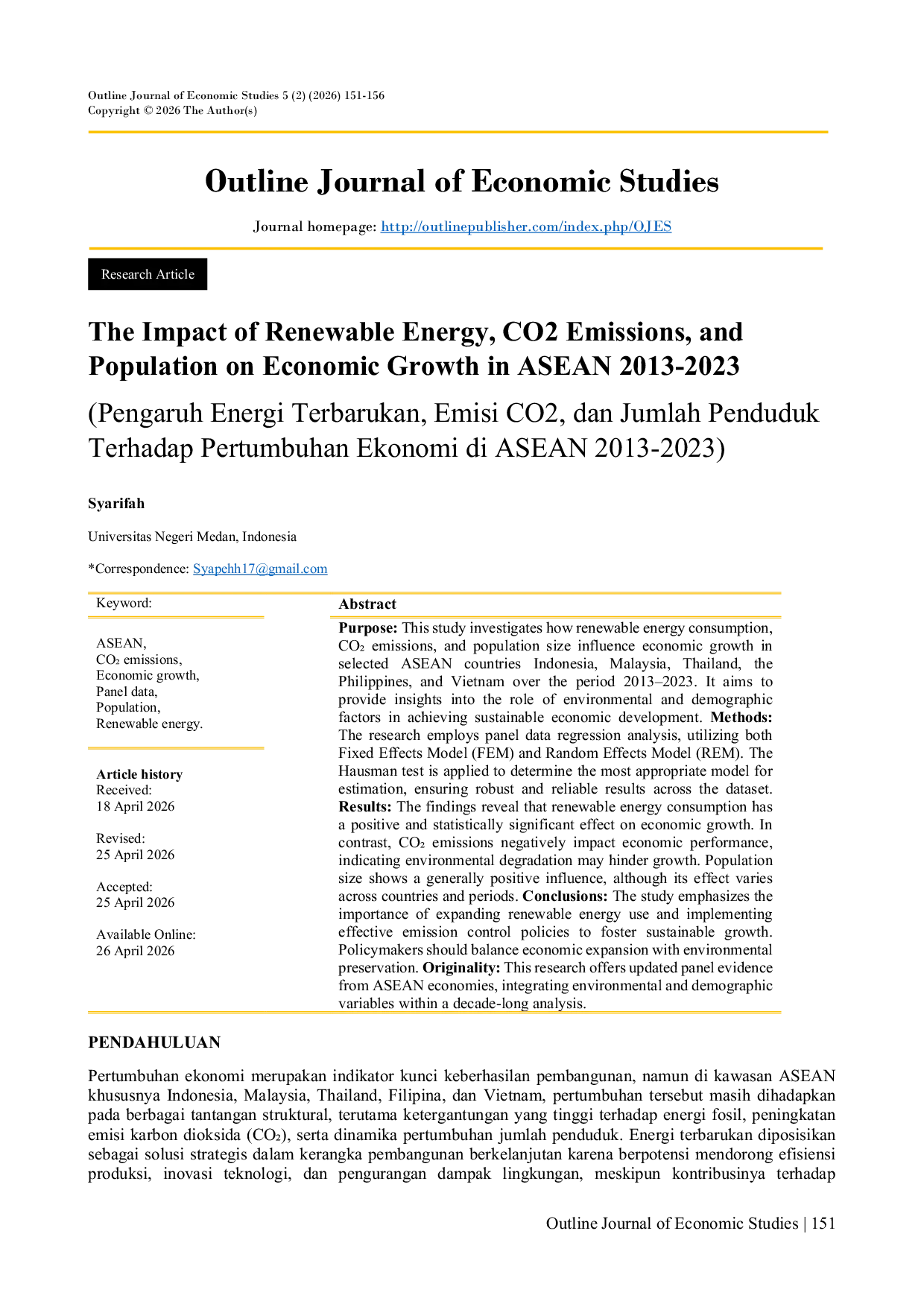
OUTLINEPUBLISHEROUTLINEPUBLISHER Konsumsi energi terbarukan berkontribusi positif terhadap pertumbuhan ekonomi, meskipun belum signifikan secara statistik. Emisi CO2 memiliki dampak negatifKonsumsi energi terbarukan berkontribusi positif terhadap pertumbuhan ekonomi, meskipun belum signifikan secara statistik. Emisi CO2 memiliki dampak negatif

UMIUMI Penelitian ini bertujuan untuk merancang UI/UX aplikasi mobile yang memudahkan orang tua dalam memantau dan mengedukasi tentang stunting. Pendekatan DesignPenelitian ini bertujuan untuk merancang UI/UX aplikasi mobile yang memudahkan orang tua dalam memantau dan mengedukasi tentang stunting. Pendekatan Design

UMIUMI Penelitian ini menghasilkan 33 aturan asosiasi yang dapat membantu strategi penjualan yang ada di Milenials Café. Berikut aturan-aturan asosiasi denganPenelitian ini menghasilkan 33 aturan asosiasi yang dapat membantu strategi penjualan yang ada di Milenials Café. Berikut aturan-aturan asosiasi dengan