IAIN PONOROGOIAIN PONOROGO
QAULAN: Journal of Islamic CommunicationQAULAN: Journal of Islamic CommunicationThis study reexamines the saving movement during the Japanese occupation of Java (1942–1945) by reframing it through contemporary perspectives on media, behavioral communication, and state-driven financial persuasion. Using historical methods combined with a systematic literature review, the research investigates how the Japanese administration orchestrated a multi-platform communication campaign through newspapers, magazines, radio broadcasts, films, songs, stage performances, and kamishibai to embed saving behavior into daily social routines. The novelty of this study lies in interpreting wartime financial propaganda as an early form of behavioral engineering, revealing patterns similar to todays media convergence and state-controlled persuasive communication. The findings show that while propaganda messages successfully constructed narratives of duty, discipline, and economic nationalism, their effectiveness was limited by low public financial literacy and the reliance on coercive institutional mechanisms. By reframing historical propaganda through a modern behavioral lens, this study contributes to contemporary discussions on financial communication, media influence, and the ethics of state-led behavioral interventions.
The study concludes that the Japanese wartime financial propaganda was a strategically planned effort to mobilize economic and social support for their war efforts.Through diverse media channels, they successfully instilled the value of saving as a form of participation in the Greater East Asia Co-Prosperity Sphere.While effective in constructing narratives of duty and discipline, the propagandas impact was limited by low financial literacy and reliance on coercion.Further research is needed to understand the long-term impact of this propaganda on Indonesian saving culture and to compare its strategies with those employed in other occupied territories.
Further research should investigate the lasting impact of Japanese wartime propaganda on the saving habits and financial literacy of the Javanese population, extending beyond the immediate post-occupation period. A comparative study examining the propaganda strategies employed by Japan in Java versus other occupied territories, such as Kalimantan and Sumatra, could reveal nuanced differences in approach and effectiveness. Additionally, exploring the psychological and social factors influencing the reception of propaganda messages, potentially through oral history interviews with descendants of those who lived through the occupation, would provide a richer understanding of its impact. Finally, research could examine how the historical context of wartime propaganda informs contemporary financial communication strategies and the ethical considerations surrounding state-led behavioral interventions, particularly in developing economies. These investigations, utilizing interdisciplinary approaches like social psychology and political economy, will contribute to a more comprehensive understanding of the complex relationship between propaganda, financial behavior, and societal control.
- Propaganda Jepang melalui Majalah Djawa Baroe pada Masa Kependudukannya di Indonesia | Jurnal Komunikasi.... doi.org/10.20885/komunikasi.vol16.iss2.art8Propaganda Jepang melalui Majalah Djawa Baroe pada Masa Kependudukannya di Indonesia Jurnal Komunikasi doi 10 20885 komunikasi vol16 iss2 art8
- PENGGUNAAN ARSIP FILM PROPAGANDA ROMUSHA MASA PENDUDUKAN JEPANG SEBAGAI SUMBER BELAJAR SE-JARAH PESERTA... doi.org/10.17977/um0330v4i1p114-127PENGGUNAAN ARSIP FILM PROPAGANDA ROMUSHA MASA PENDUDUKAN JEPANG SEBAGAI SUMBER BELAJAR SE JARAH PESERTA doi 10 17977 um0330v4i1p114 127
| File size | 1.27 MB |
| Pages | 20 |
| DMCA | Report |
Related /

IAINIAIN Skor validasi ahli konten sebesar 80 (kategori sangat baik), dan skor validasi ahli bahasa/media sebesar 78 (kategori baik), sehingga diperoleh skor rata-rataSkor validasi ahli konten sebesar 80 (kategori sangat baik), dan skor validasi ahli bahasa/media sebesar 78 (kategori baik), sehingga diperoleh skor rata-rata

UnijoyoUnijoyo Di sisi lain, ketika search for meaning diuji secara independen, pengaruh dari variabel ini pun tetap signifikan. Disini dapat disimpulkan bahwa perananDi sisi lain, ketika search for meaning diuji secara independen, pengaruh dari variabel ini pun tetap signifikan. Disini dapat disimpulkan bahwa peranan

UNIVEDUNIVED Sehingga dapat disimpulkan bahwa Pengurangan Risiko Bencana di Desa Mekarsari sudah terlaksanakan, namun masih memiliki beberapa kendala yang menghambatSehingga dapat disimpulkan bahwa Pengurangan Risiko Bencana di Desa Mekarsari sudah terlaksanakan, namun masih memiliki beberapa kendala yang menghambat

UNIVEDUNIVED Hasil dari penelitian ini adalah strategi yang digunakan Inspira TV terdapat dalam proses pengolahan informasi yang dibuat secara lugas dan jelas, sertaHasil dari penelitian ini adalah strategi yang digunakan Inspira TV terdapat dalam proses pengolahan informasi yang dibuat secara lugas dan jelas, serta
UNIVEDUNIVED Adapun saran yang didapat dari penelitian bahwa Direktorat Pendidikan Profesi Guru dapat melakukan strategi komunikasi untuk meningkatkan pengetahuan pendaftaranAdapun saran yang didapat dari penelitian bahwa Direktorat Pendidikan Profesi Guru dapat melakukan strategi komunikasi untuk meningkatkan pengetahuan pendaftaran
UNIVEDUNIVED Jenis penelitian yang digunakan adalah kualitatif dengan pendekatan deskriptif. Hasil penelitian menunjukkan bahwa aparat Kelurahan Ballaparang dan KelurahanJenis penelitian yang digunakan adalah kualitatif dengan pendekatan deskriptif. Hasil penelitian menunjukkan bahwa aparat Kelurahan Ballaparang dan Kelurahan

UNIVEDUNIVED When individuals are in a missing out situation, some of them experience disappointment, but others respond to these feelings by diverting their disappointmentWhen individuals are in a missing out situation, some of them experience disappointment, but others respond to these feelings by diverting their disappointment
UNIVEDUNIVED Inovasi adalah proses dan hasil dari pengembangan dan pemanfaatan produk atau sumber daya yang sudah ada sebelumnya untuk meningkatkan efisiensi dan efektivitas.Inovasi adalah proses dan hasil dari pengembangan dan pemanfaatan produk atau sumber daya yang sudah ada sebelumnya untuk meningkatkan efisiensi dan efektivitas.
Useful /

IAINIAIN Uji hipotesis menggunakan Wilcoxon Signed Rank Test dengan bantuan SPSS menghasilkan Asymp. Sig = 0. 028 < 0. 05, sehingga H0 ditolak dan H1 diterima,Uji hipotesis menggunakan Wilcoxon Signed Rank Test dengan bantuan SPSS menghasilkan Asymp. Sig = 0. 028 < 0. 05, sehingga H0 ditolak dan H1 diterima,

IAINIAIN Keabsahan data dalam studi ini dipertahankan melalui triangulasi sumber dengan membandingkan dari penyintas percobaan bunuh diri remaja dan informan pendukungKeabsahan data dalam studi ini dipertahankan melalui triangulasi sumber dengan membandingkan dari penyintas percobaan bunuh diri remaja dan informan pendukung
STIESTEKOMSTIESTEKOM IPNU Desa Pepe Sidoarjo. Menggunakan metode kualitatif deskriptif, data dikumpulkan melalui wawancara semi terstruktur, observasi, dan dokumentasi. HasilIPNU Desa Pepe Sidoarjo. Menggunakan metode kualitatif deskriptif, data dikumpulkan melalui wawancara semi terstruktur, observasi, dan dokumentasi. Hasil
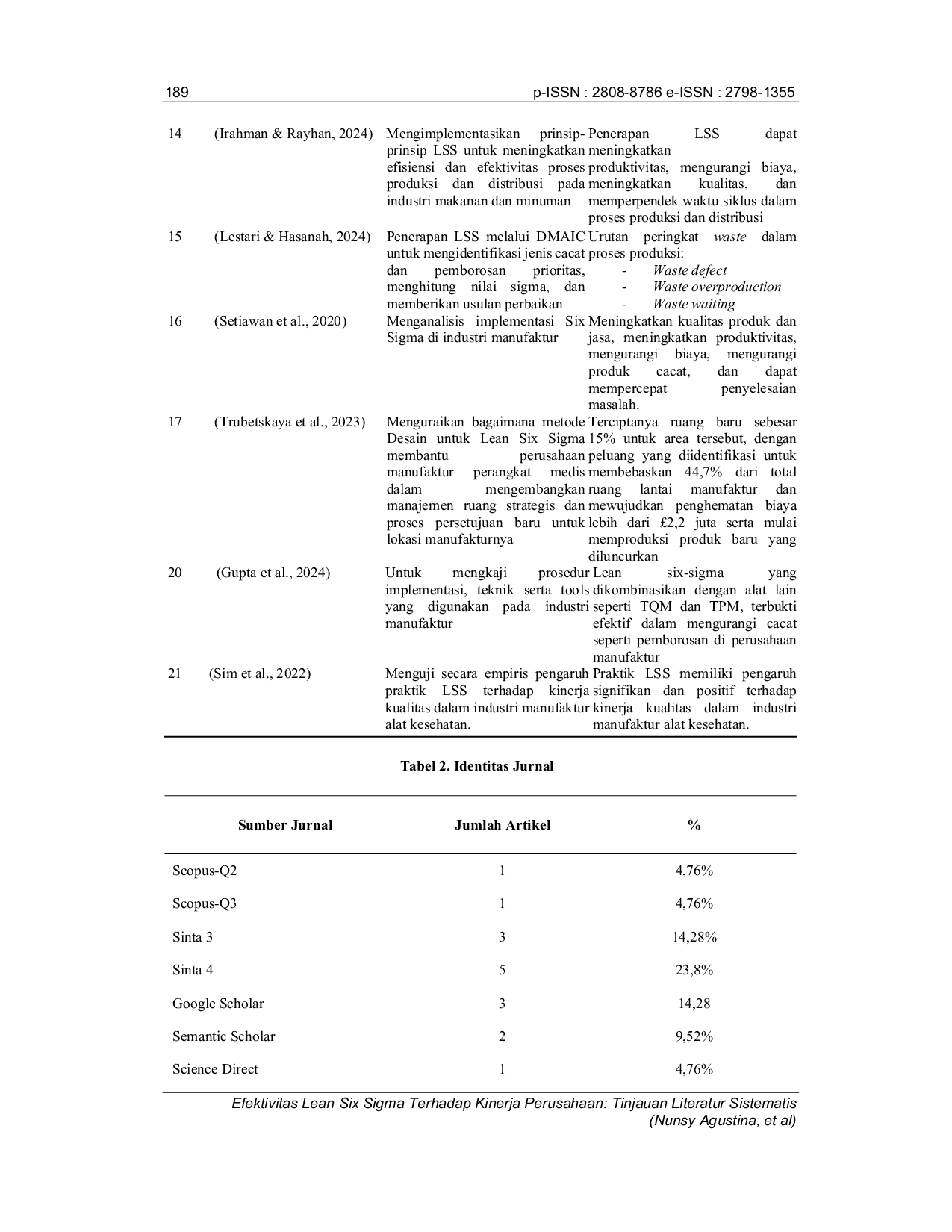
STIESTEKOMSTIESTEKOM Hasil penelitian menunjukkan Lean Six Sigma dengan metodologi DMAIC memiliki dampak yang signifikan dalam meningkatkan efisiensi operasional, mengurangiHasil penelitian menunjukkan Lean Six Sigma dengan metodologi DMAIC memiliki dampak yang signifikan dalam meningkatkan efisiensi operasional, mengurangi