WIDYADHARMAWIDYADHARMA
BLESSBLESSAriana Grande returned to music in 2024, three years after her last album, *Positions*. She introduced the upbeat single “Yes, And?, which garnered significant attention, while “We Cant Be Friends (Wait for Your Love) presents a more introspective and melancholic tone. This study analyzes the linguistic choices in both songs to uncover themes of empowerment, resilience, introspection, and emotional vulnerability through their transitivity processes. Data was collected by transcribing lyrics from AZLyrics.com. In “Yes, And?, material processes dominate with 22 occurrences, emphasizing action and assertiveness, while relational processes appear 20 times, focusing on identity. “We Cant Be Friends features 36 material processes and 16 mental processes, highlighting emotional turmoil and deeper introspection, but lacks verbal processes. Future research should extend beyond Ariana Grande to explore various artists and genres, revealing how linguistic patterns reflect themes of love and identity. Studying changes in an artists language over time can also provide insights into their artistic evolution, enhancing our understanding of the relationship between language and music in storytelling.
This study demonstrates how Ariana Grande utilizes linguistic processes to articulate the themes and emotional complexity in her songs. balances action, reflection, and communication, creating an assertive narrative, while We Cant Be Friends (Wait for Your Love) emphasizes action and emotion.These distinctions highlight how linguistic choices shape the meaning and emotional impact of the songs, showcasing the power of transitivity processes in understanding musical narratives.
Further research could investigate transitivity patterns across a broader range of artists and musical genres to identify commonalities and differences in how linguistic features convey meaning and emotion. A longitudinal study tracking changes in an artists language use over their career could reveal how evolving linguistic patterns reflect personal growth and artistic development. Additionally, exploring the interplay between transitivity and other linguistic elements, such as figurative language, could provide a more nuanced understanding of how artists construct narratives and evoke emotional responses in their music. These investigations would contribute to a deeper appreciation of the intricate relationship between language, music, and artistic expression, offering valuable insights for both music scholars and artists alike. Such studies could also examine the influence of cultural context on linguistic choices in song lyrics, revealing how artists respond to and shape societal values through their music. Finally, research could explore the potential application of transitivity analysis in music education, helping students develop a more critical and analytical understanding of song lyrics and their underlying meanings.
- THE TRANSITIVITY OF ALAN WALKER SONG LYRICS IN “DIFFERENT WORLD” ALBUM | The GIST. transitivity... doi.org/10.53675/gist.v4i2.313THE TRANSITIVITY OF ALAN WALKER SONG LYRICS IN AuDIFFERENT WORLDAy ALBUM The GIST transitivity doi 10 53675 gist v4i2 313
- ‘Hey, Jude! I Wanna Hold Your Hand’: Transitivity Process Analysis on Popular Songs by The... doi.org/10.15282/ijleal.v9.301AoHey Jude I Wanna Hold Your HandAo Transitivity Process Analysis on Popular Songs by The doi 10 15282 ijleal v9 301
| File size | 390.75 KB |
| Pages | 8 |
| DMCA | Report |
Related /

MEDIAANTARTIKAMEDIAANTARTIKA Penelitian ini menggunakan teori semiotik Saussure (1959) yaitu hubungan antara penanda dan petanda, serta teori linguistik emoji Evans (2017), membahasPenelitian ini menggunakan teori semiotik Saussure (1959) yaitu hubungan antara penanda dan petanda, serta teori linguistik emoji Evans (2017), membahas
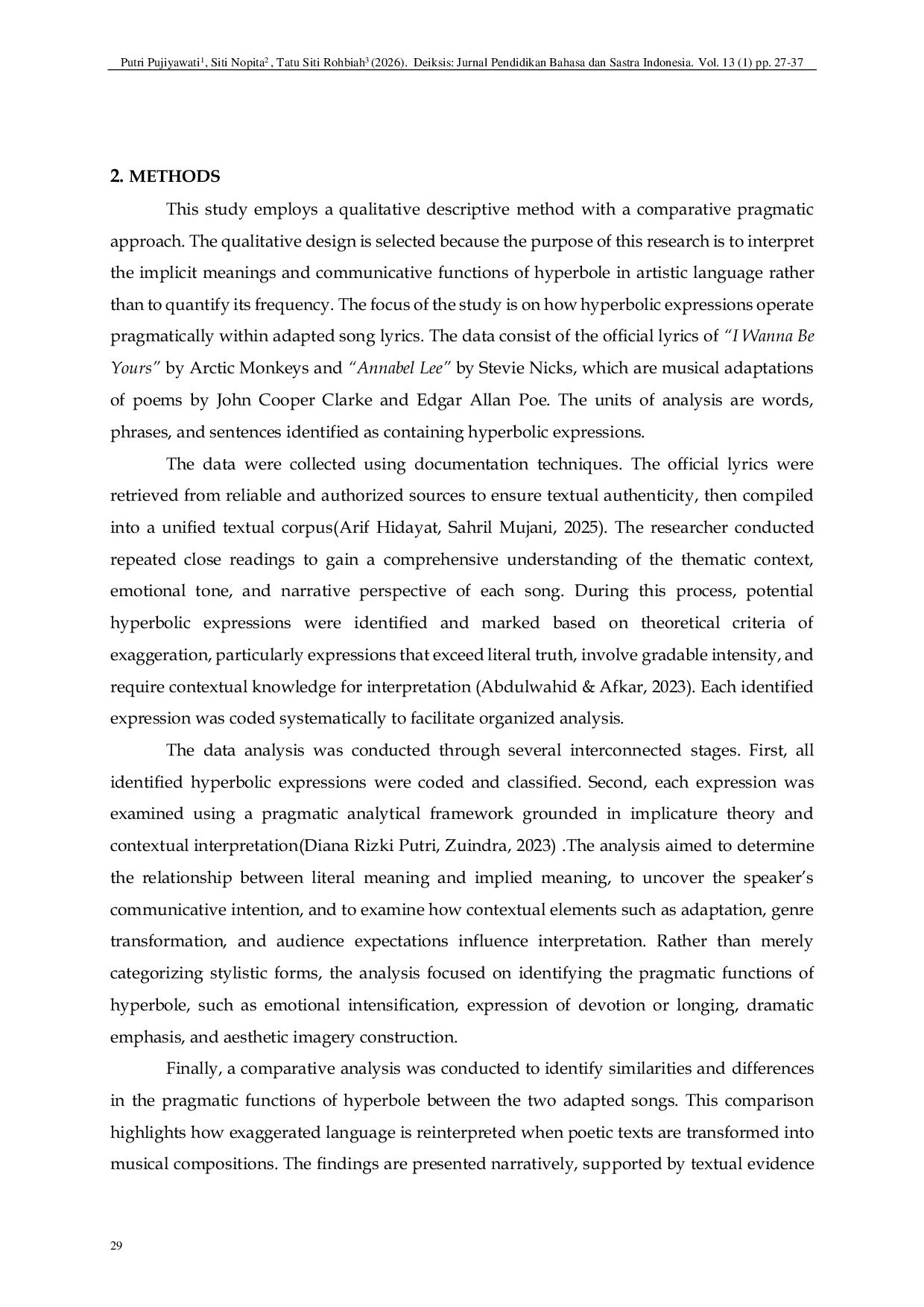
UGJUGJ Analisis pragmatis terhadap hiperbola dalam lirik lagu I Wanna Be Yours oleh Arctic Monkeys dan Annabel Lee oleh Stevie Nicks menunjukkan bahwa kedua laguAnalisis pragmatis terhadap hiperbola dalam lirik lagu I Wanna Be Yours oleh Arctic Monkeys dan Annabel Lee oleh Stevie Nicks menunjukkan bahwa kedua lagu
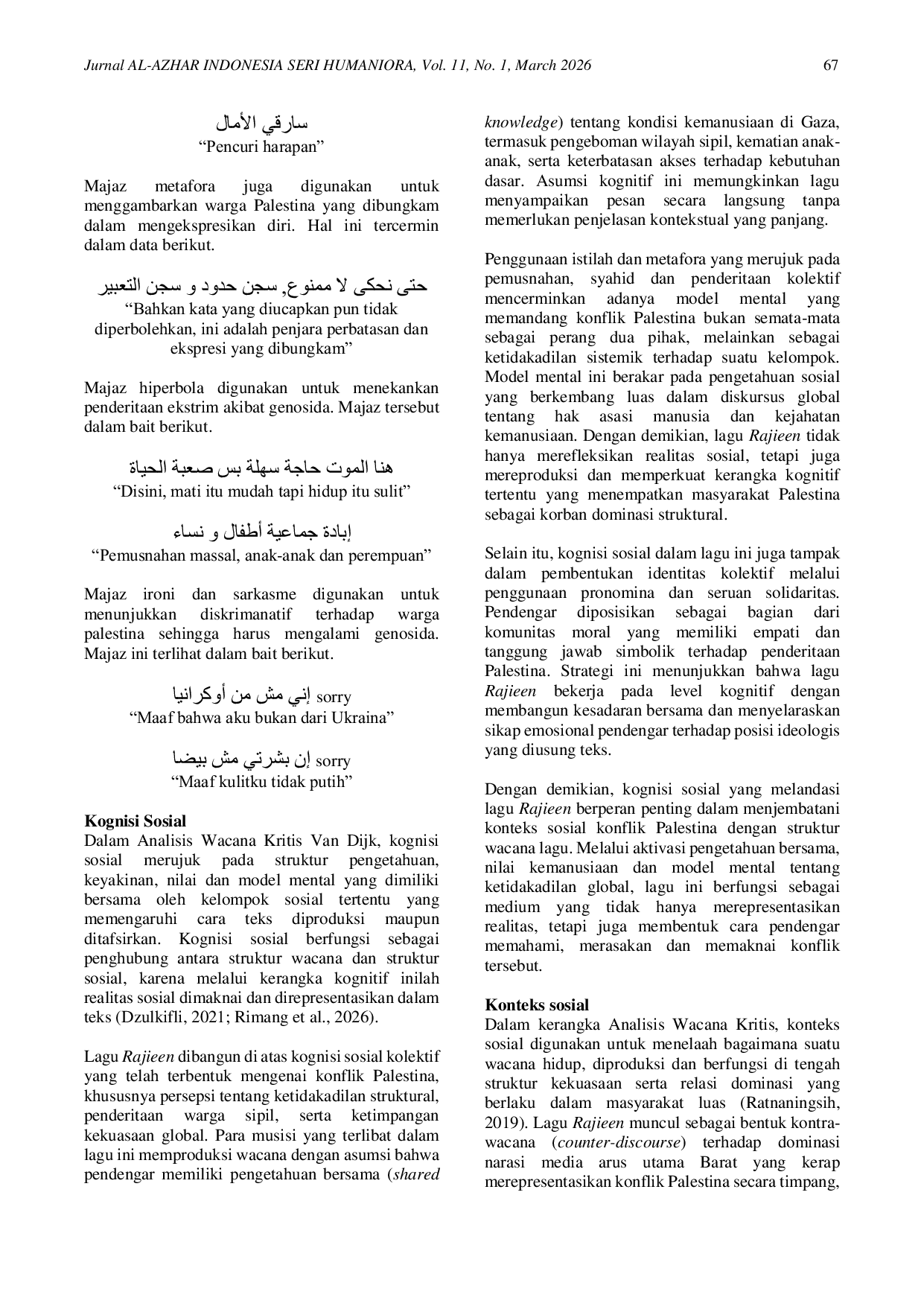
UAIUAI Wacana genosida dalam lirik lagu Rajieen diungkap sebagai instrumen perlawanan struktural terhadap narasi global yang bias terhadap Palestina. AnalisisWacana genosida dalam lirik lagu Rajieen diungkap sebagai instrumen perlawanan struktural terhadap narasi global yang bias terhadap Palestina. Analisis

BALELITERASIBALELITERASI Peningkatan ini didukung oleh temuan kuantitatif, dengan skor hasil belajar rata-rata meningkat dari 68,5 menjadi 83,5, kelengkapan klasik mencapai 90%,Peningkatan ini didukung oleh temuan kuantitatif, dengan skor hasil belajar rata-rata meningkat dari 68,5 menjadi 83,5, kelengkapan klasik mencapai 90%,

MEDIAPUBLIKASIMEDIAPUBLIKASI Pengamatan buah jambu kristal dilakukan di kebun percobaan IPB Leuwikopo dari bulan September sampai pertengahan Desember 2019. Tujuan dari penelitianPengamatan buah jambu kristal dilakukan di kebun percobaan IPB Leuwikopo dari bulan September sampai pertengahan Desember 2019. Tujuan dari penelitian

IBRAHIMYIBRAHIMY Analisis ini memperkaya pemahaman tentang fungsi metafora dalam menyampaikan narasi emosional melalui musik. Penelitian ini menemukan bahwa metafora denganAnalisis ini memperkaya pemahaman tentang fungsi metafora dalam menyampaikan narasi emosional melalui musik. Penelitian ini menemukan bahwa metafora dengan
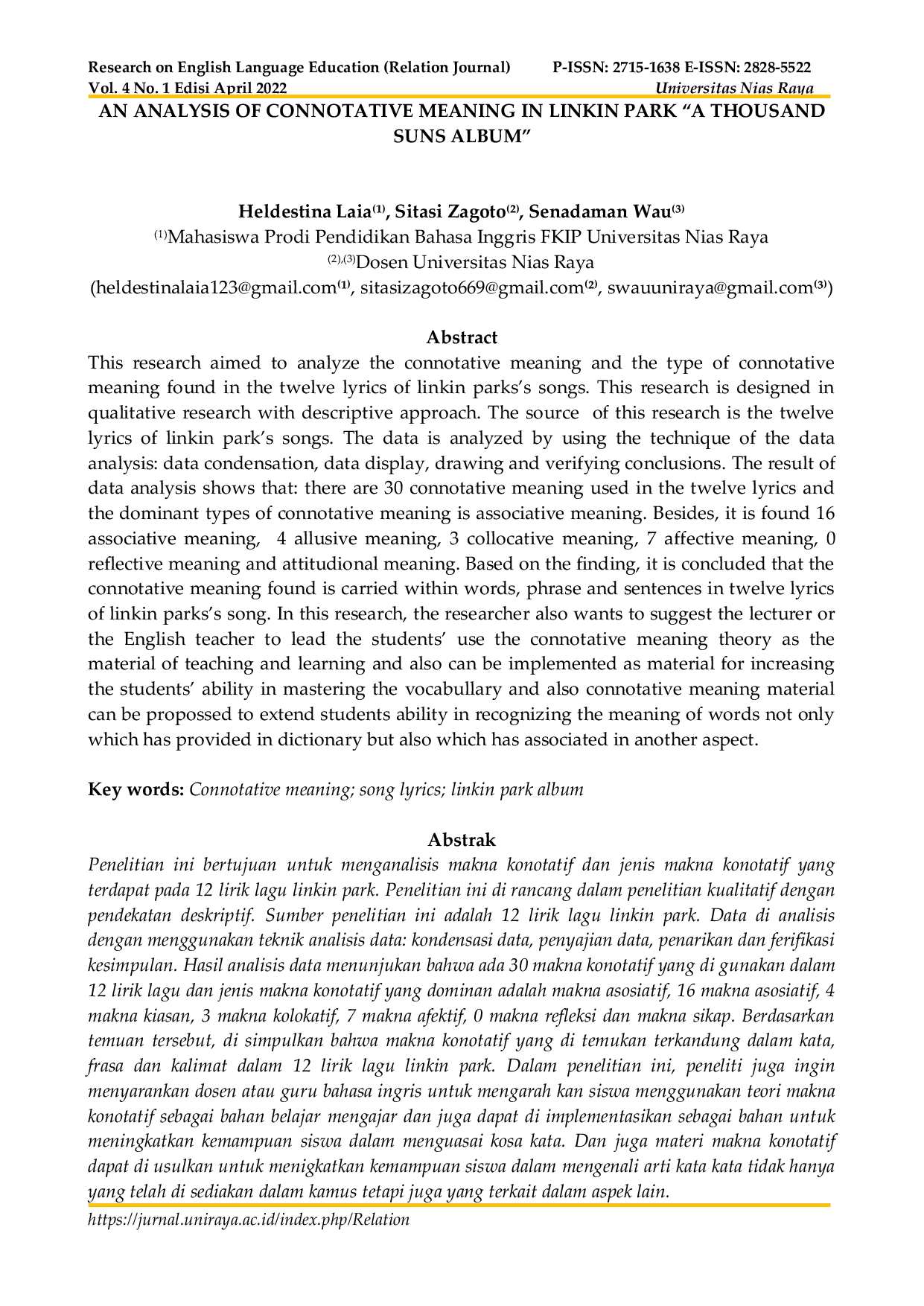
UNIRAYAUNIRAYA Berdasarkan temuan tersebut, di simpulkan bahwa makna konotatif yang di temukan terkandung dalam kata, frasa dan kalimat dalam 12 lirik lagu linkin park.Berdasarkan temuan tersebut, di simpulkan bahwa makna konotatif yang di temukan terkandung dalam kata, frasa dan kalimat dalam 12 lirik lagu linkin park.
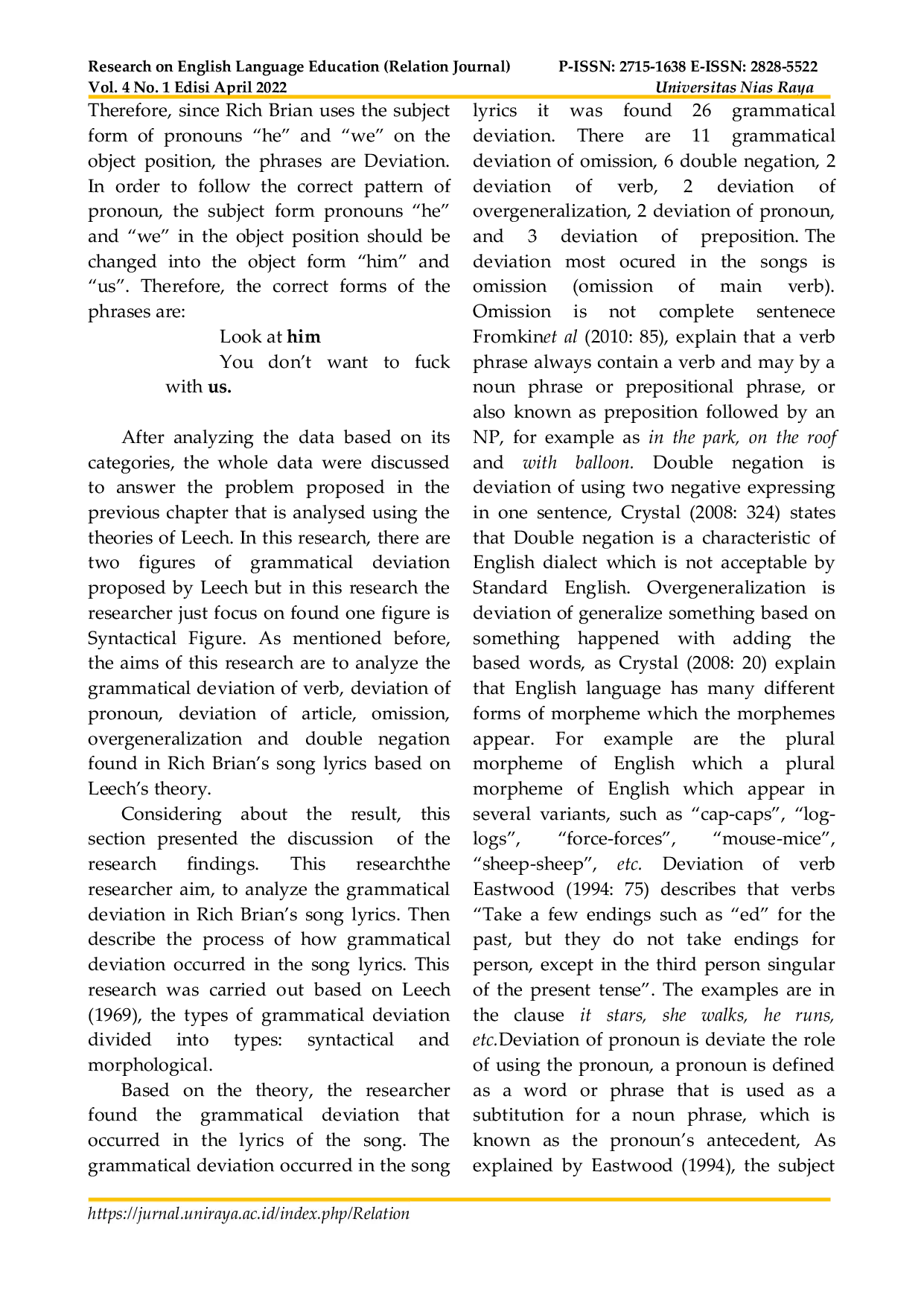
UNIRAYAUNIRAYA Penelitian ini di rancang dalam penelitian kualitatif dengan pendekatan deskriptif. Sumber Penelitian ini adalah 3 lirik lagu Rich Brian yang berjudulPenelitian ini di rancang dalam penelitian kualitatif dengan pendekatan deskriptif. Sumber Penelitian ini adalah 3 lirik lagu Rich Brian yang berjudul
Useful /
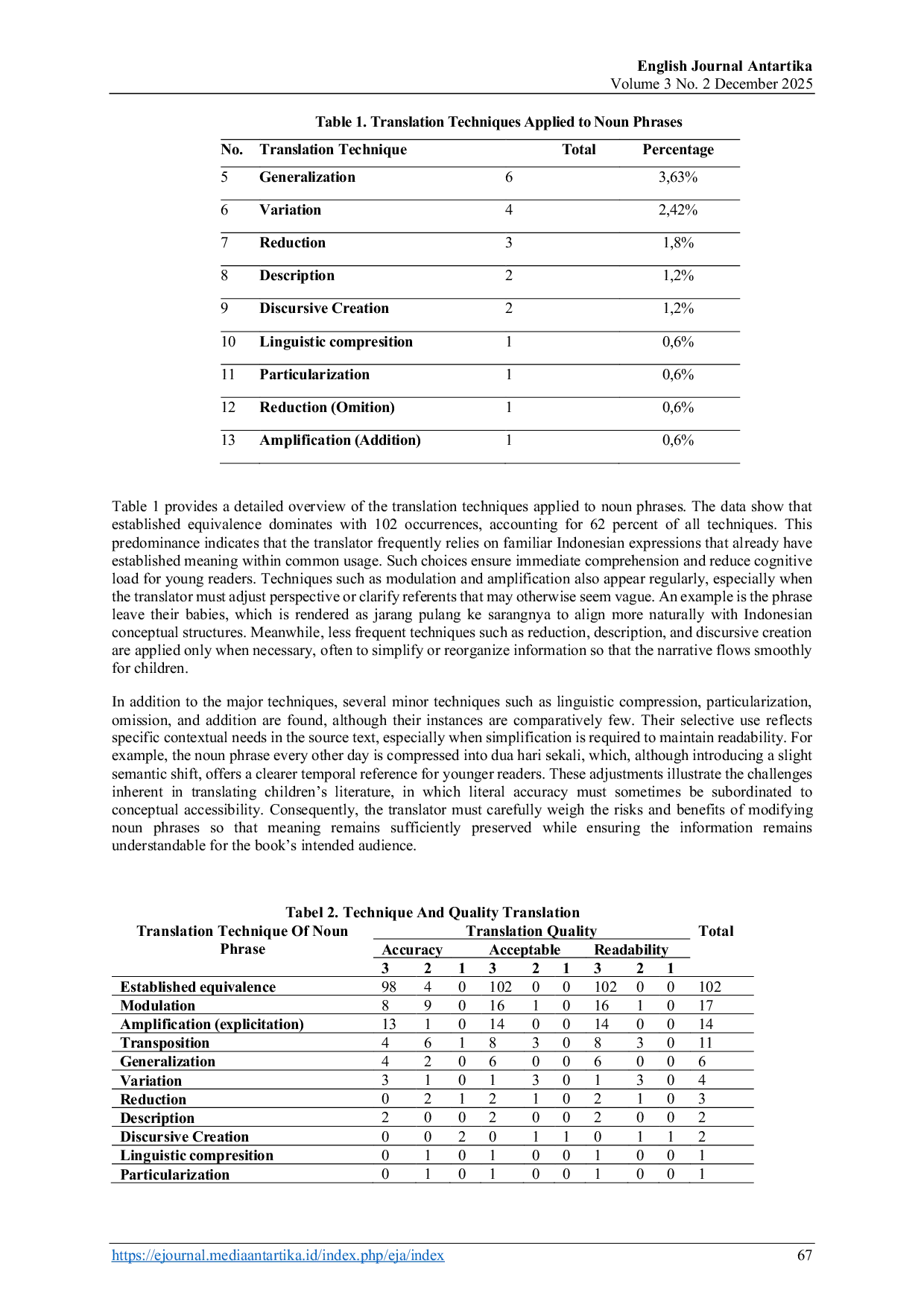
MEDIAANTARTIKAMEDIAANTARTIKA Penelitian ini berfokus pada analisis teknik penerjemahan frasa nomina serta kualitas terjemahannya dalam buku I Wonder Why Kangaroos Have Pouches andPenelitian ini berfokus pada analisis teknik penerjemahan frasa nomina serta kualitas terjemahannya dalam buku I Wonder Why Kangaroos Have Pouches and
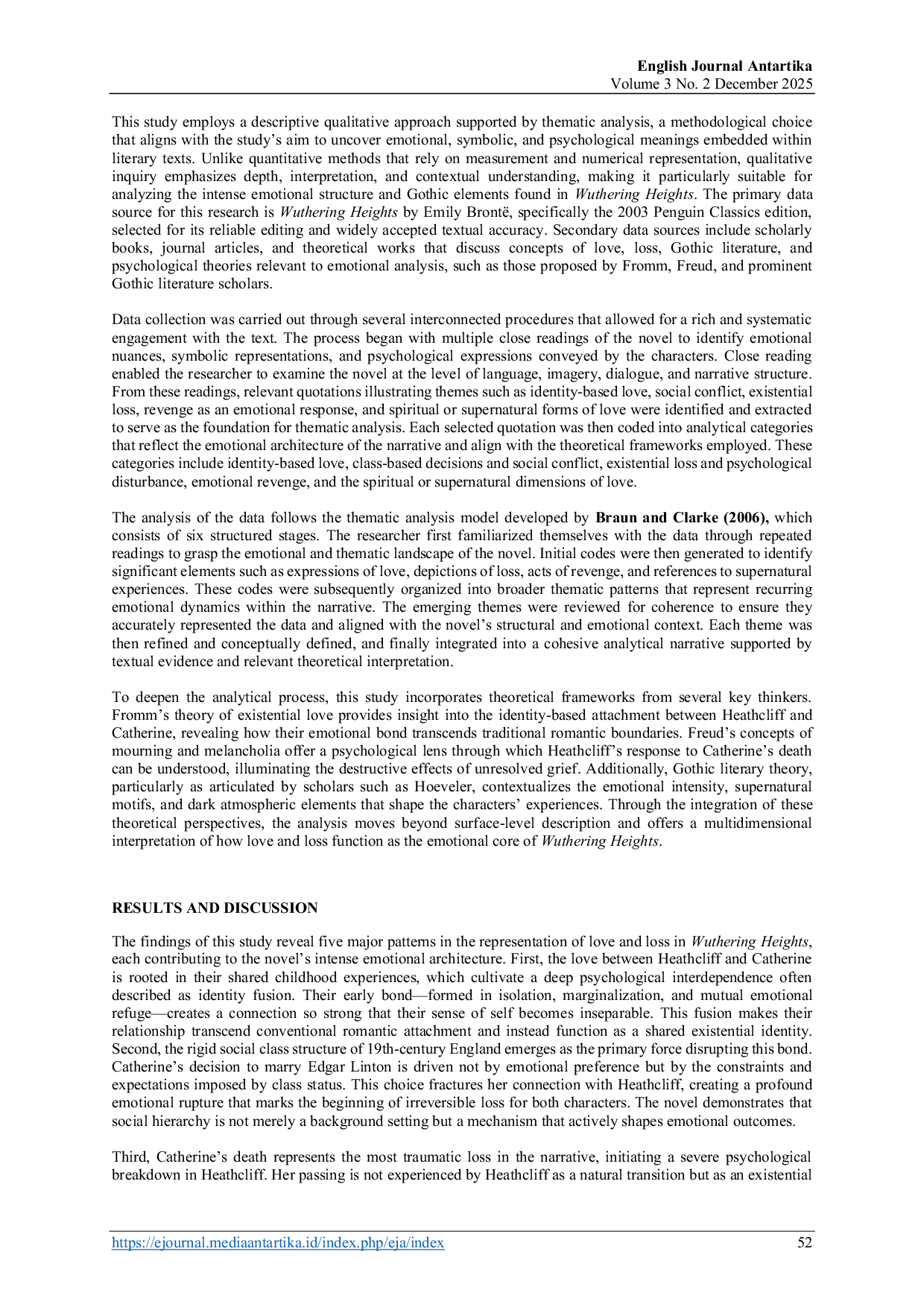
MEDIAANTARTIKAMEDIAANTARTIKA Hubungan mereka menunjukkan bahwa cinta dalam novel Brontë bukan hanya sentimen romantis, tetapi kekuatan eksistensial yang membentuk, mengganggu, danHubungan mereka menunjukkan bahwa cinta dalam novel Brontë bukan hanya sentimen romantis, tetapi kekuatan eksistensial yang membentuk, mengganggu, dan

MEDIAANTARTIKAMEDIAANTARTIKA Tidak peduli seberapa sulit, kebenaran telah tertulis dalam jiwa manusia. Itulah sebabnya manusia terus maju meskipun menghadapi tantangan. The TrumanTidak peduli seberapa sulit, kebenaran telah tertulis dalam jiwa manusia. Itulah sebabnya manusia terus maju meskipun menghadapi tantangan. The Truman
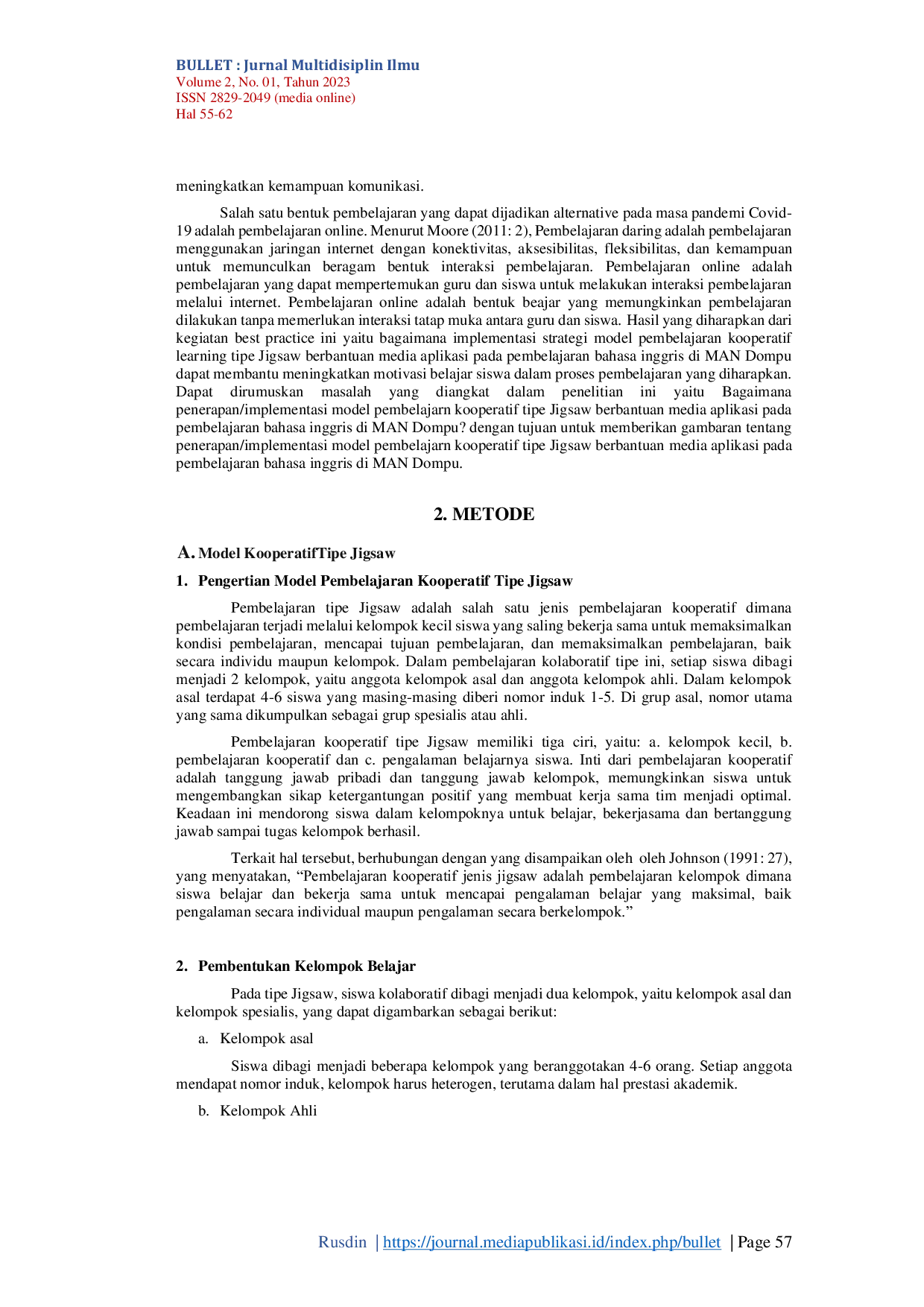
MEDIAPUBLIKASIMEDIAPUBLIKASI Penerapan pembelajaran kooperatif tipe Jigsaw pada materi offers and suggestions dapat meningkatkan aktivitas siswa kelas XI Agama 2 di MAN Dompu. PenerapanPenerapan pembelajaran kooperatif tipe Jigsaw pada materi offers and suggestions dapat meningkatkan aktivitas siswa kelas XI Agama 2 di MAN Dompu. Penerapan