JPRJPR
Jurnal Plastik RekonstruksiJurnal Plastik RekonstruksiIntroduction: Lower extremity defect poses a significant challenge in reconstructive surgery due to the limited usability of soft tissue. The keystone flap which utilizes fasciocutaneous perforators, has emerged to be a potential technique in fixing soft tissue defects. However, scientific evidence, specifically on its effectivity and complication rate in lower extremity defect is lacking. Therefore, this systematic review aims to assess the outcome and potential complications correlated to the use of Keystone Flap in repairing lower extremity defect. Method: This systematic review was done in accordance to the Preferred Reporting Items for Systematic Review and Meta-Analysis (PRISMA). Literature searching was conducted using four databases, which is PubMed Central, Embase, Scopus and Cochrane Library. Result: A grand total of sixteen studies were included in the review. Among it, fourteen studies were case series. The others were cohort prospective and single arm interventional studies. Out of the 662 keystone flaps used, a total of 129 complications (19.5%), were recorded, with the majority being infection or cellulitis (5%, n=33), delayed healing (4.5%, n=30), wound dehiscence (4.3%, n=28), and partial flap loss or necrosis (2%, n=13). Conclusion: The keystone flap could be an alternative for lower extremity defect with a realtively low complication rate.
The keystone flap is a viable alternative for reconstructing lower extremity defects, demonstrating a relatively low complication rate.The majority of complications observed were minor and manageable.These findings support the use of the keystone flap as an effective reconstructive technique for these types of defects.
Penelitian lebih lanjut diperlukan untuk membandingkan keefektifan keystone flap dengan teknik rekonstruksi lainnya dalam mengatasi defek ekstremitas bawah, dengan mempertimbangkan faktor-faktor seperti ukuran defek, lokasi anatomi, dan kondisi pasien. Studi prospektif terkontrol secara acak dengan ukuran sampel yang lebih besar sangat penting untuk mengevaluasi secara komprehensif hasil jangka panjang dan kualitas hidup pasien yang menjalani rekonstruksi dengan keystone flap. Selain itu, penelitian yang berfokus pada identifikasi dan optimasi perfurator yang ideal melalui teknik pencitraan pra-operasi, seperti angiografi CT atau MRI, dapat meningkatkan keberhasilan dan mengurangi risiko komplikasi pada prosedur keystone flap, terutama pada pasien dengan vaskularisasi yang kurang optimal.
- Keystone and Perforator Flaps in Reconstruction - Clinics in Plastic Surgery. keystone perforator flaps... plasticsurgery.theclinics.com/retrieve/pii/S0094129820350549Keystone and Perforator Flaps in Reconstruction Clinics in Plastic Surgery keystone perforator flaps plasticsurgery theclinics retrieve pii S0094129820350549
- The Keystone Perforator Island Flap, Concept. Edited by F. Behan , M. Findlay and C. H. Lo . Sydney:... doi.org/10.1111/ans.12337The Keystone Perforator Island Flap Concept Edited by F Behan M Findlay and C H Lo Sydney doi 10 1111 ans 12337
- The Outcome of Keystone Flap for Lower Extremity Defects: A Systematic Review | Jurnal Plastik Rekonstruksi.... doi.org/10.14228/jprjournal.v11i2.373The Outcome of Keystone Flap for Lower Extremity Defects A Systematic Review Jurnal Plastik Rekonstruksi doi 10 14228 jprjournal v11i2 373
| File size | 810.34 KB |
| Pages | 17 |
| DMCA | Report |
Related /

POLTEKKESBENGKULUPOLTEKKESBENGKULU Peneliti selanjutnya dapat meneliti komplikasi lain pada pasien GGK serta upaya promosi dan preventif untuk mencegah komplikasi hipertensi krisis. PenelitianPeneliti selanjutnya dapat meneliti komplikasi lain pada pasien GGK serta upaya promosi dan preventif untuk mencegah komplikasi hipertensi krisis. Penelitian

PELITAIBUPELITAIBU Temuan ini menunjukkan bahwa paritas tinggi berhubungan dengan peningkatan risiko plasenta previa. Penelitian ini memberikan kontribusi penting dalam mengidentifikasiTemuan ini menunjukkan bahwa paritas tinggi berhubungan dengan peningkatan risiko plasenta previa. Penelitian ini memberikan kontribusi penting dalam mengidentifikasi

UNIK KEDIRIUNIK KEDIRI Hasil kunjungan pertama menunjukkan keluhan nyeri perut bawah dengan pemeriksaan janin posisi lintang dan Hb 10,2 g/dL. Pada kunjungan kedua, keluhan nyeriHasil kunjungan pertama menunjukkan keluhan nyeri perut bawah dengan pemeriksaan janin posisi lintang dan Hb 10,2 g/dL. Pada kunjungan kedua, keluhan nyeri

UNDIKMAUNDIKMA Evaluasi menunjukkan tingkat partisipasi dan antusiasme yang tinggi dalam mengikuti kegiatan ini, dimana penyintas mendapatkan edukasi terkait hipertensiEvaluasi menunjukkan tingkat partisipasi dan antusiasme yang tinggi dalam mengikuti kegiatan ini, dimana penyintas mendapatkan edukasi terkait hipertensi
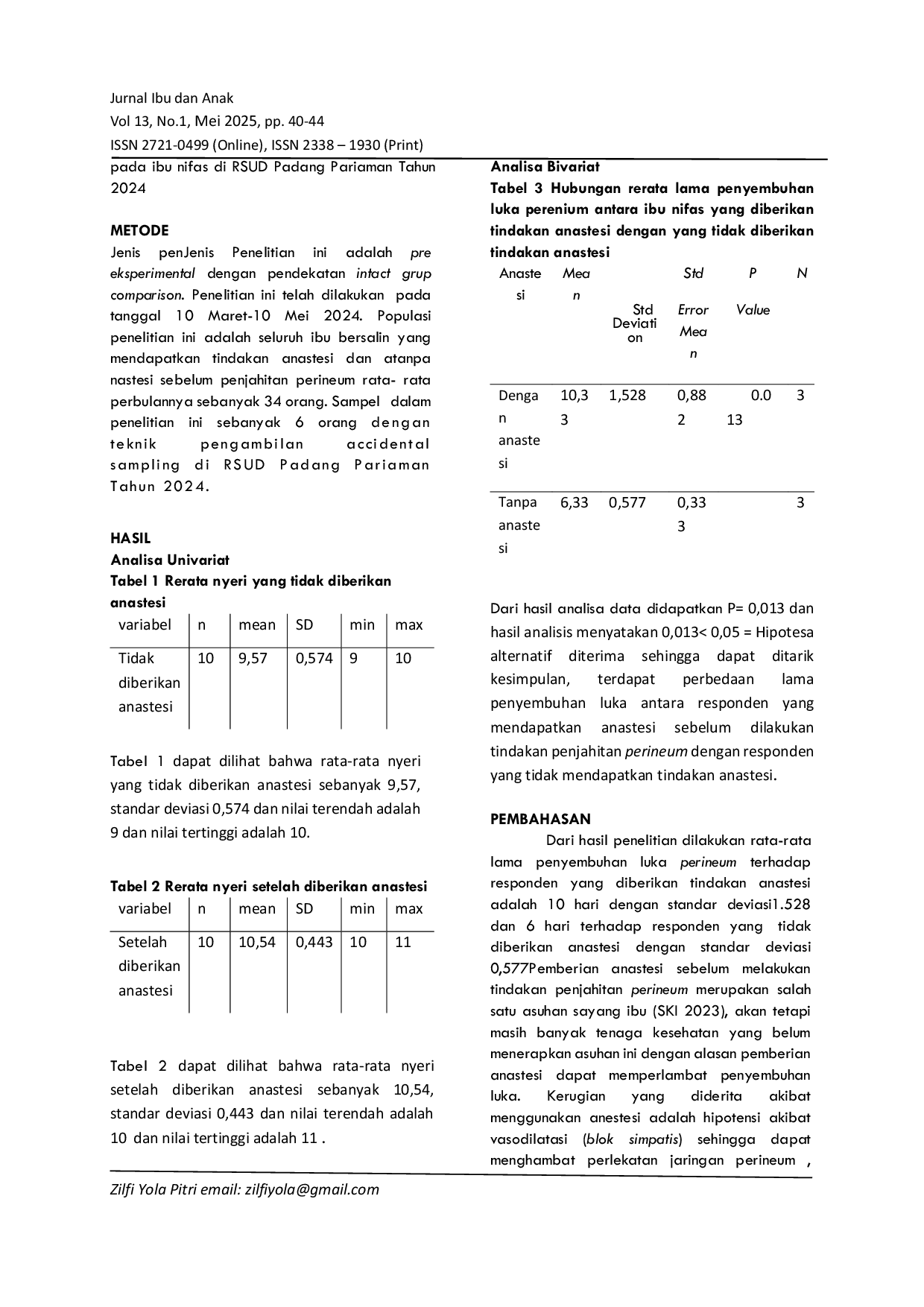
PKRPKR Hasil penelitian menunjukkan lama penyembuhan luka yang menggunakan anastesi adalah 10 hari sementara penyembuhan luka yang tidak menggunakan anastesiHasil penelitian menunjukkan lama penyembuhan luka yang menggunakan anastesi adalah 10 hari sementara penyembuhan luka yang tidak menggunakan anastesi
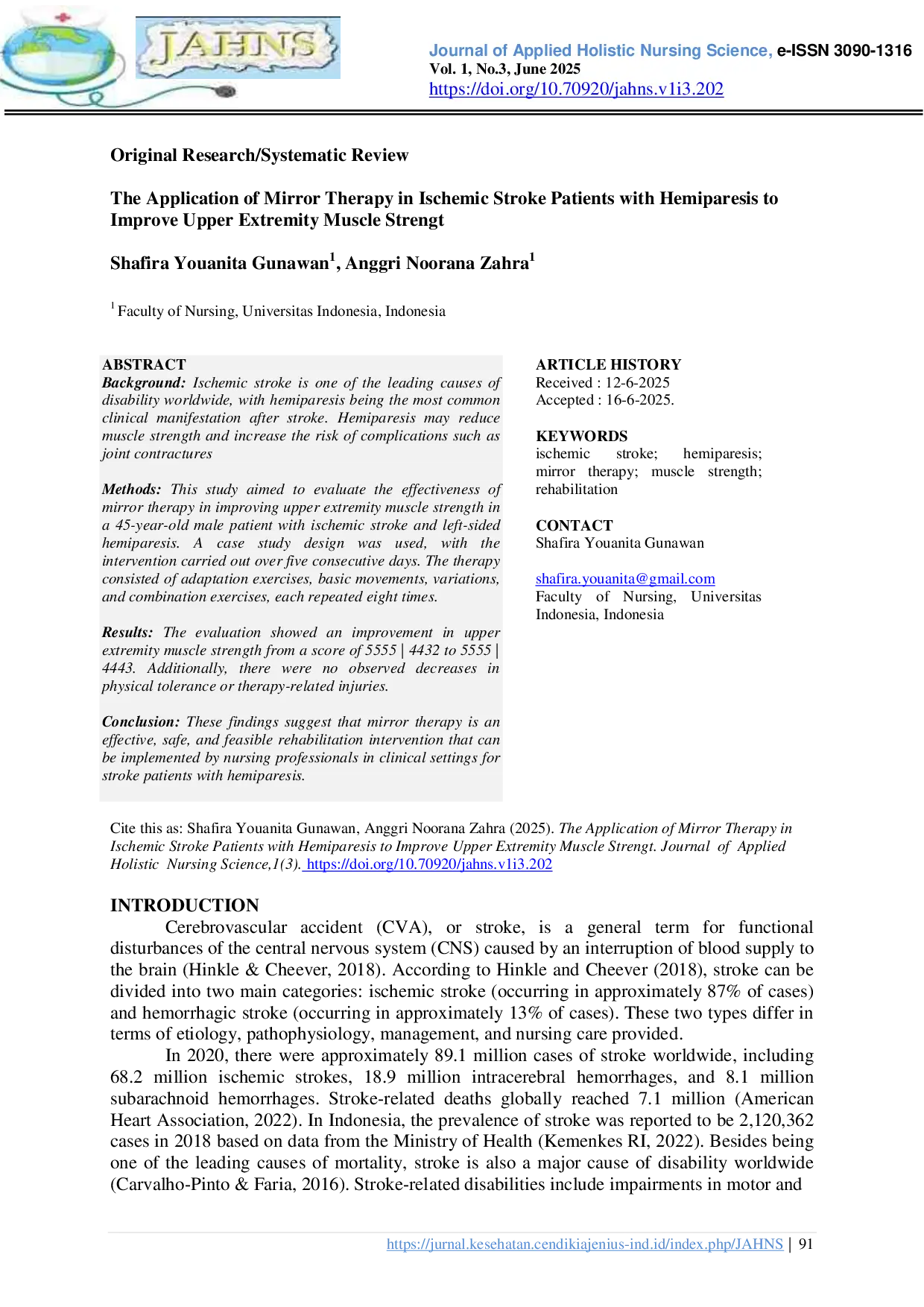
CENDIKIAJENIUS INDCENDIKIAJENIUS IND Terapi terdiri dari latihan adaptasi, gerakan dasar, variasi, dan latihan kombinasi, masing-masing diulang delapan kali. Hasil: Evaluasi menunjukkan peningkatanTerapi terdiri dari latihan adaptasi, gerakan dasar, variasi, dan latihan kombinasi, masing-masing diulang delapan kali. Hasil: Evaluasi menunjukkan peningkatan

POLTEKKES SORONGPOLTEKKES SORONG Tema yang berhasil diidentifikasi dalam penelitian ini ada 4 tema, yaitu. 1) perasaan emosional Caregiver, 2) peran Caregiver dalam menjalankan fungsiTema yang berhasil diidentifikasi dalam penelitian ini ada 4 tema, yaitu. 1) perasaan emosional Caregiver, 2) peran Caregiver dalam menjalankan fungsi

KETERAPIAN FISIKKETERAPIAN FISIK Perubahan gaya hidup, seperti kurangnya pergerakan, menjadi salah satu faktor penyebab penyakit ini. Penelitian ini dilakukan untuk melihat efektivitasPerubahan gaya hidup, seperti kurangnya pergerakan, menjadi salah satu faktor penyebab penyakit ini. Penelitian ini dilakukan untuk melihat efektivitas
Useful /

JPRJPR Data ini diharapkan dapat menjadi referensi ukuran dalam melakukan rekonstruksi maksila sesuai dengan jenis kelamin, yang akan bermanfaat bagi pasien danData ini diharapkan dapat menjadi referensi ukuran dalam melakukan rekonstruksi maksila sesuai dengan jenis kelamin, yang akan bermanfaat bagi pasien dan
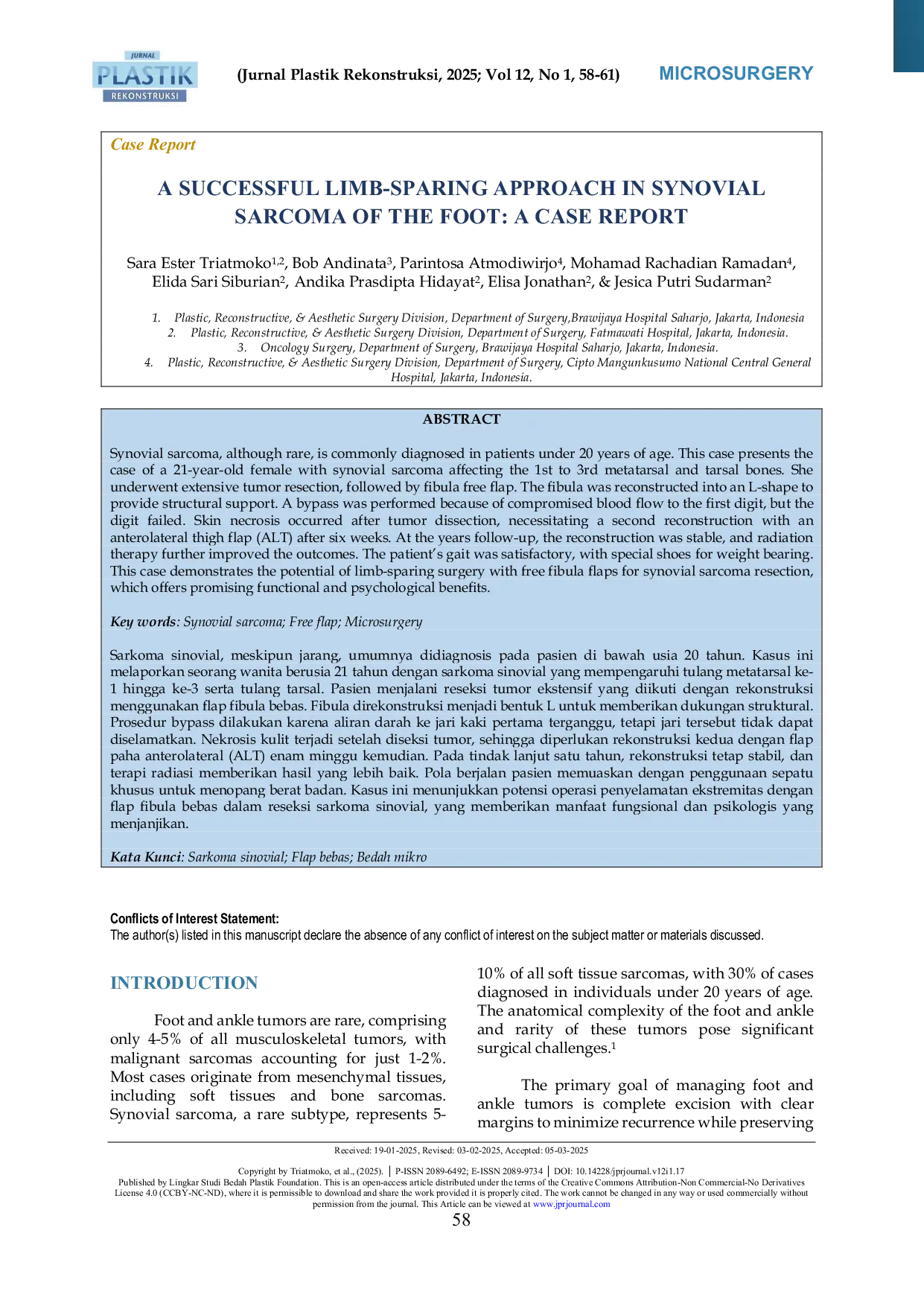
JPRJPR Fibula direkonstruksi menjadi bentuk L untuk memberikan dukungan struktural. Prosedur bypass dilakukan karena aliran darah ke jari kaki pertama terganggu,Fibula direkonstruksi menjadi bentuk L untuk memberikan dukungan struktural. Prosedur bypass dilakukan karena aliran darah ke jari kaki pertama terganggu,
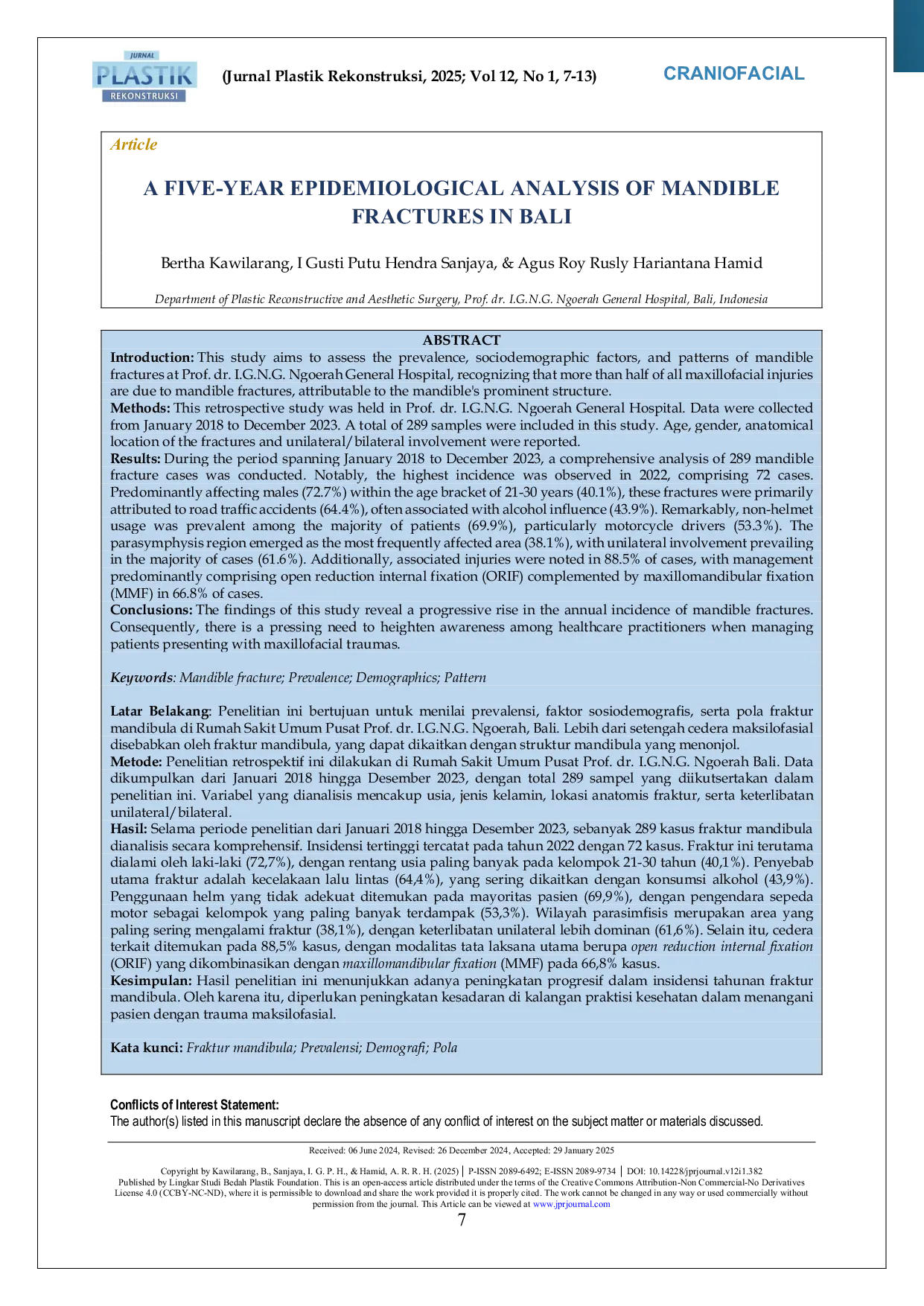
JPRJPR Hasil penelitian ini menunjukkan adanya peningkatan progresif dalam insidensi tahunan fraktur mandibula. Fraktur mandibula terutama disebabkan oleh kecelakaanHasil penelitian ini menunjukkan adanya peningkatan progresif dalam insidensi tahunan fraktur mandibula. Fraktur mandibula terutama disebabkan oleh kecelakaan

STIKES BETHESDASTIKES BETHESDA Pada tahun 2011, kasus HIV/AIDS di Indonesia mencapai 21.770 orang. Terapi antiretroviral adalah obat antiviral yang dapat menekan perkembangan virus HIVPada tahun 2011, kasus HIV/AIDS di Indonesia mencapai 21.770 orang. Terapi antiretroviral adalah obat antiviral yang dapat menekan perkembangan virus HIV