UMSUMS
Profesi Pendidikan DasarProfesi Pendidikan DasarThis comparative quantitative study examined smartphone addiction rates among children using a modified Smartphone Addiction Questionnaire, focusing on differences between preschool and primary school students to inform prevention and health promotion strategies. For preschool participants, parents completed the questionnaire, whereas for primary school children, both parents and children provided responses. The assessment tool demonstrated robust psychometric properties, with validity established through rigorous evaluation and high internal consistency for both the childrens and parents scales, as indicated by Cronbachs alpha coefficients. The study cohort comprised 832 participants, including 104 preschool-aged children, 336 parents of primary school-aged children, and 392 primary school students. The prevalence of smartphone addiction differed significantly across groups, with primary school students exhibiting higher rates than preschool-aged children (p < 0.05). This disparity was consistent across both parent- and child-reported measures. Nevertheless, 3.8% of preschool-aged children were classified as high risk for smartphone addiction, with an additional 1% at very high risk, necessitating parental vigilance. Among primary school students, the prevalence was higher, with 7.4%–9.8% at high risk and 0.8%–2.1% at very high risk.
The study concludes that there is a difference in smartphone addiction tendencies between preschool and primary school children, with primary school students exhibiting higher tendencies.Despite generally low tendencies, parents should remain vigilant as a small percentage of preschool children are at high or very high risk.Furthermore, a significant portion of primary school students also demonstrate a high risk of smartphone addiction, highlighting the need for preventative measures and parental guidance.
Penelitian lebih lanjut perlu dilakukan untuk menggali lebih dalam faktor-faktor yang memengaruhi kecanduan smartphone pada anak-anak, seperti peran lingkungan keluarga, pengaruh teman sebaya, dan karakteristik psikologis individu. Sebagai contoh, sebuah studi kualitatif dapat dilakukan untuk memahami pengalaman dan perspektif anak-anak dan orang tua mengenai penggunaan smartphone dan dampaknya terhadap kehidupan sehari-hari. Selain itu, penelitian intervensi yang bertujuan untuk mengembangkan dan menguji efektivitas program pencegahan kecanduan smartphone pada anak-anak usia dini dan sekolah dasar sangat diperlukan. Program ini dapat mencakup pelatihan keterampilan manajemen diri, peningkatan kesadaran tentang risiko kecanduan smartphone, dan promosi kegiatan alternatif yang sehat dan positif. Terakhir, penelitian longitudinal yang melacak perkembangan penggunaan smartphone dan kecanduan pada anak-anak dari waktu ke waktu dapat memberikan wawasan yang berharga tentang lintasan perkembangan kecanduan smartphone dan faktor-faktor yang memprediksi risiko jangka panjang.
- Current Opinion in Psychiatry. current opinion psychiatry journals.lww.com/co-psychiatry/abstract/2022/09000/internet_use_and_internet_based_addictive.6.aspxCurrent Opinion in Psychiatry current opinion psychiatry journals lww co psychiatry abstract 2022 09000 internet use and internet based addictive 6 aspx
- Pengaruh Status Sosial Ekonomi Keluarga Terhadap Pemenuhan Kebutuhan Pendidikan Anak | Nurwati | Share... doi.org/10.24198/share.v11i1.33642Pengaruh Status Sosial Ekonomi Keluarga Terhadap Pemenuhan Kebutuhan Pendidikan Anak Nurwati Share doi 10 24198 share v11i1 33642
- The Smartphone Addiction Scale: Development and Validation of a Short Version for Adolescents | PLOS... journals.plos.org/plosone/article?id=10.1371/journal.pone.0083558The Smartphone Addiction Scale Development and Validation of a Short Version for Adolescents PLOS journals plos plosone article id 10 1371 journal pone 0083558
| File size | 755.54 KB |
| Pages | 12 |
| DMCA | Report |
Related /
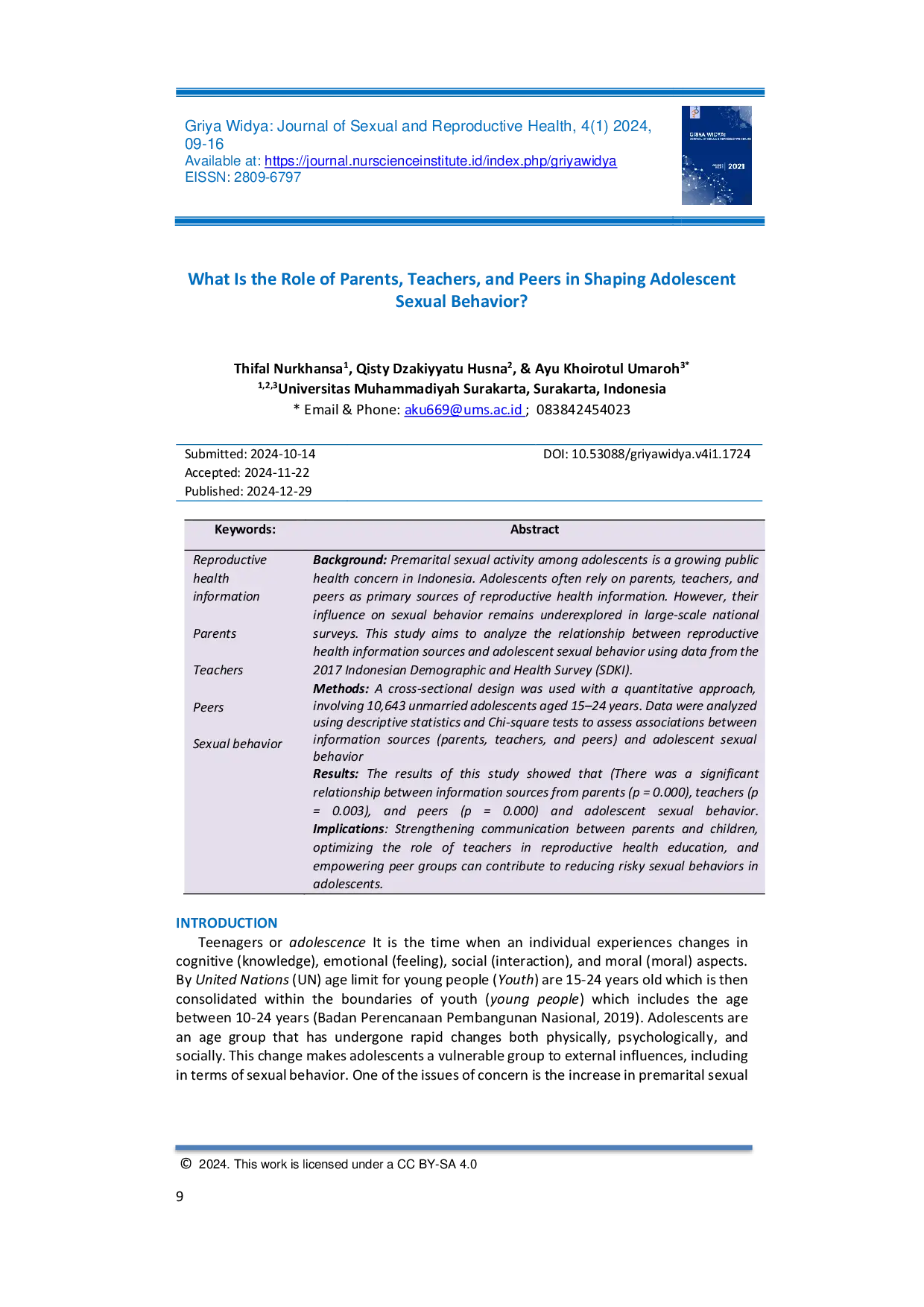
NURSCIENCEINSTITUTENURSCIENCEINSTITUTE Hasil: Hasil penelitian ini menunjukkan bahwa terdapat hubungan yang signifikan antara sumber informasi dari orang tua (p = 0,000), guru (p = 0,003), danHasil: Hasil penelitian ini menunjukkan bahwa terdapat hubungan yang signifikan antara sumber informasi dari orang tua (p = 0,000), guru (p = 0,003), dan

UnwahasUnwahas Formula emulgel yang paling memenuhi syarat adalah yang mengandung ekstrak kulit kayu manis konsentrasi 1% dengan gelling agent Viscolam MAC 5%. HasilFormula emulgel yang paling memenuhi syarat adalah yang mengandung ekstrak kulit kayu manis konsentrasi 1% dengan gelling agent Viscolam MAC 5%. Hasil

UnwahasUnwahas Evaluasi sediaan yang dilakukan meliputi uji mutu fisik, uji aktivitas antioksidan (metode DPPH), dan uji aktivitas antibakteri terhadap StaphylococcusEvaluasi sediaan yang dilakukan meliputi uji mutu fisik, uji aktivitas antioksidan (metode DPPH), dan uji aktivitas antibakteri terhadap Staphylococcus

UnwahasUnwahas Asam lemak tak jenuh terutama asam oleat dan asam palmitat, yang terdapat pada minyak alpukat bermanfaat untuk penyembuhan luka, melembabkan kulit, antioksidanAsam lemak tak jenuh terutama asam oleat dan asam palmitat, yang terdapat pada minyak alpukat bermanfaat untuk penyembuhan luka, melembabkan kulit, antioksidan

UnwahasUnwahas Jenis penelitian ini adalah penelitian observasional (non eksperimental) dengan pendekatan deskriptif analitik dengan pengambilan sampel secara accidentalJenis penelitian ini adalah penelitian observasional (non eksperimental) dengan pendekatan deskriptif analitik dengan pengambilan sampel secara accidental

FAPERTA UNRASFAPERTA UNRAS Studi ini berupaya mengidentifikasi secara mendasar dan menyeluruh jurnal mana terkait analisis multivariat yang paling signifikan, peneliti paling berpengaruh,Studi ini berupaya mengidentifikasi secara mendasar dan menyeluruh jurnal mana terkait analisis multivariat yang paling signifikan, peneliti paling berpengaruh,

FAPERTA UNRASFAPERTA UNRAS Therefore, this study investigates personality traits, resilience and perceived social support as predictors of quality of life among bereaved young adultsTherefore, this study investigates personality traits, resilience and perceived social support as predictors of quality of life among bereaved young adults
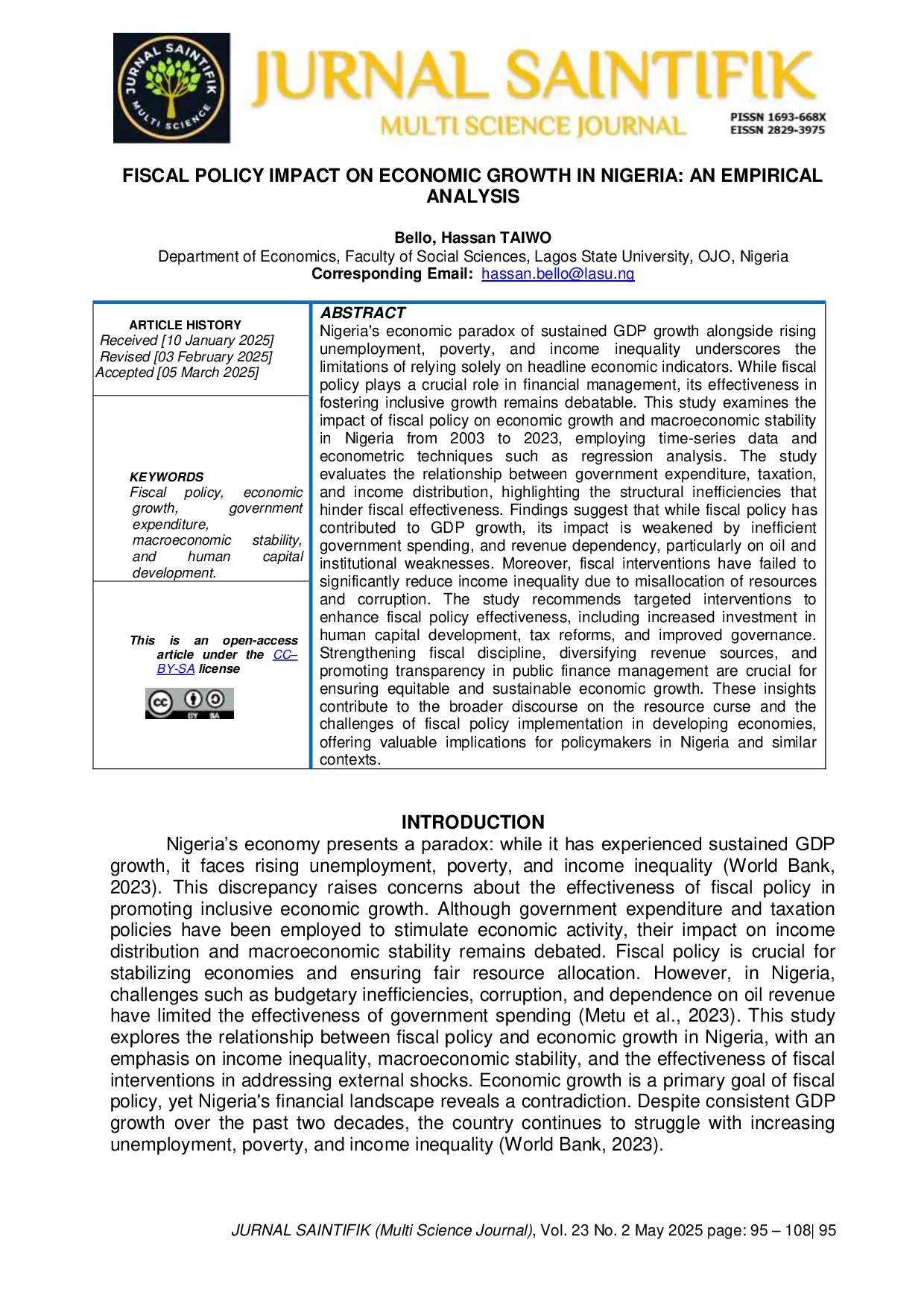
FAPERTA UNRASFAPERTA UNRAS Findings suggest that while fiscal policy has contributed to GDP growth, its impact is weakened by inefficient government spending, revenue dependency,Findings suggest that while fiscal policy has contributed to GDP growth, its impact is weakened by inefficient government spending, revenue dependency,
Useful /

NURSCIENCEINSTITUTENURSCIENCEINSTITUTE Keterbatasan penelitian terletak pada desain cross-sectional dan fokus pada satu industri manufaktur sehingga generalisasi temuan masih terbatas. BerdasarkanKeterbatasan penelitian terletak pada desain cross-sectional dan fokus pada satu industri manufaktur sehingga generalisasi temuan masih terbatas. Berdasarkan
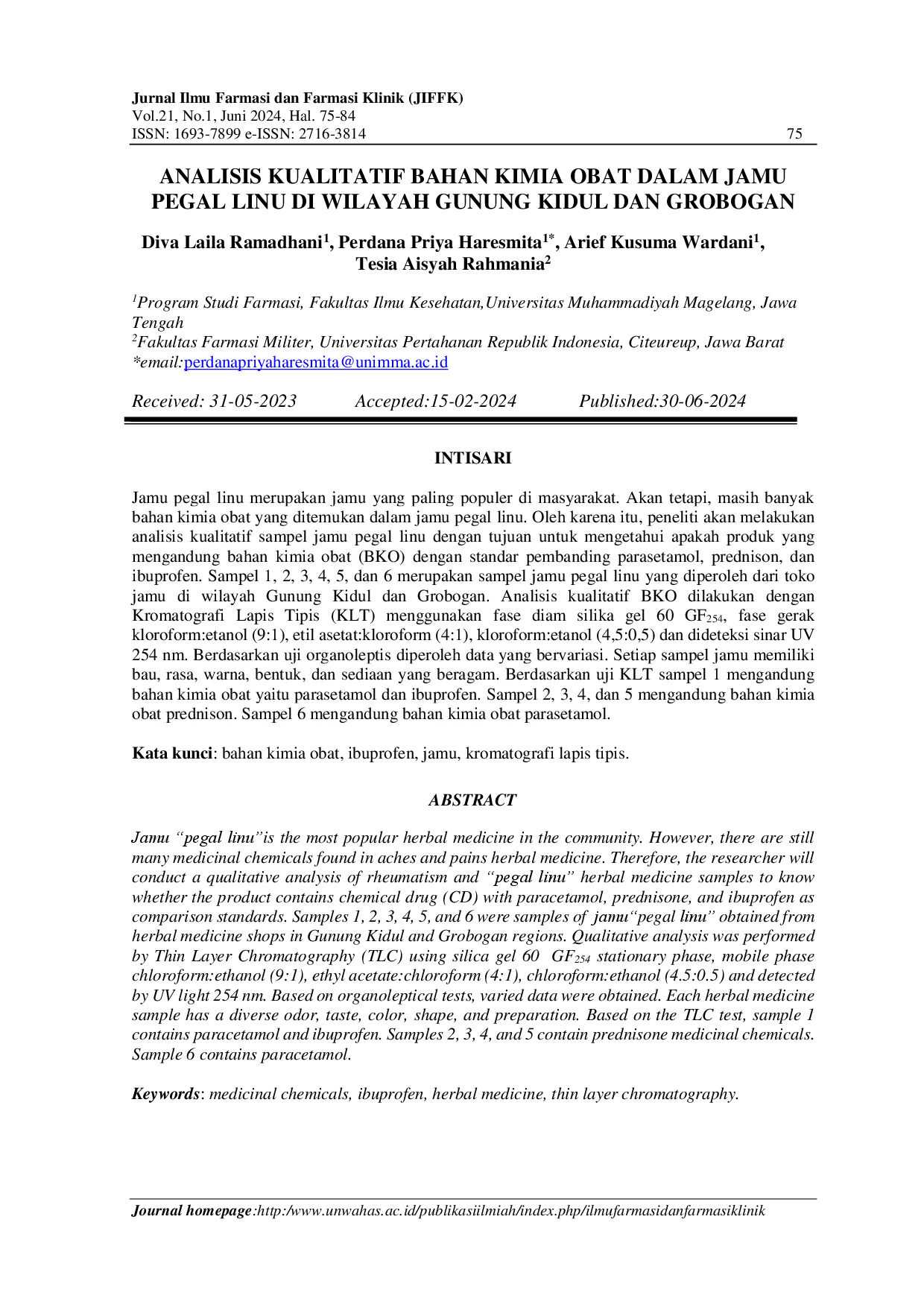
UnwahasUnwahas Penelitian ini bertujuan untuk mengetahui apakah produk jamu pegal linu yang beredar di wilayah Gunung Kidul dan Grobogan mengandung bahan kimia obat (BKO)Penelitian ini bertujuan untuk mengetahui apakah produk jamu pegal linu yang beredar di wilayah Gunung Kidul dan Grobogan mengandung bahan kimia obat (BKO)

UnwahasUnwahas Hipertensi merupakan penyakit kronis yang menjadi masalah kesehatan di Indonesia. Menurut Riset Kesehatan Dasar 2018 populasi hipertensi di Indonesia beradaHipertensi merupakan penyakit kronis yang menjadi masalah kesehatan di Indonesia. Menurut Riset Kesehatan Dasar 2018 populasi hipertensi di Indonesia berada

UnwahasUnwahas Willingness to pay (WTP) atau kemauan membayar, beriringan dengan informasi kemanfaatan yang diperoleh. Masyarakat yang memahami dan yakin mengenai manfaatWillingness to pay (WTP) atau kemauan membayar, beriringan dengan informasi kemanfaatan yang diperoleh. Masyarakat yang memahami dan yakin mengenai manfaat