POLTEKKES DENPASARPOLTEKKES DENPASAR
International Conference on Multidisciplinary Approaches in Health ScienceInternational Conference on Multidisciplinary Approaches in Health ScienceBackground: Dysmenorrhea (Menstrual Pain) is a reproductive health problem in young women because it can interfere with activities. Based on data from the World Health Organization (WHO) in 2017, the incidence of dysmenorrhea was 90% (1,769,425 people). Primary dysmenorrhea can have a negative impact on young women because the process of daily activities can be disrupted. The purpose of this study was to determine the effect of Selarindu (Seduhan Rosella Kering dan Madu) to reduce primary dysmenorrhea pain in young women. Method: This study used a cross-sectional approach with a population of young women aged 18-19 years, namely Level 1 Students of the Bachelor of Applied Midwifery Study Program Semarang Poltekkes Kemenkes Semarang. The sampling technique used total sampling so that a sample of 34 was obtained. Data collection in this study used a questionnaire and pain scale questionnaire for Primary Dysmenorrhea (NRS). Data analysis used the Wilcoxon test. Result and Conclusions: The results showed that the characteristics of respondents aged 19 years compared to 18 years, the most menarche at the age of ≤12 years, namely 20. The most BMI with poor nutritional status, namely 18 people, and the most activity is light activity, namely 20. Wilcoxon analysis results show that p -value 0.000, which is less than 0.05 so that Ha is accepted and Ho is rejected, which means that there is a significant effect of giving Selarindu (Seduhan Rosella Kering dan Madu) to reduce the pain of Primary Dysmenorrhea in young women.
The study concluded that there is a significant effect of giving Selarindu (Seduhan Rosella Kering dan Madu) on reducing primary dysmenorrhea pain in adolescent girls.The average pain score before intervention was 6.00 (Moderate Pain), and after intervention decreased to 1.This indicates a substantial reduction in pain intensity with the use of Selarindu.
Further research should investigate the optimal dosage and duration of Selarindu consumption for maximum pain relief in adolescent girls. Additionally, studies could explore the underlying mechanisms by which Selarindu components, such as rosella and honey, exert their analgesic effects on dysmenorrhea. Finally, research is needed to assess the feasibility and acceptability of integrating Selarindu into routine healthcare practices for managing primary dysmenorrhea, potentially through educational programs for adolescents and healthcare providers. These studies should consider individual variations in response to Selarindu, including factors like dietary habits and lifestyle, to personalize treatment approaches and maximize effectiveness. Exploring the long-term effects of Selarindu consumption on menstrual cycle regularity and overall reproductive health would also be valuable. The potential synergistic effects of combining Selarindu with other non-pharmacological interventions, such as exercise or heat therapy, warrants investigation to develop comprehensive pain management strategies. Ultimately, these research efforts aim to provide evidence-based recommendations for utilizing Selarindu as a safe and effective complementary therapy for primary dysmenorrhea, improving the quality of life for adolescent girls experiencing this common condition.
- Login. ciptaan lisensi creative commons atribusi jurnal.unpad.ac.id/prosiding/article/view/13625Login ciptaan lisensi creative commons atribusi jurnal unpad ac prosiding article view 13625
- Kompres Hangat Untuk Menurunkan Disminore Di Desa Padang Tambak Kecamatan Way Tenong Kabupaten Lampung... doi.org/10.33024/jkpm.v4i3.2827Kompres Hangat Untuk Menurunkan Disminore Di Desa Padang Tambak Kecamatan Way Tenong Kabupaten Lampung doi 10 33024 jkpm v4i3 2827
| File size | 361.33 KB |
| Pages | 14 |
| DMCA | Report |
Related /

POLTEKKES MALANGPOLTEKKES MALANG Hasil penelitian menunjukkan bahwa 36,10% lansia dengan peran keluarga yang baik berada pada kategori mandiri dalam ADL, 1,6% memiliki kemandirian ringan,Hasil penelitian menunjukkan bahwa 36,10% lansia dengan peran keluarga yang baik berada pada kategori mandiri dalam ADL, 1,6% memiliki kemandirian ringan,

POLTEKKES MALANGPOLTEKKES MALANG Pemberdayaan OSIS terbukti efektif dalam edukasi gizi remaja. Pemberdayaan OSIS di SMK Plus Almaarif Singosari berhasil meningkatkan pengetahuan dan sikapPemberdayaan OSIS terbukti efektif dalam edukasi gizi remaja. Pemberdayaan OSIS di SMK Plus Almaarif Singosari berhasil meningkatkan pengetahuan dan sikap

POLTEKKES MALANGPOLTEKKES MALANG Kanker menjadi penghalang terbesar manusia untuk meningkatkan angka harapan hidup. Metode penelitian menggunakan analitik observasional dengan pendekatanKanker menjadi penghalang terbesar manusia untuk meningkatkan angka harapan hidup. Metode penelitian menggunakan analitik observasional dengan pendekatan

POLTEKKES MALANGPOLTEKKES MALANG Berdasarkan hasil penelitian tentang intensitas nyeri sebelum dan sesudah dilakukan kompres hangat pada lansia penderita Artritis Gout di Puskesmas ArjunoBerdasarkan hasil penelitian tentang intensitas nyeri sebelum dan sesudah dilakukan kompres hangat pada lansia penderita Artritis Gout di Puskesmas Arjuno

POLTEKKES MALANGPOLTEKKES MALANG Hasil penelitian ada hubungan signifikan antara pendidikan, pengetahuan, ketersediaan informasi, dan dukungan keluarga dengan penerimaan masyarakat terhadapHasil penelitian ada hubungan signifikan antara pendidikan, pengetahuan, ketersediaan informasi, dan dukungan keluarga dengan penerimaan masyarakat terhadap
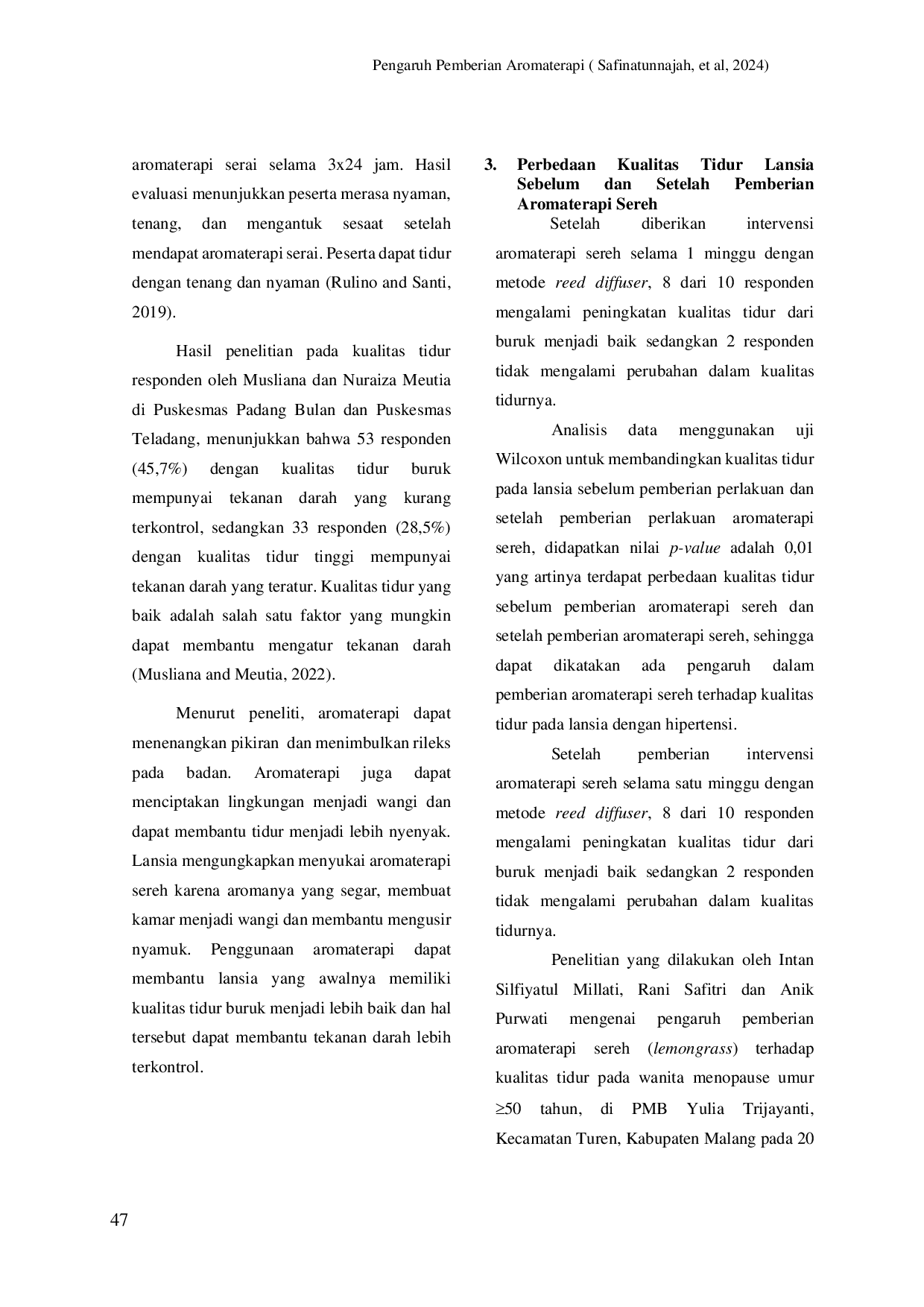
POLTEKKES MALANGPOLTEKKES MALANG Setelah pemberian intervensi aromaterapi sereh selama satu minggu dengan metode reed diffuser, 8 dari 10 responden mengalami peningkatan kualitas tidurSetelah pemberian intervensi aromaterapi sereh selama satu minggu dengan metode reed diffuser, 8 dari 10 responden mengalami peningkatan kualitas tidur

POLTEKKES MALANGPOLTEKKES MALANG Metode pengambilan sampel menggunakan “purposive sampling dengan 74 lansia. Penentuan responden berdasarkan kriteria inklusi pasien yang mengalami peningkatanMetode pengambilan sampel menggunakan “purposive sampling dengan 74 lansia. Penentuan responden berdasarkan kriteria inklusi pasien yang mengalami peningkatan

POLTEKKES MALANGPOLTEKKES MALANG Penelitian ini adalah studi kuasi-eksperimental dengan desain posttest control group design. Sampel terdiri dari kelompok intervensi dan kelompok kontrolPenelitian ini adalah studi kuasi-eksperimental dengan desain posttest control group design. Sampel terdiri dari kelompok intervensi dan kelompok kontrol
Useful /

POLTEKKES MALANGPOLTEKKES MALANG Cara efektif untuk menyampaikan bahwa pentingnya makan buah dan sayur pada anak salah satunya dengan melalui edukasi. Tujuan dari penelitian ini adalahCara efektif untuk menyampaikan bahwa pentingnya makan buah dan sayur pada anak salah satunya dengan melalui edukasi. Tujuan dari penelitian ini adalah

OJSSTIKESBANYUWANGIOJSSTIKESBANYUWANGI Kesimpulan: Pengetahuan ibu mengenai stunting tidak selalu berkorelasi dengan persepsi keluarga terhadap stunting. Oleh karena itu, upaya pencegahan stuntingKesimpulan: Pengetahuan ibu mengenai stunting tidak selalu berkorelasi dengan persepsi keluarga terhadap stunting. Oleh karena itu, upaya pencegahan stunting
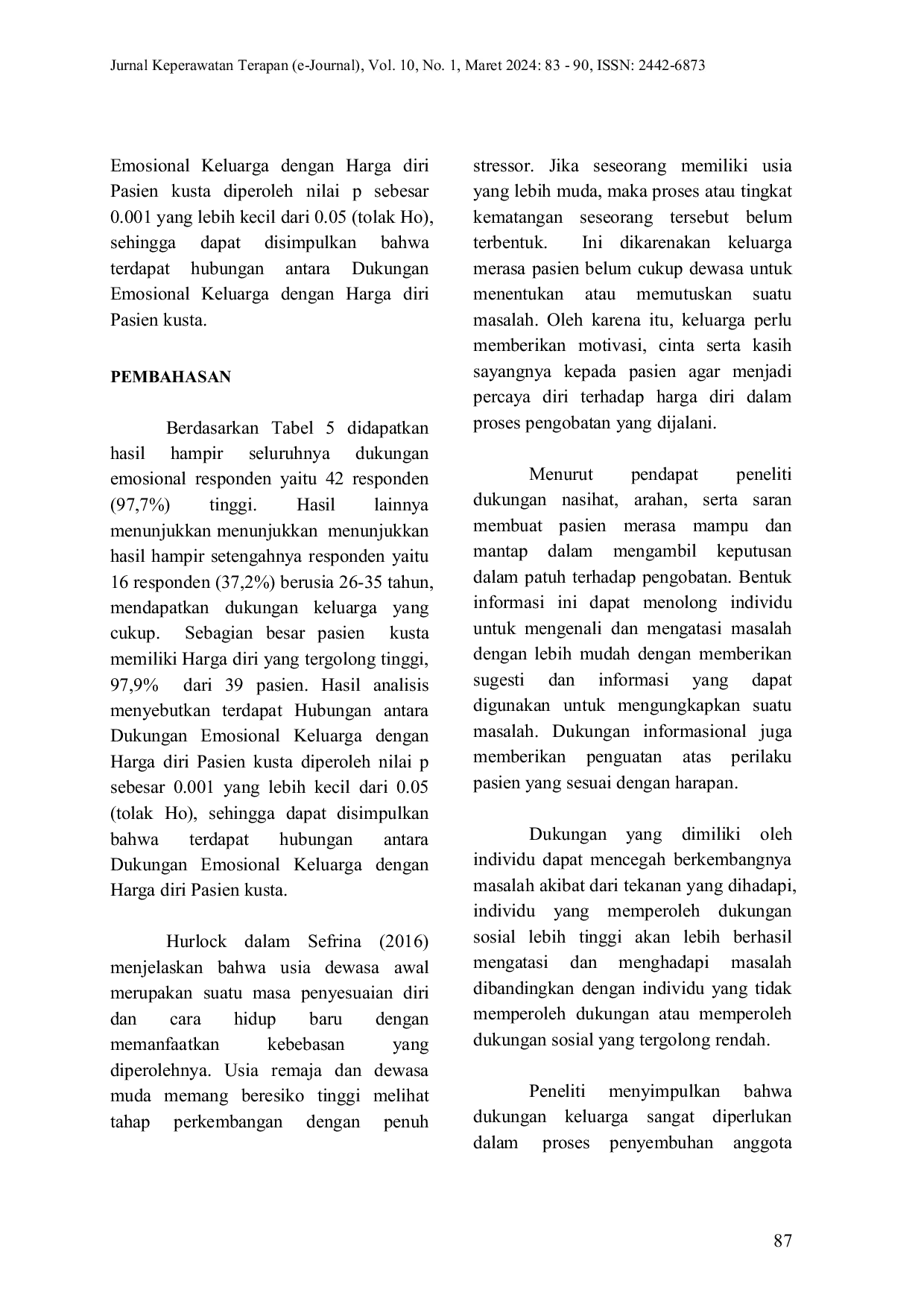
POLTEKKES MALANGPOLTEKKES MALANG Tujuan dari penelitian ini adalah untuk mengetahui hubungan dukungan emosional keluarga terhadap harga diri pasien di klinik kulit dan kelamin. PenelitianTujuan dari penelitian ini adalah untuk mengetahui hubungan dukungan emosional keluarga terhadap harga diri pasien di klinik kulit dan kelamin. Penelitian

POLTEKKES MALANGPOLTEKKES MALANG Metode penelitian ini menggunakan desain quasy eksperiment dengan teknik purpose sampling. Banyaknya sampel sejumlah 32 responden yang dibagi menjadi 2Metode penelitian ini menggunakan desain quasy eksperiment dengan teknik purpose sampling. Banyaknya sampel sejumlah 32 responden yang dibagi menjadi 2