JRTPPIJRTPPI
Jurnal Riset Teknologi Pencegahan Pencemaran IndustriJurnal Riset Teknologi Pencegahan Pencemaran IndustriThis study focuses on optimizing biofiltration techniques to mitigate heavy metal contamination in urban wastewater. The increasing presence of heavy metals in wastewater, particularly in urban environments, poses a significant threat to both human health and ecosystem stability. Biofiltration, a natural remediation process utilizing living organisms, has gained attention as an effective method for removing heavy metals from contaminated water. The research combines experimental analysis with a comprehensive literature review to evaluate and enhance the performance of various biofiltration systems. By examining the influence of different variables, such as plant species, soil composition, flow rate, and pollutant concentration, on the efficiency of heavy metal removal, this study provides a broad perspective on the potential applications of biofiltration. Experimental analysis of biofilter setups demonstrated that specific plant-microbe interactions and substrate types significantly enhance the absorption and accumulation of toxic metals. The literature review further supports these findings by summarizing past studies and providing insights into existing biofiltration techniques, their effectiveness, and limitations. The studys findings indicate that optimized biofiltration can serve as a sustainable and cost-effective solution for urban wastewater management. By providing a detailed understanding of how biofilters can be adapted and scaled for urban applications, the research contributes to the development of environmentally friendly wastewater treatment technologies. The results underscore the importance of integrating biofiltration systems into urban water management strategies for improving water quality and reducing environmental pollution.
Biofiltration naturally filters out harmful pollutants, making it an eco-friendly method for addressing heavy metal pollution in urban water sources.This research emphasizes the importance of optimizing factors like media composition, flow rates, and microbial consortia to improve biofiltration efficiency and explores how integrating traditional biofiltration can enhance the systems capacity to handle higher pollutant concentrations.
Penelitian lanjutan perlu difokuskan pada pengembangan sistem biofiltrasi hibrida yang menggabungkan proses biologis, kimia, dan fisik untuk meningkatkan efisiensi penghilangan logam berat. Selain itu, eksplorasi penggunaan mikroorganisme hasil rekayasa genetika dengan kemampuan reduksi logam berat yang ditingkatkan dapat menawarkan solusi yang menjanjikan untuk pengolahan air limbah perkotaan dengan konsentrasi logam berat yang tinggi. Terakhir, pengembangan sistem pemantauan real-time berbasis sensor untuk mengoptimalkan kondisi biofilter, seperti aktivitas mikroba, konsentrasi logam, pH, dan suhu, akan memungkinkan operator untuk menyesuaikan parameter secara efektif dan meningkatkan kinerja sistem secara keseluruhan, sehingga berkontribusi pada pengelolaan air limbah yang lebih berkelanjutan dan efisien.
| File size | 291.09 KB |
| Pages | 8 |
| DMCA | Report |
Related /
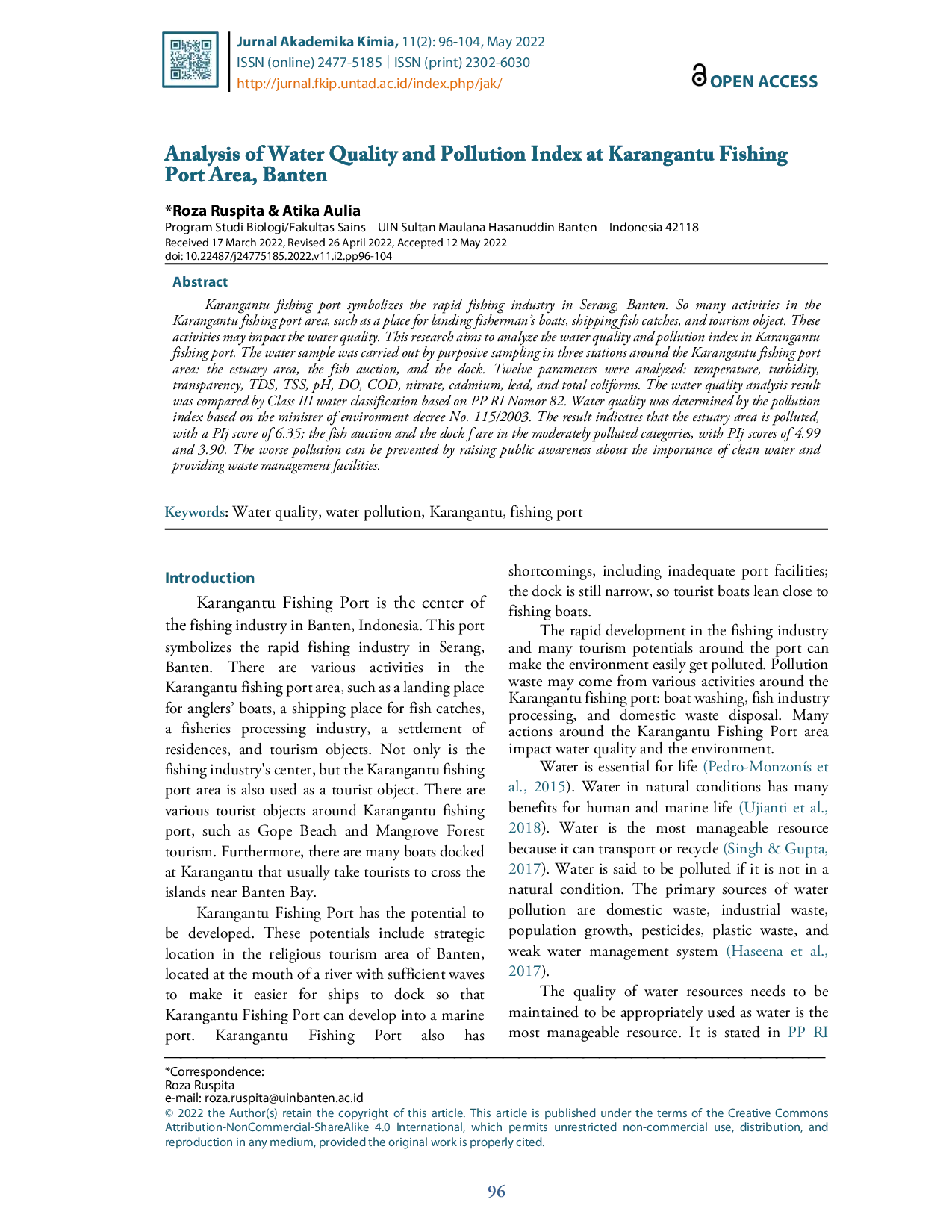
JURNALFKIPUNTADJURNALFKIPUNTAD Banyak aktivitas di kawasan Pelabuhan Perikanan Karangantu, seperti tempat pendaratan perahu nelayan, pengiriman hasil tangkapan ikan, dan objek wisata.Banyak aktivitas di kawasan Pelabuhan Perikanan Karangantu, seperti tempat pendaratan perahu nelayan, pengiriman hasil tangkapan ikan, dan objek wisata.
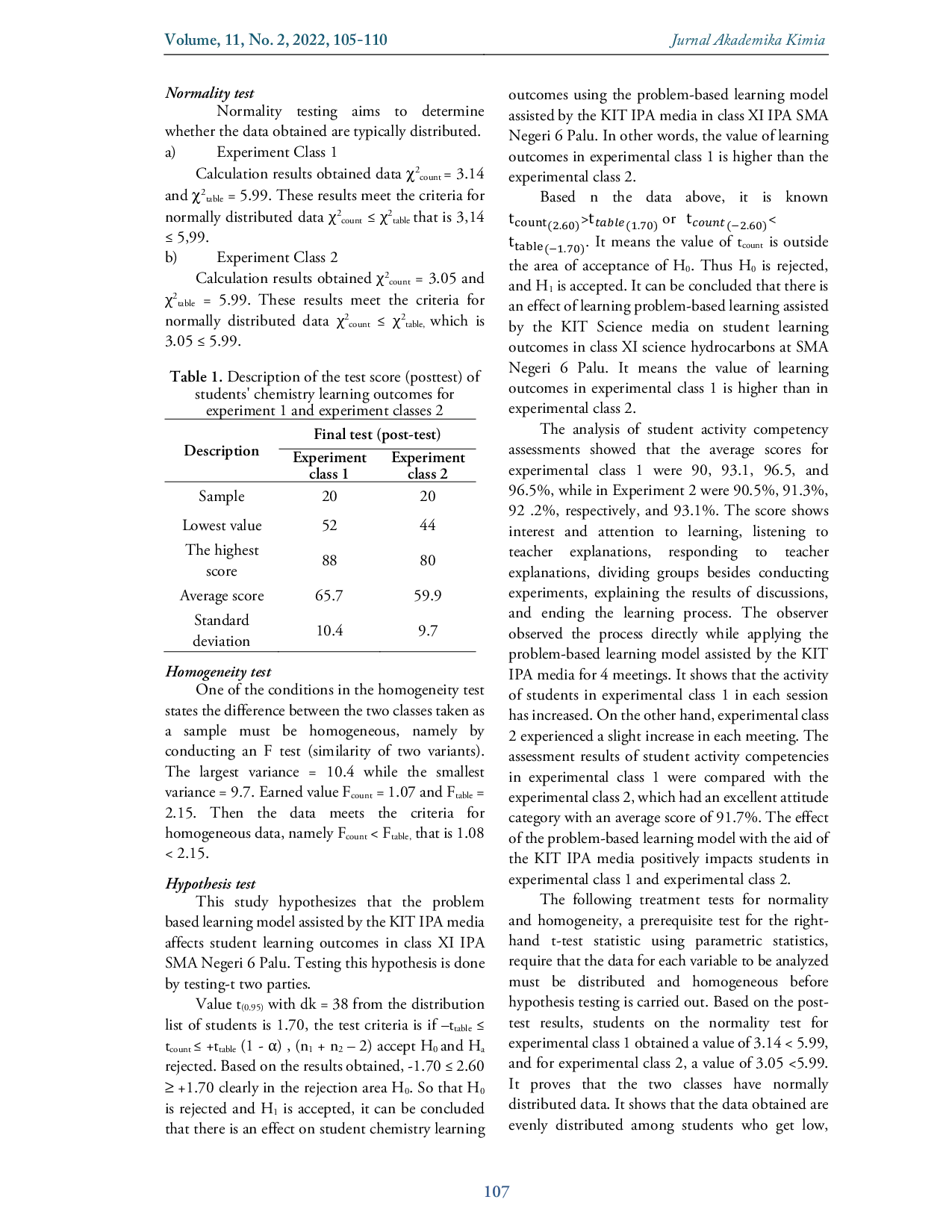
JURNALFKIPUNTADJURNALFKIPUNTAD Hasil uji statistik menunjukkan nilai t_hitung > t_tabel, yaitu 2,60 > 1,70, sehingga hipotesis nol ditolak dan hipotesis alternatif diterima. Dengan demikian,Hasil uji statistik menunjukkan nilai t_hitung > t_tabel, yaitu 2,60 > 1,70, sehingga hipotesis nol ditolak dan hipotesis alternatif diterima. Dengan demikian,

ACADEMICAREVIEWACADEMICAREVIEW Mercury concentrations were measured using Atomic Absorption Spectrophotometry (AAS). The results of the study showed that all samples exceeded the waterMercury concentrations were measured using Atomic Absorption Spectrophotometry (AAS). The results of the study showed that all samples exceeded the water
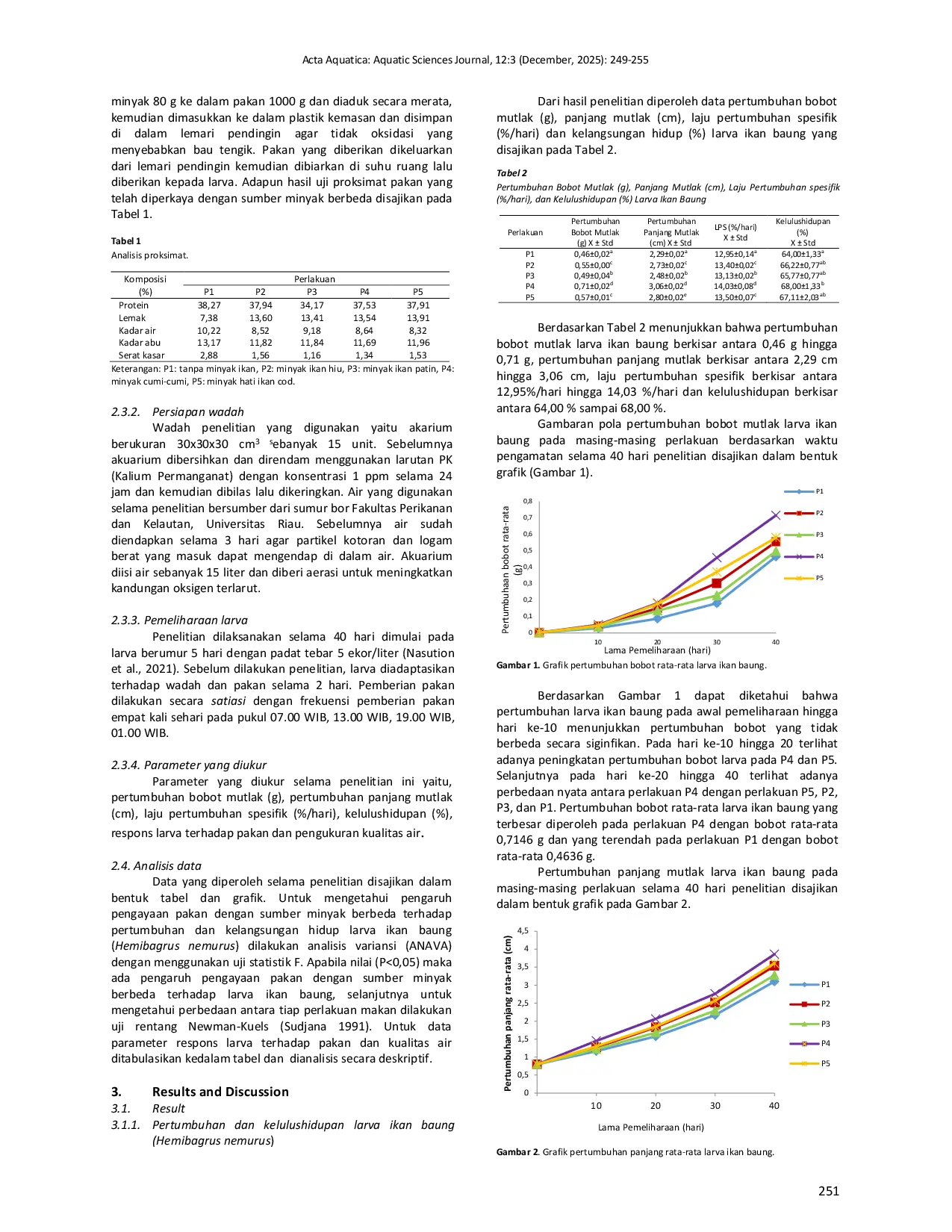
UNIMALUNIMAL Pakan yang diberikan belum memenuhi semua kandungan nutrisi yang dibutuhkan untuk pertumbuhan larva. Salah satu cara meningkatkan kualitas pakan yaituPakan yang diberikan belum memenuhi semua kandungan nutrisi yang dibutuhkan untuk pertumbuhan larva. Salah satu cara meningkatkan kualitas pakan yaitu
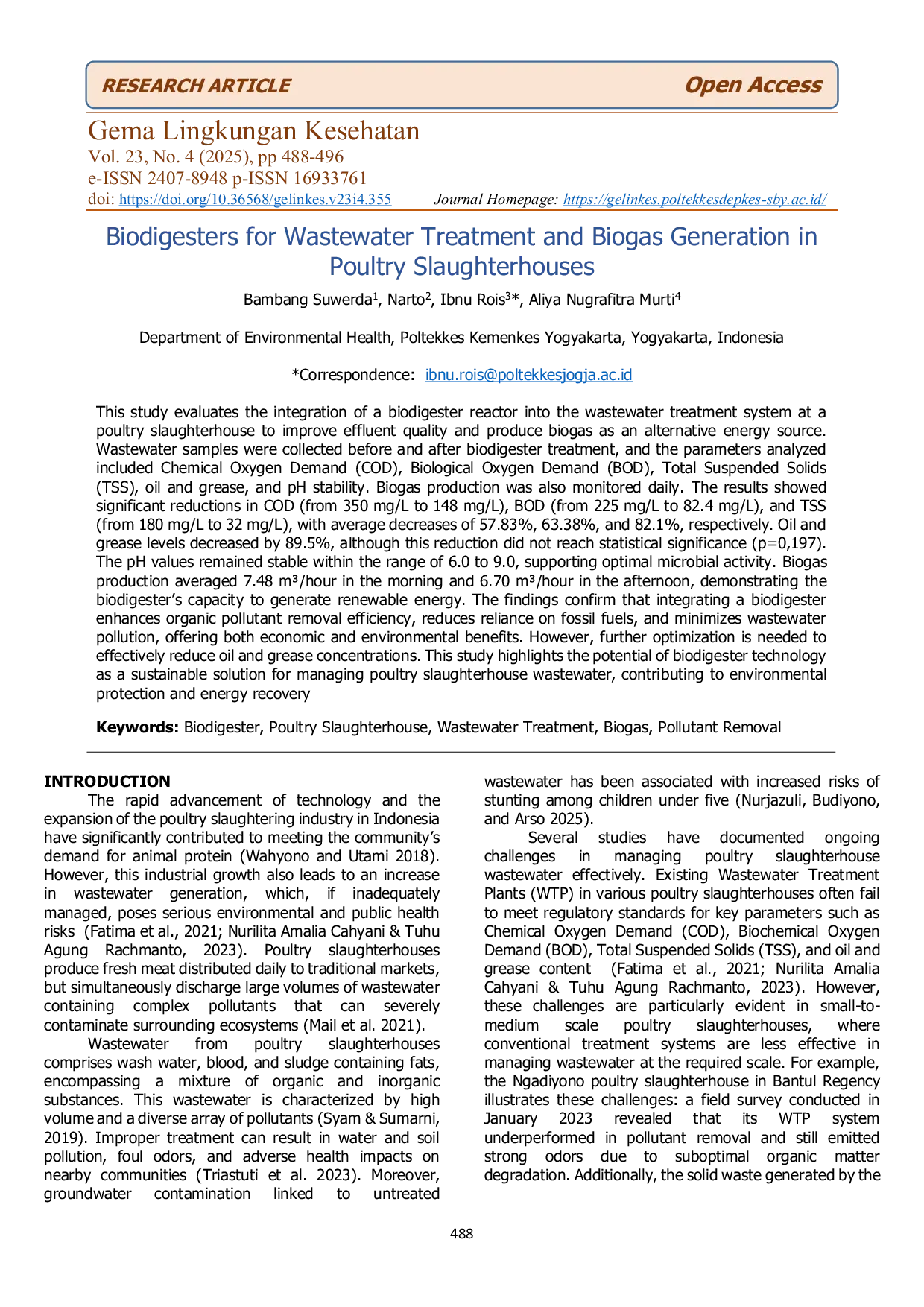
POLTEKKESDEPKES SBYPOLTEKKESDEPKES SBY Sampel limbah diambil sebelum dan sesudah perlakuan biodigester, dan parameter yang dianalisis meliputi Demand Oksigen Kimia (COD), Demand Oksigen BiologisSampel limbah diambil sebelum dan sesudah perlakuan biodigester, dan parameter yang dianalisis meliputi Demand Oksigen Kimia (COD), Demand Oksigen Biologis
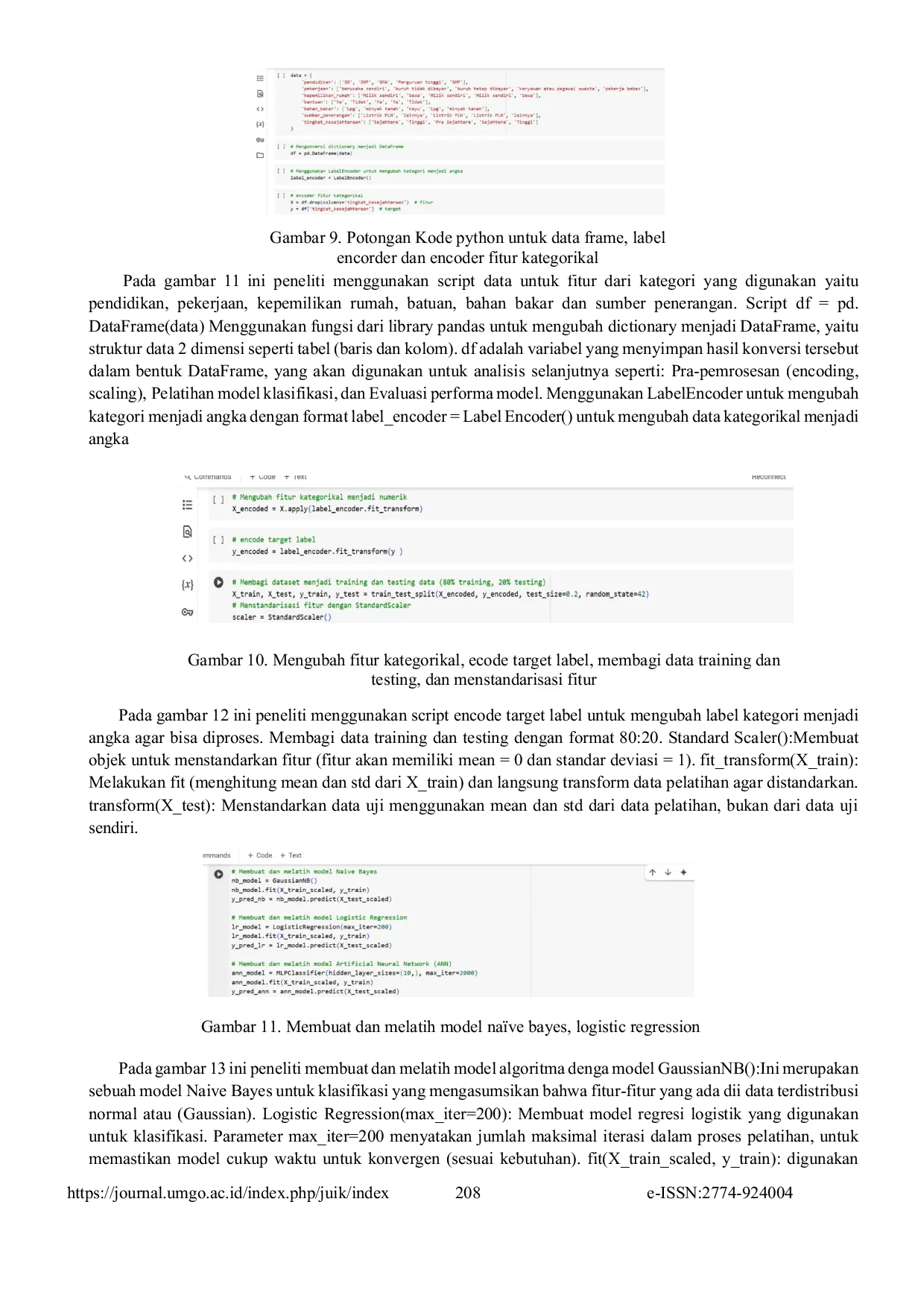
UMGOUMGO Kehidupan ekonomi desa Batu Hijau mereka bergantung secara langsung pada pemanfaatan sumber daya laut dan pesisir. Sebagian besar masyarakat yang ada diKehidupan ekonomi desa Batu Hijau mereka bergantung secara langsung pada pemanfaatan sumber daya laut dan pesisir. Sebagian besar masyarakat yang ada di
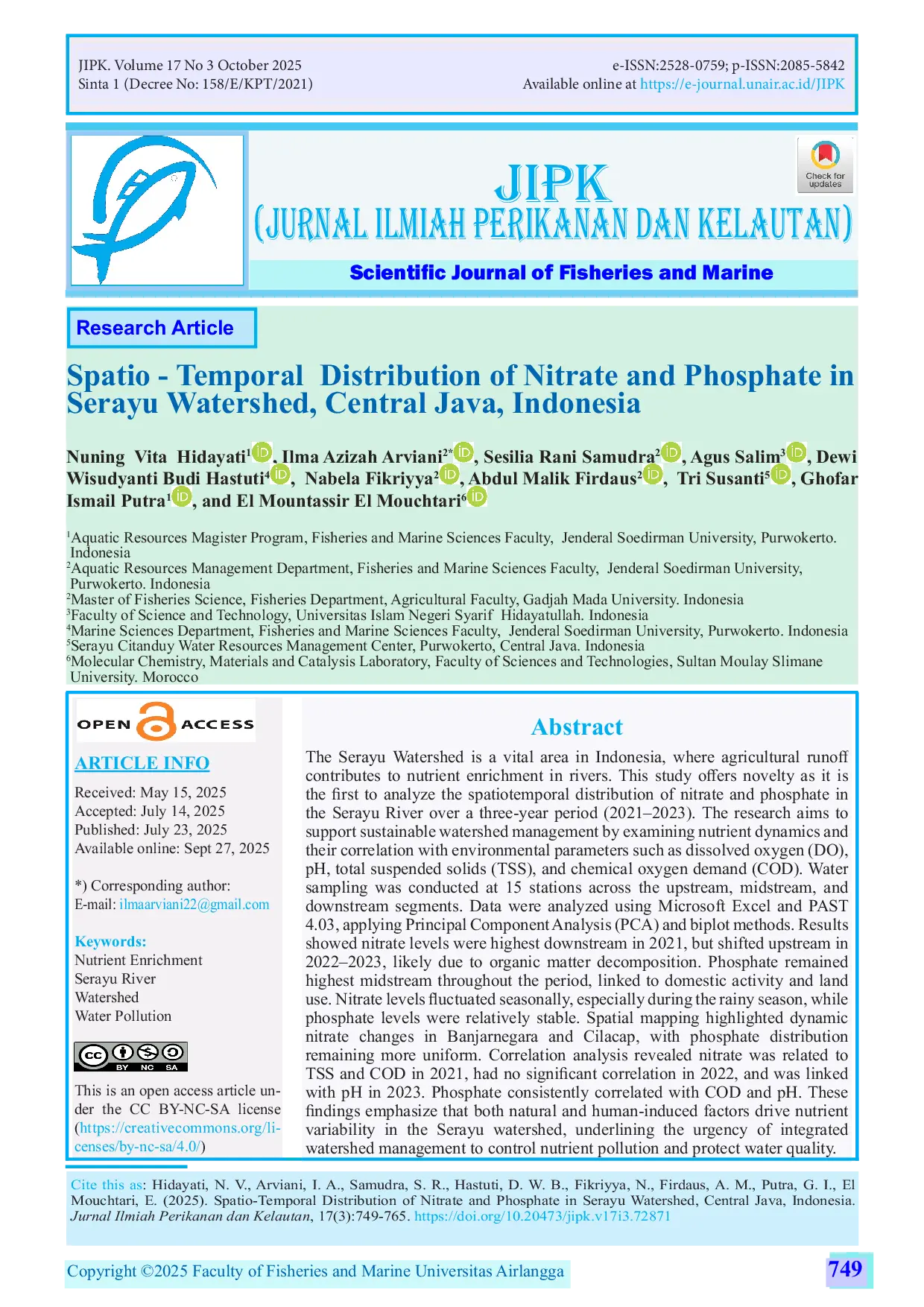
UNAIRUNAIR Analisis korelasi mengungkapkan nitrat berhubungan dengan TSS dan COD pada tahun 2021, tidak signifikan pada tahun 2022, dan berhubungan dengan pH padaAnalisis korelasi mengungkapkan nitrat berhubungan dengan TSS dan COD pada tahun 2021, tidak signifikan pada tahun 2022, dan berhubungan dengan pH pada
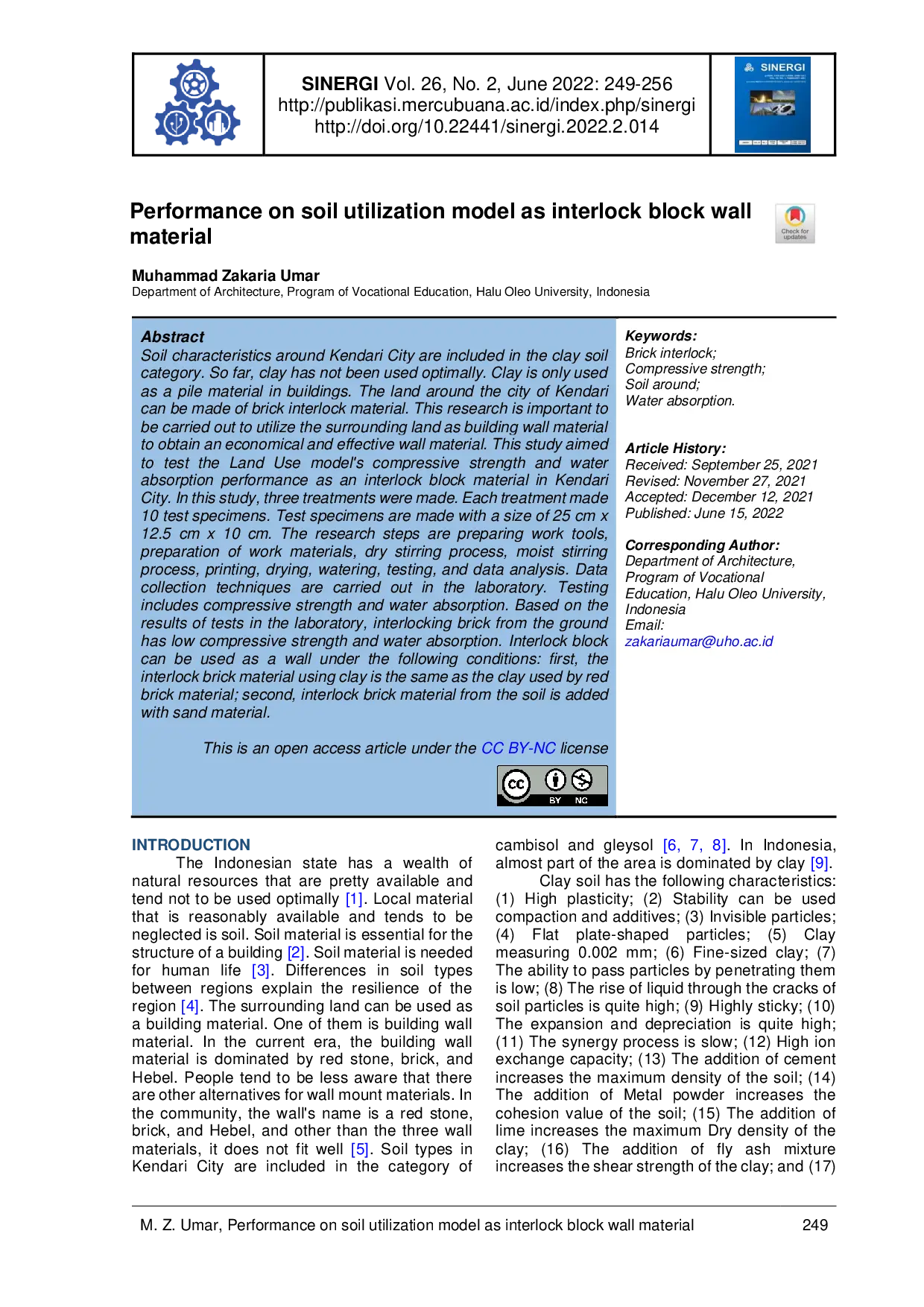
UMBUMB Karakteristik tanah di sekitar Kota Kendari tergolong tanah liat. Hingga kini, tanah liat belum dimanfaatkan secara optimal dan hanya digunakan sebagaiKarakteristik tanah di sekitar Kota Kendari tergolong tanah liat. Hingga kini, tanah liat belum dimanfaatkan secara optimal dan hanya digunakan sebagai
Useful /
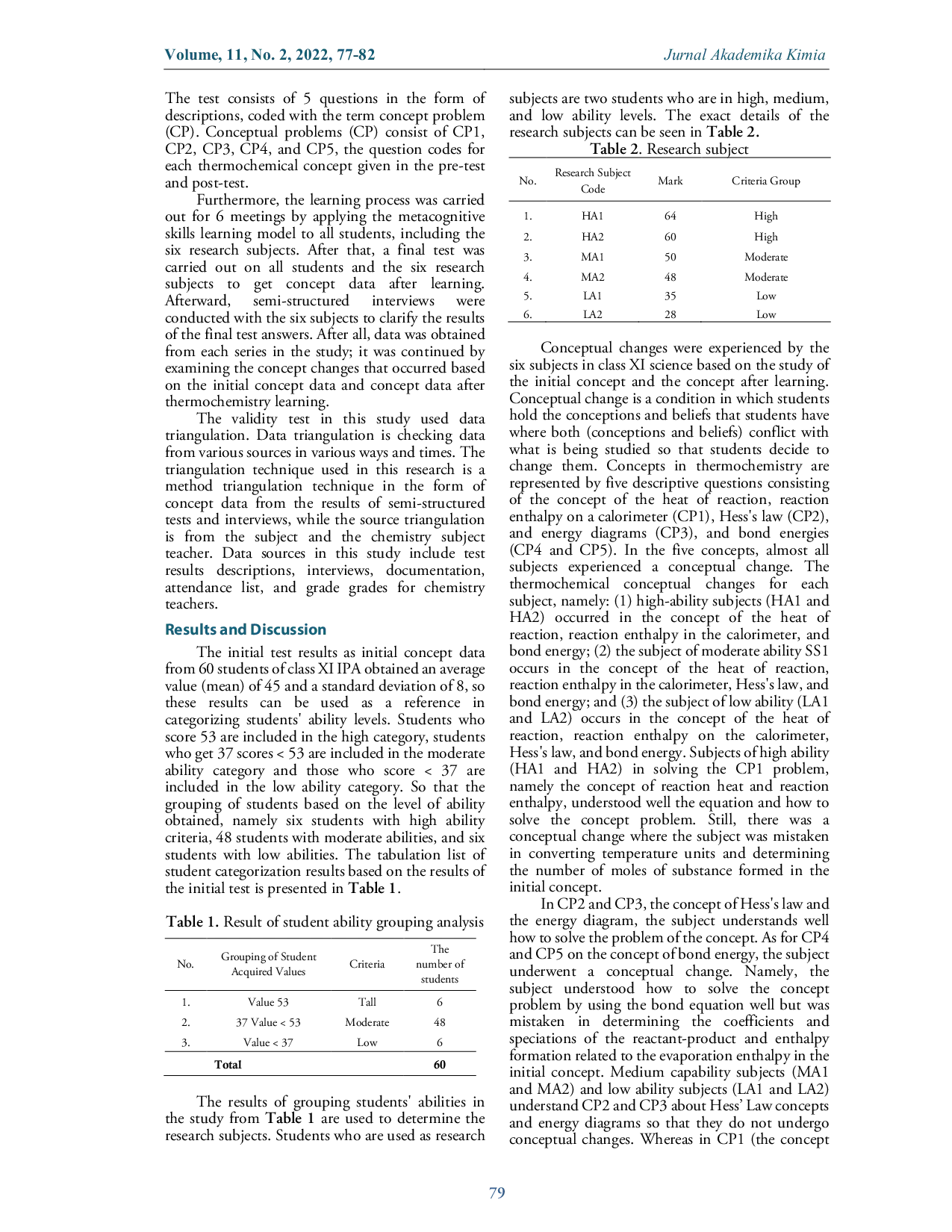
JURNALFKIPUNTADJURNALFKIPUNTAD Berbagai konsep awal dapat menjadi penghalang atau dukungan dalam memahami konsep baru. Penelitian perubahan konsep kimia dilakukan pada materi termokimia.Berbagai konsep awal dapat menjadi penghalang atau dukungan dalam memahami konsep baru. Penelitian perubahan konsep kimia dilakukan pada materi termokimia.
JURNALFKIPUNTADJURNALFKIPUNTAD Morfologi sampel terlihat berbeda setelah diberi perlakuan asam. sampel liat alami yang dileach asam menunjukkan morfologi berpori, sedangkan liat alamiMorfologi sampel terlihat berbeda setelah diberi perlakuan asam. sampel liat alami yang dileach asam menunjukkan morfologi berpori, sedangkan liat alami
UKMCUKMC Sesuai dengan respon pada kuisioner, penggemar menyimpan kekaguman pada penggemar lain yang memiliki koleksi yang langka dan mahal milik idola mereka,Sesuai dengan respon pada kuisioner, penggemar menyimpan kekaguman pada penggemar lain yang memiliki koleksi yang langka dan mahal milik idola mereka,
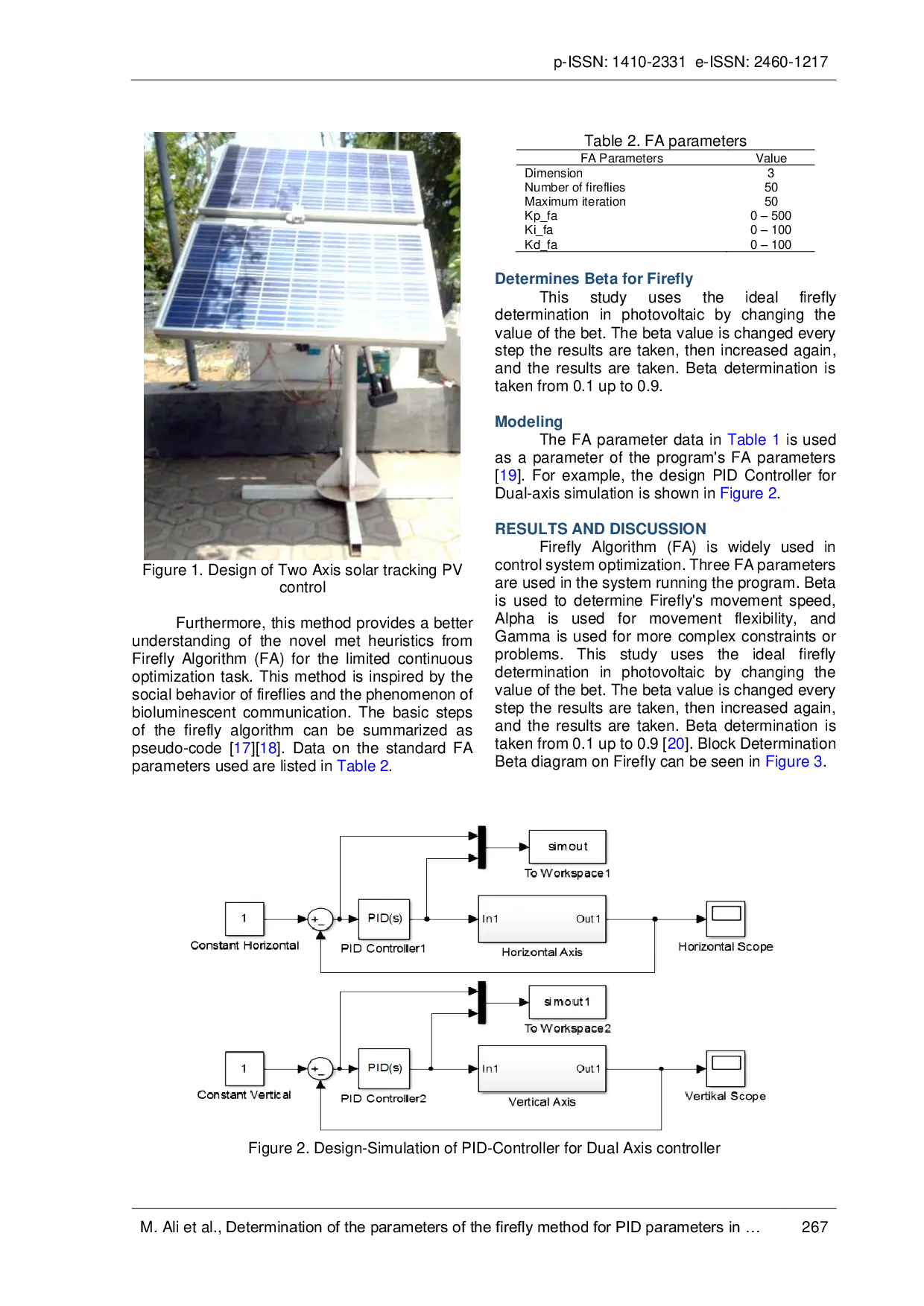
UMBUMB Pada sumbu horizontal, hasil terbaik jika Beta diberikan pada 0. 4, dan hasil terburuk jika Beta diberikan pada 0. 8. Pada sumbu vertikal, hasil terbaikPada sumbu horizontal, hasil terbaik jika Beta diberikan pada 0. 4, dan hasil terburuk jika Beta diberikan pada 0. 8. Pada sumbu vertikal, hasil terbaik