POLTEKKESKUPANGPOLTEKKESKUPANG
JURNAL INFO KESEHATANJURNAL INFO KESEHATANTuberculosis (TB) remains a major public health concern in Asia, particularly in South and Southeast Asia. Comorbidities such as diabetes mellitus and HIV/AIDS substantially contribute to the regional TB burden, while multidrug-resistant tuberculosis (MDR-TB) continues to challenge TB control efforts. This study aimed to identify key factors associated with the high prevalence of TB in Asia and to highlight the need for integrated prevention and treatment strategies. A quasi-systematic literature review was conducted following PRISMA-based screening procedures. Peer-reviewed articles and official health reports published between 2015 and 2024 were systematically searched and assessed. After screening and eligibility evaluation, 15 studies were included in the final analysis. The results revealed consistent patterns indicating that diabetes mellitus significantly increases the risk of TB and worsens treatment outcomes, particularly in countries such as Indonesia, while HIV infection remains a major driver of active TB cases in Thailand and other high-burden settings. MDR-TB emerged as a critical regional threat, primarily associated with delayed diagnosis, limited laboratory capacity, shortages of trained healthcare personnel, and weak surveillance systems. Additionally, socioeconomic inequalities and inadequate healthcare infrastructure were recurrently identified as major barriers to effective TB control. In conclusion, reducing the TB burden in Asia requires a multifaceted and integrated approach addressing medical, social, economic, and health system factors. Strengthening diagnostic capacity, improving data reporting consistency, and enhancing regional collaboration are essential to achieving global TB elimination targets.
The factors influencing tuberculosis (TB) incidence in Asia are highly complex and interrelated, encompassing socioeconomic disparities, comorbid conditions, environmental determinants, and systemic health challenges.Effective TB control in Asia requires an integrated, multisectoral approach that simultaneously addresses medical, social, and economic determinants.Priority should be given to managing comorbid diseases such as diabetes mellitus and HIV/AIDS, improving living and environmental conditions, expanding equitable access to healthcare services, and strengthening national health systems.
Berdasarkan temuan penelitian ini, beberapa saran penelitian lanjutan dapat diajukan. Pertama, penelitian lebih lanjut diperlukan untuk memahami interaksi kompleks antara faktor sosial ekonomi, kondisi lingkungan, dan komorbiditas dalam memengaruhi risiko TB di berbagai wilayah Asia. Penelitian ini dapat menggunakan pendekatan kuantitatif dan kualitatif untuk menggali lebih dalam pengalaman dan persepsi masyarakat terkait TB. Kedua, studi intervensi yang mengevaluasi efektivitas strategi terpadu dalam mengelola komorbiditas seperti diabetes dan HIV/AIDS pada pasien TB sangat penting. Penelitian ini harus mempertimbangkan aspek kepatuhan pengobatan, akses layanan kesehatan, dan dukungan sosial. Ketiga, penelitian inovatif yang berfokus pada pengembangan dan implementasi teknologi baru dalam diagnosis dan pengobatan TB, seperti penggunaan kecerdasan buatan (AI) untuk analisis citra radiologi atau pengembangan obat anti-TB yang lebih efektif, perlu didorong. Penelitian ini harus memperhatikan aspek biaya, ketersediaan, dan penerimaan teknologi oleh tenaga kesehatan dan pasien. Secara keseluruhan, penelitian-penelitian ini diharapkan dapat memberikan bukti empiris yang kuat untuk mendukung pengembangan kebijakan dan program pengendalian TB yang lebih efektif dan berkelanjutan di Asia.
- Journal of Family and Community Medicine. journal family community medicine doi.org/10.4103/jfcm.jfcm_112_22Journal of Family and Community Medicine journal family community medicine doi 10 4103 jfcm jfcm 112 22
- Better understanding extrapulmonary tuberculosis: A scoping review of public health impact in Pakistan,... doi.org/10.1002/hsr2.1357Better understanding extrapulmonary tuberculosis A scoping review of public health impact in Pakistan doi 10 1002 hsr2 1357
- Prevalence and predictive factors of tuberculosis treatment interruption in the Asia region: a systematic... gh.bmj.com/content/8/1/e010592Prevalence and predictive factors of tuberculosis treatment interruption in the Asia region a systematic gh bmj content 8 1 e010592
| File size | 542.81 KB |
| Pages | 9 |
| DMCA | Report |
Related /
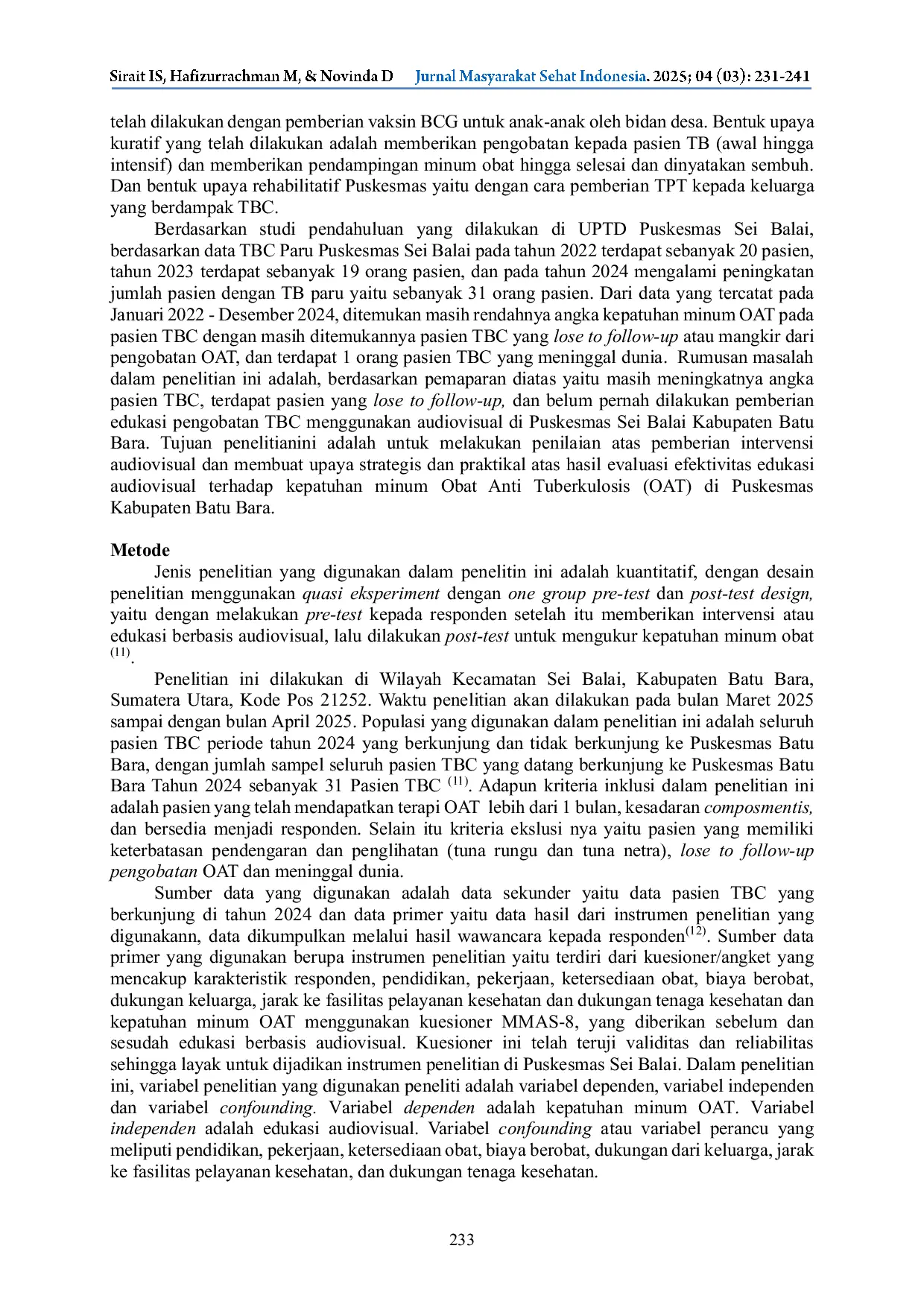
YMPAIYMPAI Populasi mencakup seluruh pasien TBC yang terdaftar sepanjang tahun 2024, dan dipilih 30 orang sebagai sampel yang hadir dalam sesi edukasi pada 4 MaretPopulasi mencakup seluruh pasien TBC yang terdaftar sepanjang tahun 2024, dan dipilih 30 orang sebagai sampel yang hadir dalam sesi edukasi pada 4 Maret

UIBUIB Methods: A literature search was conducted in PubMed, ScienceDirect, and Google Scholar for English-language articles published between 2020 and 2025 usingMethods: A literature search was conducted in PubMed, ScienceDirect, and Google Scholar for English-language articles published between 2020 and 2025 using
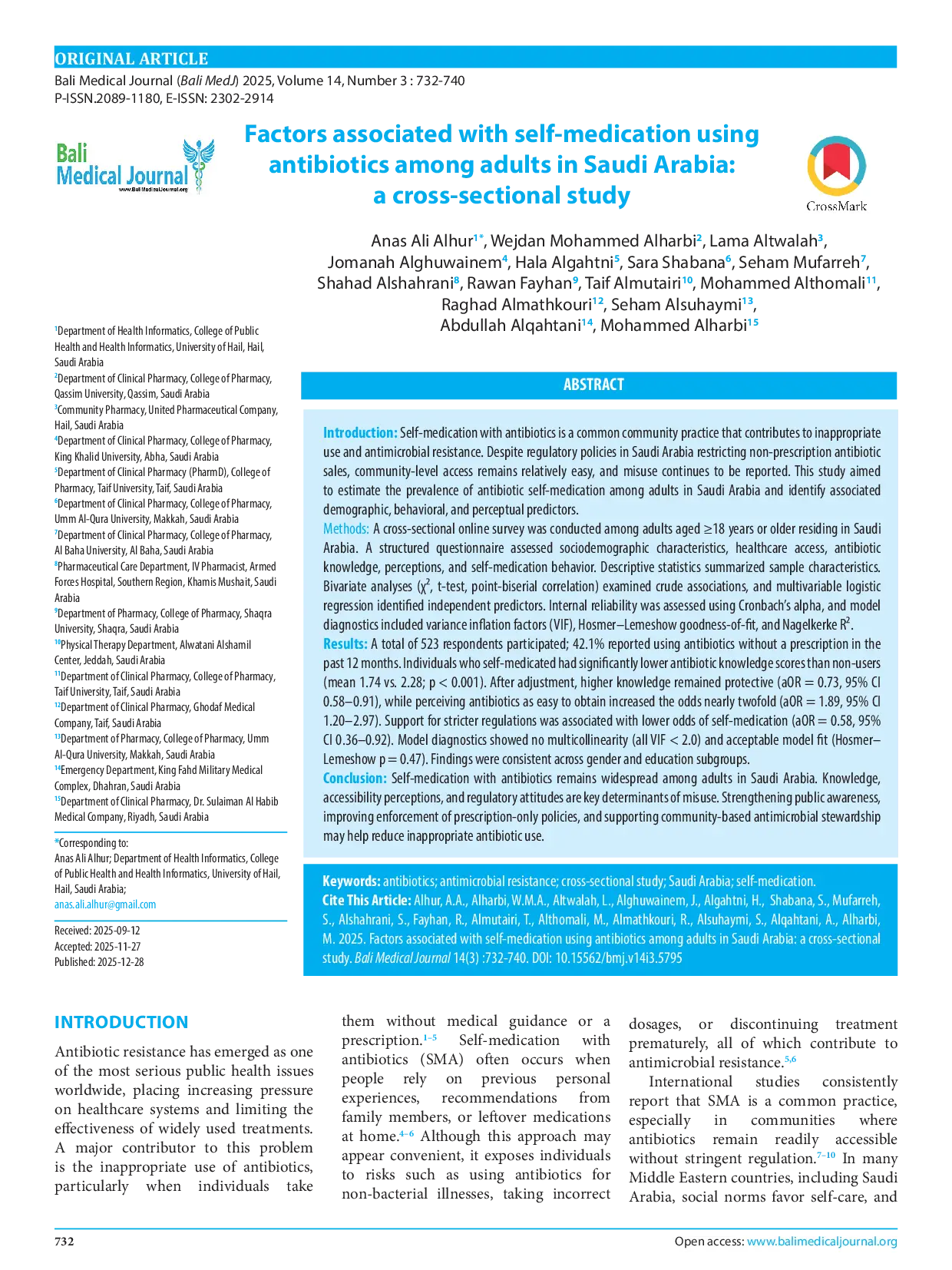
BALIMEDICALJOURNALBALIMEDICALJOURNAL Meskipun kebijakan regulasi di Arab Saudi membatasi penjualan antibiotik tanpa resep, akses di tingkat komunitas tetap relatif mudah, dan penyalahgunaanMeskipun kebijakan regulasi di Arab Saudi membatasi penjualan antibiotik tanpa resep, akses di tingkat komunitas tetap relatif mudah, dan penyalahgunaan
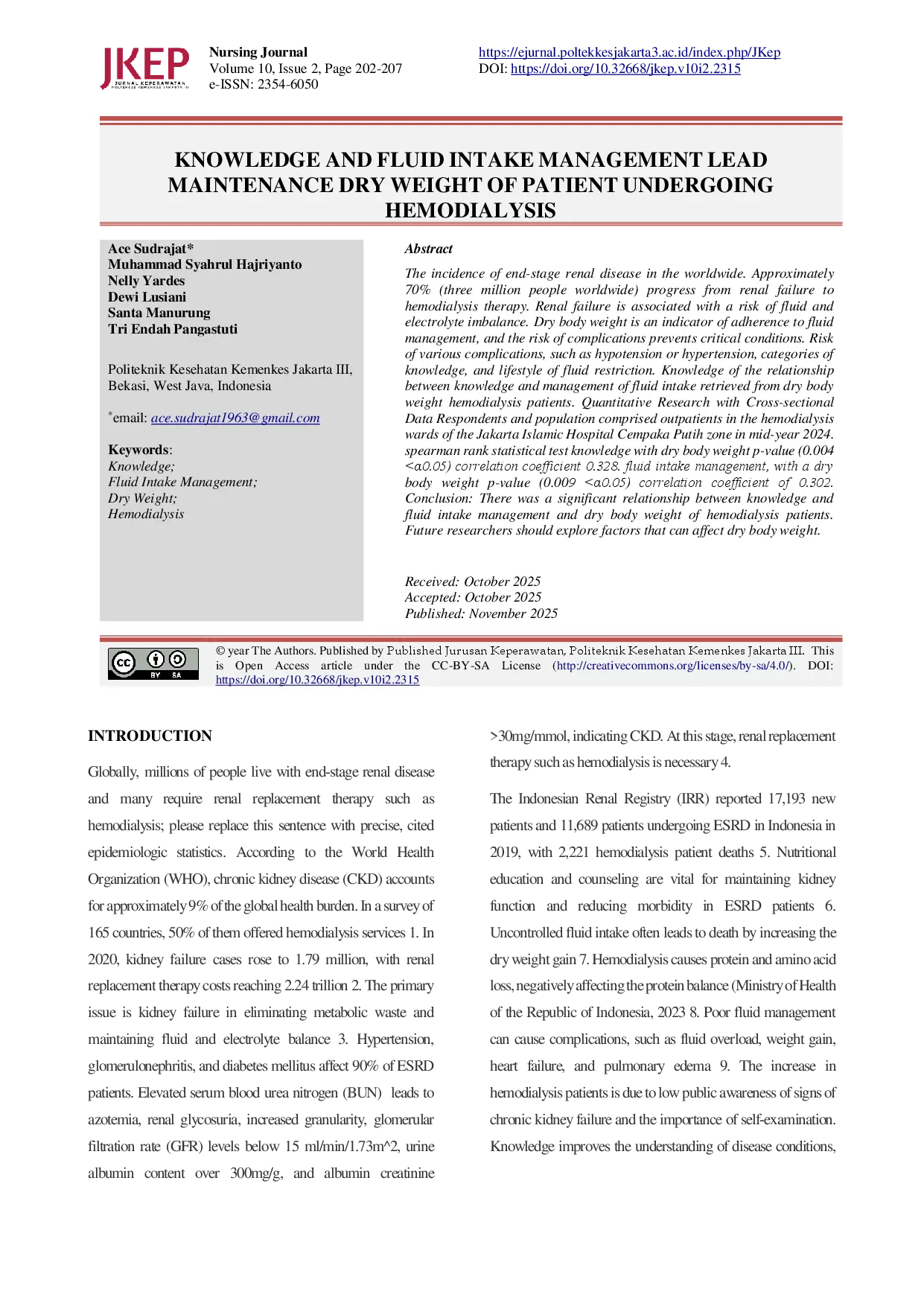
POLTEKKES JAKARTA 3POLTEKKES JAKARTA 3 302). The study concludes that there is a significant relationship between knowledge and fluid intake management and the dry body weight of hemodialysis302). The study concludes that there is a significant relationship between knowledge and fluid intake management and the dry body weight of hemodialysis
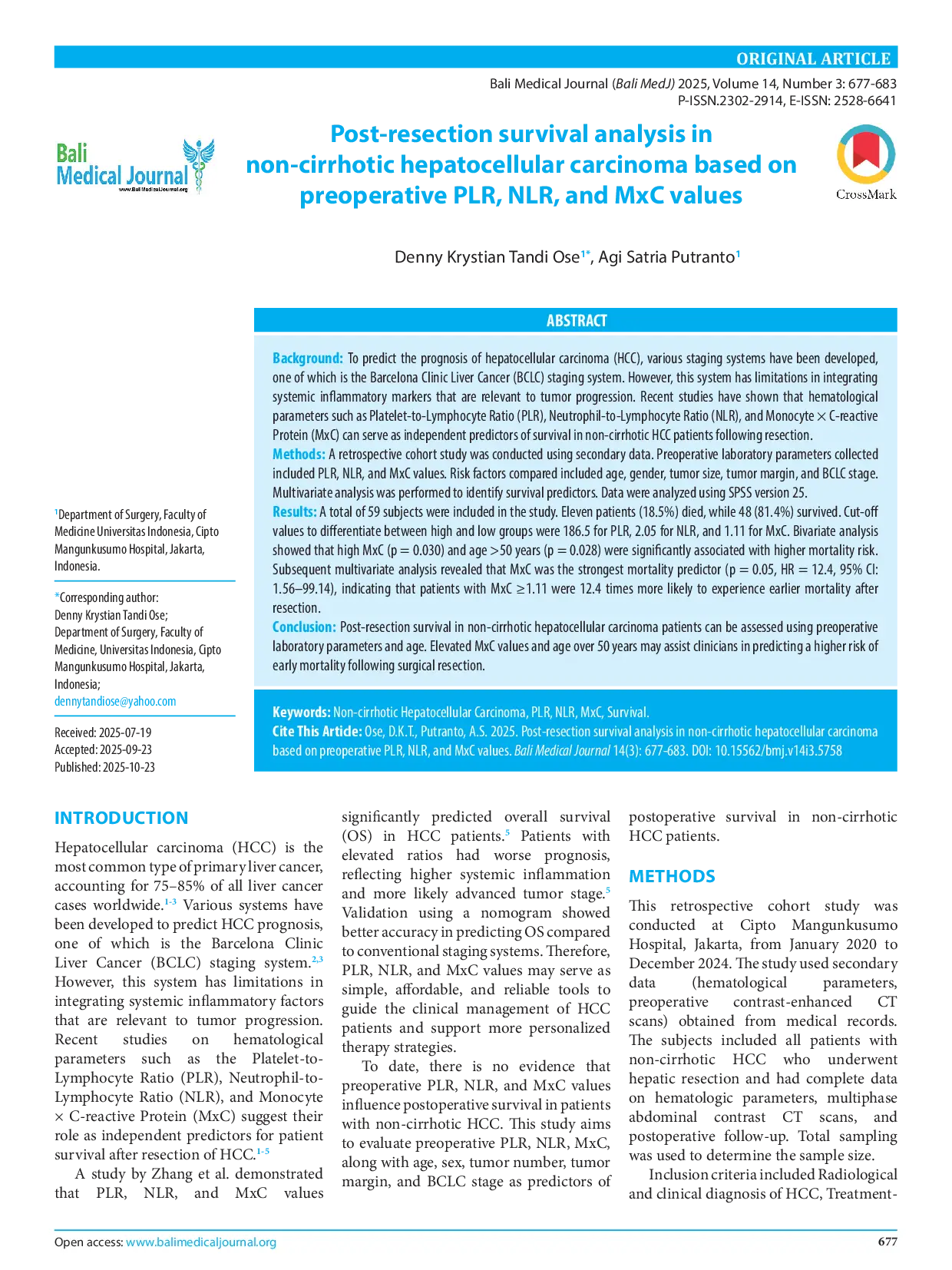
BALIMEDICALJOURNALBALIMEDICALJOURNAL Analisis multivariat selanjutnya mengungkapkan bahwa MxC adalah prediktor mortalitas terkuat (p = 0,05, HR = 12,4, 95% CI: 1,56–99,14), yang menunjukkanAnalisis multivariat selanjutnya mengungkapkan bahwa MxC adalah prediktor mortalitas terkuat (p = 0,05, HR = 12,4, 95% CI: 1,56–99,14), yang menunjukkan
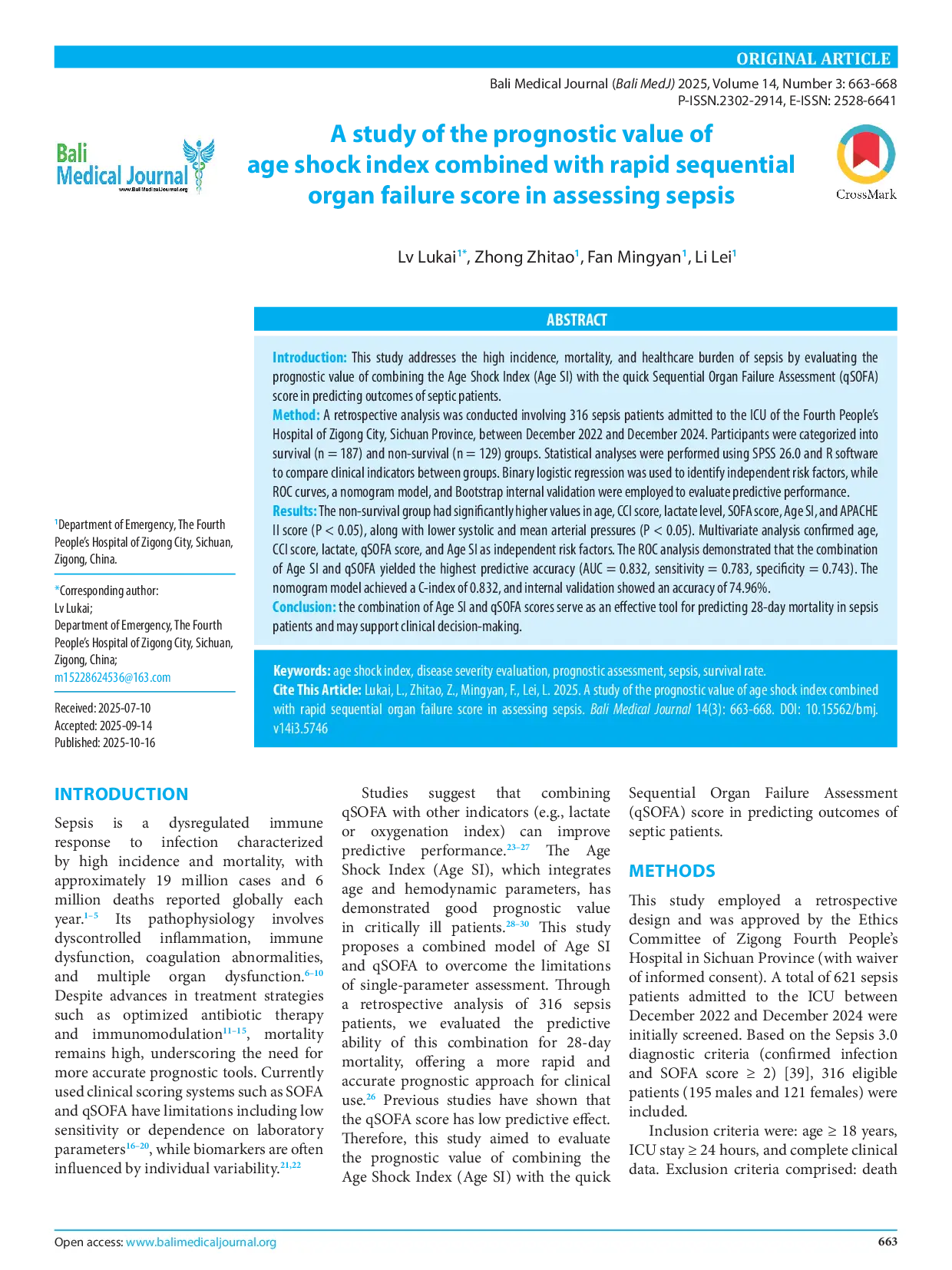
BALIMEDICALJOURNALBALIMEDICALJOURNAL Model nomogram memperoleh C‑index 0,832, dan validasi internal menunjukkan akurasi 74,96%. Kesimpulan: Kombinasi skor Age SI dan qSOFA merupakan alatModel nomogram memperoleh C‑index 0,832, dan validasi internal menunjukkan akurasi 74,96%. Kesimpulan: Kombinasi skor Age SI dan qSOFA merupakan alat

UNAIRUNAIR Langkah ini menunjukkan bahwa Indonesia ingin lebih aktif menentukan arah kerja sama kesehatan globalnya, sekaligus mengungkap adanya ketimpangan kekuasaanLangkah ini menunjukkan bahwa Indonesia ingin lebih aktif menentukan arah kerja sama kesehatan globalnya, sekaligus mengungkap adanya ketimpangan kekuasaan
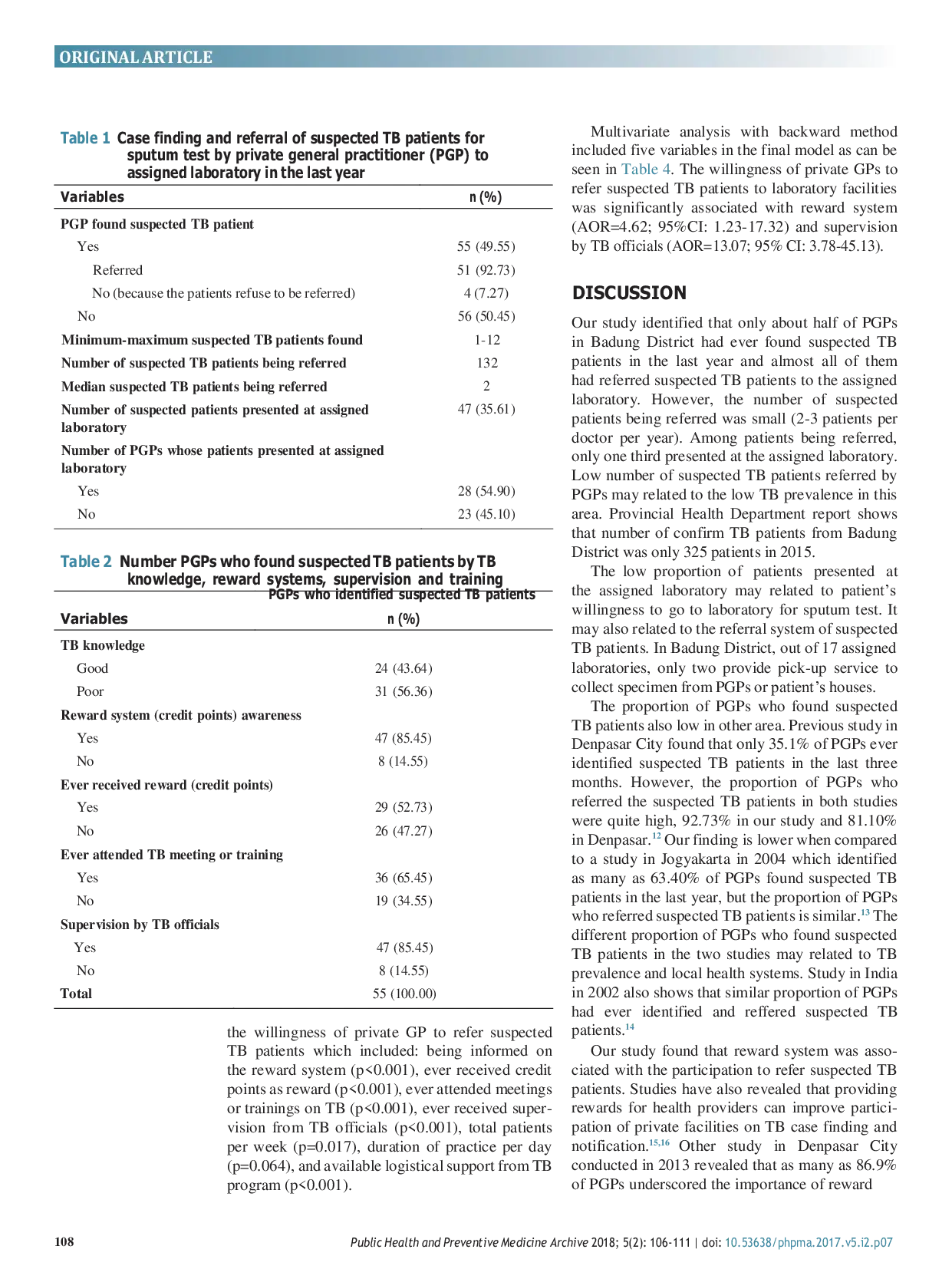
PHPMARCHIVEPHPMARCHIVE Metode: Studi potong lintas dilakukan dari Februari hingga April 2017. Sejumlah 111 dokter umum swasta yang praktik di Kabupaten Badung diwawancara. SelainMetode: Studi potong lintas dilakukan dari Februari hingga April 2017. Sejumlah 111 dokter umum swasta yang praktik di Kabupaten Badung diwawancara. Selain
Useful /

UNAIRUNAIR Riset implementasi berfungsi sebagai metode bagi peneliti untuk mengidentifikasi determinan implementasi, merumuskan strategi implementasi, dan menilaiRiset implementasi berfungsi sebagai metode bagi peneliti untuk mengidentifikasi determinan implementasi, merumuskan strategi implementasi, dan menilai

ADPETIKISINDOADPETIKISINDO Pernikahan beda agama sering terjadi dalam masyarakat dan menjadi kenyataan sosial yang sulit diselesaikan. Hal ini menimbulkan permasalahan karena adanyaPernikahan beda agama sering terjadi dalam masyarakat dan menjadi kenyataan sosial yang sulit diselesaikan. Hal ini menimbulkan permasalahan karena adanya

ADPETIKISINDOADPETIKISINDO Meskipun telah banyak kajian dilakukan, tulisan ini hanya menyajikan sebagian kecil sebagai langkah awal untuk mengumpulkan dan memetakan berbagai penelitianMeskipun telah banyak kajian dilakukan, tulisan ini hanya menyajikan sebagian kecil sebagai langkah awal untuk mengumpulkan dan memetakan berbagai penelitian

TRINITATRINITA Berdasarkan hasil penelitian mengenai pengaruh gaya kepemimpinan terhadap kinerja dosen di Universitas Trinita Manado, ditemukan bahwa tidak terdapat hubunganBerdasarkan hasil penelitian mengenai pengaruh gaya kepemimpinan terhadap kinerja dosen di Universitas Trinita Manado, ditemukan bahwa tidak terdapat hubungan