SYEKH NURJATISYEKH NURJATI
EL-IBTIKAR: Jurnal Pendidikan Bahasa ArabEL-IBTIKAR: Jurnal Pendidikan Bahasa ArabThis study discusses the implementation of learning Arabic by using direct methods in practice. Implementation of learning includes several aspects, including opening lessons, delivering material, and closing lessons. In practice, the direct method of learning Arabic is strongly supported by the regulation of how learning can be realized by the expected results. This relates to learning done to students at the elementary level. In learning a foreign language, elementary students tend to be able to receive language quickly like Mothers tongue, but if taught as a child. The research method used is descriptive qualitative research instruments in the form of observation, interviews, and documentation. Then the data are analyzed by data reduction, data display, and verification. The results of this study are 1) the application of learning Arabic with the direct method is by the needs of students where the teacher is native from Libya. Therefore, Arabic is taught directly by native speakers so students can learn languages according to a fluent dialect, 2) the implementation of learning is said to have fulfilled the rules on aspects of the opening lesson, delivering material and closing lesson. However, learning that is carried out by the direct method still teaches in writing skills, whereas in essence, the direct method emphasizes more on listening and speaking skills.
The implementation of Arabic learning in Kuttab Ibadurrahman is going well, as the implementation is in accordance with the learning objectives and adapted to the components of opening and closing lessons.However, the direct method should emphasize speaking skills, as its purpose is to exercise students critical thinking in Arabic without translation.Like learning a mother tongue, Arabic learning should utilize the direct method from an early stage.
Based on the background, methods, results, and limitations of this study, further research could explore the effectiveness of the direct method in developing specific Arabic language skills, such as listening comprehension and speaking fluency, among elementary school students. Additionally, a comparative study could be conducted to assess the differences in learning outcomes between students taught using the direct method and those taught using traditional methods. Finally, research could investigate the challenges faced by teachers in implementing the direct method and identify strategies to overcome these challenges, potentially through professional development programs focused on enhancing their fluency and pedagogical skills in Arabic language teaching. These investigations would contribute to a more nuanced understanding of the direct methods potential and limitations in the context of Arabic language education.
| File size | 788.84 KB |
| Pages | 16 |
| DMCA | Report |
Related /
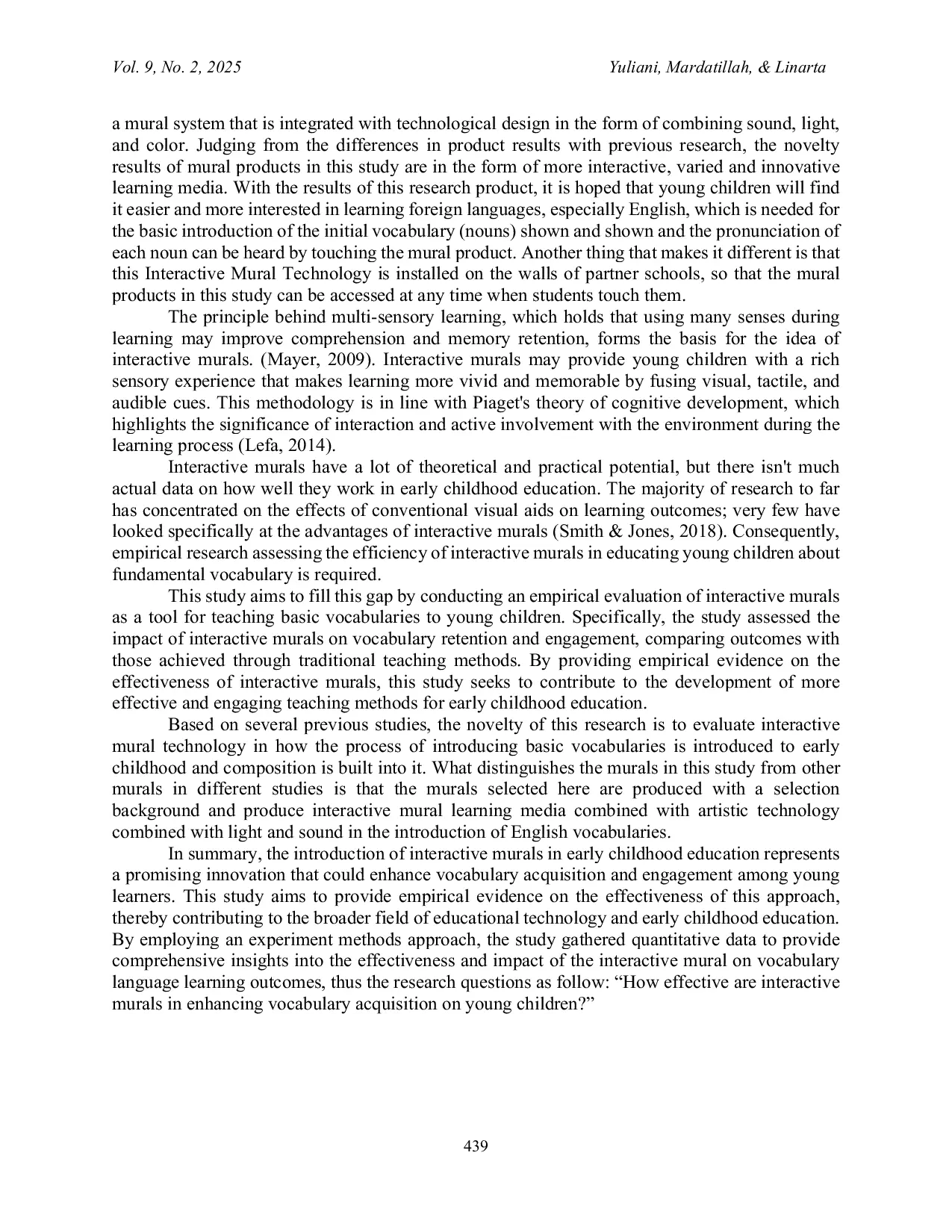
UNMUNM The primary objectives of this study are to evaluate the impact of interactive murals on vocabulary retention among young children, assess the levels ofThe primary objectives of this study are to evaluate the impact of interactive murals on vocabulary retention among young children, assess the levels of

PENELITIPENELITI The foster education model and meeting invitations are key strategies for the success of the Zendeling in Minahasa. Education has not been regulated inThe foster education model and meeting invitations are key strategies for the success of the Zendeling in Minahasa. Education has not been regulated in

PENELITIPENELITI Based on the above discussion, it can be concluded that e-learning LMS is effectively used as a learning medium based on Information Technology for studentsBased on the above discussion, it can be concluded that e-learning LMS is effectively used as a learning medium based on Information Technology for students

LPPPIPUBLISHINGLPPPIPUBLISHING The purpose of this study is to analyze and examine green marketing in comprehensive business strategy. The research method in this study uses qualitativeThe purpose of this study is to analyze and examine green marketing in comprehensive business strategy. The research method in this study uses qualitative

IJCIEDIJCIED 596, sig. = 0. 000) than psychological readiness (β = 0. 250, sig. 007). Qualitative findings from interviews support these results, showing that readiness596, sig. = 0. 000) than psychological readiness (β = 0. 250, sig. 007). Qualitative findings from interviews support these results, showing that readiness

JURNALALKHAIRATJURNALALKHAIRAT The decline in students motivation and effectiveness in memorizing the Quran raises concerns about the sustainability of traditional approaches in IslamicThe decline in students motivation and effectiveness in memorizing the Quran raises concerns about the sustainability of traditional approaches in Islamic

IAIN SUIAIN SU Educational communication has an important role in improving oral communication skills. Through teacher-student interaction and structured learning, studentsEducational communication has an important role in improving oral communication skills. Through teacher-student interaction and structured learning, students

POLTEKKES PALEMBANGPOLTEKKES PALEMBANG The results show that the comparison of Virginia Hendersons theory describes the definition of nursing by identifying 14 needs that underlie nursing care,The results show that the comparison of Virginia Hendersons theory describes the definition of nursing by identifying 14 needs that underlie nursing care,
Useful /
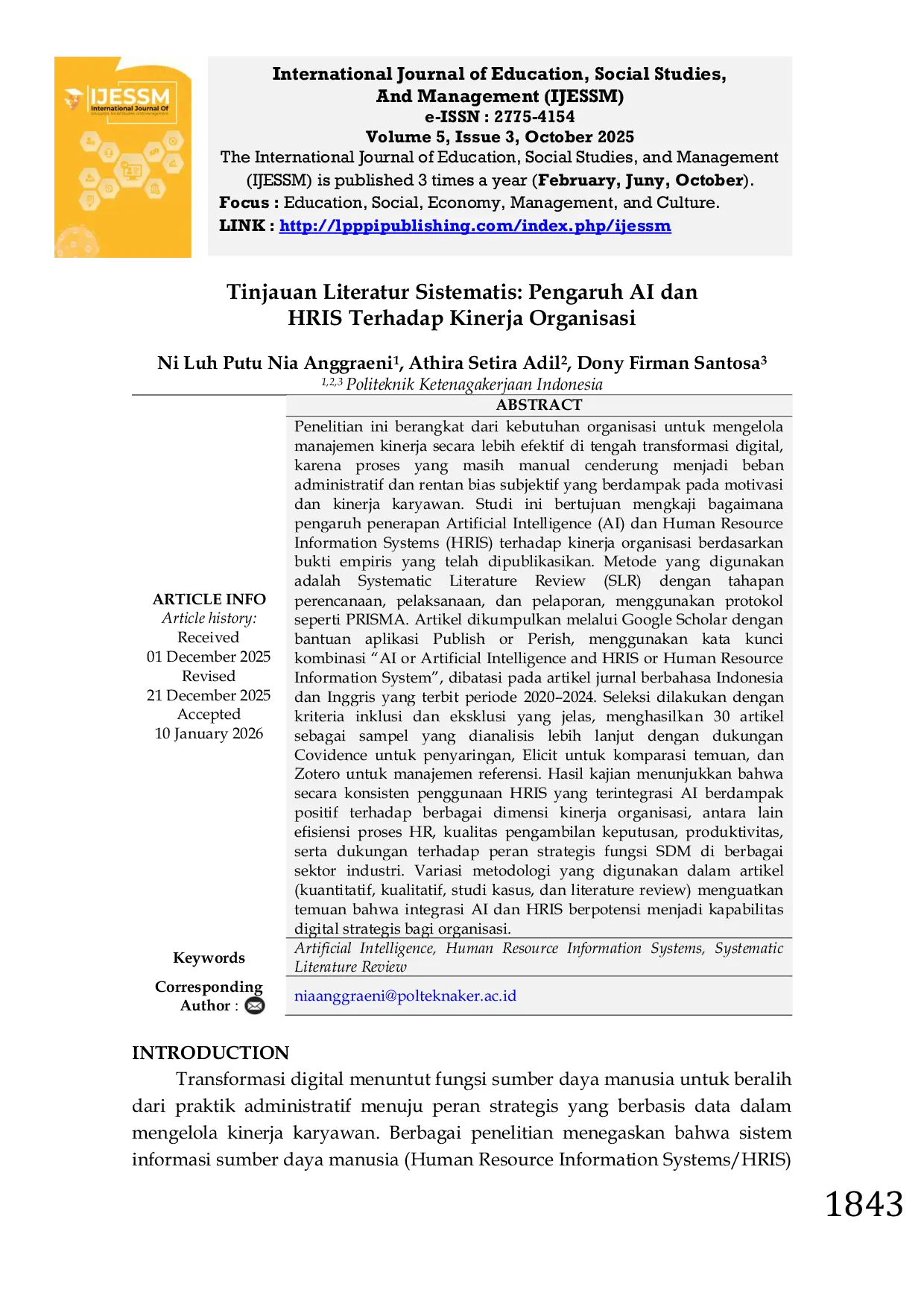
LPPPIPUBLISHINGLPPPIPUBLISHING Sintesis temuan dari berbagai konteks dan metodologi menguatkan pandangan teoritis bahwa HRIS bukan lagi sekadar alat administratif, tetapi—ketika diperkayaSintesis temuan dari berbagai konteks dan metodologi menguatkan pandangan teoritis bahwa HRIS bukan lagi sekadar alat administratif, tetapi—ketika diperkaya

MANDALABHAKTIMANDALABHAKTI Data dianalisis secara tematik untuk mengidentifikasi strategi penerapan manajemen layanan hotel serta kaitannya dengan kepuasan dan pengalaman wisatawan.Data dianalisis secara tematik untuk mengidentifikasi strategi penerapan manajemen layanan hotel serta kaitannya dengan kepuasan dan pengalaman wisatawan.

AKSARAGLOBALAKSARAGLOBAL Wawancara akan membantu menggali pandangan dan perspektif guru PAI, terkait keterlibatan guru PAI dalam evaluasi pembelajaran sumatif. Dokumen sepertiWawancara akan membantu menggali pandangan dan perspektif guru PAI, terkait keterlibatan guru PAI dalam evaluasi pembelajaran sumatif. Dokumen seperti

AISYAHUNIVERSITYAISYAHUNIVERSITY Terapi perawatan luka dengan sinar inframerah selama tiga hari terbukti mengurangi gangguan integritas kulit pada pasien ulkus diabetik. Evaluasi padaTerapi perawatan luka dengan sinar inframerah selama tiga hari terbukti mengurangi gangguan integritas kulit pada pasien ulkus diabetik. Evaluasi pada