UNIMALUNIMAL
Jurnal Ilmu Sosial dan Ilmu Politik Malikussaleh (JSPM)Jurnal Ilmu Sosial dan Ilmu Politik Malikussaleh (JSPM)Negara-negara di Afrika terus mewakili contoh-contoh praktis negara-bangsa yang gagal karena bertahannya semua indikator keterbelakangan yang diketahui. Ironisnya, benua itu memiliki sejarah sosial yang membanggakan yang memuji kontribusinya terhadap pembangunan global. Namun, pengamatan yang cermat pada sebagian besar negara (seperti Nigeria) yang membentuk benua mengungkapkan gambaran realitas pembangunan manusia yang merugikan. Skenario sosial-ekonomi negatif ini telah menempatkan benua Afrika di garis depan tujuan bantuan asing meskipun Afrika memiliki semua yang diperlukan untuk mendorong agenda pembangunan yang sehat. Cara kebijakan pembangunan yang jauh dari jangkauan massa dalam hal masukan, kebutuhan, dan aspirasi mereka, menunjukkan sifat karakter kolonial yang melingkupi pembuatan kebijakan di negara seperti Nigeria. Makalah ini menggambarkan proses dekolonisasi pembuatan kebijakan dan memastikan bahwa massa terintegrasi ke dalam proses akan sangat membantu mensintesis aspirasi masyarakat adat, kelompok elit, dan pengalaman yang valid untuk pembangunan berkelanjutan.
The foothold of the British Empire builders in what is known today as Nigeria came with some complications that bedeviled the indigenous people.While the complications were carefully orchestrated to perpetually cage the indigenous people, they worked out for the colonialists economic and political interests.In the post-colonial era, which is supposedly the freedom of the colonized in decision-making and policy proposals in line with indigenous needs and aspiration, the colonized were trapped in the net of neocolonialism, which is more complicated than colonialism itself.While the colonial vestiges enabled the British government to tie the Nigerian system to her apron, the monologue nature of the United Nations designed by North America and Western Europe, opened the door for America and the host of other countries, to trap Nigeria in the framework of neocolonialism.Each of these stages of colonial experience such as colonialism and neocolonialism has the socioeconomic logical policy framework.In each of the epochs marked by a regime, Nigerian political and economic landscapes are locked in the orbit of one neocolonialist or more.Currently, we are in the cage of Saudi Arabia with America, Europe, and Asian nations.The vestiges of colonial structured policies will continue to make the Nigerian system the more you look, the less you see save for the reversion of policy-making processes and patterns.To achieve this, there is a need for collective force.Although the political structure of postcolonial Nigeria is fraught with the problem of external dependency, and somewhat internal anarchy, the pre-colonial grouping such as tribe and ethnic groups, on which the subsequent regionalization and political units were created can still be relevant in the current need for policy process reversion.The policy process reversion can start from individual active participation and bear fruit at the level of collective consciousness hence, pressure on the political system and the leaders for careful acknowledgment of the indigenous needs and aspirations in the policy-making processes.
Untuk mencapai dekolonisasi kebijakan dan pembangunan berkelanjutan, diperlukan upaya kolektif. Meskipun struktur politik Nigeria pasca-kolonial dihadapkan pada masalah ketergantungan eksternal dan anarki internal, kelompok pra-kolonial seperti suku dan kelompok etnis, yang menjadi dasar regionalisasi dan unit politik selanjutnya, masih relevan dalam kebutuhan saat ini untuk merevisi proses kebijakan. Revisi proses kebijakan dapat dimulai dari partisipasi aktif individu dan berbuah pada tingkat kesadaran kolektif, sehingga menciptakan tekanan pada sistem politik dan pemimpin untuk mengakui kebutuhan dan aspirasi masyarakat adat dalam proses pembuatan kebijakan.
| File size | 735.52 KB |
| Pages | 22 |
| DMCA | Report |
Related /

STISABUZAIRISTISABUZAIRI Politik hukum di Indonesia merupakan arena strategis yang merefleksikan dinamika sosial, politik, dan budaya bangsa sejak masa kolonial hingga era reformasi.Politik hukum di Indonesia merupakan arena strategis yang merefleksikan dinamika sosial, politik, dan budaya bangsa sejak masa kolonial hingga era reformasi.
UIDUID Faktor pendorong pemekaran meliputi aspirasi masyarakat, potensi daerah, kemampuan ekonomi, dan historis budaya. Kewenangan pemerintah pusat dan daerahFaktor pendorong pemekaran meliputi aspirasi masyarakat, potensi daerah, kemampuan ekonomi, dan historis budaya. Kewenangan pemerintah pusat dan daerah
ANDREWLAWCENTERANDREWLAWCENTER 35 Tahun 2009, maka diketahui bahwa BNN punya peran yang vital dalam mencegah penyalahgunaan narkotika. Mencegah penyalahgunaan narkotika berarti menyelamatkan35 Tahun 2009, maka diketahui bahwa BNN punya peran yang vital dalam mencegah penyalahgunaan narkotika. Mencegah penyalahgunaan narkotika berarti menyelamatkan

ANDREWLAWCENTERANDREWLAWCENTER Hukum Pidana dapat mengakomodasi Cancel Culture sebagai tindak pidana pencemaran nama baik menggunakan Pasal 27A jo. Pasal 45 Ayat (4) Undang-Undang InformasiHukum Pidana dapat mengakomodasi Cancel Culture sebagai tindak pidana pencemaran nama baik menggunakan Pasal 27A jo. Pasal 45 Ayat (4) Undang-Undang Informasi
ANDREWLAWCENTERANDREWLAWCENTER Pada tahun 2023, angka perceraian di Pengadilan Agama Rokan Hulu berjumlah 819 kasus. Pada tahun 2024, angka perceraian di Pengadilan Agama Rokan HuluPada tahun 2023, angka perceraian di Pengadilan Agama Rokan Hulu berjumlah 819 kasus. Pada tahun 2024, angka perceraian di Pengadilan Agama Rokan Hulu
ANDREWLAWCENTERANDREWLAWCENTER Oleh karena itu, diperlukan reformulasi regulasi yang lebih inklusif dan desentralistik, serta pengakuan terhadap bentuk-bentuk akses berbasis komunitas.Oleh karena itu, diperlukan reformulasi regulasi yang lebih inklusif dan desentralistik, serta pengakuan terhadap bentuk-bentuk akses berbasis komunitas.

SINTHOPSINTHOP Penelitian ini menggali transformasi budaya pertanian di masyarakat Lamteuba dari perspektif sosio-historis, dengan penekanan khusus pada peralihan dariPenelitian ini menggali transformasi budaya pertanian di masyarakat Lamteuba dari perspektif sosio-historis, dengan penekanan khusus pada peralihan dari

UNTRIMBALIUNTRIMBALI Hasil penelitian menunjukkan bahwa Puskesmas Citeras memberikan pelayanan medis yang baik. Namun, terdapat kendala yang menurunkan kualitas layanan, antaraHasil penelitian menunjukkan bahwa Puskesmas Citeras memberikan pelayanan medis yang baik. Namun, terdapat kendala yang menurunkan kualitas layanan, antara
Useful /
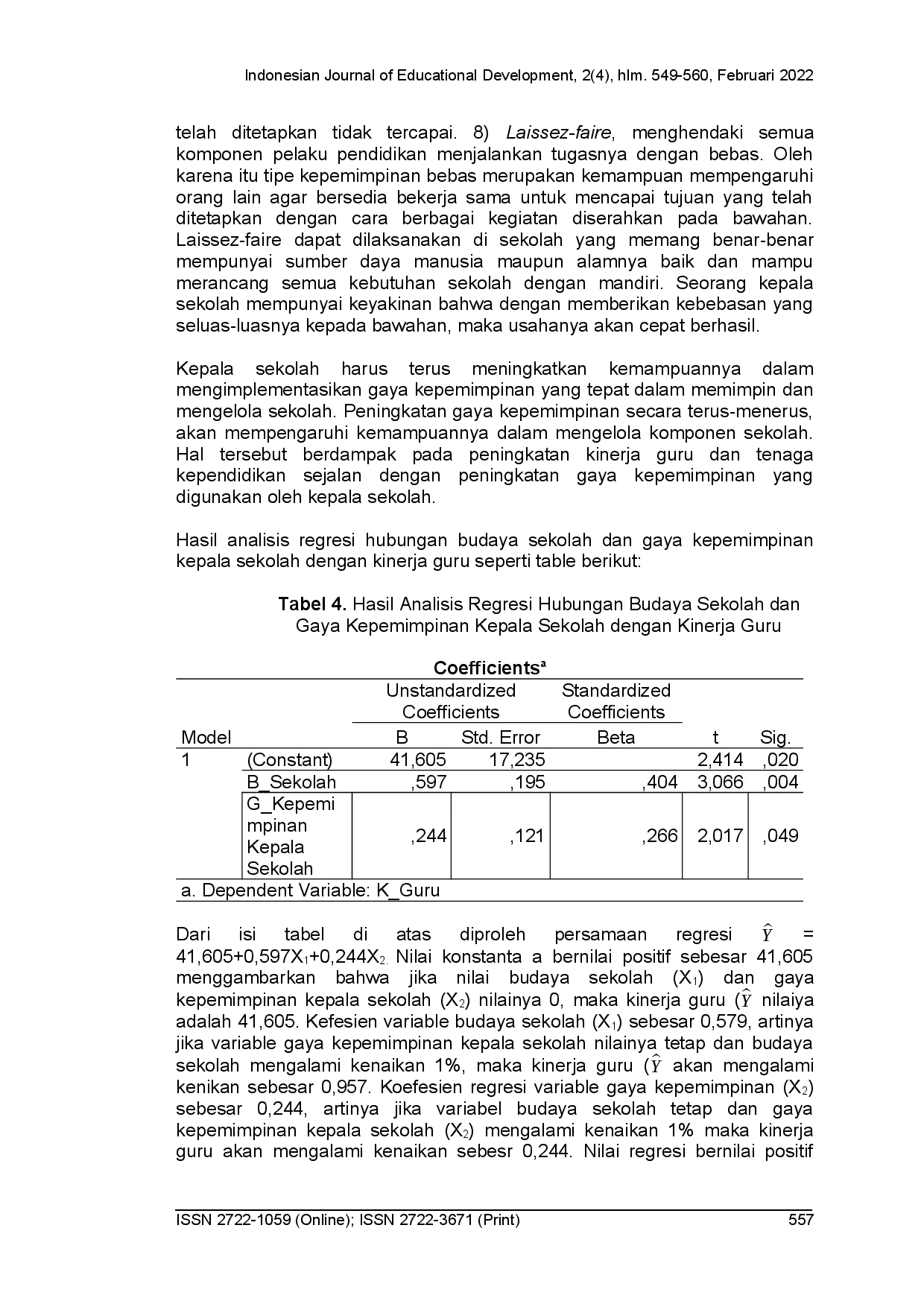
MAHADEWAMAHADEWA Penelitian ini menganalisis hubungan antara budaya sekolah dan gaya kepemimpinan kepala sekolah dengan kinerja guru. Populasi guru SD Negeri berjumlahPenelitian ini menganalisis hubungan antara budaya sekolah dan gaya kepemimpinan kepala sekolah dengan kinerja guru. Populasi guru SD Negeri berjumlah

MAHADEWAMAHADEWA Jenis penelitian yang digunakan adalah penelitian dan pengembangan, dengan langkah-langkah sebagai berikut: (1) potensi masalah, (2) perencanaan, (3) desainJenis penelitian yang digunakan adalah penelitian dan pengembangan, dengan langkah-langkah sebagai berikut: (1) potensi masalah, (2) perencanaan, (3) desain

UNSULBARUNSULBAR Hasil penelitian menunjukkan bahwa hasil produk sarung sutera dikelompokkan dalam tiga varian yaitu Varian pertama merupakan kelompok sarung sutera denganHasil penelitian menunjukkan bahwa hasil produk sarung sutera dikelompokkan dalam tiga varian yaitu Varian pertama merupakan kelompok sarung sutera dengan
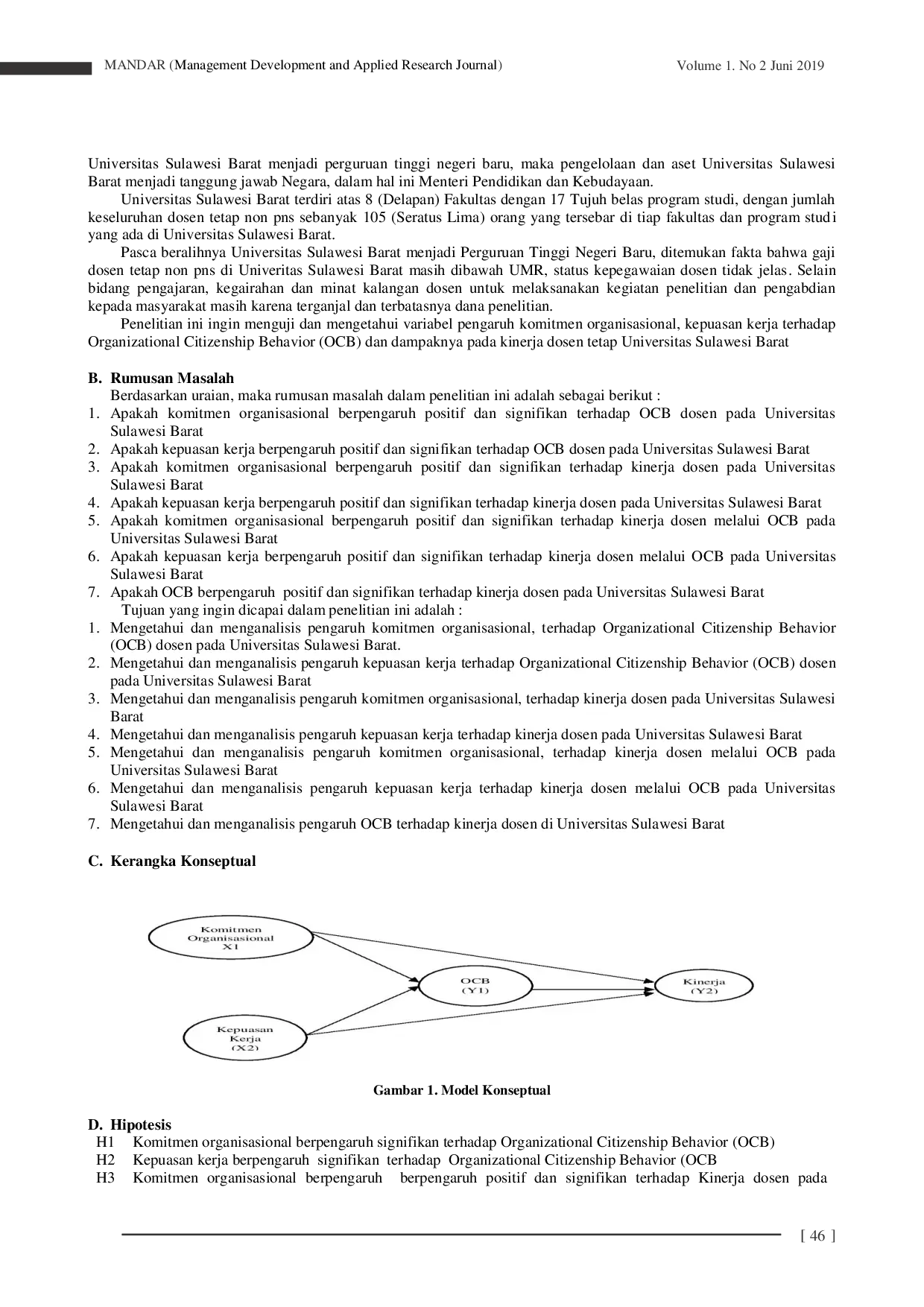
UNSULBARUNSULBAR Saran ini diberikan berdasarkan hasil dari penelitian mengenai komitmen organisasi dengan indikator komitmen berkelanjutan (Continuence commitment) mendapatSaran ini diberikan berdasarkan hasil dari penelitian mengenai komitmen organisasi dengan indikator komitmen berkelanjutan (Continuence commitment) mendapat