UMPUMP
Proceedings Series on Health & Medical SciencesProceedings Series on Health & Medical SciencesExclusive breastfeeding (EBF) for the first six months of life is essential for infant health, growth and development, yet its coverage remains low in Indonesia. The study aimed to assess exclusive breastfeeding practices in Indonesia and examine the association of early initiation of breastfeeding and other antenatal care service (ANC) with EBF in Indonesian. This cross-sectional study analyzed secondary data from the 2022 Indonesia National Nutrition Survey. Data of 3,718 infants aged 6 months from 33 provinces on breastfeeding practice were extracted. Multiple logistic regression analysis was performed to identify the factors associated with EBF, presenting Adjusted Odds Ratio (AOR), 95% Confidence Interval (95% CI) and spatial distribution was mapped using QGIS. The results revealed that only 45.70%. History of early breastfeeding (AOR=1.60; 95% CI: 1.40-1.83), received nutrition counseling (AOR=1.21; 95% CI: 1.06-1.38) and infants with normal or higher birth weight (≥2,500 grams) were more likely to be exclusively breastfed (AOR=1.68; 95% CI: 1.27-2.21). Employment of mothers also showed significant associations with EBF practices (AOR=1.20; 95% CI: 1.04-1.37). Less than half of infants received exclusive breastfeeding. Early breastfeeding and nutrition counseling improved EBF, especially among employed mothers. Emphasis on those factors during ANC is needed, particularly in low EBF coverage provinces.
This study found that exclusive breastfeeding (EBF) coverage among infants aged six months in Indonesia remains suboptimal.Early initiation of breastfeeding, receipt of nutrition counseling, maternal employment, and normal or above-normal birth weight were significantly associated with EBF.Efforts to increase EBF should focus on promoting immediate breastfeeding after birth, strengthening nutrition counseling during ANC and PNC visits, and expanding health promotion programs.
Penelitian lebih lanjut perlu dilakukan untuk menggali lebih dalam mengenai faktor-faktor kontekstual yang mempengaruhi keberhasilan inisiasi menyusu dini dan konseling gizi, seperti peran dukungan keluarga, norma sosial, dan kualitas layanan kesehatan di berbagai daerah. Selain itu, studi intervensi yang dirancang secara khusus untuk meningkatkan pengetahuan dan keterampilan petugas kesehatan dalam memberikan konseling gizi yang efektif kepada ibu hamil dan menyusui sangat diperlukan. Terakhir, penelitian kualitatif dapat dilakukan untuk memahami pengalaman dan persepsi ibu bekerja mengenai tantangan dalam menyusui eksklusif, serta strategi yang mereka gunakan untuk mengatasi hambatan tersebut, sehingga dapat dirumuskan kebijakan dan program yang lebih responsif terhadap kebutuhan mereka.
| File size | 450.33 KB |
| Pages | 7 |
| DMCA | Report |
Related /

IJNMSIJNMS Anemia selama kehamilan tetap menjadi masalah kesehatan publik yang signifikan, terutama di kalangan remaja di daerah berpenghasilan rendah. Studi iniAnemia selama kehamilan tetap menjadi masalah kesehatan publik yang signifikan, terutama di kalangan remaja di daerah berpenghasilan rendah. Studi ini
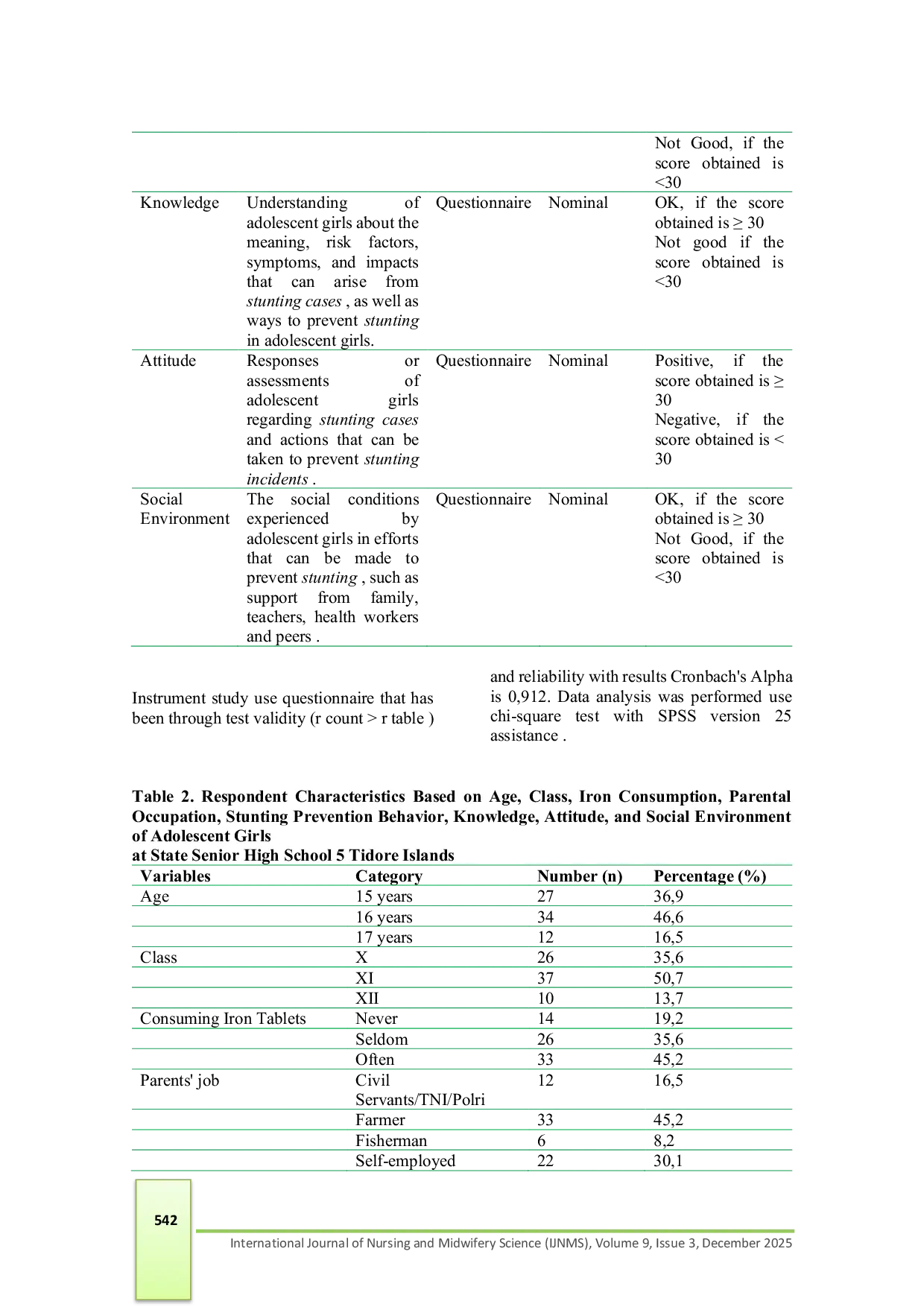
IJNMSIJNMS Adolescents with good knowledge, positive attitudes, and a supportive social environment were more likely to demonstrate good preventive behavior. TheseAdolescents with good knowledge, positive attitudes, and a supportive social environment were more likely to demonstrate good preventive behavior. These
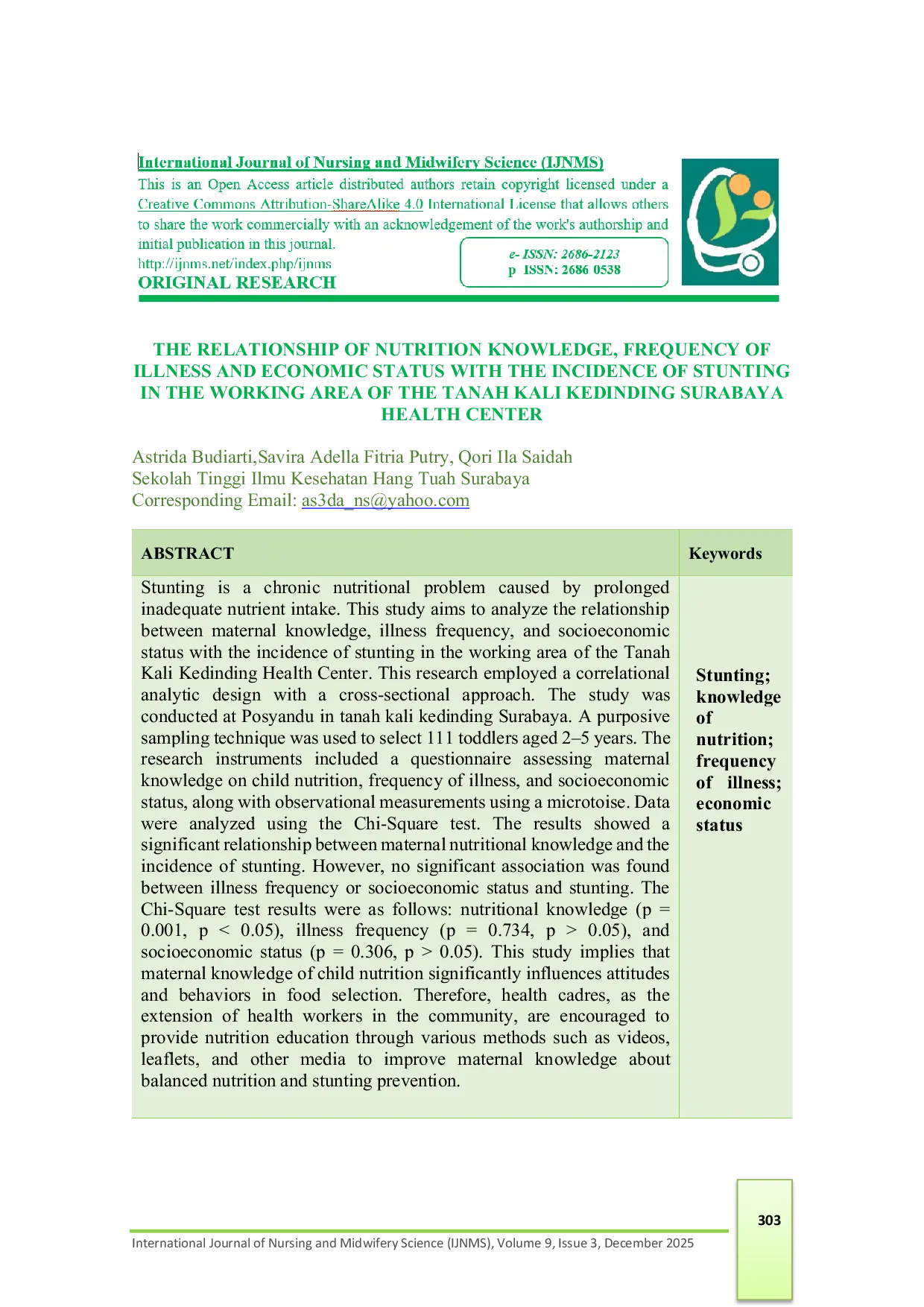
IJNMSIJNMS A purposive sampling technique was used to select 111 toddlers aged 2–5 years. The research instruments included a questionnaire assessing maternal knowledgeA purposive sampling technique was used to select 111 toddlers aged 2–5 years. The research instruments included a questionnaire assessing maternal knowledge

IJNMSIJNMS Program enam minggu ini secara signifikan mengurangi diastasis recti abdominis, meningkatkan kekuatan otot perut dan mobilitas fisik, menurunkan nyeriProgram enam minggu ini secara signifikan mengurangi diastasis recti abdominis, meningkatkan kekuatan otot perut dan mobilitas fisik, menurunkan nyeri

IJNMSIJNMS 4% diabetic. The findings indicate that elderly people at the Sinduadi Health Center tend to experience increased blood pressure and blood glucose levels4% diabetic. The findings indicate that elderly people at the Sinduadi Health Center tend to experience increased blood pressure and blood glucose levels

PPNIUNIMMANPPNIUNIMMAN Menurut data dari Organisasi Kesehatan Dunia (WHO), sekitar 24 juta orang di seluruh dunia, atau sekitar satu dari setiap 300 individu, hidup dengan skizofrenia.Menurut data dari Organisasi Kesehatan Dunia (WHO), sekitar 24 juta orang di seluruh dunia, atau sekitar satu dari setiap 300 individu, hidup dengan skizofrenia.
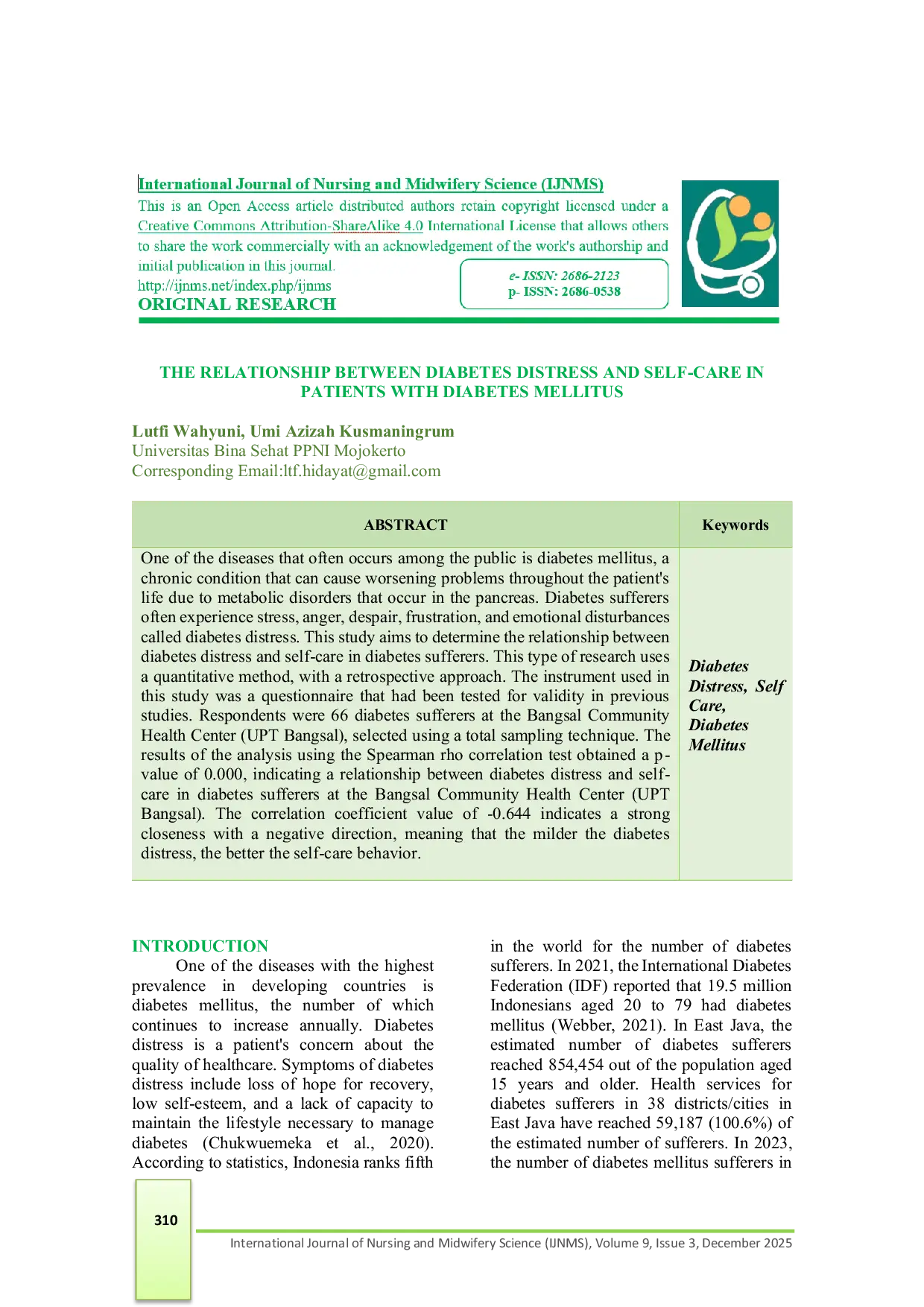
IJNMSIJNMS The correlation coefficient value of -0. 644 indicates a strong closeness with a negative direction, meaning that the milder the diabetes distress, theThe correlation coefficient value of -0. 644 indicates a strong closeness with a negative direction, meaning that the milder the diabetes distress, the
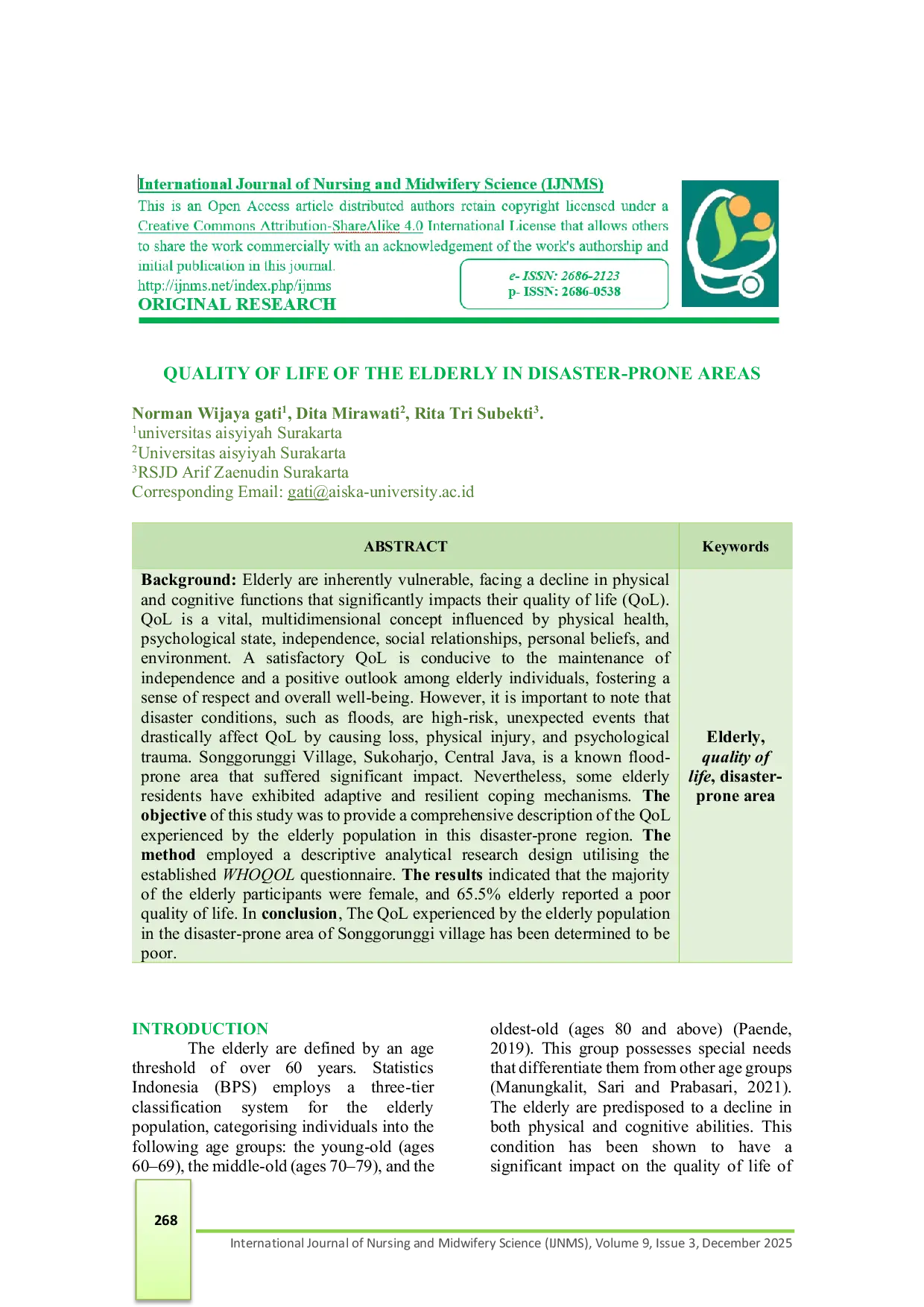
IJNMSIJNMS Mayoritas responden di Desa Songgorunggi adalah perempuan (59,5%), yang menunjukkan potensi bias gender dalam data. Mayoritas responden lansia menunjukkanMayoritas responden di Desa Songgorunggi adalah perempuan (59,5%), yang menunjukkan potensi bias gender dalam data. Mayoritas responden lansia menunjukkan
Useful /

STAI AL-FURQANSTAI AL-FURQAN Pertama Tahap Transformasi Nilai dengan menggunakan metode nasihat, metode teladan, metode hukuman. Sementara itu, pada tahap kedua terdapat Tahap TransaksiPertama Tahap Transformasi Nilai dengan menggunakan metode nasihat, metode teladan, metode hukuman. Sementara itu, pada tahap kedua terdapat Tahap Transaksi

STAI AL-FURQANSTAI AL-FURQAN Penekanan konsisten pada etika dan nilai-nilai moral selama kegiatan khataman Al-Quran memainkan peran penting dalam membentuk kebiasaan positif yang akanPenekanan konsisten pada etika dan nilai-nilai moral selama kegiatan khataman Al-Quran memainkan peran penting dalam membentuk kebiasaan positif yang akan
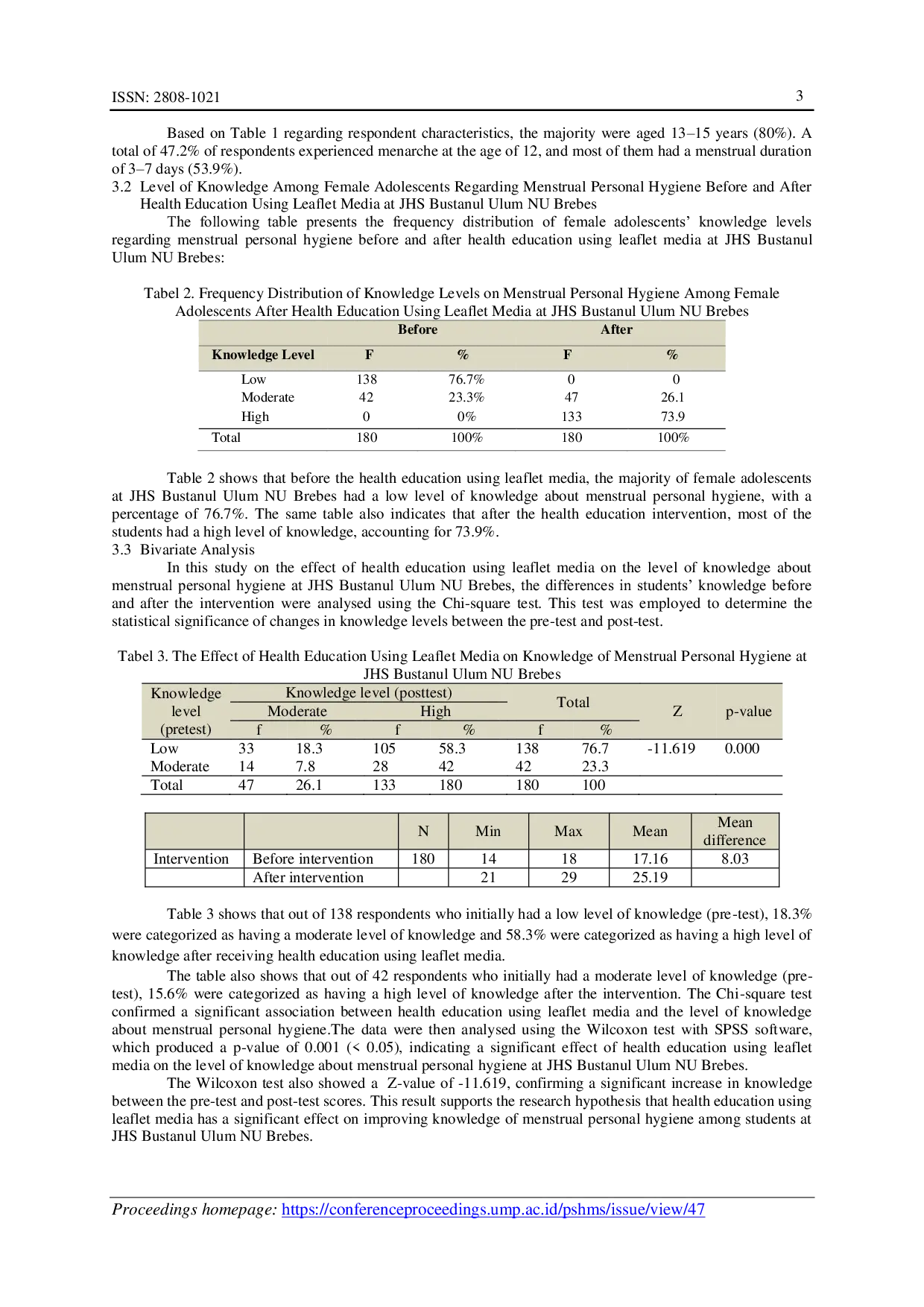
UMPUMP Praktik kebersihan pribadi sangat penting bagi kesehatan reproduksi remaja. Salah satu cara meningkatkan pengetahuan adalah melalui media cetak sepertiPraktik kebersihan pribadi sangat penting bagi kesehatan reproduksi remaja. Salah satu cara meningkatkan pengetahuan adalah melalui media cetak seperti
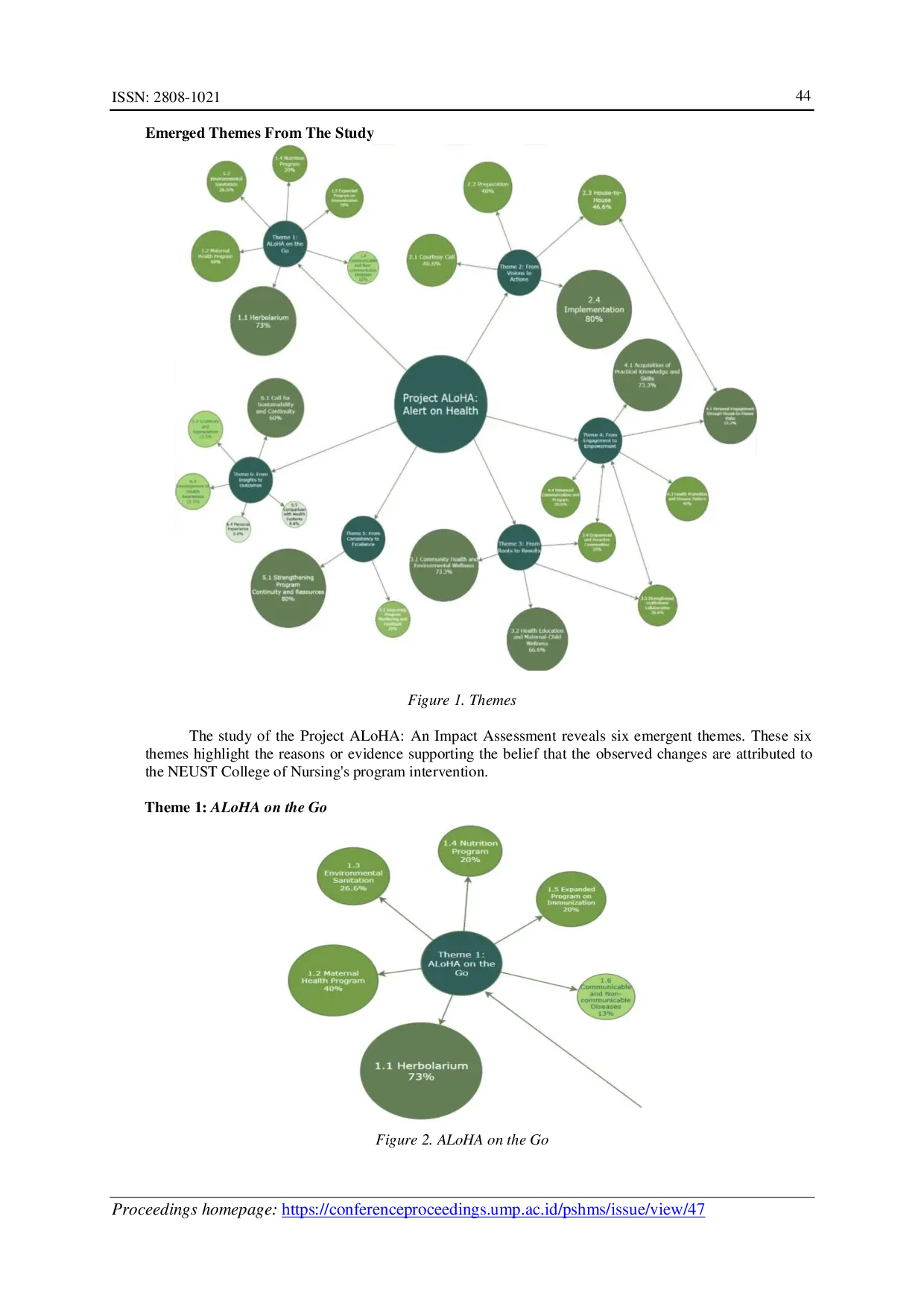
UMPUMP Sebagai respons, Fakultas Keperawatan Universitas Sains dan Teknologi Nueva Ecija (NEUST) memulai Project ALoHA—program ekstensi berbasis komunitas yangSebagai respons, Fakultas Keperawatan Universitas Sains dan Teknologi Nueva Ecija (NEUST) memulai Project ALoHA—program ekstensi berbasis komunitas yang