UNISSULAUNISSULA
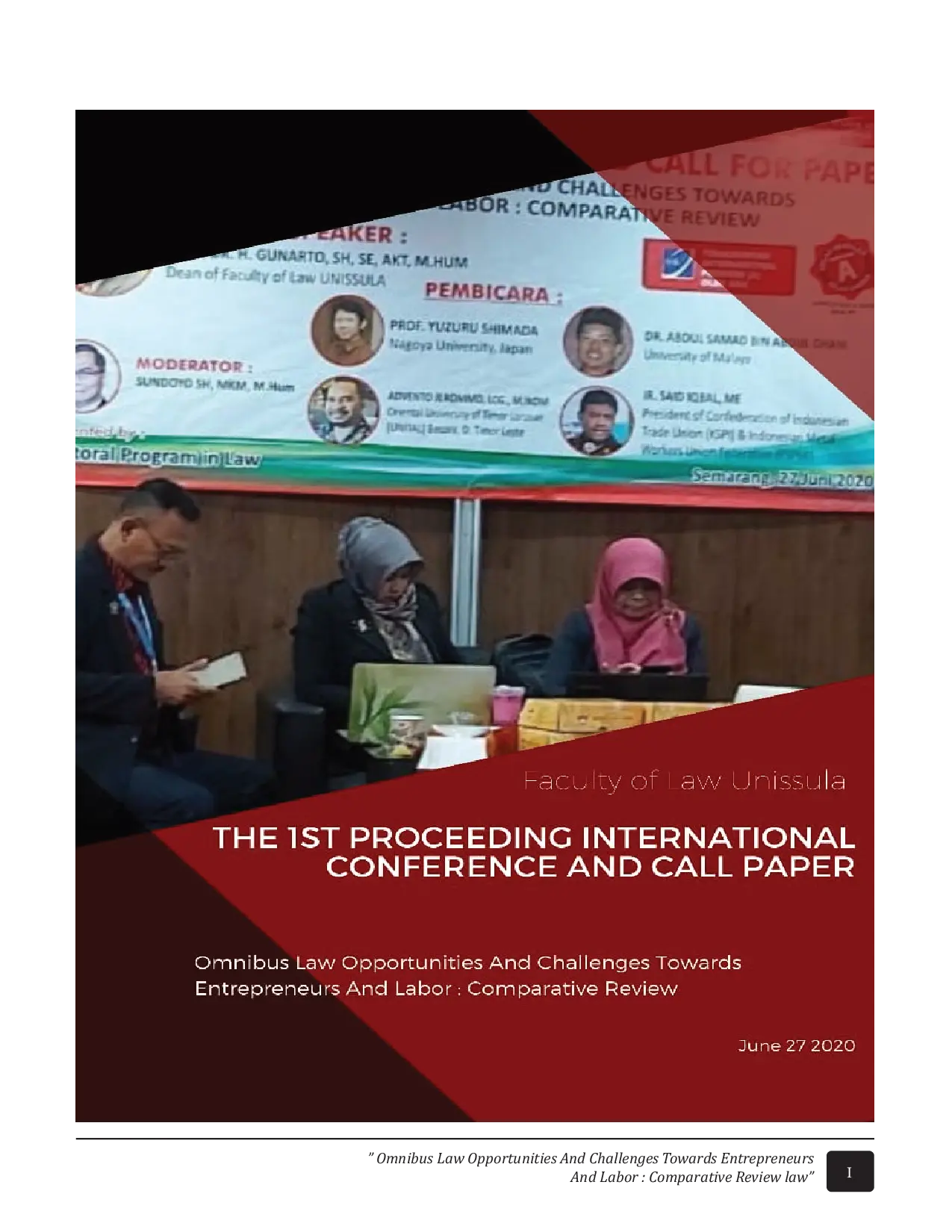
The 1st Proceeding International Conference And Call PaperThe 1st Proceeding International Conference And Call PaperThe aim of this study is to explain the role of mediation in solving sharia economy dispute as civilization toward ethical value of Islam. That it has been practiced since Rasulullah SAW era was through many ways such as shulh, tahkim, andqadha. This study uses qualitative method and data collection is got from observation, direct interview to justice, attorney, lawyer, mediator, and the disputants. Based on the result of the study above is known that the role of mediation in solving sharia economy dispute as civilization toward ethical value of Islam is important and needs to be optimalized. According to Rasulullah SAW teaching, in fact, in a practice, there is failure of mediation in solving sharia economy dispute because the disputants feel that they are right and want to win finally by litigation way with consent or default judgment. Otherwise,mediation practice gives benefits for the disputants and based on Indonesian culture and civilization because solving dispute through mediation can be solved fast, correctly, and cheaply, thus it does not take much energy, time, and thought. In a result, it can keep privacy, beneficial for parties, and harmless with the result made by parties themselves, that is “win-win solution. In ethical value of Islam in solving sharia economic dispute, firstly, by al-shulhu(peace). Peace in islam is recommended because if there is peace among disputants, they will avoid from hostility. If it does not work, it can be passed by al-tahkim (arbitration) and if it gets stuck, Islam teaches us by al-qadha (Court Process).
The role of mediation in resolving sharia economic disputes is crucial and requires optimization, aligning with Islamic ethical values.Despite challenges like disputants prioritizing winning over peaceful resolution, mediation offers benefits such as speed, cost-effectiveness, and privacy.Ultimately, mediation promotes a win-win solution rooted in Islamic principles of peace (al-shulhu), arbitration (al-tahkim), and judicial process (al-qadha).
Further research should explore the effectiveness of integrating traditional Indonesian mediation practices with formal sharia economic dispute resolution mechanisms to enhance cultural relevance and acceptance. Additionally, studies could investigate the development of standardized mediator training programs specifically tailored to sharia economic principles and ethical considerations, ensuring a consistent level of expertise. Finally, research is needed to assess the impact of incorporating digital platforms and technologies into sharia economic mediation processes, potentially increasing accessibility and efficiency for disputants, while maintaining the confidentiality and integrity of the proceedings. These investigations should contribute to a more robust and culturally sensitive framework for resolving sharia economic disputes in Indonesia, fostering trust and promoting ethical business practices.
| File size | 803.83 KB |
| Pages | 20 |
| DMCA | Report |
Related /

IBIK57IBIK57 Fokus penelitian ini adalah menganalisis penggunaan identitas mahasiswa dalam media pembelajaran daring. Penelitian ini menggunakan metode kuantitatifFokus penelitian ini adalah menganalisis penggunaan identitas mahasiswa dalam media pembelajaran daring. Penelitian ini menggunakan metode kuantitatif

IBIK57IBIK57 Penggunaan media online sebagai media dakwah merupakan kesempatan dan tantangan untuk mengembangkan dan memperluas cakrawala dakwah Islamiyah. Para daiPenggunaan media online sebagai media dakwah merupakan kesempatan dan tantangan untuk mengembangkan dan memperluas cakrawala dakwah Islamiyah. Para dai
MKRIMKRI Paper ini berpendapat bahwa metode omnibus masih dapat dipergunakan asalkan bersifat tematik, namun untuk memastikan penggunaan pendekatan omnibus tematikPaper ini berpendapat bahwa metode omnibus masih dapat dipergunakan asalkan bersifat tematik, namun untuk memastikan penggunaan pendekatan omnibus tematik
FHUKIFHUKI Transformasi dari Perum ke Persero meliputi perbedaan struktur modal, tata kelola, dasar hukum, serta potensi privatisasi, dan sesuai dengan PP No. AkibatTransformasi dari Perum ke Persero meliputi perbedaan struktur modal, tata kelola, dasar hukum, serta potensi privatisasi, dan sesuai dengan PP No. Akibat

UMMUMM Namun, memberikan wewenang ini juga memperkenalkan potensi konflik antara pemerintah pusat dan daerah, terutama ketika peraturan saling bertentangan atauNamun, memberikan wewenang ini juga memperkenalkan potensi konflik antara pemerintah pusat dan daerah, terutama ketika peraturan saling bertentangan atau

UMMUMM Di Indonesia diadopsi pendekatan birokratis yang bersifat formal, administratif, serta berbasis sosial dan komunitas. Indonesia mengatur secara khususDi Indonesia diadopsi pendekatan birokratis yang bersifat formal, administratif, serta berbasis sosial dan komunitas. Indonesia mengatur secara khusus

UBBGUBBG Penelitian ini juga dapat dijadikan referensi oleh guru Bahasa Inggris untuk melegitimasi setiap materi yang disajikan guna memotivasi siswa menjadi pembelajarPenelitian ini juga dapat dijadikan referensi oleh guru Bahasa Inggris untuk melegitimasi setiap materi yang disajikan guna memotivasi siswa menjadi pembelajar
UMMUMM Hasil penelitian menunjukkan bahwa proses pembuatan RUU Cipta Kerja cenderung mengesampingkan prinsip transparansi dan partisipasi publik melalui polaHasil penelitian menunjukkan bahwa proses pembuatan RUU Cipta Kerja cenderung mengesampingkan prinsip transparansi dan partisipasi publik melalui pola
Useful /

UNISSULAUNISSULA Prinsip hukuman menjadi dasar dalam menjatuhkan sanksi kepada pelaku perdagangan manusia dengan memperhitungkan faktor pemberat dan peringan, di mana prinsipPrinsip hukuman menjadi dasar dalam menjatuhkan sanksi kepada pelaku perdagangan manusia dengan memperhitungkan faktor pemberat dan peringan, di mana prinsip

UNISSULAUNISSULA Selain itu, RUU Omnibus Law dapat memberikan celah bagi perlindungan bisnis yang melakukan kejahatan lingkungan (penebangan liar, penggundulan hutan, danSelain itu, RUU Omnibus Law dapat memberikan celah bagi perlindungan bisnis yang melakukan kejahatan lingkungan (penebangan liar, penggundulan hutan, dan
UNISSULAUNISSULA Oleh karena itu, sebagai dasar filosofis, prinsip-prinsip Pancasila adalah aspek persatuan, hierarki, dan sistematis. Manifestasi Nilai-Nilai PancasilaOleh karena itu, sebagai dasar filosofis, prinsip-prinsip Pancasila adalah aspek persatuan, hierarki, dan sistematis. Manifestasi Nilai-Nilai Pancasila
UNISSULAUNISSULA Diperlukan penyesuaian substansial agar hak‑hak pekerja dapat lebih terlindungi dalam mencapai kemakmuran, mengingat Indonesia telah meluncurkan agendaDiperlukan penyesuaian substansial agar hak‑hak pekerja dapat lebih terlindungi dalam mencapai kemakmuran, mengingat Indonesia telah meluncurkan agenda