FEB UMIFEB UMI
Paradoks : Jurnal Ilmu EkonomiParadoks : Jurnal Ilmu EkonomiIn contemporary digital markets, cultivating sustained customer loyalty and shaping purchasing decisions present significant strategic challenges for companies. This study investigates the impact of digital marketing on consumer decisions and loyalty in the financing industry in Indonesia, comparing the mediating mechanisms of brand engagement (affective pathway) and consumer trust (cognitive path). Using an explanatory quantitative approach on 265 respondents selected through purposive sampling, the data were analyzed with Structural Equation Modeling (SEM). The findings reveal that digital marketing significantly influences consumer decisions and loyalty, with brand engagement acting as a partial mediator, while consumer trust does not mediate significantly, uncovering a trust paradox in the context of the financing industry. This study makes an original contribution by introducing a dual-pathway model that distinguishes between affective and cognitive mediation mechanisms, and by highlighting the practical implication that relational strategies grounded in emotional attachment are more effective than transactional trust-based approaches in fostering sustainable loyalty.
This study concludes that digital marketing significantly drives consumer decision-making and loyalty within the Indonesian financing industry.However, the key finding lies in the identification of affective pathways as more dominant than cognitive ones, with brand attachment serving as a substantial mediator, while consumer trust does not.This suggests that in a competitive financial services landscape, emotional connections and psychological bonds of brand attachment are crucial for translating marketing efforts into sustained loyalty and repeat decisions.Therefore, focusing on building deep emotional brand relationships, rather than solely establishing trust, is more effective.
Future research should explore the dual-pathway model across diverse industries, such as fintech, banking, and e-commerce, to validate the prominence of brand attachment over consumer trust. Longitudinal studies are needed to track the evolution of these relationships over time, providing a more nuanced understanding of how digital marketing impacts consumer behavior. Expanding the sampling framework to include a more diverse population, both nationally and internationally, would enhance the generalizability of the findings. Furthermore, integrating objective behavioral data, such as repeat purchase rates and customer lifetime value, alongside survey responses would strengthen the robustness of the results. Finally, investigating the influence of specific digital marketing strategies—like personalized content or interactive experiences—on brand attachment could offer actionable insights for practitioners seeking to optimize their marketing efforts and foster stronger customer relationships.
- What Makes GO-JEK Go in Indonesia? The Influences of Social Media Marketing Activities on Purchase Intention.... doi.org/10.3390/jtaer17010005What Makes GO JEK Go in Indonesia The Influences of Social Media Marketing Activities on Purchase Intention doi 10 3390 jtaer17010005
- Do Store and Brand Attachments Influence Customer Loyalty? Evidence From Migrant Workers in Taiwan -... doi.org/10.1177/21582440241234794Do Store and Brand Attachments Influence Customer Loyalty Evidence From Migrant Workers in Taiwan doi 10 1177 21582440241234794
- The Influence of Social Marketing Drives on Brand Loyalty via the Customer Satisfaction as a Mediating... journals.sagepub.com/doi/10.1177/21582440231181433The Influence of Social Marketing Drives on Brand Loyalty via the Customer Satisfaction as a Mediating journals sagepub doi 10 1177 21582440231181433
| File size | 473.46 KB |
| Pages | 13 |
| DMCA | Report |
Related /
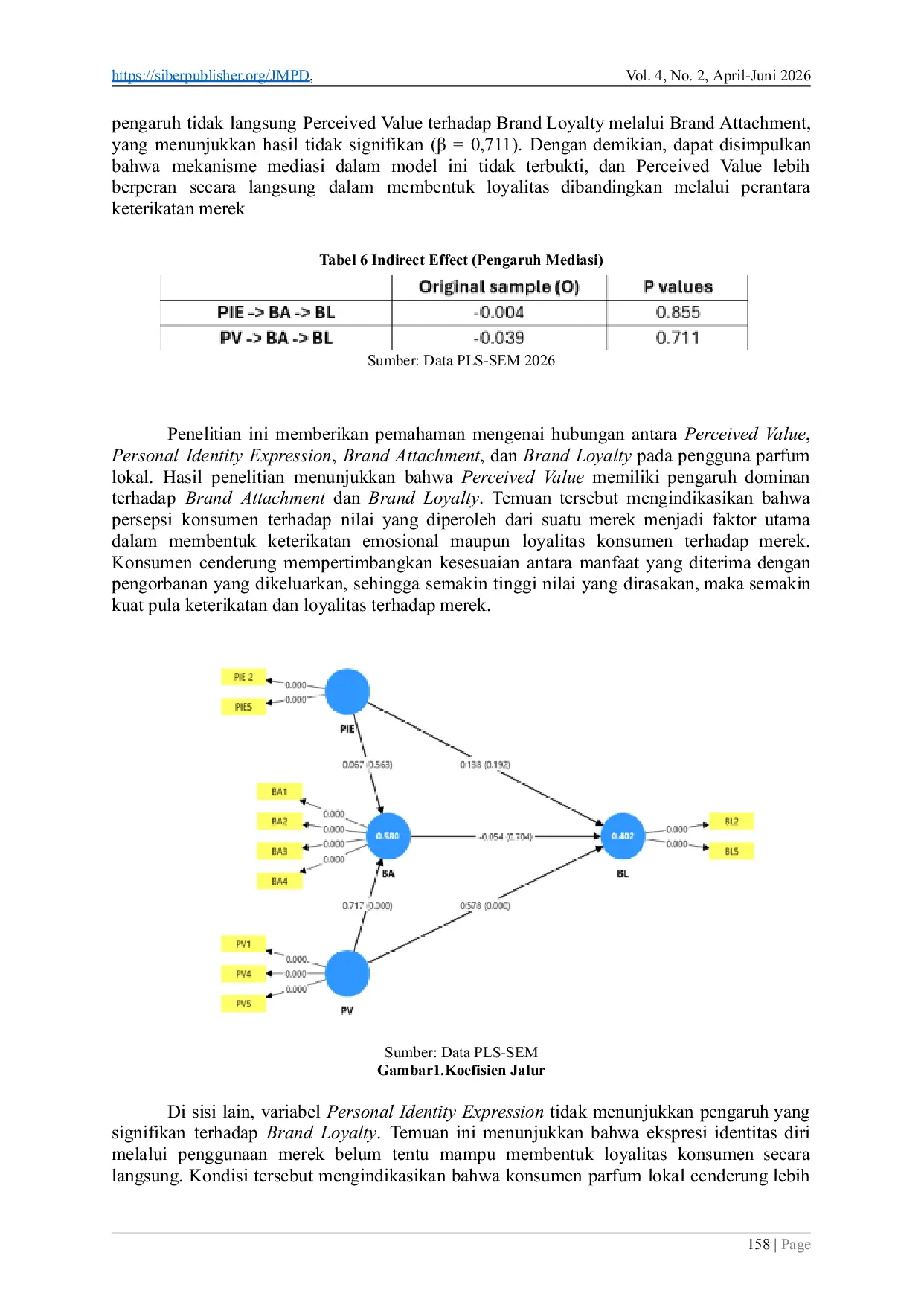
SIBERPUBLISHERSIBERPUBLISHER Personal Identity Expression tidak menunjukkan pengaruh signifikan terhadap Brand Attachment maupun Brand Loyalty. Brand Attachment tidak memediasi pengaruhPersonal Identity Expression tidak menunjukkan pengaruh signifikan terhadap Brand Attachment maupun Brand Loyalty. Brand Attachment tidak memediasi pengaruh

FEB UMIFEB UMI Analisis regresi linear berganda memperlihatkan bahwa kedua strategi pemasaran tersebut memberikan pengaruh yang nyata terhadap budaya kerja. KeterlibatanAnalisis regresi linear berganda memperlihatkan bahwa kedua strategi pemasaran tersebut memberikan pengaruh yang nyata terhadap budaya kerja. Keterlibatan

FEB UMIFEB UMI Faktor internal dan eksternal yang mempengaruhi usaha ayam petelur di Desa Sumber Sekar Kecamatan Dau Kabupaten Malang menunjukkan adanya 16 strategi yangFaktor internal dan eksternal yang mempengaruhi usaha ayam petelur di Desa Sumber Sekar Kecamatan Dau Kabupaten Malang menunjukkan adanya 16 strategi yang

FEB UMIFEB UMI Penelitian ini bertujuan untuk menganalisis pengaruh budaya lingkungan organisasi terhadap kinerja karyawan dengan mediasi Green Human Resources ManagementPenelitian ini bertujuan untuk menganalisis pengaruh budaya lingkungan organisasi terhadap kinerja karyawan dengan mediasi Green Human Resources Management

FEB UMIFEB UMI Hasil penelitian menunjukkan bahwa beban kerja berdampak negatif terhadap kinerja, yang berarti semakin tinggi tekanan dan volume pekerjaan yang dirasakanHasil penelitian menunjukkan bahwa beban kerja berdampak negatif terhadap kinerja, yang berarti semakin tinggi tekanan dan volume pekerjaan yang dirasakan

STEBIS IGMSTEBIS IGM U. Citra merek secara parsial memberi pengaruh positif dan signifikan terhadap keputusan pembelian Kartu Perdana By. Kualitas produk secara parsial berpengaruhU. Citra merek secara parsial memberi pengaruh positif dan signifikan terhadap keputusan pembelian Kartu Perdana By. Kualitas produk secara parsial berpengaruh

NURSCIENCEINSTITUTENURSCIENCEINSTITUTE This research contributes valuable insights into brand dynamics within the photography industry and provides practical recommendations for marketers seekingThis research contributes valuable insights into brand dynamics within the photography industry and provides practical recommendations for marketers seeking

UNDIPUNDIP The study concludes that the use of Korean brand ambassadors significantly impacts purchasing decisions on Tokopedia, particularly among young consumersThe study concludes that the use of Korean brand ambassadors significantly impacts purchasing decisions on Tokopedia, particularly among young consumers
Useful /

UMKOUMKO Kerangka ini memperoleh rata‑rata latency pemeliharaan 2,057 detik, menandakan kelayakan eksperimental untuk pencatatan forensik berbantuan blockchainKerangka ini memperoleh rata‑rata latency pemeliharaan 2,057 detik, menandakan kelayakan eksperimental untuk pencatatan forensik berbantuan blockchain

WESTSCIENCESWESTSCIENCES Penelitian ini mengamati bahwa kebakaran hutan dan lahan di Kecamatan Dayun didominasi oleh pola hotspot mengelompok, dengan konsentrasi tertinggi di DesaPenelitian ini mengamati bahwa kebakaran hutan dan lahan di Kecamatan Dayun didominasi oleh pola hotspot mengelompok, dengan konsentrasi tertinggi di Desa

FEB UMIFEB UMI Kajian ini menggunakan pendekatan kualitatif deskriptif melalui wawancara mendalam, diskusi kelompok terfokus, observasi lapangan, dan telaah dokumen untukKajian ini menggunakan pendekatan kualitatif deskriptif melalui wawancara mendalam, diskusi kelompok terfokus, observasi lapangan, dan telaah dokumen untuk

FEB UMIFEB UMI Penelitian ini bertujuan untuk membahas analisis Anggaran Biaya Operasional dan Kinerja Keuangan Dalam Standar Operasional Prosedur (SOP) di PTPN IV RegionalPenelitian ini bertujuan untuk membahas analisis Anggaran Biaya Operasional dan Kinerja Keuangan Dalam Standar Operasional Prosedur (SOP) di PTPN IV Regional