UMJ PremiumUMJ Premium
International Conference on Engineering, Applied Sciences and TechnologyInternational Conference on Engineering, Applied Sciences and TechnologyWaste oil can be converted to fuel through complex processes due to its high impurity level and significant oxygen content. This research explores the use of pyrolysis together with metal-organic frameworks (MOFs) to enhance the conversion of waste oil. MOFs, porous crystalline materials formed by linking metal ions with organic linkers, provide moderate surface area and increased active sites for catalytic applications, especially in bioproduction. In this study, copper-based MOFs (Cu-MOF) were synthesized via a room temperature method using CuSO4-5H2O and 2-methylimidazole, followed by wet impregnation with K2O. The synthesized catalysts were characterized using FTIR, SEM, and BET and the biofuel production using GC-MS. The characterization results showed that K2O impregnation enhanced the stability of MOF structure and significantly improved thermal stability as well as made it more efficient for the pyrolytic catalytic process for biofuel production. FTIR analysis confirmed the successful impregnation of K2O, SEM analysis showed that the Cu-MOF particles did not have a clear crystal shape. From BET analysis, there is a decrease in surface area due to K2O impregnation. Gas chromatography-mass spectrometry (GC-MS) confirmed that the pyrolytic reaction occurred by using Cu-MOF/K2O catalyst can significantly increase the hydrocarbon compounds of the waste cooking oil to 39.25% as well as decrease the oxygen content contained in the oil to 56.65% according to the reaction in the pyrolytic catalysis cracking process. Importantly, the catalyst showed regeneration potential after use, proving its feasibility for repeated application in waste oil conversion processes.
This study investigates the conversion of used cooking oil into biofuel using a Cu-MOF/K2O catalyst.The results demonstrate that K2O impregnation successfully enhanced the stability and efficiency of the Cu-MOF catalyst for pyrolytic catalytic cracking.GC-MS analysis confirmed that the Cu-MOF/K2O catalyst significantly increased hydrocarbon production (39.65%) in the biofuel compared to using Cu-MOF alone, indicating its superior performance in waste cooking oil conversion.
Penelitian lebih lanjut perlu dilakukan untuk mengoptimalkan komposisi katalis Cu-MOF/K2O, misalnya dengan memvariasikan rasio K2O terhadap Cu-MOF, guna mencapai aktivitas katalitik yang lebih tinggi dan selektivitas produk yang diinginkan. Selain itu, studi mengenai mekanisme reaksi yang terjadi selama proses pirolisis katalitik dengan menggunakan katalis ini perlu diperdalam, termasuk identifikasi intermediet reaksi dan pengaruhnya terhadap kualitas biofuel yang dihasilkan. Terakhir, penelitian tentang regenerasi dan stabilitas katalis dalam jangka panjang sangat penting untuk memastikan keberlanjutan dan efisiensi ekonomi dari proses konversi minyak goreng bekas menjadi biofuel, termasuk pengujian terhadap berbagai siklus penggunaan katalis dan pengaruhnya terhadap kinerja katalitik.
- 0. loading aip.scitation.org/doi/abs/10.1063/5.01728510 loading aip scitation doi abs 10 1063 5 0172851
- Pembuatan dan Karakterisasi Katalis Nikel/Zeolit pada Pirolisis Tir Batubara | Suyati | Jurnal Kimia... ejournal.undip.ac.id/index.php/ksa/article/view/3306Pembuatan dan Karakterisasi Katalis Nikel Zeolit pada Pirolisis Tir Batubara Suyati Jurnal Kimia ejournal undip ac index php ksa article view 3306
| File size | 331.87 KB |
| Pages | 7 |
| DMCA | Report |
Related /
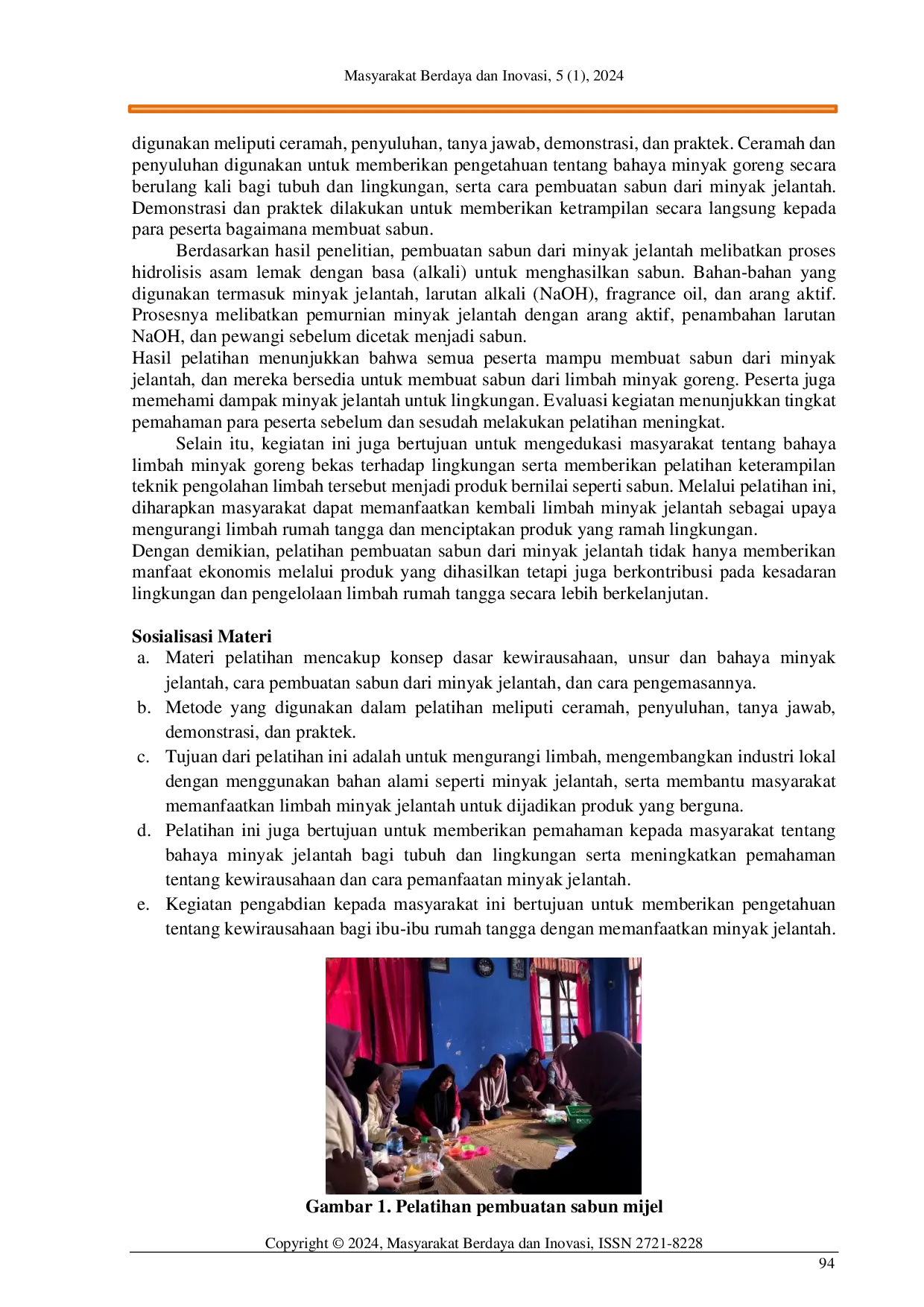
MAYADANIMAYADANI Kegiatan pelatihan pembuatan sabun mijel telah berjalan dengan baik dan mendapat antusias dari ibu-ibu Dusun Malang. Dengan pelatihan ini, ibu-ibu menjadiKegiatan pelatihan pembuatan sabun mijel telah berjalan dengan baik dan mendapat antusias dari ibu-ibu Dusun Malang. Dengan pelatihan ini, ibu-ibu menjadi

IAIIIAII Keterlibatan aktif masyarakat dalam pelatihan pengoperasian dan perawatan perangkat memastikan keberlanjutan program serta menumbuhkan rasa kepemilikanKeterlibatan aktif masyarakat dalam pelatihan pengoperasian dan perawatan perangkat memastikan keberlanjutan program serta menumbuhkan rasa kepemilikan
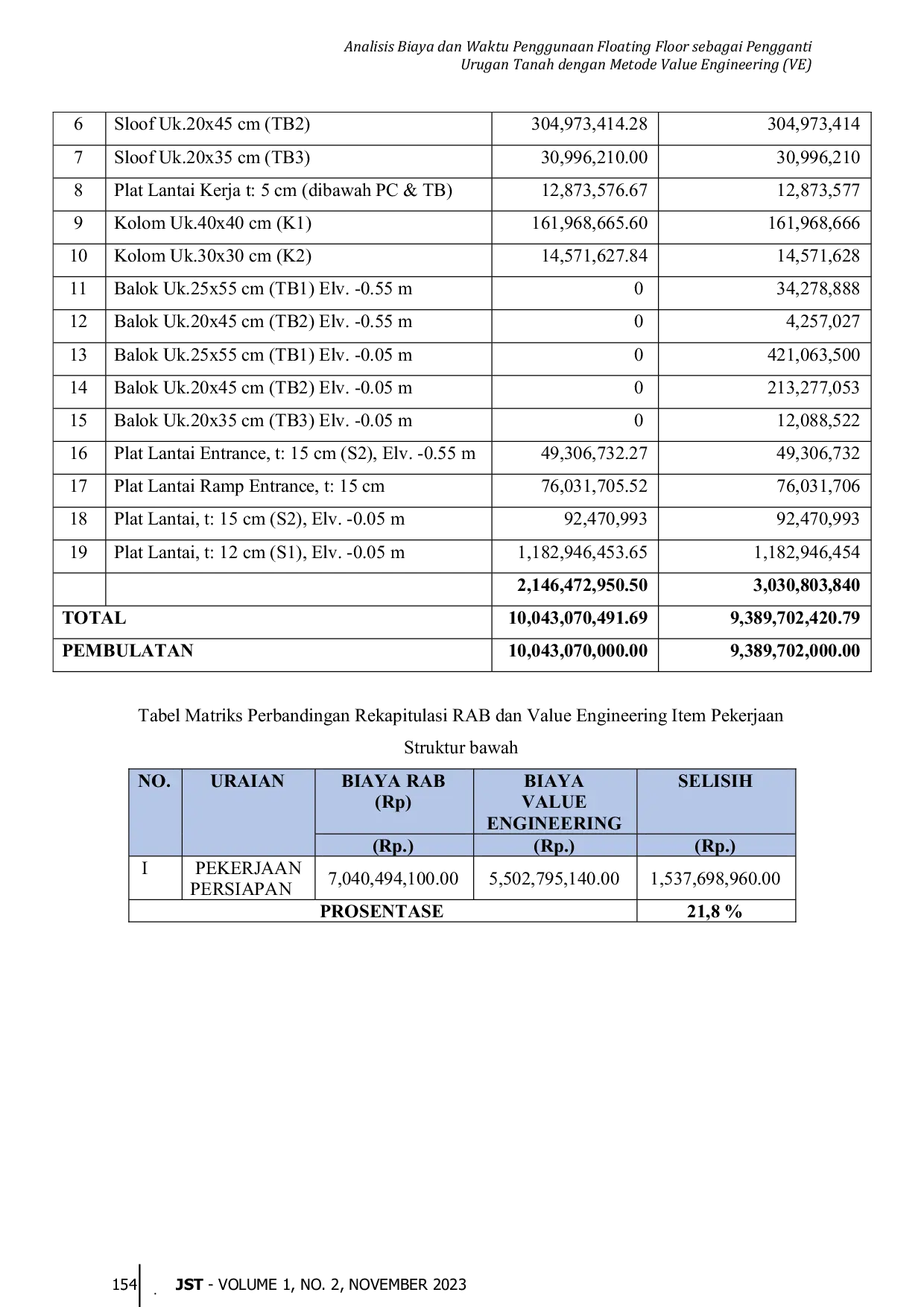
FTUNCENFTUNCEN Hal ini merupakan peluang bisnis sekaligus tantangan bagi masyarakat dunia usaha, khususnya usaha jasa konstruksi. Pemerintah Kota Mojokerto, dalam halHal ini merupakan peluang bisnis sekaligus tantangan bagi masyarakat dunia usaha, khususnya usaha jasa konstruksi. Pemerintah Kota Mojokerto, dalam hal

FTUNCENFTUNCEN Hasil ini sesuai standar nasional No 04-7182-2006. Hasil analisa biodisel dari proses pre-treatment yaitu viskositas yaitu 5,7 Cst, Densitas yaitu 860Hasil ini sesuai standar nasional No 04-7182-2006. Hasil analisa biodisel dari proses pre-treatment yaitu viskositas yaitu 5,7 Cst, Densitas yaitu 860

FTUNCENFTUNCEN Disimpulkan bahwa proyek pembangunan perumahan 16 unit dapat menguntungkan dan layak untuk dilaksanakan kondisi optimis dengan proses pembangunan selesaiDisimpulkan bahwa proyek pembangunan perumahan 16 unit dapat menguntungkan dan layak untuk dilaksanakan kondisi optimis dengan proses pembangunan selesai
FTUNCENFTUNCEN Beton pracetak ialah suatu teknologi konstruksi struktur beton dengan komponen yang dicetak terelebih dahulu di pabrik. Disini peneliti memperhitungkanBeton pracetak ialah suatu teknologi konstruksi struktur beton dengan komponen yang dicetak terelebih dahulu di pabrik. Disini peneliti memperhitungkan
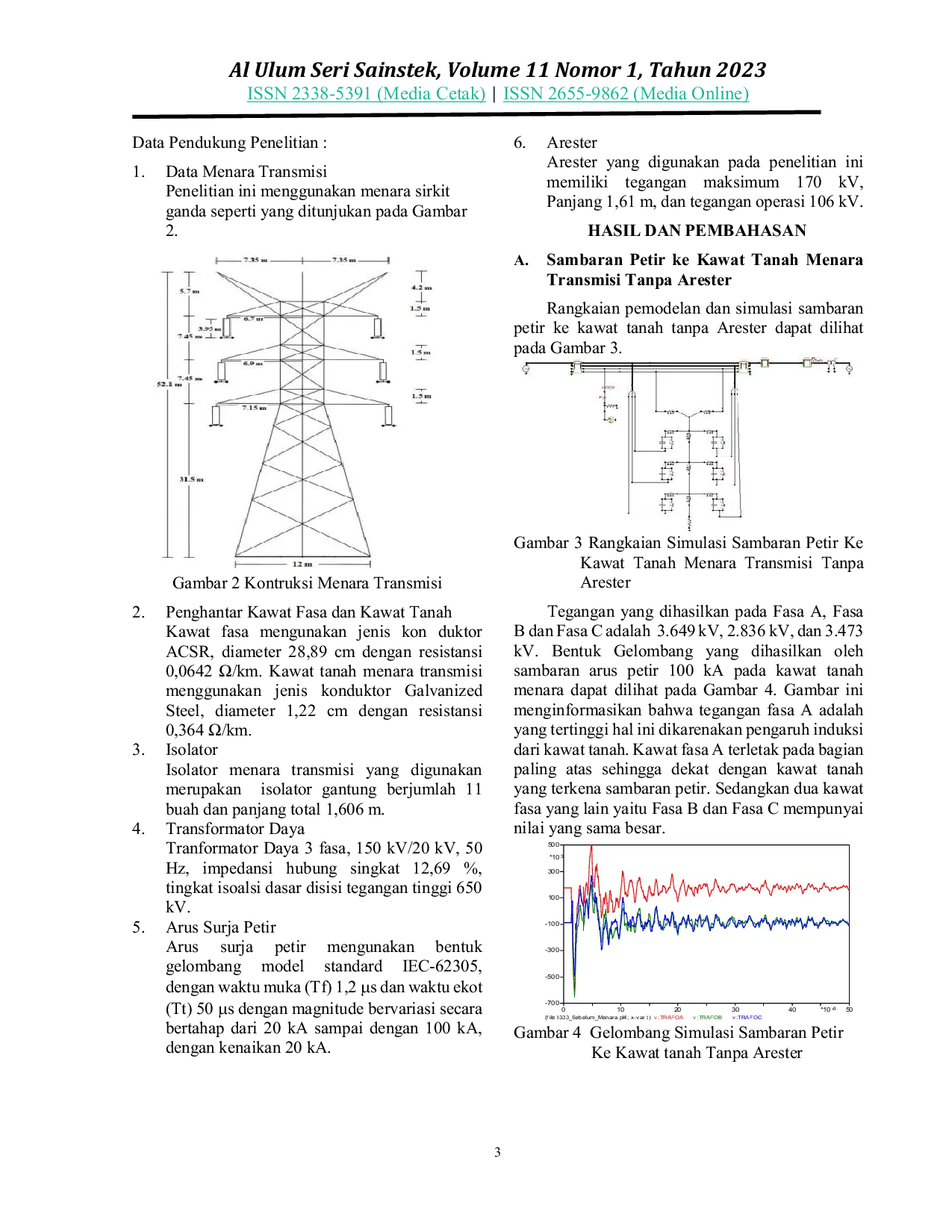
UNIVAUNIVA Besarnya tegangan puncak pada Fasa A, Fasa B dan Fasa C berturut‑turut yaitu 191 kV, 175 kV dan 175 kV. Dengan demikian pemasangan Arester dapat menurunkanBesarnya tegangan puncak pada Fasa A, Fasa B dan Fasa C berturut‑turut yaitu 191 kV, 175 kV dan 175 kV. Dengan demikian pemasangan Arester dapat menurunkan

UMUSUMUS Kelompok Tani Bahagia IV merupakan usaha peternakan sapi yang terletak di Desa Banjaratma Kecamatan Bulakamba Kabupaten Brebes, jenis sapi yang diternakKelompok Tani Bahagia IV merupakan usaha peternakan sapi yang terletak di Desa Banjaratma Kecamatan Bulakamba Kabupaten Brebes, jenis sapi yang diternak
Useful /

STITUSASTITUSA Peningkatan aktivitas yang terjadi berupa aktivitas fisik (bertanya, menjawab, mendengarkan, mencatat) dari 8 siswa menjadi 16 siswa dan peningkatan aktivitasPeningkatan aktivitas yang terjadi berupa aktivitas fisik (bertanya, menjawab, mendengarkan, mencatat) dari 8 siswa menjadi 16 siswa dan peningkatan aktivitas

AL MATANIAL MATANI This web-based employee attendance information system will be able to provide convenience in the employee attendance process, search for attendance dataThis web-based employee attendance information system will be able to provide convenience in the employee attendance process, search for attendance data

UMUSUMUS Salah satu kegiatan yang dapat dilakukan adalah memanfaatkan lahan pekarangan rumah dengan perbanyakan tanaman bunga kertas atau tanaman lainnya, yangSalah satu kegiatan yang dapat dilakukan adalah memanfaatkan lahan pekarangan rumah dengan perbanyakan tanaman bunga kertas atau tanaman lainnya, yang

UMUSUMUS Pandemi covid-19 masih menjadi kekhawatiran bagi masyarakat. Sejak merebaknya wabah covid-19 banyak aspek yang terdampak, diantaranya adalah aspek ekonomi,Pandemi covid-19 masih menjadi kekhawatiran bagi masyarakat. Sejak merebaknya wabah covid-19 banyak aspek yang terdampak, diantaranya adalah aspek ekonomi,