ADAIADAI
INTERNATIONAL JOURNAL OF TRENDS IN ACCOUNTING RESEARCHINTERNATIONAL JOURNAL OF TRENDS IN ACCOUNTING RESEARCHThe purpose of this research is to analyze financial performance using liquidity ratios (Current Ratio and Cash Ratio), solvency (Debt to Assets Ratio and Debt to Equity Ratio), profitability (Return on Investment and Return on Equity), and activity (Asset Turnover and Fixed Asset Turnover) at PT Unilever Indonesia Tbk. for the period 2019–2024. The research method used is a quantitative descriptive method, which explains and provides an overview of a phenomenon from numerical data listed in the financial statements for 6 consecutive years. The results of the study indicate that PT Unilever Indonesia Tbk. has excellent profitability and asset efficiency, this can be seen from the ROI, ROE, TAT, and FAT values that are above industry standards. However, in terms of liquidity, the Current Ratio is below standard, even though the Cash Ratio is very high. This is due to sufficient cash capacity to meet short-term obligations. Meanwhile, a high solvency ratio indicates the company dependence on debt, so financial risks need to be managed more carefully. This research provides an empirical picture of the strengths and weaknesses of the company financial performance and can be the basis for management strategies in optimizing capital structure, increasing liquidity, and maintaining asset efficiency in a sustainable manner.
Based on the financial ratio analysis of PT Unilever Indonesia Tbk.for the 2019–2024 period, the company exhibits varied performance across different financial aspects.The companys ability to meet short-term obligations remains relatively weak, while its cash reserves are strong.A high dependence on debt presents financial risks that require careful management.Despite these challenges, the company demonstrates excellent profitability and asset utilization efficiency.Maintaining a balanced financial structure across liquidity, solvency, and profitability is crucial for ensuring sustainable financial performance.
Further research could investigate the impact of macroeconomic factors, such as inflation and exchange rates, on PT Unilever Indonesia Tbk.s financial performance, particularly concerning its high debt levels. Additionally, a comparative analysis with competitors in the FMCG industry could provide valuable insights into best practices for liquidity management and capital structure optimization. Finally, exploring the relationship between non-financial factors, like brand reputation and consumer loyalty, and the companys profitability and asset efficiency would offer a more holistic understanding of its financial success. These studies should consider the evolving consumer landscape and the increasing importance of sustainable business practices, potentially examining the financial implications of Unilevers environmental and social initiatives. Such research would provide a more comprehensive understanding of the factors driving the companys financial performance and inform strategic decision-making for long-term sustainability and growth.
| File size | 411.63 KB |
| Pages | 18 |
| DMCA | Report |
Related /

PELITA BANGSAPELITA BANGSA Kinerja karyawan merupakan komponen penting dari kemampuan perusahaan untuk mencapai tujuannya. Hal ini berkaitan langsung dengan semua elemen lingkunganKinerja karyawan merupakan komponen penting dari kemampuan perusahaan untuk mencapai tujuannya. Hal ini berkaitan langsung dengan semua elemen lingkungan

UMPARUMPAR Penelitian ini mengkaji advokasi anggaran desa berbasis Gender-Responsive Budgeting (GRB) untuk mendukung pembangunan inklusif bagi perempuan dan anakPenelitian ini mengkaji advokasi anggaran desa berbasis Gender-Responsive Budgeting (GRB) untuk mendukung pembangunan inklusif bagi perempuan dan anak

UMPARUMPAR Menggunakan pendekatan kuantitatif kausal asosiatif dengan survei kuesioner skala Likert terhadap 161 responden melalui teknik strata quota sampling danMenggunakan pendekatan kuantitatif kausal asosiatif dengan survei kuesioner skala Likert terhadap 161 responden melalui teknik strata quota sampling dan

UMPARUMPAR Selain itu, financial technology juga memiliki pengaruh positif dan signifikan terhadap kinerja keuangan dengan meningkatkan akses ke pembiayaan, meningkatkanSelain itu, financial technology juga memiliki pengaruh positif dan signifikan terhadap kinerja keuangan dengan meningkatkan akses ke pembiayaan, meningkatkan

UMPARUMPAR SPIP juga menunjukkan pengaruh signifikan (Sig. 002; B = 0. 310), yang menegaskan bahwa lingkungan kontrol yang kuat, manajemen risiko, aktivitas kontrol,SPIP juga menunjukkan pengaruh signifikan (Sig. 002; B = 0. 310), yang menegaskan bahwa lingkungan kontrol yang kuat, manajemen risiko, aktivitas kontrol,

IJBLEIJBLE Hasil menunjukkan bahwa CR dan DER memiliki dampak signifikan terhadap ROE secara bersamaan. Namun, CR tidak secara signifikan memengaruhi ROE, sementaraHasil menunjukkan bahwa CR dan DER memiliki dampak signifikan terhadap ROE secara bersamaan. Namun, CR tidak secara signifikan memengaruhi ROE, sementara

JMAN UPIYPTKJMAN UPIYPTK Pendekatan yang dipakai adalah pendekatan kuantitatif dengan metode purposive sampling. Data ini menggunakan data sekunder berupa dokumen. Sumber dataPendekatan yang dipakai adalah pendekatan kuantitatif dengan metode purposive sampling. Data ini menggunakan data sekunder berupa dokumen. Sumber data

UNTAG SMDUNTAG SMD Holcim Indonesia (Tbk) sebelum dan sesudah akuisisi, dapat disimpulkan bahwa kinerja keuangan perusahaan lebih baik sebelum akuisisi. Hal ini terlihatHolcim Indonesia (Tbk) sebelum dan sesudah akuisisi, dapat disimpulkan bahwa kinerja keuangan perusahaan lebih baik sebelum akuisisi. Hal ini terlihat
Useful /
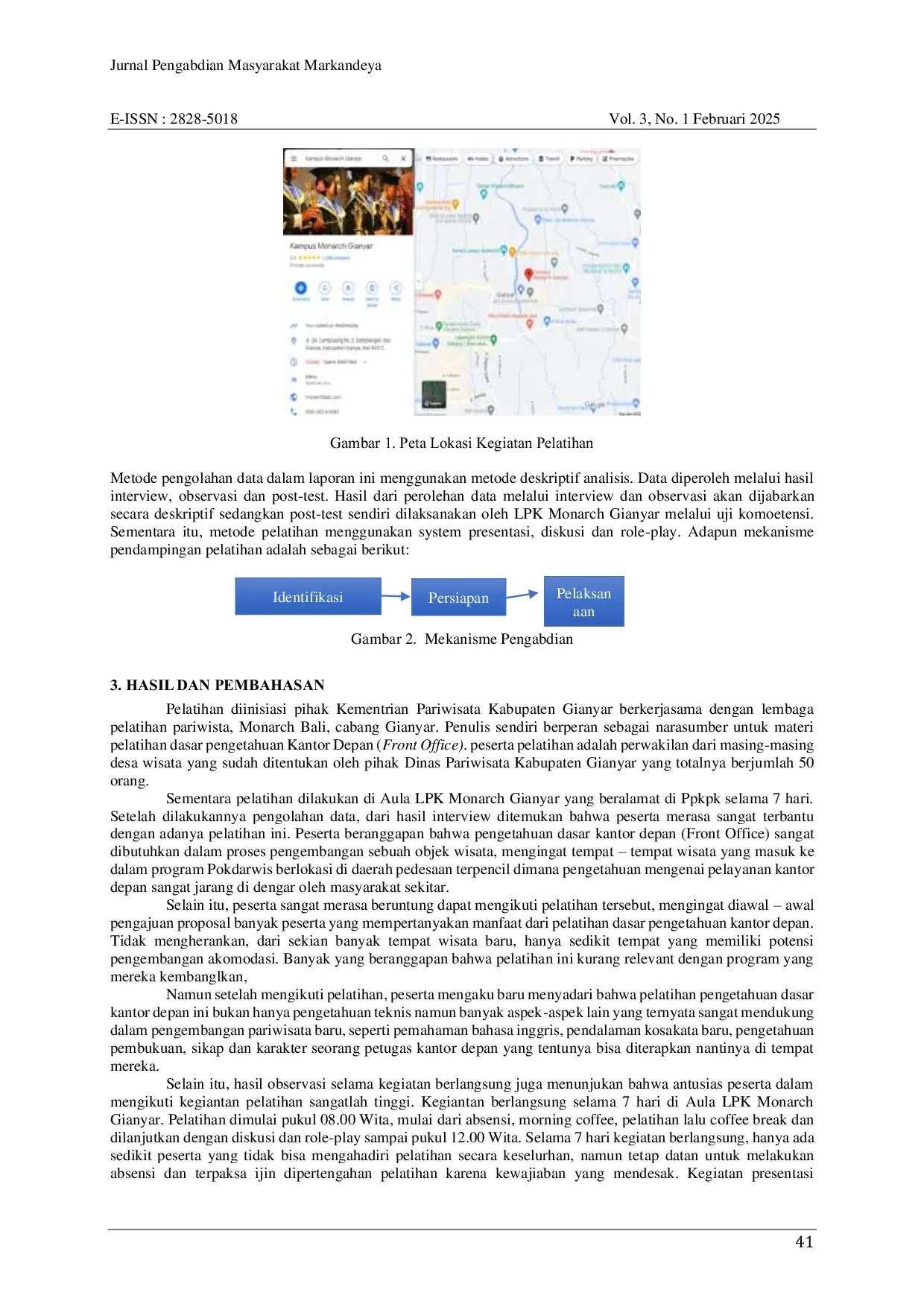
MARKANDEYABALIMARKANDEYABALI Pelatihan dilakukan selama 7 hari bertempat di LPK Monarch Gianyar. Materi pelatihan melingkupi teknis dasar akomodasi mulai dari pengetahuan dasar tatagrahaPelatihan dilakukan selama 7 hari bertempat di LPK Monarch Gianyar. Materi pelatihan melingkupi teknis dasar akomodasi mulai dari pengetahuan dasar tatagraha

MARKANDEYABALIMARKANDEYABALI Kerja sama membantu penari saling memahami dan meningkatkan kepercayaan di panggung. Banyak hal positif yang didapatkan dari pelatihan seni tari, termasukKerja sama membantu penari saling memahami dan meningkatkan kepercayaan di panggung. Banyak hal positif yang didapatkan dari pelatihan seni tari, termasuk

POLITANI KOEPOLITANI KOE Penelitian ini menggunakan metode eksperimen dengan 4 perlakuan dan 3 kali ulangan. Hasil penelitian menunjukkan bahwa pemberian air perasan buah jerukPenelitian ini menggunakan metode eksperimen dengan 4 perlakuan dan 3 kali ulangan. Hasil penelitian menunjukkan bahwa pemberian air perasan buah jeruk

POLITANI KOEPOLITANI KOE Tujuan dari penelitian ini adalah untuk mengetahui variabel kondisi lingkungan di ekosistem mangrove pada pesisir Kota Kupang. Penelitian ini dilakukanTujuan dari penelitian ini adalah untuk mengetahui variabel kondisi lingkungan di ekosistem mangrove pada pesisir Kota Kupang. Penelitian ini dilakukan