UINFASBENGKULUUINFASBENGKULU
Madania: Jurnal Kajian KeislamanMadania: Jurnal Kajian KeislamanThis study aims to analyze the input, process, output, outcome, and contextualization of Yusuf al-Qardhawis concept of moral education within the framework of Indonesias character education. Data were collected from books, journals, articles, videos, and especially Yusuf al-Qardhawis works on moral education, using qualitative content analysis. The findings reveal that moral education consists of both software and hardware. The software includes a curriculum emphasizing morality toward Allah, the Prophet, oneself, other creatures, and the state, supported by both soft skills and hard skills activities. The hardware consists of teachers and students, with teachers expected to possess pedagogical, personal, social, and professional competencies, strengthened through prayer, dhikr, and advice. The process is carried out through structured lesson planning that integrates materials, syllabi, teaching modules, media, methods, and facilities into the lesson plan (RPP), while learning activities cover opening to closing stages with appropriate methods, assessments, and classroom management. The output and outcome of Yusuf al-Qardhawis moral education are students who have faith and piety to Allah, love the Prophet, show noble character toward others, and respect all creation. In its contextualization, this study highlights that Yusuf al-Qardhawis moral values, such as compassion, humility, sincerity, patience, justice, moderation (wasathiyah), and balance (tawazun), are strongly relevant to character education in Indonesia. These values align with key traits promoted nationally, including religiosity, honesty, discipline, creativity, tolerance, democracy, nationalism, patriotism, respect, peace, and environmental care. The study affirms that Yusuf al-Qardhawis ideas provide a valuable contribution to strengthening character education in Indonesia.
Yusuf al-Qardhawis moral education is structured around two key components.moral software and moral hardware, encompassing curriculum and the roles of educators and learners.The implementation process involves careful planning, structured learning activities, and comprehensive evaluation, aiming to cultivate students faith, piety, and noble character.The study concludes that al-Qardhawis values strongly align with Indonesias character education goals, offering a valuable framework for strengthening moral and ethical development within the national education system.
Penelitian lanjutan perlu dilakukan untuk mengkaji efektivitas implementasi konsep pendidikan moral Yusuf al-Qardhawi dalam berbagai konteks sekolah di Indonesia, dengan mempertimbangkan perbedaan karakteristik siswa dan lingkungan. Studi komparatif dapat dilakukan untuk membandingkan pendekatan pendidikan karakter di Indonesia dengan negara-negara lain yang juga mengadopsi gagasan al-Qardhawi, guna mengidentifikasi praktik-praktik terbaik dan tantangan yang mungkin timbul. Lebih lanjut, penelitian perlu menggali lebih dalam bagaimana teknologi digital dapat dimanfaatkan untuk memperkuat pendidikan moral, khususnya dalam menanamkan nilai-nilai luhur kepada generasi muda di era digital, serta mengembangkan model pelatihan guru yang efektif untuk mengintegrasikan nilai-nilai moral al-Qardhawi ke dalam praktik pengajaran sehari-hari, sehingga guru dapat menjadi teladan yang baik bagi siswa dalam mengamalkan nilai-nilai tersebut.
| File size | 292.6 KB |
| Pages | 12 |
| DMCA | Report |
Related /
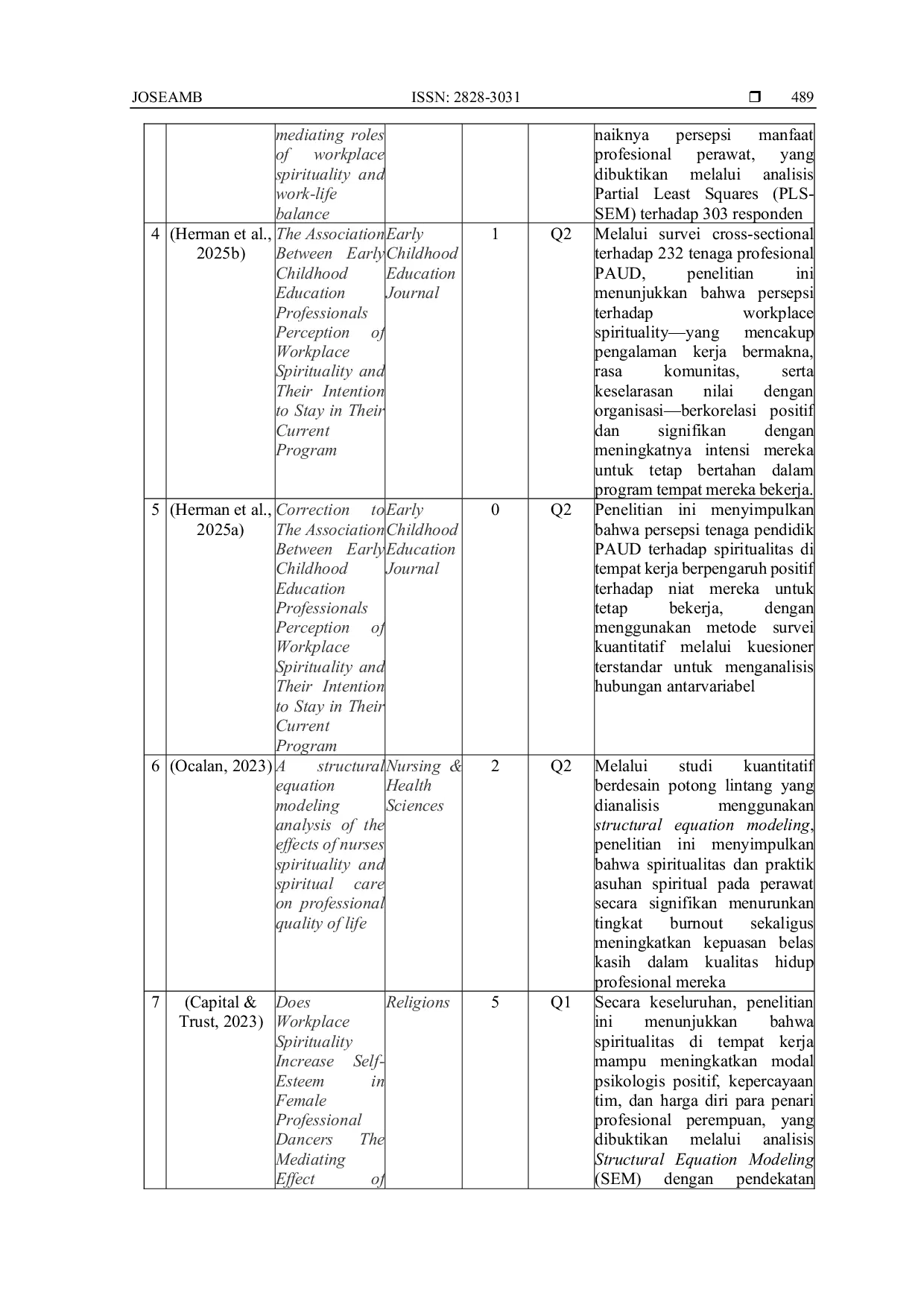
RCF INDONESIARCF INDONESIA Hasil sintesis menunjukkan bahwa spiritualitas profesional berkontribusi pada kesejahteraan, keterlibatan, dan komitmen kerja, sementara humanisme evolusionerHasil sintesis menunjukkan bahwa spiritualitas profesional berkontribusi pada kesejahteraan, keterlibatan, dan komitmen kerja, sementara humanisme evolusioner

RADJAPUBLIKARADJAPUBLIKA Perusahaan yang secara konsisten menerapkan etika cenderung memiliki hubungan jangka panjang yang kuat dengan karyawan, pelanggan, dan mitra bisnis. OlehPerusahaan yang secara konsisten menerapkan etika cenderung memiliki hubungan jangka panjang yang kuat dengan karyawan, pelanggan, dan mitra bisnis. Oleh

NALANDANALANDA Tantangan yang muncul antara lain keterbatasan waktu dan ketersediaan media, tetapi dapat diatasi melalui kolaborasi guru-siswa dan kreativitas guru dalamTantangan yang muncul antara lain keterbatasan waktu dan ketersediaan media, tetapi dapat diatasi melalui kolaborasi guru-siswa dan kreativitas guru dalam

UNWUNW Hasil analisis deskriptif menunjukkan bahwa rata-rata skor kemampuan berhitung siswa laki-laki dan perempuan bervariasi tergantung pada gaya belajar yangHasil analisis deskriptif menunjukkan bahwa rata-rata skor kemampuan berhitung siswa laki-laki dan perempuan bervariasi tergantung pada gaya belajar yang

UNWUNW Penelitian ini menyimpulkan bahwa kejadian bullying pada anak usia dini memiliki dampak negatif bagi perkembangan sosial dan emosional anak, baik pelakuPenelitian ini menyimpulkan bahwa kejadian bullying pada anak usia dini memiliki dampak negatif bagi perkembangan sosial dan emosional anak, baik pelaku

STIK KENDALSTIK KENDAL Pendidikan akhlak berbasis nilai-nilai agama menjadi sangat penting untuk melindungi anak-anak dari pengaruh negatif teknologi dan globalisasi. PenelitianPendidikan akhlak berbasis nilai-nilai agama menjadi sangat penting untuk melindungi anak-anak dari pengaruh negatif teknologi dan globalisasi. Penelitian
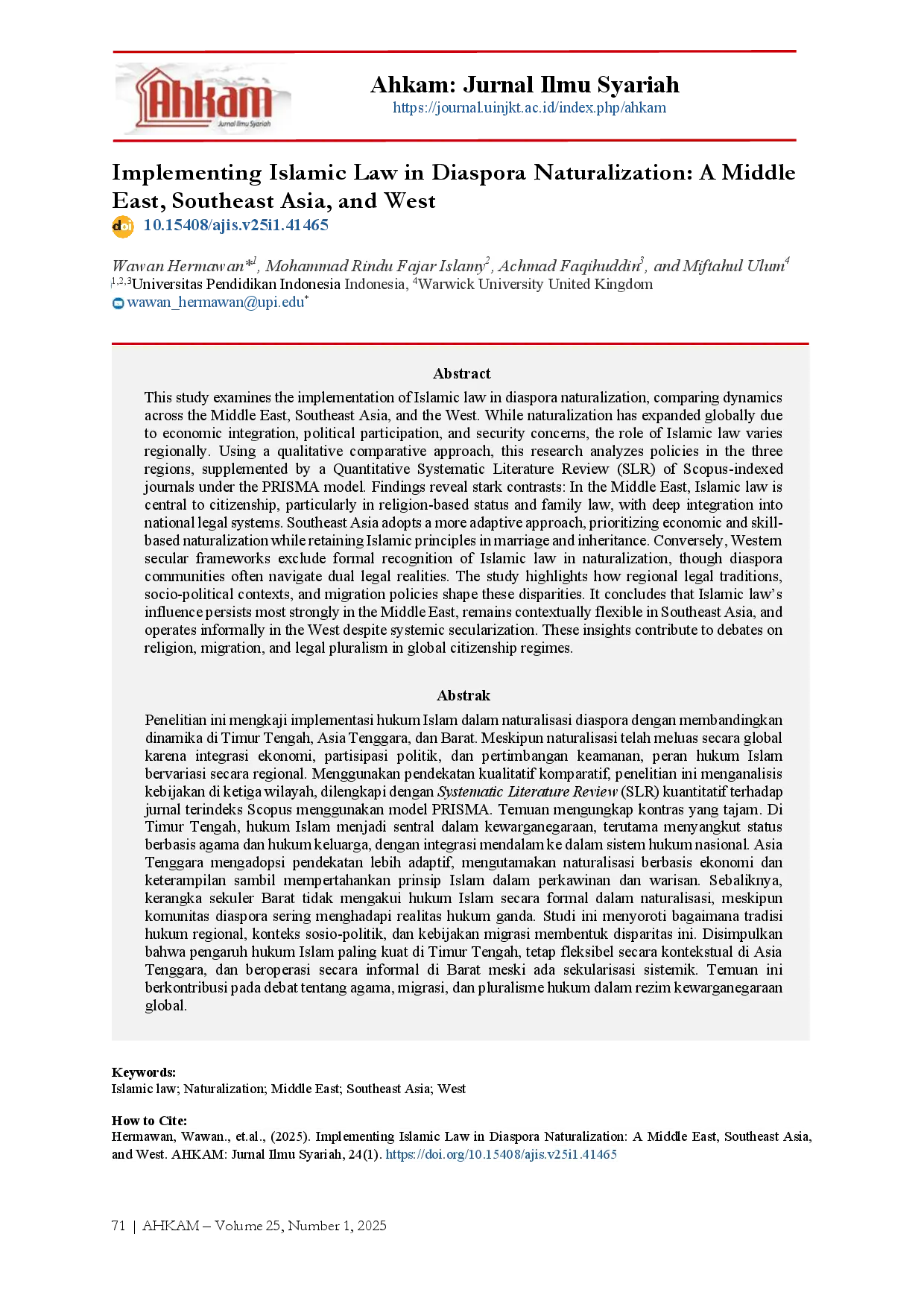
UINUIN Menggunakan pendekatan kualitatif komparatif, penelitian ini menganalisis kebijakan di ketiga wilayah, dilengkapi dengan Systematic Literature Review (SLR)Menggunakan pendekatan kualitatif komparatif, penelitian ini menganalisis kebijakan di ketiga wilayah, dilengkapi dengan Systematic Literature Review (SLR)
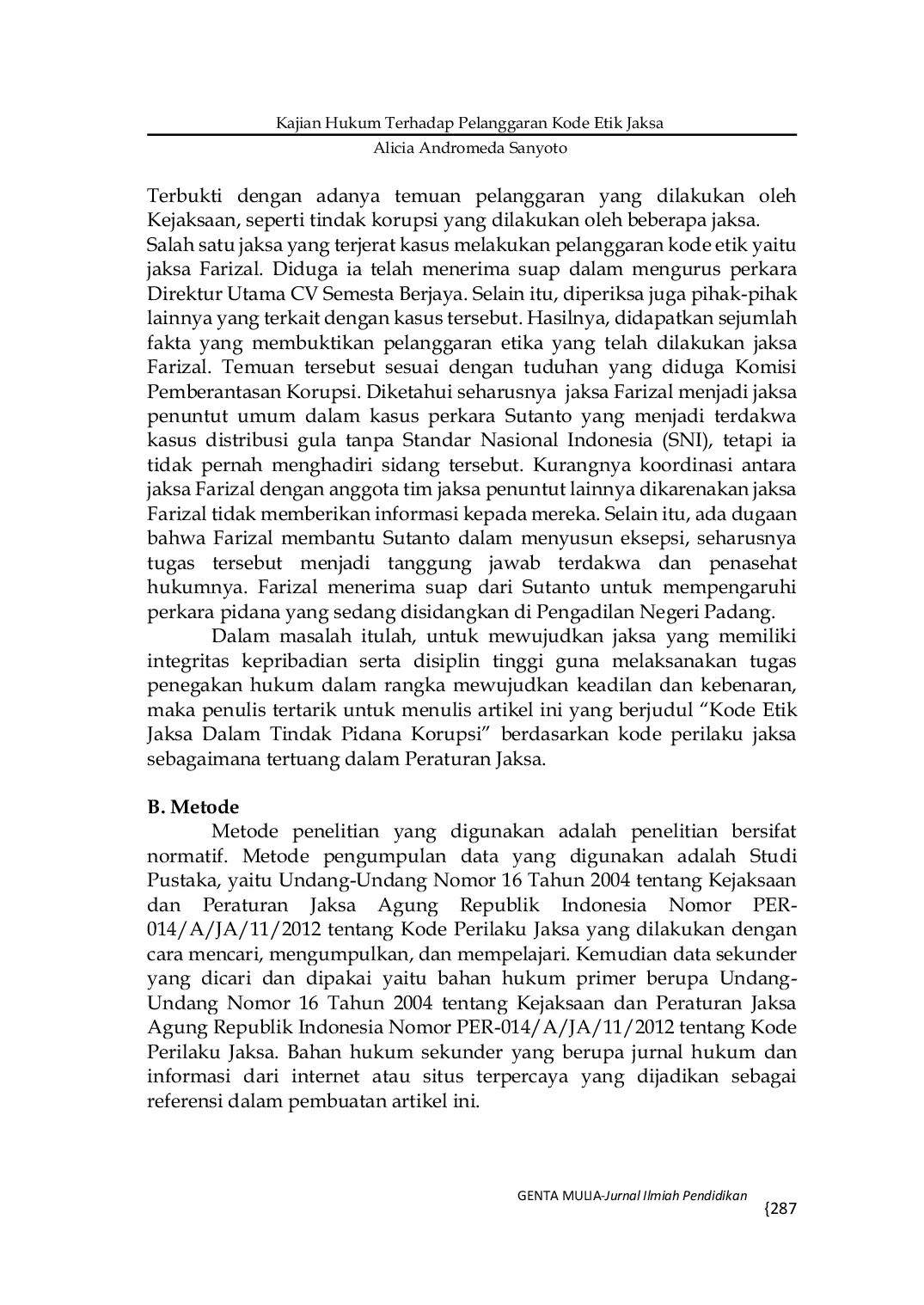
UNCMUNCM Pelanggaran kode etik, seperti korupsi, dapat ditangani melalui Majelis Kode Etik atau proses hukum dengan kerja sama Kepolisian dan Komisi PemberantasanPelanggaran kode etik, seperti korupsi, dapat ditangani melalui Majelis Kode Etik atau proses hukum dengan kerja sama Kepolisian dan Komisi Pemberantasan
Useful /

RCF INDONESIARCF INDONESIA Penelitian ini menyajikan tinjauan menyeluruh mengenai konsep graf maksimum dalam extremal graph theory serta relevansinya bagi pemodelan jaringan modern.Penelitian ini menyajikan tinjauan menyeluruh mengenai konsep graf maksimum dalam extremal graph theory serta relevansinya bagi pemodelan jaringan modern.
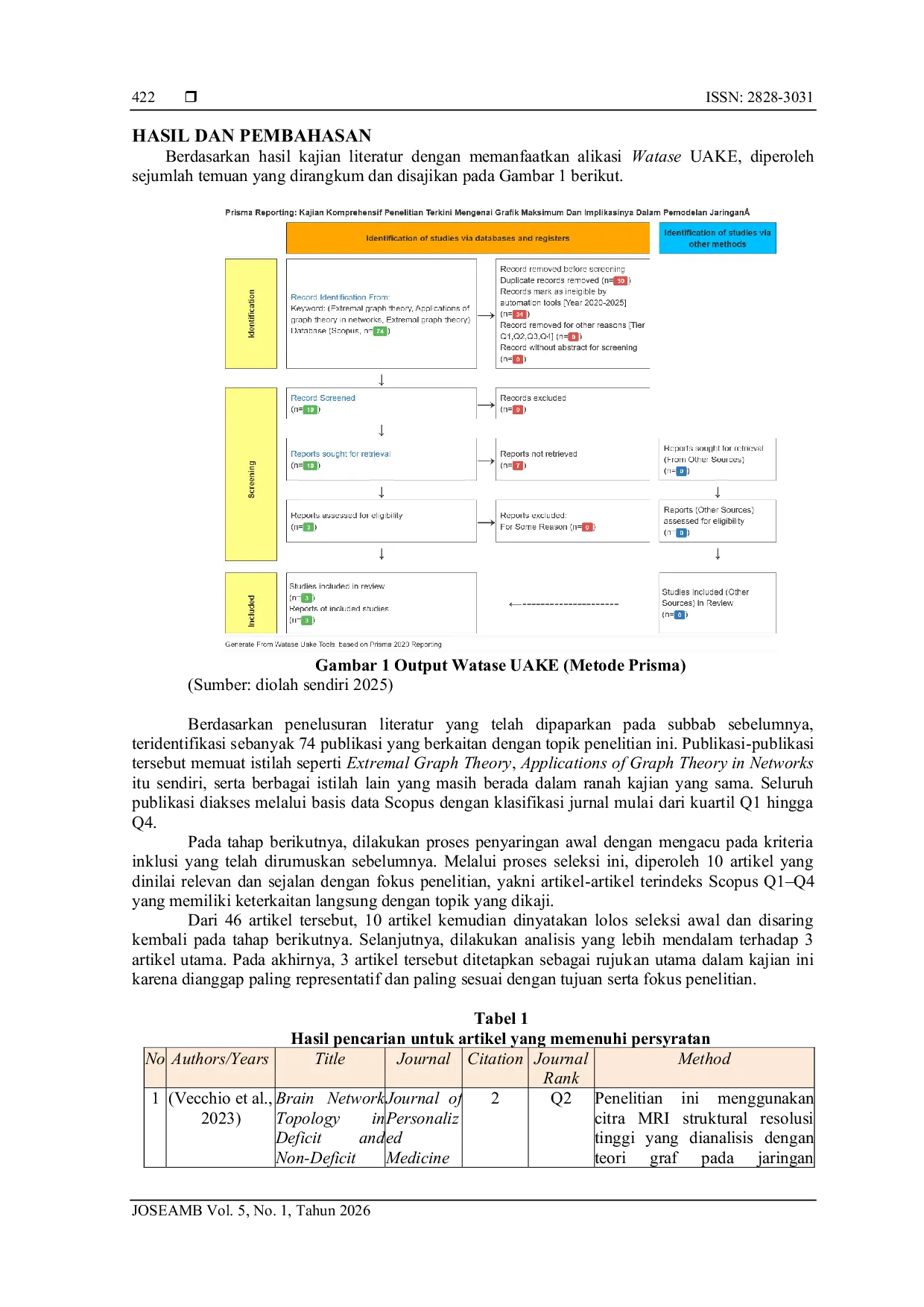
RCF INDONESIARCF INDONESIA Studi‑studi ini menegaskan bahwa struktur graf maksimum berperan penting dalam memahami efisiensi, kerentanan, dan pola konektivitas jaringan. SecaraStudi‑studi ini menegaskan bahwa struktur graf maksimum berperan penting dalam memahami efisiensi, kerentanan, dan pola konektivitas jaringan. Secara
UINUIN Pendekatan akomodatif ini mempercepat pertumbuhan institusi namun menimbulkan risiko konvergensi model perbankan syariah dan konvensional, sehingga mengurangiPendekatan akomodatif ini mempercepat pertumbuhan institusi namun menimbulkan risiko konvergensi model perbankan syariah dan konvensional, sehingga mengurangi

UINUIN Meskipun Jamaah Tabligh tidak mengklaim diri sebagai tarekat, namun praktiknya menunjukkan konfigurasi ulang warisan Chishti-Ḥanafī dalam bentuk non-institusional.Meskipun Jamaah Tabligh tidak mengklaim diri sebagai tarekat, namun praktiknya menunjukkan konfigurasi ulang warisan Chishti-Ḥanafī dalam bentuk non-institusional.