IAINAMBONIAINAMBON
al-Iltizam: Jurnal Pendidikan Agama Islamal-Iltizam: Jurnal Pendidikan Agama IslamThe Tartila method is one of the alternative methods in learning to read the Quran applied at TPQ al-Hidayah Miftahul Ulum II Bekacak, Bangil. The Tartila method is one of the methods of learning to read the Quran that emphasizes aspects of fluency (fasahah), accuracy of makhraj, and the application of tajweed rules in stages. This study aims to analyze the effectiveness of the Tartila method in improving the ability to read al-Quran of students, as well as identifying obstacles faced in the learning process. Using a descriptive qualitative approach, this research involves direct observation, semi-structured interviews with educators and parents of santri, and documentation studies of students learning outcomes. The results showed that the Tartila method was able to improve students fluency, makhraj accuracy, and understanding of tajweed. Learning is done classically with a gradual evaluation system. However, some of the obstacles faced include differences in the ability of students, the lack of involvement of educators, and the lack of support from santri guardians for religious education. Thus, efforts are needed to optimize this method to make it more effective in producing a Quranic generation.
The Tartila method is an effective approach to learning to read the Al-Quran implemented at TPQ Al-Hidayah Miftahul Ulum II.This method helps improve fluency, accuracy of makhraj, and the gradual application of tajweed.Despite its effectiveness, challenges exist, including varying student abilities, limited educator involvement, and insufficient support from parents.Therefore, further optimization is needed, including enhanced training for educators and increased parental awareness of the importance of Al-Quran education, to effectively cultivate a generation capable of reading and understanding the Al-Quran.
Based on the findings, future research could explore the impact of incorporating technology, such as interactive apps or audio-visual aids, into the Tartila method to enhance student engagement and learning outcomes. Furthermore, a comparative study examining the effectiveness of the Tartila method against other established methods of Quranic literacy could provide valuable insights for educators. Finally, research focusing on developing targeted interventions to address the challenges posed by varying student abilities and limited parental involvement would be beneficial in maximizing the potential of the Tartila method and ensuring its widespread success in fostering a generation proficient in reading and understanding the Al-Quran. These studies should be conducted with a focus on practical implementation and scalability, ensuring that the findings can be readily adopted by TPQ institutions and educators to improve the quality of Quranic education for all students.
| File size | 1.32 MB |
| Pages | 12 |
| DMCA | Report |
Related /

LETIGESLETIGES Maqamnya mencerminkan pengalaman hidupnya dan pencarian pencerahan spiritual dari perintah Al-Quran, menjadikannya sumber inspirasi dan bimbingan yangMaqamnya mencerminkan pengalaman hidupnya dan pencarian pencerahan spiritual dari perintah Al-Quran, menjadikannya sumber inspirasi dan bimbingan yang

LETIGESLETIGES Penelitian ini bertujuan untuk mengkaji perspektif Islam tentang martabat dan potensi manusia serta implikasinya terhadap praktik pendidikan. Dalam Islam,Penelitian ini bertujuan untuk mengkaji perspektif Islam tentang martabat dan potensi manusia serta implikasinya terhadap praktik pendidikan. Dalam Islam,
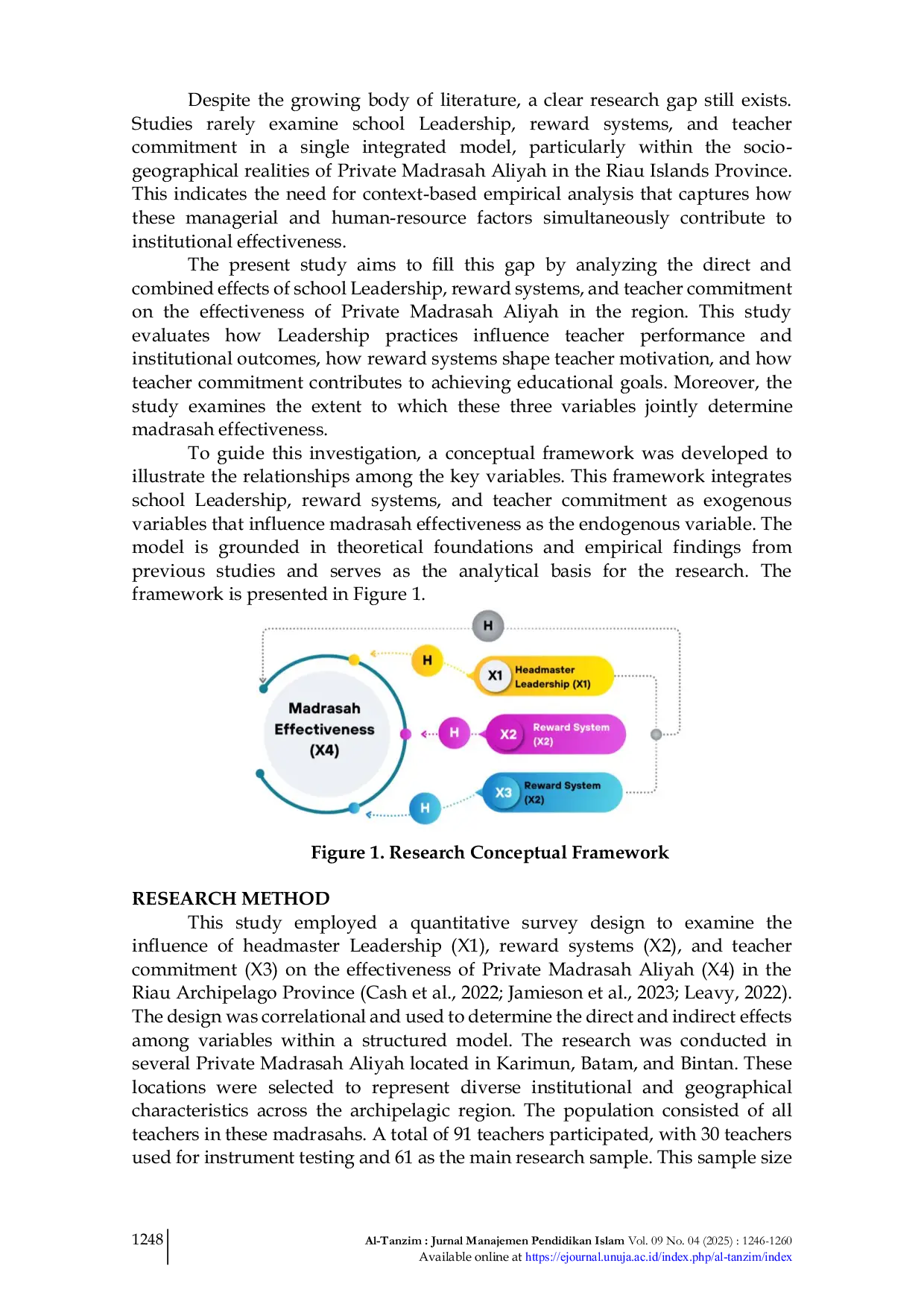
UNUJAUNUJA This study provides practical implications for madrasah leaders and policymakers in designing Leadership strategies, reward mechanisms, and commitment-strengtheningThis study provides practical implications for madrasah leaders and policymakers in designing Leadership strategies, reward mechanisms, and commitment-strengthening

INSURIPONOROGOINSURIPONOROGO Effective leadership and a supportive school environment are crucial for enhancing teacher quality. These findings underscore the need for strategic interventionsEffective leadership and a supportive school environment are crucial for enhancing teacher quality. These findings underscore the need for strategic interventions

UNTARUNTAR The demand for green talents in key industries generally focuses on environmental safety and energy conservation managers. However, most enterprises doThe demand for green talents in key industries generally focuses on environmental safety and energy conservation managers. However, most enterprises do

IAINAMBONIAINAMBON Faktor pendukung utama meliputi metode yang sistematis, guru bersanad, motivasi siswa, dan model pembelajaran klasikal. Program tahfidz Al-Quran di MTsFaktor pendukung utama meliputi metode yang sistematis, guru bersanad, motivasi siswa, dan model pembelajaran klasikal. Program tahfidz Al-Quran di MTs

STIAB JINARAKKHITASTIAB JINARAKKHITA Hasil penelitian menunjukkan bahwa pelatihan tidak hanya meningkatkan keterampilan komunikasi mahasiswa, tetapi juga memperkuat keterampilan pengambilanHasil penelitian menunjukkan bahwa pelatihan tidak hanya meningkatkan keterampilan komunikasi mahasiswa, tetapi juga memperkuat keterampilan pengambilan

UMPOUMPO Adapun hasil dari penelitian ini yaitu: 1) pemahaman mahasiswa tentang konsep negara darul ahdi wa syahadah belum optimal meskipun sudah ada mata kuliahAdapun hasil dari penelitian ini yaitu: 1) pemahaman mahasiswa tentang konsep negara darul ahdi wa syahadah belum optimal meskipun sudah ada mata kuliah
Useful /
STAIMADIUNSTAIMADIUN Metode penelitian yang digunakan bersifat kualitatif dengan pendekatan deskriptif, data dikumpulkan melalui observasi, wawancara, dan dokumentasi. HasilMetode penelitian yang digunakan bersifat kualitatif dengan pendekatan deskriptif, data dikumpulkan melalui observasi, wawancara, dan dokumentasi. Hasil

UNTARUNTAR Perbedaan dalam gaya kepemimpinan eksekutif pada lingkungan transformasi digital sebabkan perbedaan sumber daya, peralatan, dan kinerja sektor asuransiPerbedaan dalam gaya kepemimpinan eksekutif pada lingkungan transformasi digital sebabkan perbedaan sumber daya, peralatan, dan kinerja sektor asuransi
UNTARUNTAR Setelah analisis data, rekomendasi disajikan untuk meningkatkan operasi kafetaria lansia di Kabupaten Chiayi. Rekomendasi mencakup strategi untuk memperbaikiSetelah analisis data, rekomendasi disajikan untuk meningkatkan operasi kafetaria lansia di Kabupaten Chiayi. Rekomendasi mencakup strategi untuk memperbaiki
UNTARUNTAR A total of 486 valid questionnaires were received from an initial 521 distributed. The results indicated a positive effect between happiness and re-participationA total of 486 valid questionnaires were received from an initial 521 distributed. The results indicated a positive effect between happiness and re-participation