PUBMEDIAPUBMEDIA
Journal of Geosciences and Environmental StudiesJournal of Geosciences and Environmental StudiesPlastic waste pollution increasingly threatens the ecological and hydrological functions of the Ciliwung River Basin, yet identifying its sources remains difficult due to interacting physical and socio-economic factors. This study aims to map potential plastic waste source areas to support upstream waste management interventions. A Geographic Information System (GIS) combined with Multi-Criteria Decision Analysis (MCDA) using a Weighted Linear Combination (WLC) approach was applied to integrate six variables: settlement typology, population density, market distribution, presence of waste facilities, distance to the river, and riverbank condition. Results show that 16.37% of the basin is classified as high-potential, 35.24% as medium, and 48.40% as low-potential. Scenario 1—emphasizing settlement typology and population density—most closely matched field observations, identifying densely populated informal settlements on disturbed riverbanks as the primary contributors to plastic waste leakage. These findings underscore the role of demographic pressure and riverbank settlement characteristics in shaping pollution risks and provide a basis for targeted interventions in high-risk areas.
The study successfully mapped areas with potential to become sources of plastic waste pollution in the Ciliwung River, highlighting the complex interplay of physical and socio-economic factors.Community behavior, particularly waste disposal practices in densely populated informal settlements along riverbanks, was identified as a key driver of plastic pollution.The research underscores the need for targeted interventions in high-risk areas and emphasizes the importance of considering both land characteristics and demographic factors in waste management strategies.
Further research should investigate the temporal dynamics of plastic waste accumulation, particularly during flood events, to understand seasonal variations and improve predictive modeling. Integrating hydrological modeling with GIS analysis would enable tracing the downstream movement of plastic debris and identifying hotspots of accumulation within the river system. Additionally, incorporating participatory mapping, citizen science, or crowdsourced data could provide richer insights into localized dumping practices and behavioral drivers of waste disposal. Expanding the framework to include analysis of plastic waste composition would help establish clearer links between land-based sources, waste management infrastructure, and in-river pollution levels. Finally, a network analysis could be integrated to account for accessibility to the river channel, as dumping behavior is influenced by this factor, and minor river tributaries should be investigated as potential pollution entry points.
- Radware Bot Manager Captcha. radware bot manager captcha apologize ensure keep safe please confirm human... doi.org/10.1088/1755-1315/200/1/012042Radware Bot Manager Captcha radware bot manager captcha apologize ensure keep safe please confirm human doi 10 1088 1755 1315 200 1 012042
- Radware Bot Manager Captcha. radware bot manager captcha apologize ensure keep safe please confirm human... doi.org/10.1088/1755-1315/106/1/012043Radware Bot Manager Captcha radware bot manager captcha apologize ensure keep safe please confirm human doi 10 1088 1755 1315 106 1 012043
- Flood Prediction due to Land Cover Change in the Ciliwung River Basin. flood prediction land change ciliwung... doi.org/10.14716/ijtech.v13i2.4662Flood Prediction due to Land Cover Change in the Ciliwung River Basin flood prediction land change ciliwung doi 10 14716 ijtech v13i2 4662
- A Systematic Review of the Latest Research Trends on the Use of Satellite Imagery in Solid Waste Disposal... mdpi.com/2076-3298/10/7/128A Systematic Review of the Latest Research Trends on the Use of Satellite Imagery in Solid Waste Disposal mdpi 2076 3298 10 7 128
- Estimasi Laju Timbulan Sampah dan Kebutuhan Landfill Periode 2018-2027 (Studi Kasus Kec. Mentawa Baru... doi.org/10.33084/mitl.v2i2.124Estimasi Laju Timbulan Sampah dan Kebutuhan Landfill Periode 2018 2027 Studi Kasus Kec Mentawa Baru doi 10 33084 mitl v2i2 124
| File size | 1.08 MB |
| Pages | 20 |
| DMCA | Report |
Related /

ESC IDESC ID Temuan ini mengindikasikan bahwa peningkatan pemahaman dan keterampilan teknis mahasiswa memainkan peran penting dalam membentuk kesiapan dan kesadaranTemuan ini mengindikasikan bahwa peningkatan pemahaman dan keterampilan teknis mahasiswa memainkan peran penting dalam membentuk kesiapan dan kesadaran

IJBLEIJBLE The decision establishes a constitutional benchmark for assessing other restrictive criminal norms, including those contained in the new Criminal CodeThe decision establishes a constitutional benchmark for assessing other restrictive criminal norms, including those contained in the new Criminal Code

IJBLEIJBLE Badan hukum yang terintegrasi seperti Perseroan Terbatas (PT) diperlukan untuk memastikan perlindungan investor, akuntabilitas, dan kepastian hukum dalamBadan hukum yang terintegrasi seperti Perseroan Terbatas (PT) diperlukan untuk memastikan perlindungan investor, akuntabilitas, dan kepastian hukum dalam
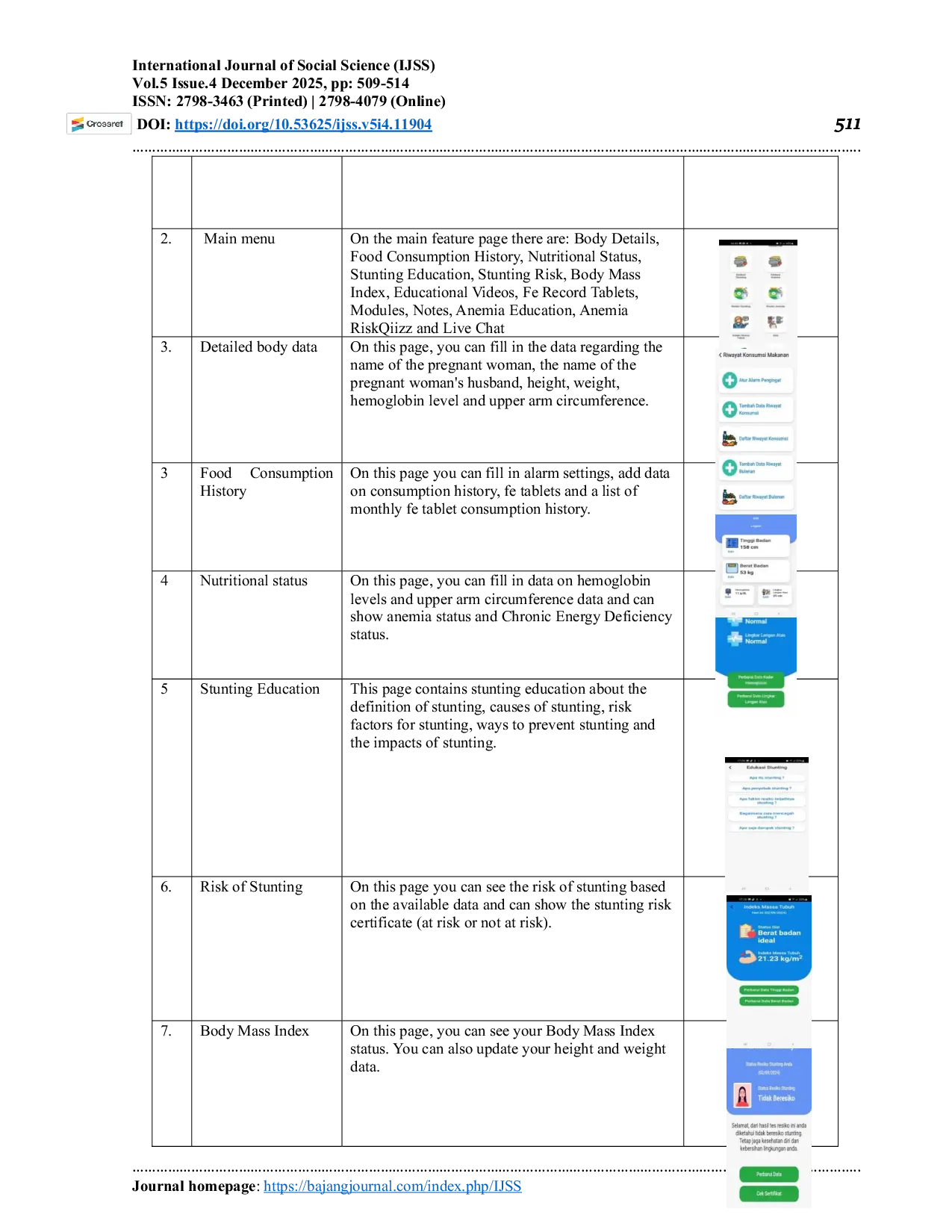
BAJANGJOURNALBAJANGJOURNAL Aplikasi Si-NaNing adalah aplikasi kesehatan ibu yang dikembangkan dalam bentuk prototipe dan dapat dioperasikan pada smartphone Android. Aplikasi iniAplikasi Si-NaNing adalah aplikasi kesehatan ibu yang dikembangkan dalam bentuk prototipe dan dapat dioperasikan pada smartphone Android. Aplikasi ini

ULILALBABINSTITUTEULILALBABINSTITUTE Tinjauan literatur nasional dan internasional yang diakui (Sinta dan jurnal bereputasi) sebanyak 22 yang diterbitkan antara tahun 2020 dan 2025 digunakanTinjauan literatur nasional dan internasional yang diakui (Sinta dan jurnal bereputasi) sebanyak 22 yang diterbitkan antara tahun 2020 dan 2025 digunakan
ARIMSIARIMSI Sistem Informasi Praktek Kerja Industri (PKI) bagi siswa kelas XII pada Sekolah SMK Kasimo Kererobbo bertujuan untuk mempermudah proses pengelolaan danSistem Informasi Praktek Kerja Industri (PKI) bagi siswa kelas XII pada Sekolah SMK Kasimo Kererobbo bertujuan untuk mempermudah proses pengelolaan dan
NEWINERANEWINERA Penelitian ini bertujuan memahami kolaborasi antara KUA dan pemimpin agama dalam meningkatkan kinerja layanan KUA serta mengidentifikasi faktor pendukungPenelitian ini bertujuan memahami kolaborasi antara KUA dan pemimpin agama dalam meningkatkan kinerja layanan KUA serta mengidentifikasi faktor pendukung

NEWINERANEWINERA This research uses a qualitative research approach, which aims to find out the development of storynomics using English-based digital information systemsThis research uses a qualitative research approach, which aims to find out the development of storynomics using English-based digital information systems
Useful /

ESC IDESC ID Specifically, enhancing employee competencies, managing workloads proportionally, and implementing a fair and transparent reward system are crucial forSpecifically, enhancing employee competencies, managing workloads proportionally, and implementing a fair and transparent reward system are crucial for

PUBMEDIAPUBMEDIA Upaya global untuk mengurangi ketergantungan pada bahan bakar fosil dan emisi gas rumah kaca semakin menekankan potensi energi laut sebagai sumber energiUpaya global untuk mengurangi ketergantungan pada bahan bakar fosil dan emisi gas rumah kaca semakin menekankan potensi energi laut sebagai sumber energi

UMSUMS However, in Ternate City, ARV adherence remains low due to side effect fears, stigma, depression, and limited health service access. Therefore, this studyHowever, in Ternate City, ARV adherence remains low due to side effect fears, stigma, depression, and limited health service access. Therefore, this study
POLTEKKESKUPANGPOLTEKKESKUPANG Johannes in August - September 2019 on 92 hemodialysis patients who met the inclusion criteria. The collected data were calculated with the SPSS application,Johannes in August - September 2019 on 92 hemodialysis patients who met the inclusion criteria. The collected data were calculated with the SPSS application,