SANGADJIMEDIAPUBLISHINGSANGADJIMEDIAPUBLISHING
KOLANO: Journal of Multi-Disciplinary SciencesKOLANO: Journal of Multi-Disciplinary SciencesRapid technological development has encouraged governments worldwide to adopt digital technologies in public administration. In Indonesia, public service digitalization has become a strategic approach to improve the performance of local government administrations, particularly in terms of efficiency, transparency, and citizen satisfaction. This study aims to examine the impact of public service digitalization on the performance of local governments in Indonesia. A quantitative research design was employed using survey data and secondary performance indicators. The sample consisted of local governments from various provinces and municipalities that have implemented digital public services, including online licensing, taxation, and public service platforms. Data were collected through structured questionnaires distributed to government officials and citizens, complemented by secondary data obtained from official government reports. Statistical analysis, including descriptive statistics and regression analysis, was used to assess the relationship between digitalization and administrative performance. The findings reveal that public service digitalization has a significant positive effect on local government performance. Digital systems have reduced service processing times, increased transparency through improved access to public information, and enhanced citizen satisfaction with government services. However, the study also identifies several challenges, including unequal digital infrastructure, limited digital literacy among citizens, and resistance to technological change within government institutions. These challenges may hinder the optimal implementation of digital services, particularly in rural areas. The study concludes that while digitalization improves local government performance, supportive policies, infrastructure development, and capacity building are essential to ensure inclusive and sustainable digital governance in Indonesia.
The study concludes that digitalization positively impacts local government performance in Indonesia, enhancing efficiency, transparency, and citizen satisfaction.However, challenges such as unequal digital infrastructure and limited digital literacy hinder full realization of benefits.Addressing these challenges through supportive policies, infrastructure development, and capacity building is crucial for inclusive and sustainable digital governance.
Based on the studys findings, future research should investigate the effectiveness of different digital literacy training programs tailored to the specific needs of citizens in rural areas, aiming to bridge the digital divide and ensure equitable access to e-government services. Furthermore, a comparative study examining the impact of varying levels of digital infrastructure investment on local government performance across different regions of Indonesia could provide valuable insights for policymakers. Finally, research exploring the role of inter-agency collaboration and data sharing in enhancing the efficiency and effectiveness of digital public services is warranted, potentially leading to the development of integrated digital governance platforms that streamline administrative processes and improve citizen experiences. These research directions will contribute to a more comprehensive understanding of the challenges and opportunities associated with digitalization in the Indonesian context, ultimately informing the development of more effective and inclusive e-government strategies.
| File size | 148.44 KB |
| Pages | 7 |
| DMCA | Report |
Related /

PPSDPPPSDP Sementara itu, dalam aspek pengabdian, mahasiswa mengimplementasikan program konkret seperti penyediaan fasilitas pengelolaan sampah, penyelenggaraan bazarSementara itu, dalam aspek pengabdian, mahasiswa mengimplementasikan program konkret seperti penyediaan fasilitas pengelolaan sampah, penyelenggaraan bazar

GOVERNMENTJOURNALGOVERNMENTJOURNAL Survei daring diberikan kepada 85 karyawan Departemen Kesehatan Zamboanga Peninsula - Pusat Pengembangan Kesehatan di Kota Zamboanga. Data dianalisis menggunakanSurvei daring diberikan kepada 85 karyawan Departemen Kesehatan Zamboanga Peninsula - Pusat Pengembangan Kesehatan di Kota Zamboanga. Data dianalisis menggunakan
DINASTIRESDINASTIRES The findings indicate that the implementation of smart governance in Bekasi City has shown significant progress through the development of the Public ServiceThe findings indicate that the implementation of smart governance in Bekasi City has shown significant progress through the development of the Public Service

ADAIADAI Kompetensi sumber daya manusia juga berpengaruh positif terhadap kualitas laporan keuangan pemerintah daerah. Sistem pengendalian internal memiliki pengaruhKompetensi sumber daya manusia juga berpengaruh positif terhadap kualitas laporan keuangan pemerintah daerah. Sistem pengendalian internal memiliki pengaruh

IAIN CURUPIAIN CURUP Bersama-sama, suara-suara ini menunjukkan bahwa pluralisme hukum melampaui eksistensi paralel dari tiga tatanan hukum (hukum adat, hukum Islam, dan hukumBersama-sama, suara-suara ini menunjukkan bahwa pluralisme hukum melampaui eksistensi paralel dari tiga tatanan hukum (hukum adat, hukum Islam, dan hukum
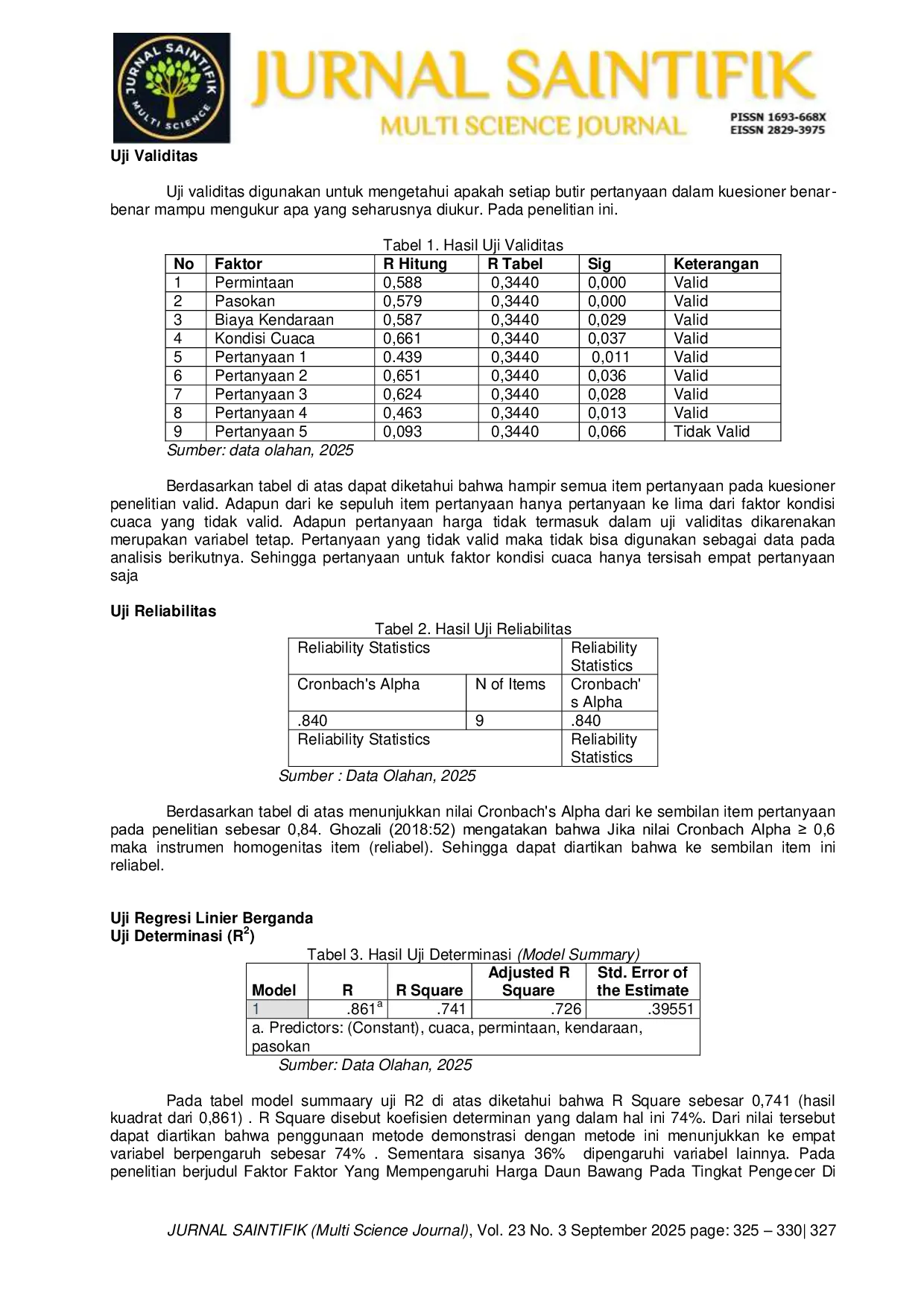
FAPERTA UNRASFAPERTA UNRAS Dimana ke empat variabel bebas berpengaruh secara parsial terhadap variabel tetap. Penelitian ini menunjukkan bahwa permintaan, pasokan, biaya kendaraan,Dimana ke empat variabel bebas berpengaruh secara parsial terhadap variabel tetap. Penelitian ini menunjukkan bahwa permintaan, pasokan, biaya kendaraan,

FAPERTA UNRASFAPERTA UNRAS Perlakuan P1 (3 g serbuk kopi) menunjukkan hasil pertumbuhan terbaik secara rata-rata dalam hal jumlah daun (4,5 helai), tinggi tanaman (6,13 cm), luasPerlakuan P1 (3 g serbuk kopi) menunjukkan hasil pertumbuhan terbaik secara rata-rata dalam hal jumlah daun (4,5 helai), tinggi tanaman (6,13 cm), luas

UMPUMP Analisis bibliometrik menggunakan Vos Viewer membagi riset menjadi 17 kluster dengan 171 kata kunci, di mana 67 kata kunci relevan dengan resolusi konflikAnalisis bibliometrik menggunakan Vos Viewer membagi riset menjadi 17 kluster dengan 171 kata kunci, di mana 67 kata kunci relevan dengan resolusi konflik
Useful /

GOVERNMENTJOURNALGOVERNMENTJOURNAL Peraturan Gubernur DKI Jakarta Nomor 2 Tahun 2025 tentang izin poligami ASN mencerminkan institusionalisasi hubungan kekuasaan tak seimbang antara priaPeraturan Gubernur DKI Jakarta Nomor 2 Tahun 2025 tentang izin poligami ASN mencerminkan institusionalisasi hubungan kekuasaan tak seimbang antara pria

GOVERNMENTJOURNALGOVERNMENTJOURNAL Analisis dilakukan dengan menggunakan teori efektivitas kebijakan yang dikemukakan oleh Nugroho, melalui lima indikator, yaitu kebijakan yang tepat, implementasiAnalisis dilakukan dengan menggunakan teori efektivitas kebijakan yang dikemukakan oleh Nugroho, melalui lima indikator, yaitu kebijakan yang tepat, implementasi

UNUHAUNUHA Penyakit busuk batang merupakan salah satu masalah utama dalam budidaya tanaman sawi yang dapat menyebabkan kerugian ekonomi signifikan. Penggunaan pestisidaPenyakit busuk batang merupakan salah satu masalah utama dalam budidaya tanaman sawi yang dapat menyebabkan kerugian ekonomi signifikan. Penggunaan pestisida

IAIHPANCORIAIHPANCOR Keberhasilan proses pembelajaran dipengaruhi oleh beberapa faktor, di antaranya adalah metode pengajaran. Metode pengajaran memiliki peran krusial dalamKeberhasilan proses pembelajaran dipengaruhi oleh beberapa faktor, di antaranya adalah metode pengajaran. Metode pengajaran memiliki peran krusial dalam