CEREDINDONESIACEREDINDONESIA
International Journal of Economic, Technology and Social Sciences (Injects)International Journal of Economic, Technology and Social Sciences (Injects)The registration and classification of inmates constitute a fundamental initial stage in the administration of the correctional system, as they form the basis for placement decisions, security management, and individualized rehabilitation programs. Registration standards, as regulated through technical guidelines and administrative instruments within correctional units, are intended to ensure accurate data recording, risk identification, and the formulation of effective treatment and development programs. However, their implementation continues to face various challenges that affect the overall effectiveness of inmate classification. Empirical studies conducted across several correctional institutions indicate that limitations in human resources, infrastructure constraints, and insufficient training of assessment officers hinder the consistent application of registration standards in accordance with established guidelines. As a result, the objective of achieving appropriate inmate grouping and the optimal design of individualized correctional programs has not been uniformly realized. At the normative level, the enactment of Law Number 22 of 2022 concerning Corrections has renewed the legal framework previously governed by Law Number 12 of 1995. The new statute reinforces the principles of individualization, continuity, and the protection of inmates rights as integral components of a modern correctional system oriented toward rehabilitation and social reintegration. Although this updated legal framework strengthens the rights-based and evidence-based orientation of correctional administration, the technical regulation of registration and classification procedures remains largely dependent on guidelines issued by the Directorate General of Corrections. Consequently, further harmonization between statutory provisions and technical instruments is necessary to enhance legal certainty and operational effectiveness. These findings demonstrate that the effectiveness of registration standards in inmate classification is determined not solely by the quality of written regulations, but also by institutional capacity, administrative coherence, and the availability of adequate resources to ensure accurate and sustainable implementation.
Based on the findings, the implementation of inmate registration standards at the Class IIA Narcotics Correctional Institution in Langkat has normatively complied with established correctional admission procedures.However, substantively, it has not yet been fully effective in producing classifications grounded in risk assessment and rehabilitative needs.Strengthening staff capacity, optimizing needs-based assessment mechanisms, and integrating inmate data within the centralized system managed by the Directorate General of Corrections constitute essential measures to ensure accurate classification and to support the success of rehabilitation and social reintegration processes.
Penelitian lebih lanjut perlu dilakukan untuk mengeksplorasi secara mendalam dampak dari digitalisasi sistem database koreksi terhadap akurasi registrasi dan efektivitas klasifikasi narapidana, dengan fokus pada evaluasi kualitas data yang dihasilkan dan kemudahan akses bagi petugas lapangan. Selain itu, studi komparatif antara lembaga pemasyarakatan yang telah mengimplementasikan sistem digital secara penuh dengan yang masih menggunakan metode manual dapat memberikan wawasan berharga mengenai praktik terbaik dan tantangan yang dihadapi dalam proses transisi. Lebih lanjut, penelitian kualitatif yang melibatkan wawancara mendalam dengan petugas pemasyarakatan, narapidana, dan ahli rehabilitasi dapat mengungkap persepsi dan pengalaman mereka terkait efektivitas standar registrasi saat ini, serta mengidentifikasi area-area yang memerlukan perbaikan untuk memastikan bahwa proses klasifikasi benar-benar berpusat pada kebutuhan individu dan berorientasi pada rehabilitasi. Dengan demikian, penelitian-penelitian ini diharapkan dapat memberikan rekomendasi konkret bagi pembuat kebijakan dan praktisi di bidang pemasyarakatan untuk meningkatkan kualitas sistem registrasi dan klasifikasi, serta mencapai tujuan koreksi yang berfokus pada rehabilitasi dan reintegrasi sosial.
| File size | 402.76 KB |
| Pages | 7 |
| DMCA | Report |
Related /

CEREDINDONESIACEREDINDONESIA Sebaliknya, koefisien aliran permukaan meningkat, menunjukkan risiko banjir yang lebih tinggi dan kapasitas penyerapan air yang berkurang. Wilayah berhutanSebaliknya, koefisien aliran permukaan meningkat, menunjukkan risiko banjir yang lebih tinggi dan kapasitas penyerapan air yang berkurang. Wilayah berhutan

CEREDINDONESIACEREDINDONESIA Dalam penegakan hukum, putusan Pengadilan Hubungan Industrial juga membuka jalan bagi PHK karena alasan mendesak. Penelitian ini menggunakan pendekatanDalam penegakan hukum, putusan Pengadilan Hubungan Industrial juga membuka jalan bagi PHK karena alasan mendesak. Penelitian ini menggunakan pendekatan

CEREDINDONESIACEREDINDONESIA Ekspansi ekonomi dan pengeluaran pemerintah merupakan isu sentral dalam analisis makroekonomi suatu negara, yang umumnya dianalisis melalui dua pendekatanEkspansi ekonomi dan pengeluaran pemerintah merupakan isu sentral dalam analisis makroekonomi suatu negara, yang umumnya dianalisis melalui dua pendekatan
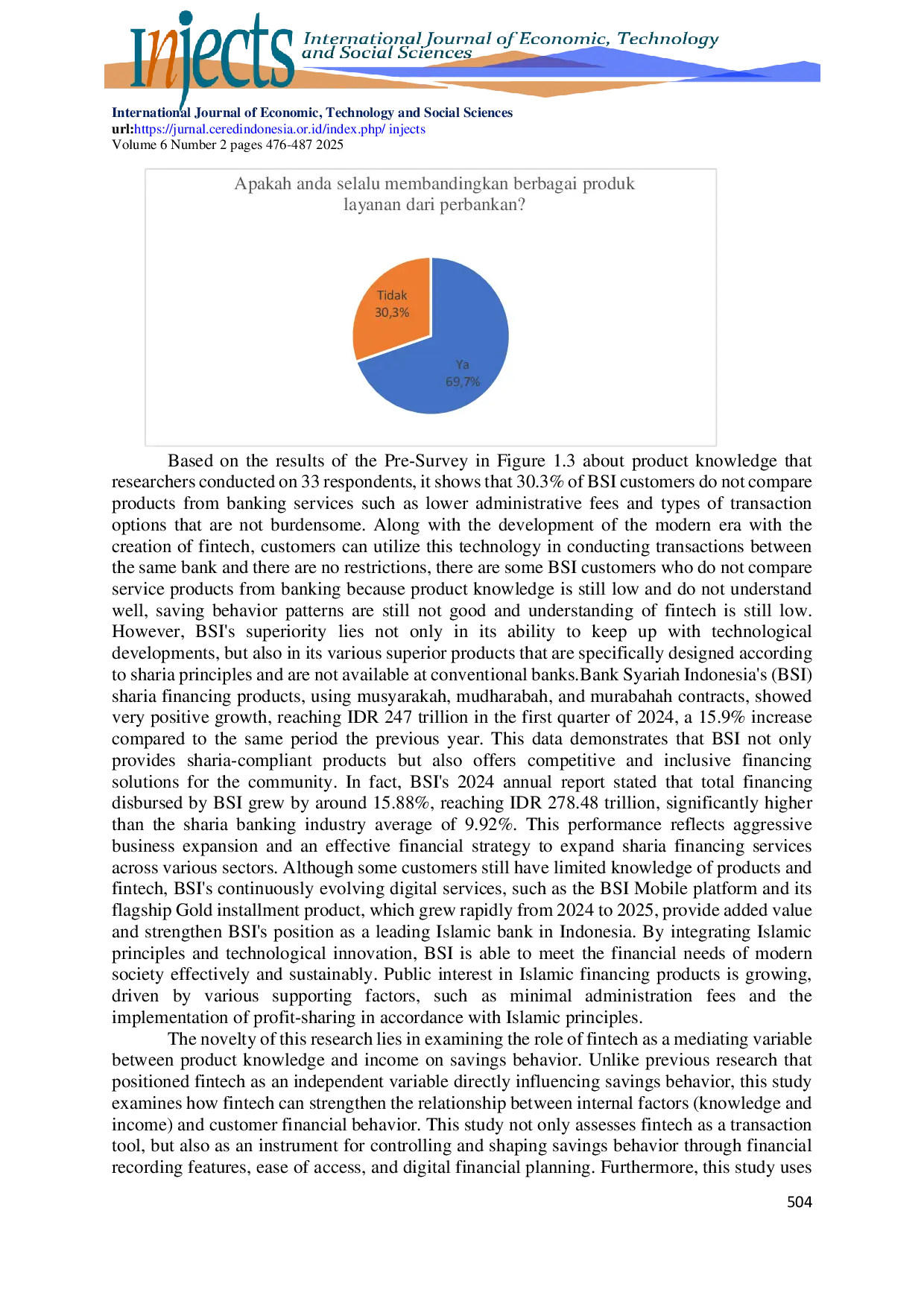
CEREDINDONESIACEREDINDONESIA Peningkatan pendapatan cenderung diikuti dengan peningkatan perilaku menabung. Penggunaan fintech memiliki pengaruh positif dan signifikan terhadap perilakuPeningkatan pendapatan cenderung diikuti dengan peningkatan perilaku menabung. Penggunaan fintech memiliki pengaruh positif dan signifikan terhadap perilaku

JOURNALSJOURNALS Kegiatan diikuti oleh 142 peserta, yang terdiri dari 124 siswa, 7 guru pendamping, serta tim dari Universitas PGRI Yogyakarta dan CSNano Universitas TeknologiKegiatan diikuti oleh 142 peserta, yang terdiri dari 124 siswa, 7 guru pendamping, serta tim dari Universitas PGRI Yogyakarta dan CSNano Universitas Teknologi

MEDIAPUBLIKASIMEDIAPUBLIKASI Dalam menghadapi perubahan yang cepat dan persaingan yang ketat, organisasi perlu mengadopsi strategi yang tepat untuk mengoptimalkan penggunaan pengetahuanDalam menghadapi perubahan yang cepat dan persaingan yang ketat, organisasi perlu mengadopsi strategi yang tepat untuk mengoptimalkan penggunaan pengetahuan

UNTAG SMDUNTAG SMD Dengan adanya tekanan perawat mudah mengalami stres, stres biasanya akan membuat kehilangan motivasi, kejenuhan dan tidak mampu untuk bekerja secara efektif.Dengan adanya tekanan perawat mudah mengalami stres, stres biasanya akan membuat kehilangan motivasi, kejenuhan dan tidak mampu untuk bekerja secara efektif.

UNTAG SMDUNTAG SMD Penelitian ini dilakukan pada siswa kelas V Sekolah Dasar Negeri 021 Meranti di Samarinda. Hasil uji normalitas menunjukkan normal (p>0,05) untuk konsepPenelitian ini dilakukan pada siswa kelas V Sekolah Dasar Negeri 021 Meranti di Samarinda. Hasil uji normalitas menunjukkan normal (p>0,05) untuk konsep
Useful /

JOURNALSJOURNALS Program ini memungkinkan KWT Mawar dan sebagian masyarakat mengelola kebun pangan rumah tangga secara mandiri. Kegiatan pengabdian kepada masyarakat iniProgram ini memungkinkan KWT Mawar dan sebagian masyarakat mengelola kebun pangan rumah tangga secara mandiri. Kegiatan pengabdian kepada masyarakat ini

JOURNALSJOURNALS Rencana tindak lanjut dari kegiatan pengabdian kepada Masyarakat ini adalah menggunakan data hasil pemetaan kapasitas untuk merancang intervensi terarah,Rencana tindak lanjut dari kegiatan pengabdian kepada Masyarakat ini adalah menggunakan data hasil pemetaan kapasitas untuk merancang intervensi terarah,

JOURNALSJOURNALS Kelompok minat khusus seperti Ankubas memiliki potensi besar dalam pemberdayaan masyarakat berbasis sumber daya lokal. Namun, banyak kelompok serupa yangKelompok minat khusus seperti Ankubas memiliki potensi besar dalam pemberdayaan masyarakat berbasis sumber daya lokal. Namun, banyak kelompok serupa yang

YPIDATHUYPIDATHU Penelitian ini memberikan implikasi penting bagi orang tua, pendidik, dan pembuat kebijakan dalam menciptakan lingkungan yang kondusif untuk belajar. HasilPenelitian ini memberikan implikasi penting bagi orang tua, pendidik, dan pembuat kebijakan dalam menciptakan lingkungan yang kondusif untuk belajar. Hasil