CHEMOPREVCHEMOPREV
Indonesian Journal of Cancer ChemopreventionIndonesian Journal of Cancer ChemopreventionParijoto (Medinilla speciosa, Reinw. ex. Bl.), a tropical plant native to Southeast Asia, contains flavonoids, tannins, and saponins, which have the potential as an anticancer. Gold nanoparticle-based drug formulations are applied to increase the anticancer effectiveness of herbal medicines. The compounds in the stalk of parijoto have the potential to be bioreductor in the biosynthesis of gold nanoparticles. This study aims to determine the physicochemical characterization, cytotoxic activity, and expression of protein caspase-9 after treatment with nanogold parijoto (AuNPs-PR) on HeLa cell. The nanogold biosynthesis process was done by reacting 1 mM HAuCl4 with parijoto aqueous extract (EP). Physicochemical characterization measure of particle size, Polydisperse Index (PdI), and zeta potential of AuNPs-PR was carried out using a particle size analyzer. The cytotoxic effect and viability cell of AuNPs-PR were carried out using the MTT assay. The expression of caspase-9 was observed by immunocytochemistry assay. Physicochemical characterization of AuNPs-PR shows that the particle size value is 160.8 nm with PdI and zeta potential values of 0.430 and -4.56 mV respectively. In the MTT assay, both AuNPs-PR and EP demonstrated a reduction in the viability of Hela cells after 24 h in a dose-dependent manner, yielding IC50 values of 3.28 μg/mL and 19.22 μg/mL, respectively. AuNPs-PR and EP showed low cytotoxic activity against Vero normal cells, with IC50 values of over 500 µM. Further, the immunocytochemistry assay indicated that there was upregulation of caspase-9 by their expression. These results indicate that AuNPs-PR could effectively induce apoptosis in HeLa cells by upregulating caspase-9.
The study demonstrates that AuNPs-PR exhibits potent cytotoxicity against HeLa cells while showing minimal toxicity towards normal Vero kidney cells.The results indicate that AuNPs-PR can effectively induce apoptosis in HeLa cells by upregulating caspase-9 expression.These findings suggest that AuNPs-PR holds potential as a chemopreventive agent and may serve as an alternative approach for maintaining health in normal kidney cells.
Future research should investigate the specific molecular mechanisms underlying the cytotoxic effects of AuNPs-PR on HeLa cells, including the signaling pathways involved in caspase-9 activation. Further studies are needed to evaluate the in vivo efficacy and safety of AuNPs-PR in preclinical models of cervical cancer, assessing its potential for targeted drug delivery and minimizing off-target effects. Exploring the potential synergistic effects of AuNPs-PR with existing chemotherapeutic agents could lead to the development of more effective combination therapies for cervical cancer treatment, potentially reducing drug resistance and improving patient outcomes.
| File size | 1.82 MB |
| Pages | 11 |
| DMCA | Report |
Related /
UNSUNS The study was conducted in Sragen and the Laboratory of the Faculty of Agriculture, Tunas Pembangunan University, Surakarta during September–DecemberThe study was conducted in Sragen and the Laboratory of the Faculty of Agriculture, Tunas Pembangunan University, Surakarta during September–December

UPBUPB Parameters measured included plant height, leaf number, tiller number, and fresh weight. Results showed highly significant effects (p < 0. 01) on leafParameters measured included plant height, leaf number, tiller number, and fresh weight. Results showed highly significant effects (p < 0. 01) on leaf
UNIBUNIB To address this issue while maintaining land productivity, researchers have explored the application of vermicompost fertilizer, known for its positiveTo address this issue while maintaining land productivity, researchers have explored the application of vermicompost fertilizer, known for its positive
BALIMEDICALJOURNALBALIMEDICALJOURNAL Hasil: Kelompok tidak bertahan hidup menunjukkan nilai signifikan lebih tinggi pada usia, skor CCI, kadar laktat, skor SOFA, Age SI, dan skor APACHE IIHasil: Kelompok tidak bertahan hidup menunjukkan nilai signifikan lebih tinggi pada usia, skor CCI, kadar laktat, skor SOFA, Age SI, dan skor APACHE II

ARESTEARESTE ) Merill). The experimental study employed a complete randomized design (CRD) with the treatment of arbuscular mycorrhizal fungi (AMF). The AMF treatment) Merill). The experimental study employed a complete randomized design (CRD) with the treatment of arbuscular mycorrhizal fungi (AMF). The AMF treatment

UNIKSUNIKS The research demonstrates that liquid smoke derived from empty oil palm bunches contains phenol at a concentration of 2. This liquid smoke effectivelyThe research demonstrates that liquid smoke derived from empty oil palm bunches contains phenol at a concentration of 2. This liquid smoke effectively
INABJINABJ PKA yang teraktivasi dapat menginduksi pertahanan sel lewat Phosphatydilinositol 3-kinase (PI3K). Oleh karena itu, kami melakukan penelitian ini untukPKA yang teraktivasi dapat menginduksi pertahanan sel lewat Phosphatydilinositol 3-kinase (PI3K). Oleh karena itu, kami melakukan penelitian ini untuk
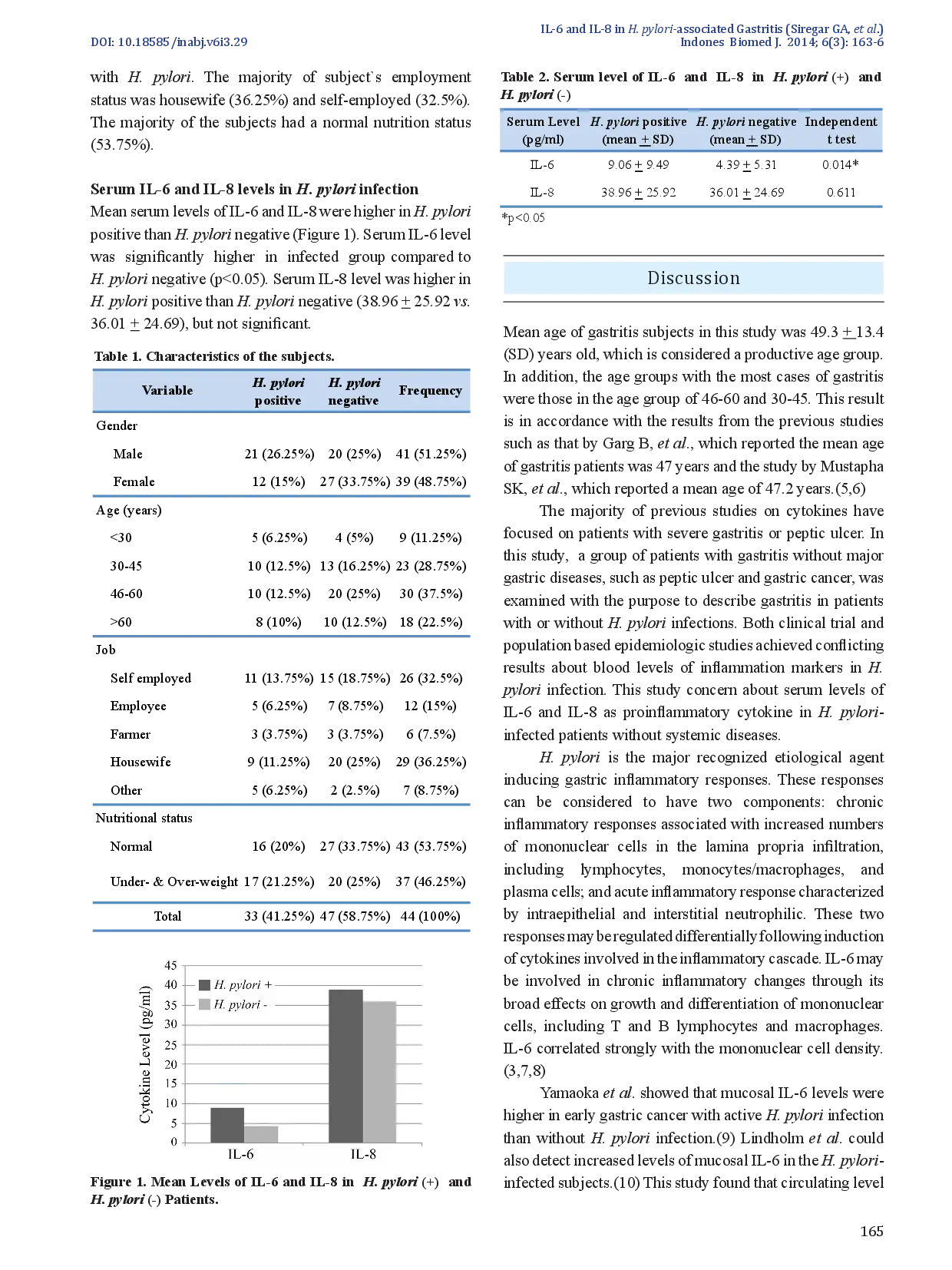
INABJINABJ Dilakukan pemeriksaan kadar serum IL-6 dan IL-8. Dilakukan analisis univariat dan bivariat (independent t test). Hasil: Terdapat 41,25% pasien terinfeksiDilakukan pemeriksaan kadar serum IL-6 dan IL-8. Dilakukan analisis univariat dan bivariat (independent t test). Hasil: Terdapat 41,25% pasien terinfeksi
Useful /

BMABERSAMABMABERSAMA Hasil menunjukkan bahwa instrumen valid dan reliabel dengan Cronbachs Alpha 0,816 (motivasi dosen) dan 0,768 (minat kewirausahaan). Uji determinasi menghasilkanHasil menunjukkan bahwa instrumen valid dan reliabel dengan Cronbachs Alpha 0,816 (motivasi dosen) dan 0,768 (minat kewirausahaan). Uji determinasi menghasilkan
ETDCIETDCI Pengembangan media mengikuti model ADDIE (Analysis, Design, Development, Implementation, Evaluation). Validasi dilakukan oleh ahli media, ahli materi,Pengembangan media mengikuti model ADDIE (Analysis, Design, Development, Implementation, Evaluation). Validasi dilakukan oleh ahli media, ahli materi,
ETDCIETDCI Hasil penelitian menunjukkan bahwa strategi pencegahan dan penanganan bullying yang efektif mencakup program edukasi untuk siswa, pelatihan untuk guru,Hasil penelitian menunjukkan bahwa strategi pencegahan dan penanganan bullying yang efektif mencakup program edukasi untuk siswa, pelatihan untuk guru,

ARESTEARESTE Artikel ini membahas pengembangan dan implementasi media literasi kesehatan berbasis WhatsApp untuk wanita hamil (Rakes Bumil) sebagai pendekatan pemberdayaanArtikel ini membahas pengembangan dan implementasi media literasi kesehatan berbasis WhatsApp untuk wanita hamil (Rakes Bumil) sebagai pendekatan pemberdayaan