CEREDINDONESIACEREDINDONESIA
International Journal of Economic, Technology and Social Sciences (Injects)International Journal of Economic, Technology and Social Sciences (Injects)Indonesia is affirmed as a state of law as regulated in Article 1 paragraph (3) of the 1945 Constitution of the Republic of Indonesia, which contains the consequence that law must be the main foundation in the life of the nation and state. However, in practice, law enforcement still faces various problems, especially low public legal awareness and weak trust in law enforcement officials. This study aims to analyze the role of legal culture in realizing the effectiveness of the national legal system. The method used is normative legal research with a statutory and conceptual approach, descriptive-analytical in nature, and analyzed qualitatively. The results of the study indicate that the effectiveness of the law is not only determined by the substance and structure of the law, but is also greatly influenced by the legal culture of society which reflects values, attitudes, and views towards the law. Therefore, the development of legal culture and awareness through education, socialization, and legal counseling is a strategic step in realizing a democratic, just, and welfare-oriented state of law.
In conclusion, Indonesias affirmation as a state of law necessitates law as the primary foundation of national and state life.However, the implementation of this principle faces challenges such as low public trust in law enforcement and a gap between legal norms and social reality.Legal culture, reflecting societal values and attitudes towards the law, plays a crucial role in determining the effectiveness of the legal system.Therefore, strengthening legal culture and increasing public legal awareness through systematic and sustainable efforts, including legal education and enhancing the integrity of law enforcement, is essential to realize a democratic and just state based on the rule of law.
Penelitian lebih lanjut perlu dilakukan untuk menggali secara mendalam bagaimana nilai-nilai budaya lokal dapat diintegrasikan ke dalam sistem hukum nasional, sehingga hukum tidak hanya dipandang sebagai seperangkat aturan formal, tetapi juga mencerminkan kearifan lokal dan kebutuhan masyarakat. Selain itu, studi komparatif mengenai efektivitas berbagai model pendidikan hukum di berbagai negara dapat memberikan wawasan berharga untuk merancang program pendidikan hukum yang lebih relevan dan efektif di Indonesia. Terakhir, penelitian mengenai dampak teknologi informasi dan media sosial terhadap pembentukan opini publik dan kesadaran hukum perlu dilakukan, mengingat peran penting teknologi dalam membentuk persepsi masyarakat terhadap hukum dan lembaga penegak hukum. Penelitian-penelitian ini diharapkan dapat memberikan kontribusi signifikan dalam upaya mewujudkan sistem hukum yang lebih adil, efektif, dan responsif terhadap kebutuhan masyarakat Indonesia.
| File size | 309.24 KB |
| Pages | 7 |
| DMCA | Report |
Related /

CEREDINDONESIACEREDINDONESIA Penelitian ini menggunakan pendekatan kuantitatif dengan teknik pengumpulan data berupa kuesioner kepada 78 responden. Hasil analisis menunjukkan bahwaPenelitian ini menggunakan pendekatan kuantitatif dengan teknik pengumpulan data berupa kuesioner kepada 78 responden. Hasil analisis menunjukkan bahwa

STIESIASTIESIA Temuan menunjukkan bahwa semua hubungan langsung hasilnya positif dan signifikan, sedangkan hubungan tak langsung antara green knowledge terhadap greenTemuan menunjukkan bahwa semua hubungan langsung hasilnya positif dan signifikan, sedangkan hubungan tak langsung antara green knowledge terhadap green

JOURNALSJOURNALS Dukungan terhadap pentingnya edukasi e-waste di sekolah juga mengalami peningkatan dari 71% menjadi 74,58%. Temuan ini mengindikasikan bahwa pendekatanDukungan terhadap pentingnya edukasi e-waste di sekolah juga mengalami peningkatan dari 71% menjadi 74,58%. Temuan ini mengindikasikan bahwa pendekatan

CEREDINDONESIACEREDINDONESIA Berdasarkan data yang diperoleh dalam penelitian ini dari 52 responden, yang kemudian dianalisis, dapat disimpulkan bahwa kecerdasan emosional memilikiBerdasarkan data yang diperoleh dalam penelitian ini dari 52 responden, yang kemudian dianalisis, dapat disimpulkan bahwa kecerdasan emosional memiliki

CEREDINDONESIACEREDINDONESIA Penelitian ini bertujuan untuk menguji fungsi Analisis SDM sebagai variabel pemoderasi dalam model integrasi Kapabilitas SDM dan Kesejajaran StrategisPenelitian ini bertujuan untuk menguji fungsi Analisis SDM sebagai variabel pemoderasi dalam model integrasi Kapabilitas SDM dan Kesejajaran Strategis
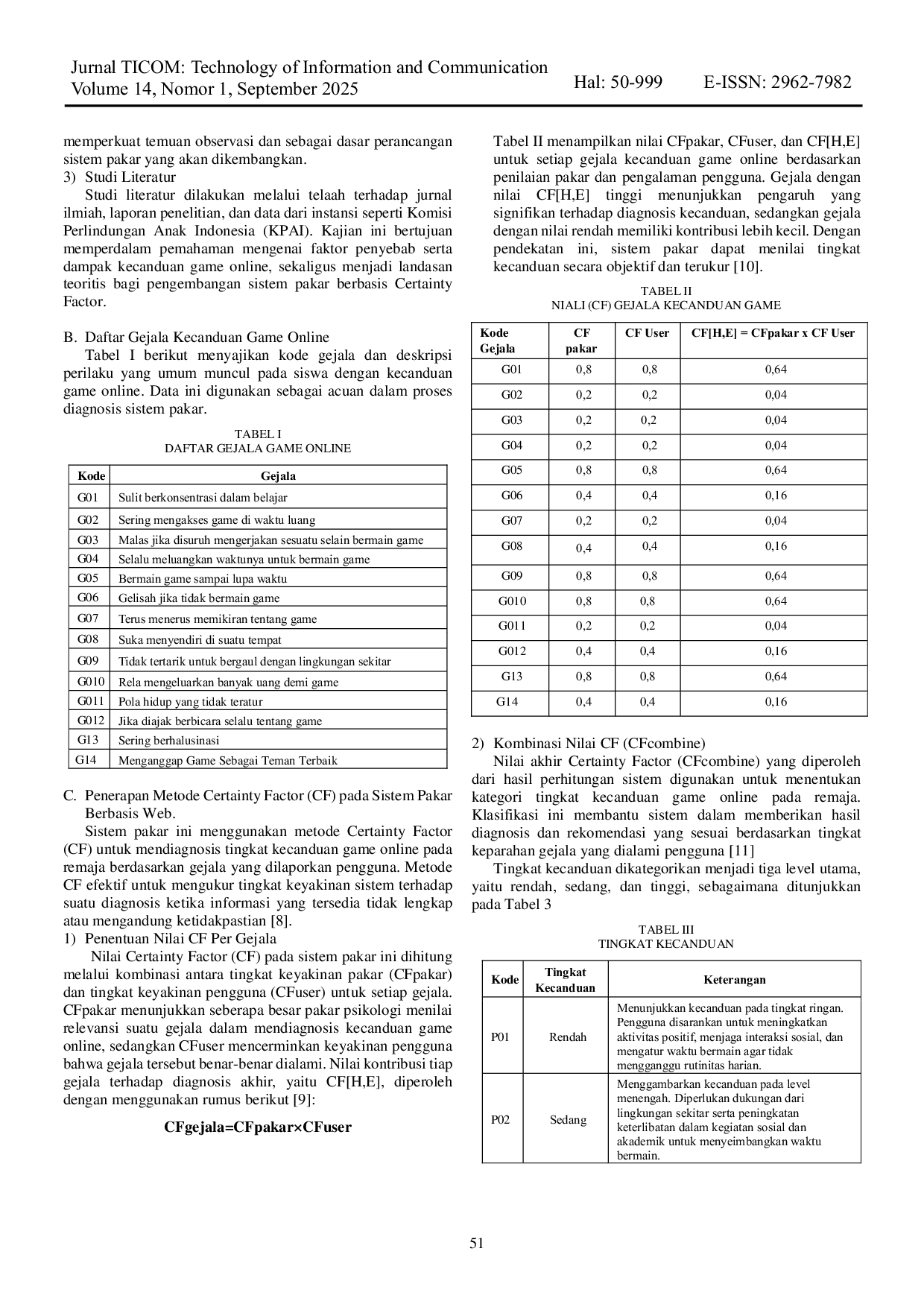
APTIKOMAPTIKOM Hasil pengujian terhadap 25 siswa menunjukkan tingkat kesesuaian diagnosis sistem dengan asesmen guru sebesar 88%. Sistem dinilai mudah digunakan, efisien,Hasil pengujian terhadap 25 siswa menunjukkan tingkat kesesuaian diagnosis sistem dengan asesmen guru sebesar 88%. Sistem dinilai mudah digunakan, efisien,

CEREDINDONESIACEREDINDONESIA Hasil menunjukkan bahwa hubungan antara ketimpangan dan kualitas institusional tidak konsisten, sementara hubungan antara ketimpangan dan tata kelola bersifatHasil menunjukkan bahwa hubungan antara ketimpangan dan kualitas institusional tidak konsisten, sementara hubungan antara ketimpangan dan tata kelola bersifat

CEREDINDONESIACEREDINDONESIA 5°C. The system maintained temperature within the manufacturer-recommended range for PPF installation. The research concludes that modified fuzzy logic5°C. The system maintained temperature within the manufacturer-recommended range for PPF installation. The research concludes that modified fuzzy logic
Useful /

CEREDINDONESIACEREDINDONESIA 4) Secara simultan, Motivasi Kerja dan Komitmen Organisasi memiliki pengaruh yang signifikan terhadap Kinerja Pegawai, dengan nilai F hitung (93,650) lebih4) Secara simultan, Motivasi Kerja dan Komitmen Organisasi memiliki pengaruh yang signifikan terhadap Kinerja Pegawai, dengan nilai F hitung (93,650) lebih

CEREDINDONESIACEREDINDONESIA This study uses a qualitative method with data collection techniques through interviews and observations. The results of the study reveal that the spiritualThis study uses a qualitative method with data collection techniques through interviews and observations. The results of the study reveal that the spiritual

LIFESCIFILIFESCIFI Dalam beberapa tahun terakhir, kesadaran akan penampilan pada pria meningkat, yang menyebabkan peningkatan minat mereka terhadap layanan klinik kecantikan.Dalam beberapa tahun terakhir, kesadaran akan penampilan pada pria meningkat, yang menyebabkan peningkatan minat mereka terhadap layanan klinik kecantikan.
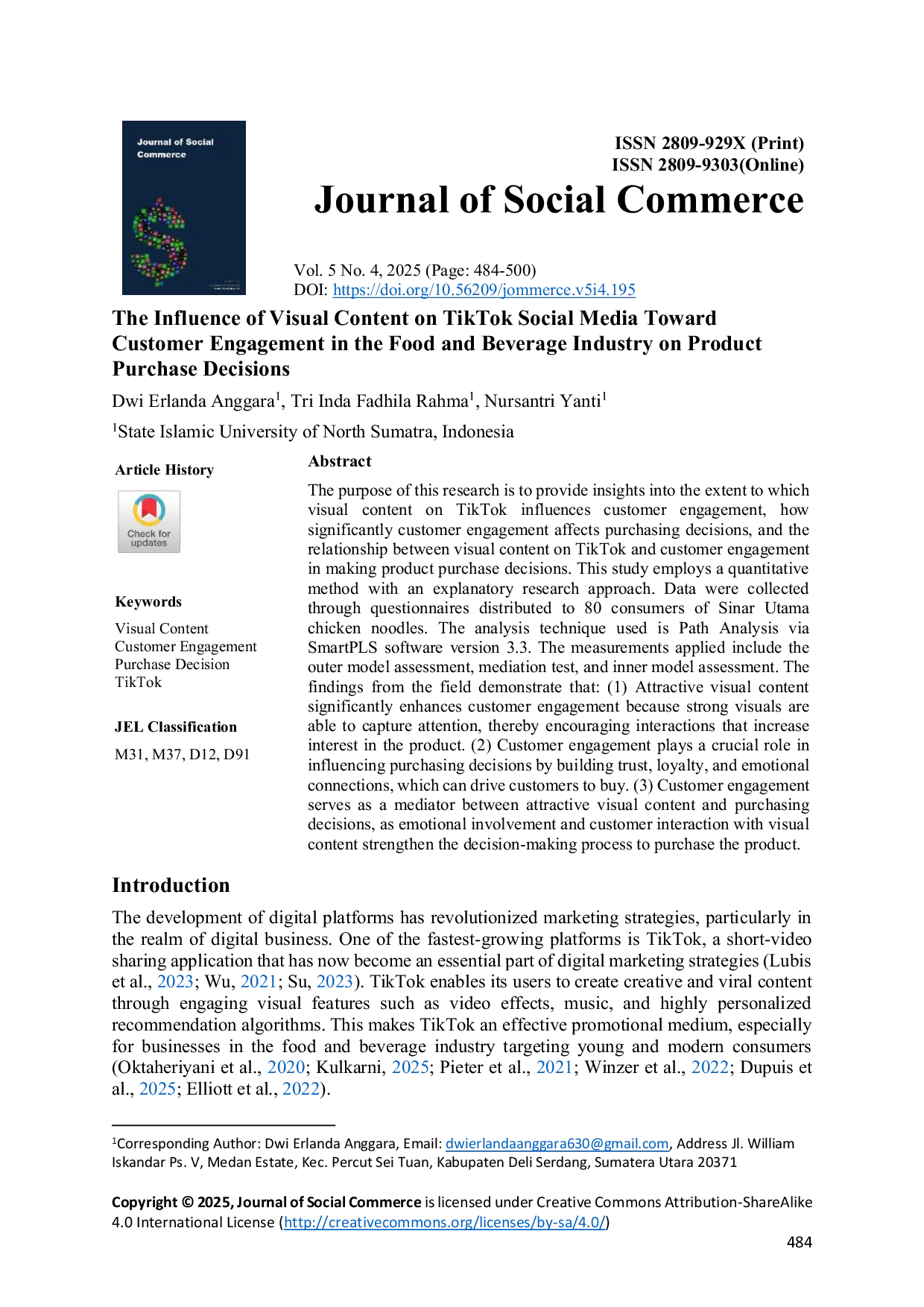
CELEBESSCHOLARPGCELEBESSCHOLARPG The study demonstrates that attractive visual content significantly enhances customer engagement, as strong visuals capture attention and encourage interaction.The study demonstrates that attractive visual content significantly enhances customer engagement, as strong visuals capture attention and encourage interaction.