LAMINTANGLAMINTANG
International Journal of Artificial IntelligenceInternational Journal of Artificial IntelligencePersonal financial literacy is a vital skill for university students, yet many struggle to track their daily expenses due to time constraints and low awareness. This study aims to design and develop a web-based Student Expense Tracking System using Optical Character Recognition (OCR) technology to address this issue. The system allows users to automatically extract and record spending information from receipt images, reducing manual input and improving financial awareness. The development followed the Web Development Life Cycle (WDLC) using the Waterfall model, comprising planning, design, development, and testing phases. Visual Studio Code, Python 3, and Tesseract OCR were employed in system implementation. Wireframes and mockups guided the interface design, while backend development focused on data storage and OCR integration. Functionality testing showed a 100% pass rate across ten scenarios, validating the systems performance in image processing, budget management, and spending visualization. Usability testing using the Post-Study System Usability Questionnaire (PSSUQ) with 30 participants yielded a mean score of 4.45 out of 5, indicating a high level of user satisfaction. The system scored highest on ease of use (4.6), visual design (4.7), and recommendation likelihood (4.8), confirming its intuitive interface and appeal. Slightly lower scores in user confidence (4.1) and data organization (4.2) point to opportunities for interface refinement and improved user guidance. This research concludes that OCR can effectively support financial tracking for students. Future enhancements with NLP and machine learning are recommended to automate expense categorization and improve analytical capabilities.
The development of the Student Expense Tracking System using OCR has successfully met its three main objectives.First, the system was effectively designed with clear visual mockups and wireframes that guided its development.Second, the integration of Optical Character Recognition (OCR) allowed users to extract and convert printed receipt data into digital expense entries, automating what is typically a manual process.Finally, thorough functional testing was conducted using 10 test scenarios, all of which passed successfully, confirming that core functionalities—such as login, image upload, OCR processing, expense input, budget setup, and visualization—worked as intended.The system addresses key challenges in student financial management, such as the lack of routine expense tracking and difficulties in budgeting.By automating data input through OCR and visualizing spending patterns, students can better understand their financial habits.Future development should focus on integrating Natural Language Processing (NLP) and Machine Learning (ML) to enhance system intelligence and provide more meaningful insights into financial habits.
Berdasarkan latar belakang, metode, hasil, keterbatasan, dan saran penelitian lanjutan yang ada, beberapa saran penelitian lanjutan yang potensial dapat dikembangkan. Pertama, penelitian dapat difokuskan pada pengembangan algoritma machine learning untuk secara otomatis mengkategorikan pengeluaran berdasarkan deskripsi teks yang diekstrak dari gambar resi. Hal ini akan mengurangi kebutuhan pengguna untuk secara manual mengkategorikan setiap transaksi, sehingga meningkatkan efisiensi dan akurasi sistem. Kedua, penelitian dapat mengeksplorasi integrasi dengan sumber data keuangan eksternal, seperti rekening bank dan kartu kredit, untuk memberikan gambaran yang lebih komprehensif tentang kondisi keuangan mahasiswa. Integrasi ini dapat dilakukan melalui API atau metode lainnya, dan memerlukan pertimbangan keamanan dan privasi data yang ketat. Ketiga, penelitian dapat menguji efektivitas sistem dalam meningkatkan literasi keuangan dan perilaku pengeluaran mahasiswa melalui studi longitudinal. Studi ini dapat melibatkan kelompok kontrol dan eksperimen, serta pengukuran perubahan dalam pengetahuan, sikap, dan perilaku keuangan mahasiswa dari waktu ke waktu. Dengan menggabungkan ketiga saran ini, penelitian dapat memberikan kontribusi signifikan terhadap pengembangan sistem pelacakan pengeluaran mahasiswa yang lebih cerdas, komprehensif, dan efektif dalam meningkatkan literasi keuangan.
| File size | 801.12 KB |
| Pages | 10 |
| DMCA | Report |
Related /
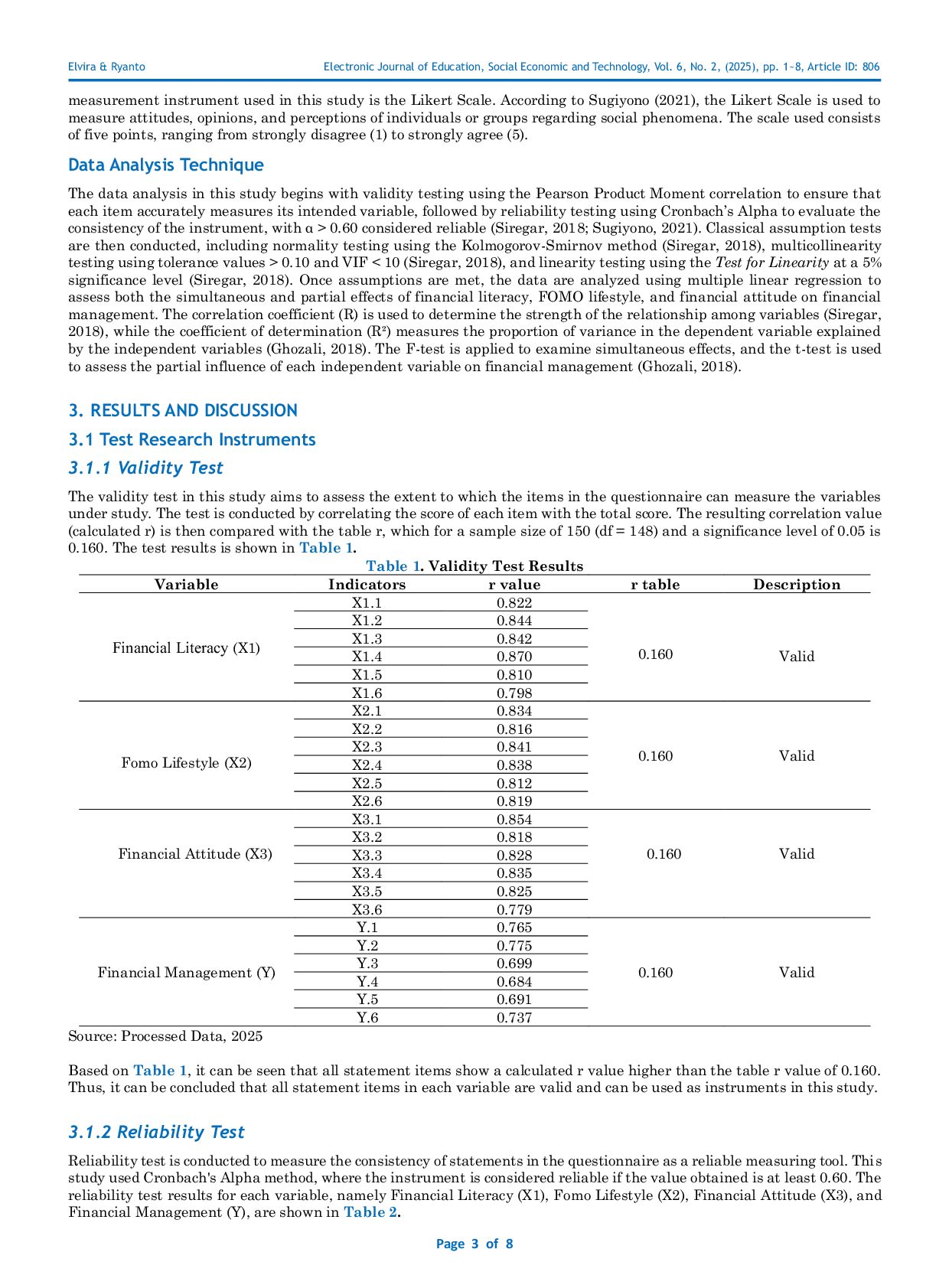
SAINTISPUBSAINTISPUB Studi ini bertujuan menganalisis pengaruh literasi keuangan, gaya hidup FOMO, dan sikap keuangan terhadap pengelolaan keuangan mahasiswa di Kota Pontianak.Studi ini bertujuan menganalisis pengaruh literasi keuangan, gaya hidup FOMO, dan sikap keuangan terhadap pengelolaan keuangan mahasiswa di Kota Pontianak.

IJBLEIJBLE 37 Tahun 2004 yang tidak secara eksplisit mengatur permohonan terhadap penjamin. Dengan menggunakan metode yuridis normatif yang menggabungkan pendekatan37 Tahun 2004 yang tidak secara eksplisit mengatur permohonan terhadap penjamin. Dengan menggunakan metode yuridis normatif yang menggabungkan pendekatan

IJBLEIJBLE Berdasarkan hasil studi pada 26 perusahaan makanan dan minuman yang terdaftar di BEI selama periode 2020-2023, dapat disimpulkan bahwa variabel CR tidakBerdasarkan hasil studi pada 26 perusahaan makanan dan minuman yang terdaftar di BEI selama periode 2020-2023, dapat disimpulkan bahwa variabel CR tidak

IJBLEIJBLE Berdasarkan tinjauan literatur sistematis (SLR) terhadap 45 artikel jurnal yang kemudian disaring menjadi 10 studi yang sangat relevan, tinjauan ini berhasilBerdasarkan tinjauan literatur sistematis (SLR) terhadap 45 artikel jurnal yang kemudian disaring menjadi 10 studi yang sangat relevan, tinjauan ini berhasil

IJBLEIJBLE Studi ini juga menekankan pentingnya menyelaraskan program pengembangan dengan tujuan karier individu dan strategi organisasi. Dari temuan dan analisisStudi ini juga menekankan pentingnya menyelaraskan program pengembangan dengan tujuan karier individu dan strategi organisasi. Dari temuan dan analisis

IJBLEIJBLE Metode yang digunakan dalam penelitian ini adalah kuantitatif deskriptif dengan sampel 100 responden dari konsumen Skintific. Teknik pengambilan sampelMetode yang digunakan dalam penelitian ini adalah kuantitatif deskriptif dengan sampel 100 responden dari konsumen Skintific. Teknik pengambilan sampel

IJBLEIJBLE Setelah dianalisis berdasarkan Teori Kepastian Hukum, disimpulkan bahwa Persekutuan Perdata sebagai bentuk badan usaha bagi Notaris dalam melaksanakanSetelah dianalisis berdasarkan Teori Kepastian Hukum, disimpulkan bahwa Persekutuan Perdata sebagai bentuk badan usaha bagi Notaris dalam melaksanakan

IJBLEIJBLE Penelitian ini bertujuan untuk menganalisis urgensi perubahan Peraturan Mahkamah Agung Nomor 1 Tahun 2020 tentang Pedoman Pemidanaan untuk Pasal 2 danPenelitian ini bertujuan untuk menganalisis urgensi perubahan Peraturan Mahkamah Agung Nomor 1 Tahun 2020 tentang Pedoman Pemidanaan untuk Pasal 2 dan
Useful /
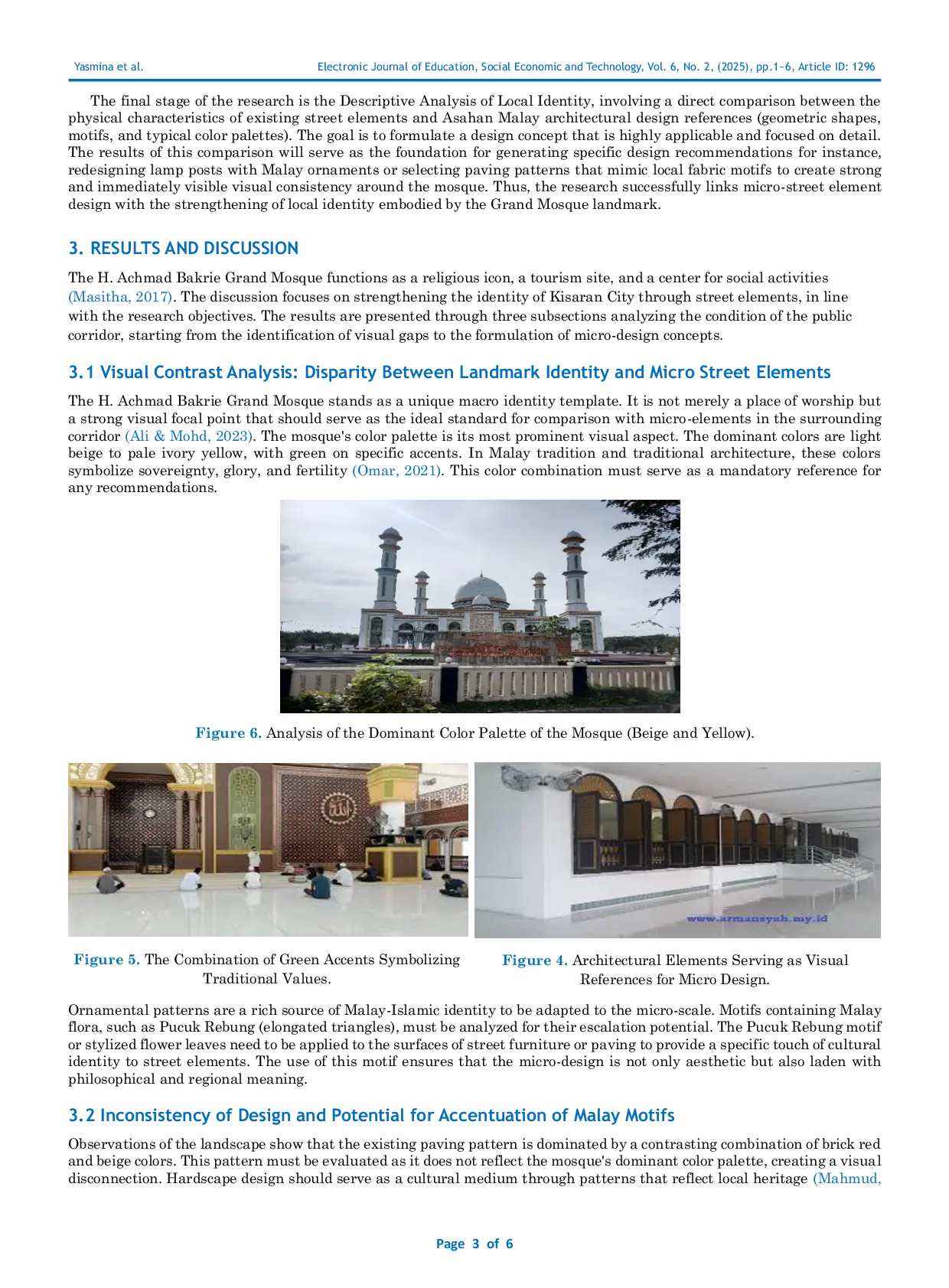
SAINTISPUBSAINTISPUB Masjid Bakrie merupakan kawasan wisata religi dengan potensi strategis dalam membentuk identitas kota. Penelitian ini membahas konsep aksentuasi dan eskalasiMasjid Bakrie merupakan kawasan wisata religi dengan potensi strategis dalam membentuk identitas kota. Penelitian ini membahas konsep aksentuasi dan eskalasi
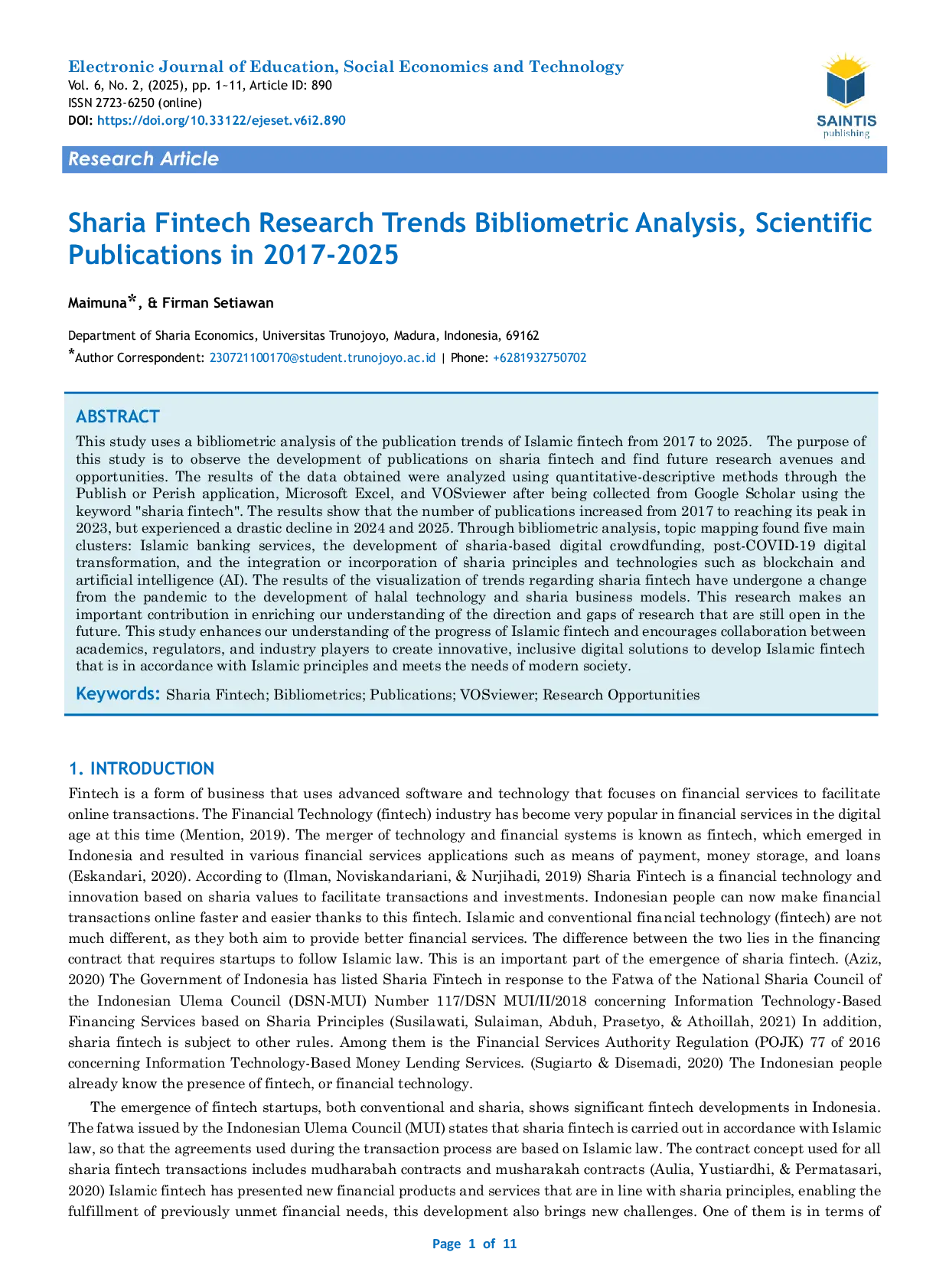
SAINTISPUBSAINTISPUB Hasil data yang diperoleh dianalisis menggunakan metode deskriptif kuantitatif melalui aplikasi Publish or Perish, Microsoft Excel, dan VOSviewer setelahHasil data yang diperoleh dianalisis menggunakan metode deskriptif kuantitatif melalui aplikasi Publish or Perish, Microsoft Excel, dan VOSviewer setelah
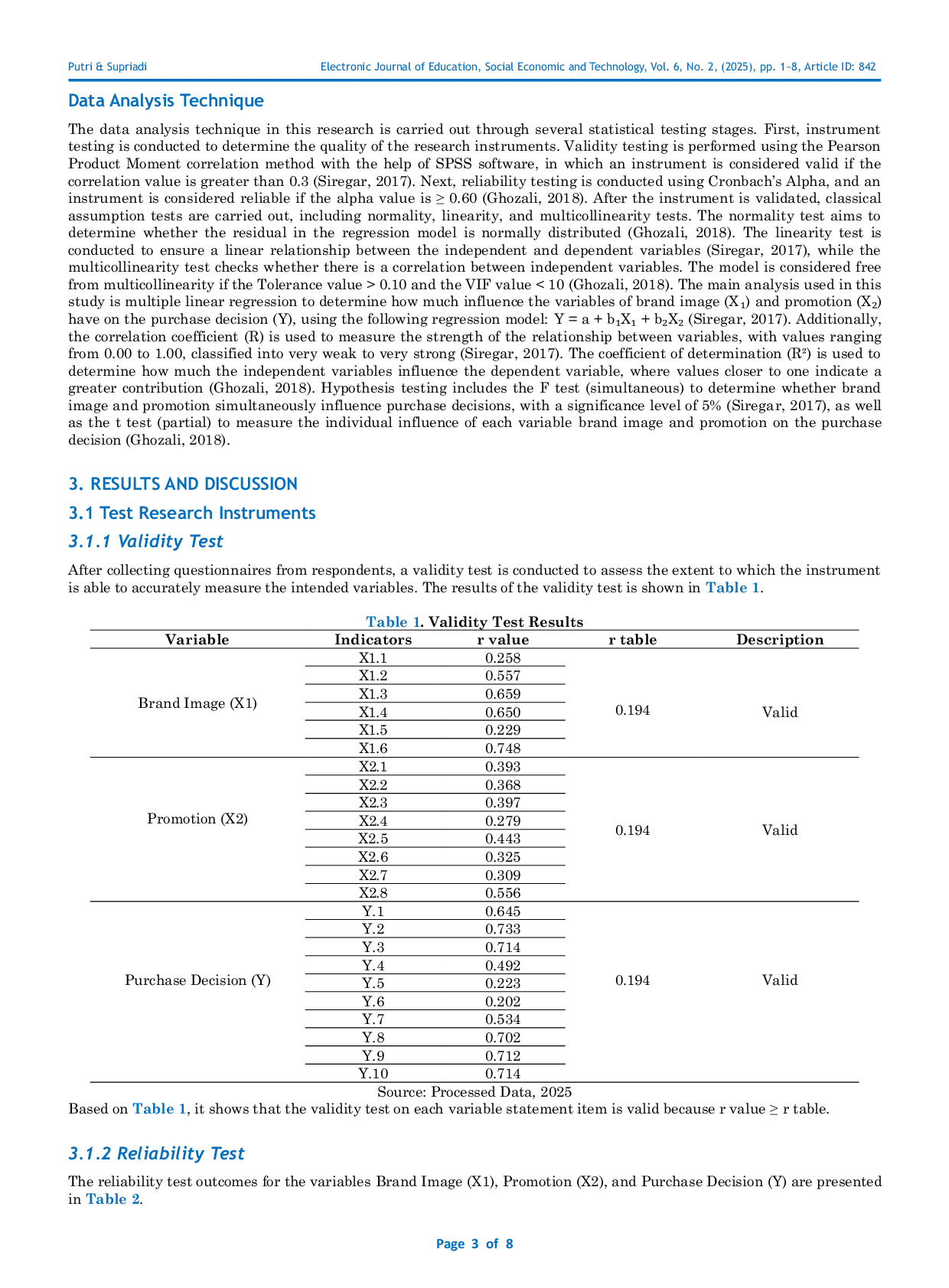
SAINTISPUBSAINTISPUB Hasil penelitian mengungkapkan bahwa baik citra merek maupun promosi secara signifikan memengaruhi keputusan pembelian, dengan model regresi Y = 1. 413Hasil penelitian mengungkapkan bahwa baik citra merek maupun promosi secara signifikan memengaruhi keputusan pembelian, dengan model regresi Y = 1. 413

STAIMASWONOGIRISTAIMASWONOGIRI Jika kita mempelajari Bahasa Arab serta Al-quran maka diharapkan dapat meningkatkan ketaqwaan kita kepada Allah SWT, karena hal tersebut juga terdapatJika kita mempelajari Bahasa Arab serta Al-quran maka diharapkan dapat meningkatkan ketaqwaan kita kepada Allah SWT, karena hal tersebut juga terdapat