STEKOMSTEKOM
Kompak :Jurnal Ilmiah Komputerisasi AkuntansiKompak :Jurnal Ilmiah Komputerisasi AkuntansiThis study aims to examine the effect of the implementation of the Quick Response Code Indonesian Standard (QRIS) in increasing business income, especially for Micro, Small and Medium Enterprises (MSMEs) using the Technology Acceptance Model (TAM) approach. The method used in this study is a descriptive quantitative approach, which aims to provide an overview of the QR Code implementation. The population in this study involved MSME owners, with a sample taken from 100 respondents through non-probability sampling techniques. Data collection was done through questionnaires. Data analysis includes testing research instruments to assess data quality (validity and reliability), classical assumption test (normality), as well as multiple linear regression analysis and hypothesis testing (t test and F test). The results show that QRIS implementation and user satisfaction have a significant influence on increasing MSME income, which supports TAM theory regarding the importance of perceived usefulness and perceived ease of use in technology acceptance. However, other variables, such as QRIS usage literacy, convenience of use, and QRIS service price, did not show a significant influence on MSME income. Simultaneously, these factors still have an effect on MSME income, although with different variations in influence.
The study demonstrates a significant positive influence of QRIS implementation and user satisfaction on MSME income, validating the principles of the Technology Acceptance Model.While factors like QRIS literacy, convenience, and service price did not exhibit significant individual impacts, they collectively contribute to MSME income.These findings underscore the importance of promoting QRIS adoption and enhancing user experience to maximize its benefits for MSMEs.
Future research should investigate the long-term effects of QRIS adoption on MSME sustainability and competitiveness, potentially exploring the role of government policies and support programs. Furthermore, a deeper understanding of the barriers to QRIS adoption among specific MSME segments, such as those in rural areas or with limited digital literacy, is crucial. This could involve qualitative studies to uncover the nuanced challenges faced by these businesses. Finally, research could focus on the integration of QRIS with other digital tools and platforms, such as e-commerce marketplaces and supply chain management systems, to assess the potential for synergistic benefits and enhanced operational efficiency for MSMEs. These investigations, totaling over 150 words, will provide valuable insights for policymakers and practitioners seeking to maximize the positive impact of digital payment technologies on the Indonesian MSME sector.
| File size | 588.8 KB |
| Pages | 10 |
| DMCA | Report |
Related /

STIALANMAKASSARSTIALANMAKASSAR Pemerintah Kota Magelang perlu memperkuat dukungan infrastruktur, literasi digital, dan pengembangan aplikasi secara adaptif dan inklusif sesuai denganPemerintah Kota Magelang perlu memperkuat dukungan infrastruktur, literasi digital, dan pengembangan aplikasi secara adaptif dan inklusif sesuai dengan

ARIKESIARIKESI Selain itu, strategi pemasaran digital secara efektif memoderasi hubungan antara literasi digital, kualitas situs web, dan kemudahan akses dengan citraSelain itu, strategi pemasaran digital secara efektif memoderasi hubungan antara literasi digital, kualitas situs web, dan kemudahan akses dengan citra

UNSURYAUNSURYA Hasil penelitian menunjukkan bahwa persepsi manfaat, persepsi kemudahan, dan kepercayaan secara signifikan membentuk minat pengguna untuk menggunakan BRIZZIHasil penelitian menunjukkan bahwa persepsi manfaat, persepsi kemudahan, dan kepercayaan secara signifikan membentuk minat pengguna untuk menggunakan BRIZZI

STEKOMSTEKOM 2) Pola komunikasi tidak berpengaruh signifikan terhadap kinerja. 3) Kepemimpinan transformasional berpengaruh positif dan signifikan terhadap kinerja.2) Pola komunikasi tidak berpengaruh signifikan terhadap kinerja. 3) Kepemimpinan transformasional berpengaruh positif dan signifikan terhadap kinerja.

DINASTIPUBDINASTIPUB Hasil ulasan pustaka ini menunjukkan: (1) gaya kepemimpinan memengaruhi penyusunan anggaran berbasis kinerja, (2) perbaikan administrasi memengaruhi penyusunanHasil ulasan pustaka ini menunjukkan: (1) gaya kepemimpinan memengaruhi penyusunan anggaran berbasis kinerja, (2) perbaikan administrasi memengaruhi penyusunan

DINASTIPUBDINASTIPUB Renovasi sistem administrasi perpajakan dapat meningkatkan pengaruh green governance pada kinerja organisasi untuk yang lebih baik. Kontribusi Teoritis/Orisinalitas:Renovasi sistem administrasi perpajakan dapat meningkatkan pengaruh green governance pada kinerja organisasi untuk yang lebih baik. Kontribusi Teoritis/Orisinalitas:
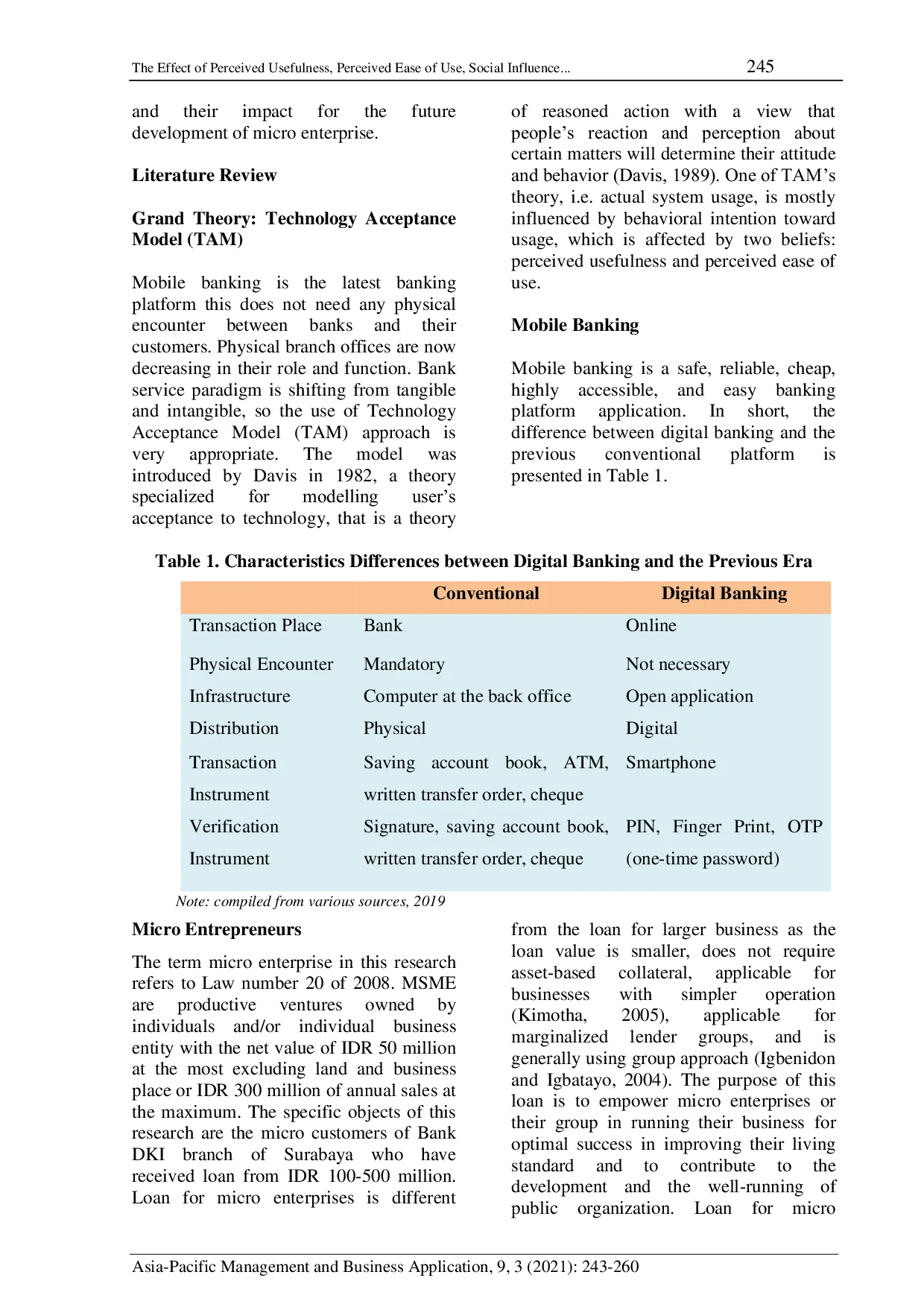
UBUB Perceived usefulness, ease of use, and social influence directly influence the use of mobile banking among micro‑entrepreneurs. These factors also affectPerceived usefulness, ease of use, and social influence directly influence the use of mobile banking among micro‑entrepreneurs. These factors also affect

ANTARBANGSAANTARBANGSA Penelitian ini menyimpulkan bahwa model TAM menghasilkan lima hipotesis diterima, yang menunjukkan hubungan signifikan antara perceived usefulness, perceivedPenelitian ini menyimpulkan bahwa model TAM menghasilkan lima hipotesis diterima, yang menunjukkan hubungan signifikan antara perceived usefulness, perceived
Useful /
UMUM Metode penelitian yang digunakan adalah kuantitatif dengan desain survei. Data dikumpulkan dari 163 responden mahasiswa Teknik Industri melalui kuesionerMetode penelitian yang digunakan adalah kuantitatif dengan desain survei. Data dikumpulkan dari 163 responden mahasiswa Teknik Industri melalui kuesioner

DINASTIPUBDINASTIPUB Subjek penelitian adalah mahasiswa akuntansi di beberapa universitas di Pulau Jawa, yaitu di Jakarta, Bandung, dan Surabaya. Metode yang digunakan bersifatSubjek penelitian adalah mahasiswa akuntansi di beberapa universitas di Pulau Jawa, yaitu di Jakarta, Bandung, dan Surabaya. Metode yang digunakan bersifat

DINASTIPUBDINASTIPUB Artikel ini membahas sejauh mana keempat KPI AR tersebut dapat mendukung penerimaan pajak secara optimal. Hasil tinjauan pustaka menggambarkan seberapaArtikel ini membahas sejauh mana keempat KPI AR tersebut dapat mendukung penerimaan pajak secara optimal. Hasil tinjauan pustaka menggambarkan seberapa

DINASTIPUBDINASTIPUB Penyusunan artikel ini bagi para penulis bertujuan untuk membangun hipotesis dalam mencari pengaruh di antara beberapa variabel yang dapat dijadikan objekPenyusunan artikel ini bagi para penulis bertujuan untuk membangun hipotesis dalam mencari pengaruh di antara beberapa variabel yang dapat dijadikan objek