MCMC
Mauriduna : Journal of Islamic StudiesMauriduna : Journal of Islamic StudiesPenelitian ini bertujuan mengkontekstualisasikan etika dakwah Rasulullah SAW sebagaimana tercantum dalam Q.S. An-Nahl [16]:125, Q.S. Ali Imran [3]:104, dan Q.S. Fussilat [41]:33 melalui kajian komparatif terhadap Tafsir Al-Maraghi dan Tafsir Al-Misbah, serta menilai relevansinya dalam praktik dakwah digital. Metode penelitian menggunakan pendekatan kualitatif-deskriptif dengan analisis kepustakaan yang menelaah sumber klasik dan kontemporer. Hasil penelitian menunjukkan bahwa tiga prinsip utama dakwah bil hikmah, al-mauizhah al-hasanah, dan al-mujādalah billatī hiya aḥsan memiliki nilai etis yang dapat diterapkan secara efektif dalam ekosistem digital yang ditandai oleh percepatan informasi, interaktivitas tinggi, serta kerentanan terhadap provokasi dan disinformasi. Kedua tafsir menegaskan pentingnya kebijaksanaan, keteladanan, dan dialog konstruktif sebagai fondasi dakwah yang humanis dan adaptif. Penelitian ini menegaskan bahwa etika Qurani mampu berfungsi sebagai pedoman normatif dan praktis untuk menjaga integritas dakwah di tengah digitalisasi. Temuan ini memberikan implikasi perlunya literasi etika dakwah digital bagi para pendakwah agar penyampaian pesan keagamaan tetap akurat, santun, dan berorientasi pada kemaslahatan publik.
This study concludes that the ethics of the Prophet Muhammads preaching as contained in Q.33, when examined through Tafsir Al-Maraghi and Tafsir Al-Misbah, provide an ethical foundation that remains relevant to addressing the needs of dawah in the digital age.The principles of bil hikmah, al-mauizhah al-hasanah, and al-mujādalah billati hiya ahsan have proven to be normative guidelines that maintain the moral quality of dawah in terms of understanding the audience, the pattern of message delivery, and the attitude of dai in facing differences and the dynamics of digital discourse.The contextualization of these values shows that dawah activities in the digital space demand greater wisdom, exemplary behavior, and caution, given the fast-paced, interactive nature of the media and its susceptibility to misinformation and distortion of religious authority.Thus, the research objective to identify and affirm the relevance of the Prophet Muhammads preaching ethics in digital preaching practices has been achieved.Quranic ethical values not only survive as spiritual norms but also serve as practical guidelines that can minimize information bias, commercialization of religion, and provocative preaching practices.This study points to the importance of strengthening digital ethics literacy for preachers so that the religious messages conveyed remain oriented towards benefit and accuracy.Further research is recommended to empirically examine the application of dawah ethics on various digital platforms, so that the effectiveness of the Prophet Muhammads dawah principles in facing the challenges of new media can be measured more comprehensively.
Based on the research findings, several suggestions for further research can be proposed. Firstly, it is recommended to conduct empirical studies on the application of dawah ethics on various digital platforms, such as social media, podcasts, and YouTube channels. This would provide a more comprehensive understanding of the effectiveness of the Prophet Muhammads dawah principles in addressing the challenges of new media. Secondly, exploring the relationship between Quranic ethical values and the algorithmic dynamics of social media is essential. Algorithms play a significant role in shaping the visibility and form of dawah delivery, and further research in this area could contribute to a deeper understanding of how to navigate the ethical challenges posed by algorithmic mechanisms. Lastly, given the increasing complexity of digital dawah, it is crucial to develop strategies for strengthening digital ethics literacy among preachers. This could involve designing training programs or workshops that emphasize the importance of maintaining integrity, accuracy, and public trust in religious communication. By combining these suggestions, future research can contribute to a more nuanced and practical approach to upholding the ethical foundations of Islamic dawah in the digital age.
- Peran Dakwah Digital dalam Menyebarkan Pesan Islam di Era Modern | Jurnal An-nasyr: Jurnal Dakwah Dalam... ejournal.unisai.ac.id/index.php/jian/article/view/842Peran Dakwah Digital dalam Menyebarkan Pesan Islam di Era Modern Jurnal An nasyr Jurnal Dakwah Dalam ejournal unisai ac index php jian article view 842
- Kompetensi Dai Profesional untuk Berdakwah di Kalangan Generasi Z | Tanzhim: Jurnal Dakwah Terprogram.... doi.org/10.55372/tanzhim.v2i2.33Kompetensi Dai Profesional untuk Berdakwah di Kalangan Generasi Z Tanzhim Jurnal Dakwah Terprogram doi 10 55372 tanzhim v2i2 33
- DIGITALISASI DAN TANTANGAN DAKWAH DI ERA MILENIAL | Muẚṣarah: Jurnal Kajian Islam Kontemporer. digitalisasi... jurnal.uin-antasari.ac.id/index.php/muasharah/article/view/3666DIGITALISASI DAN TANTANGAN DAKWAH DI ERA MILENIAL Muoarah Jurnal Kajian Islam Kontemporer digitalisasi jurnal uin antasari ac index php muasharah article view 3666
| File size | 409 KB |
| Pages | 14 |
| DMCA | Report |
Related /
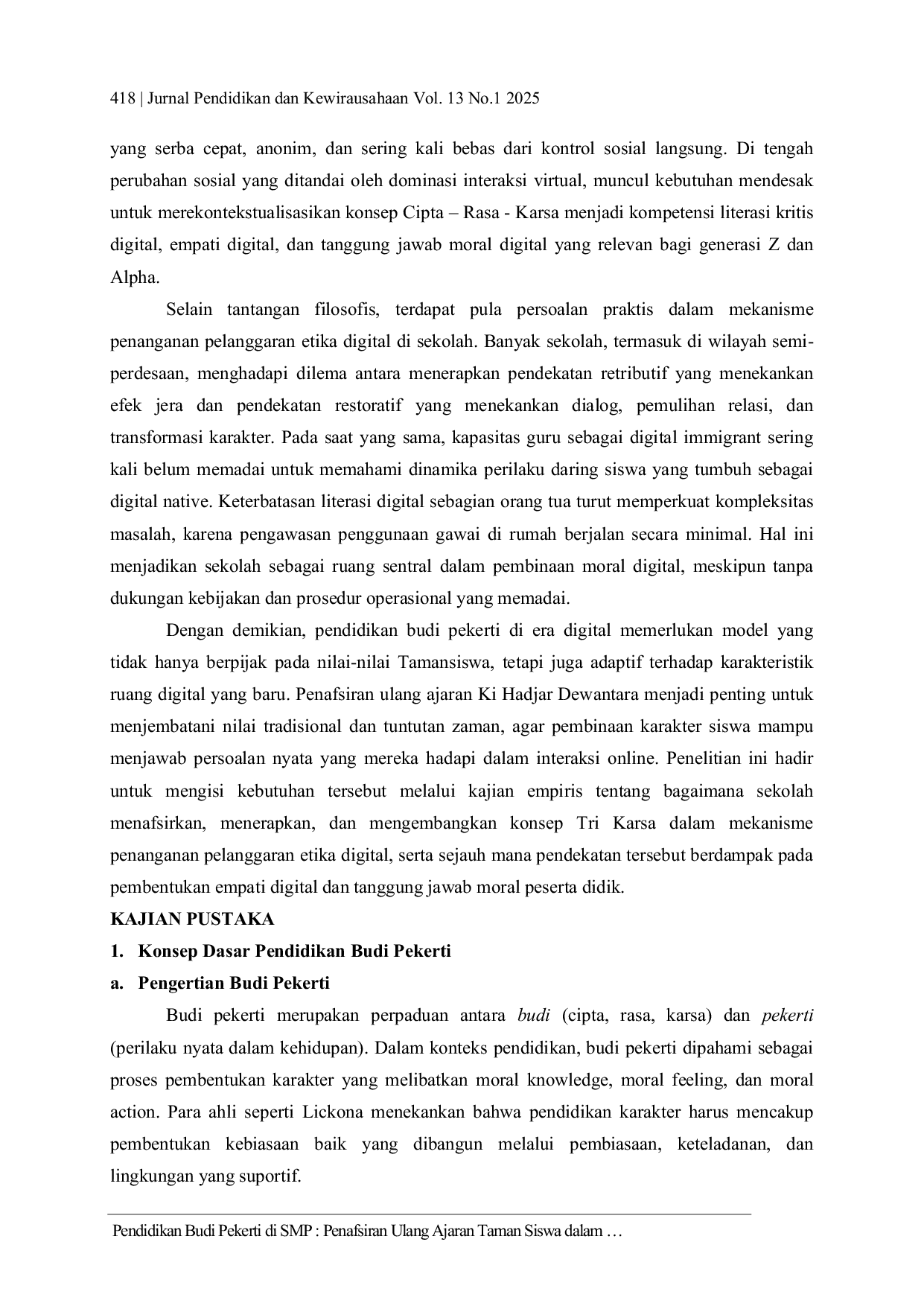
JOURNALSTKIPPGRISITUBONDOJOURNALSTKIPPGRISITUBONDO Hasil penelitian menunjukkan bahwa Tri Karsa di SMPN 2 Campaka diinterpretasikan sebagai literasi kritis digital, empati digital, dan tanggung jawabHasil penelitian menunjukkan bahwa Tri Karsa di SMPN 2 Campaka diinterpretasikan sebagai literasi kritis digital, empati digital, dan tanggung jawab

UVAYABJMUVAYABJM 08), indikator ketiga, Saya tidak akan berkomentar kasar jika ada orang yang komentar negatif di unggahan saya (3. 85), indikator keempat Saya tidak membuat08), indikator ketiga, Saya tidak akan berkomentar kasar jika ada orang yang komentar negatif di unggahan saya (3. 85), indikator keempat Saya tidak membuat
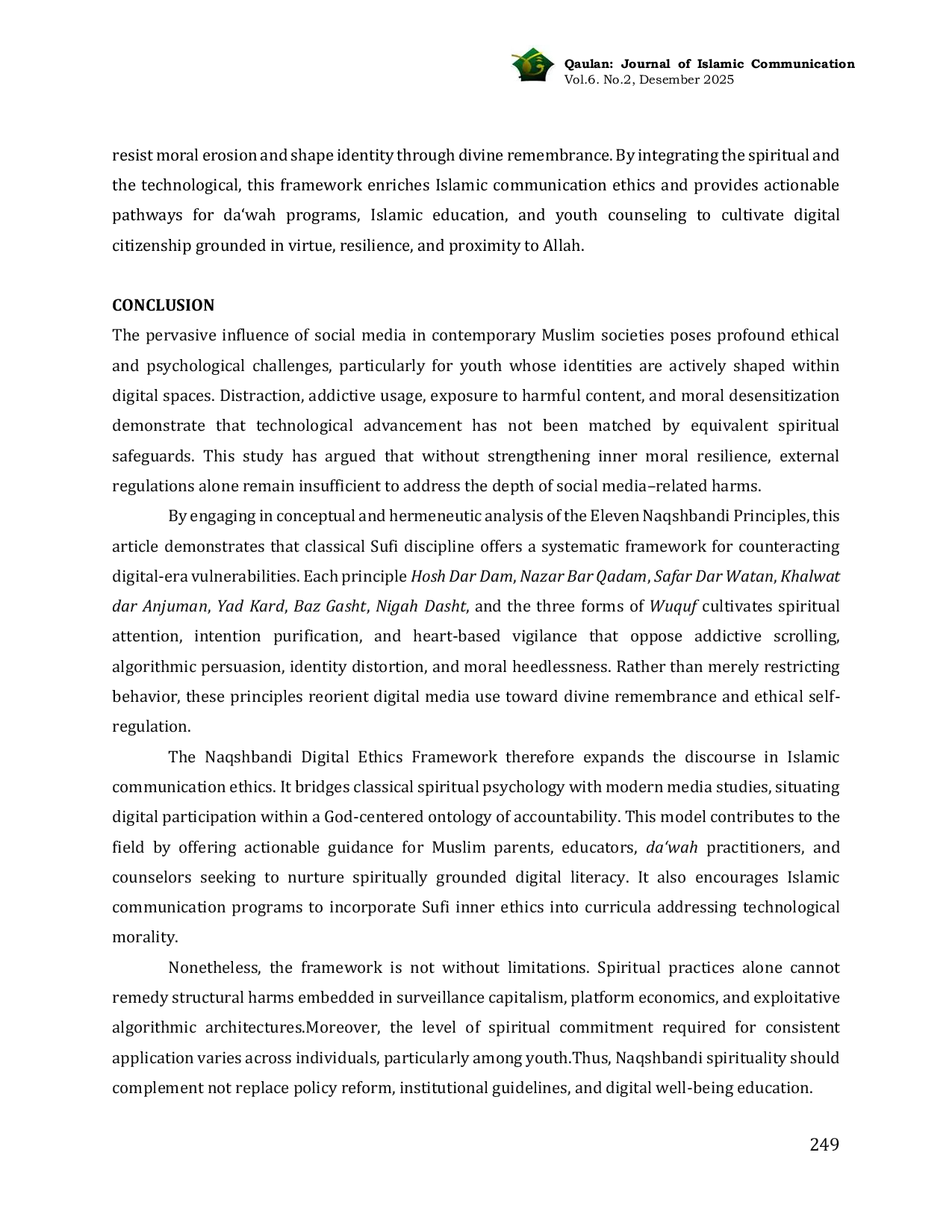
IAIN PONOROGOIAIN PONOROGO Naqshbandi Digital Ethics Framework memberikan kerangka konseptual yang menekankan disiplin perhatian, pemurnian niat, dan pengendalian diri moral sebagaiNaqshbandi Digital Ethics Framework memberikan kerangka konseptual yang menekankan disiplin perhatian, pemurnian niat, dan pengendalian diri moral sebagai

UNIAUNIA Metode yang digunakan mengikuti protokol Prisma 2020 dengan menganalisis 28 artikel terpilih dari 327 literatur awal yang ditemukan melalui basis dataMetode yang digunakan mengikuti protokol Prisma 2020 dengan menganalisis 28 artikel terpilih dari 327 literatur awal yang ditemukan melalui basis data

ASY SYUKRIYYAHASY SYUKRIYYAH Penelitian ini memberikan kontribusi akademik dengan menunjukkan bagaimana internalisasi nilai-nilai transenden seperti muraqabah menawarkan kerangka etikaPenelitian ini memberikan kontribusi akademik dengan menunjukkan bagaimana internalisasi nilai-nilai transenden seperti muraqabah menawarkan kerangka etika
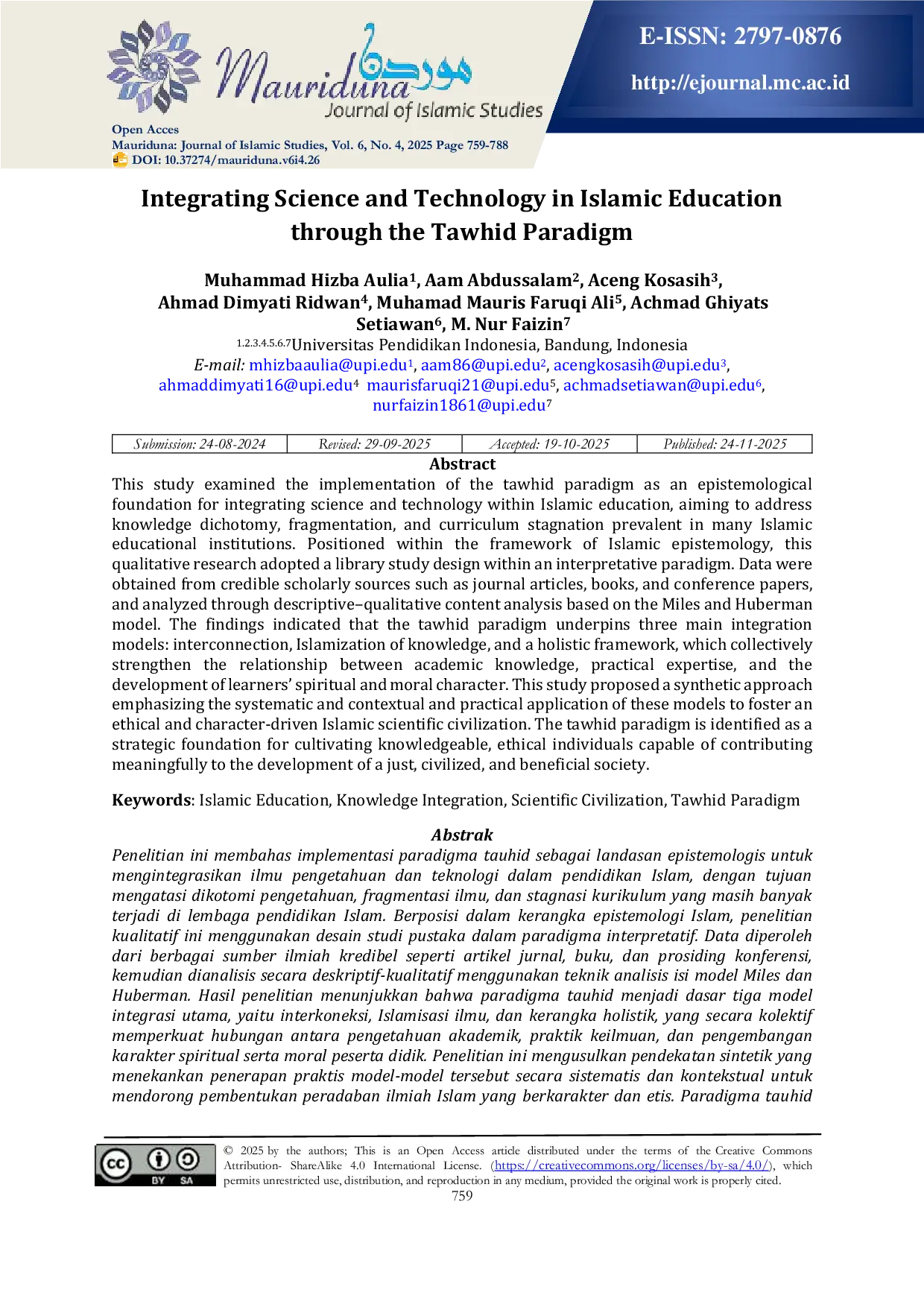
MCMC Berposisi dalam kerangka epistemologi Islam, penelitian kualitatif ini menggunakan desain studi pustaka dalam paradigma interpretatif. Data diperoleh dariBerposisi dalam kerangka epistemologi Islam, penelitian kualitatif ini menggunakan desain studi pustaka dalam paradigma interpretatif. Data diperoleh dari

SYEKH NURJATISYEKH NURJATI Implikasi penelitian ini menunjukkan urgensi pelaksanaan program untuk meningkatkan kompetensi digital guru. Secara lebih luas, penelitian ini berdampakImplikasi penelitian ini menunjukkan urgensi pelaksanaan program untuk meningkatkan kompetensi digital guru. Secara lebih luas, penelitian ini berdampak
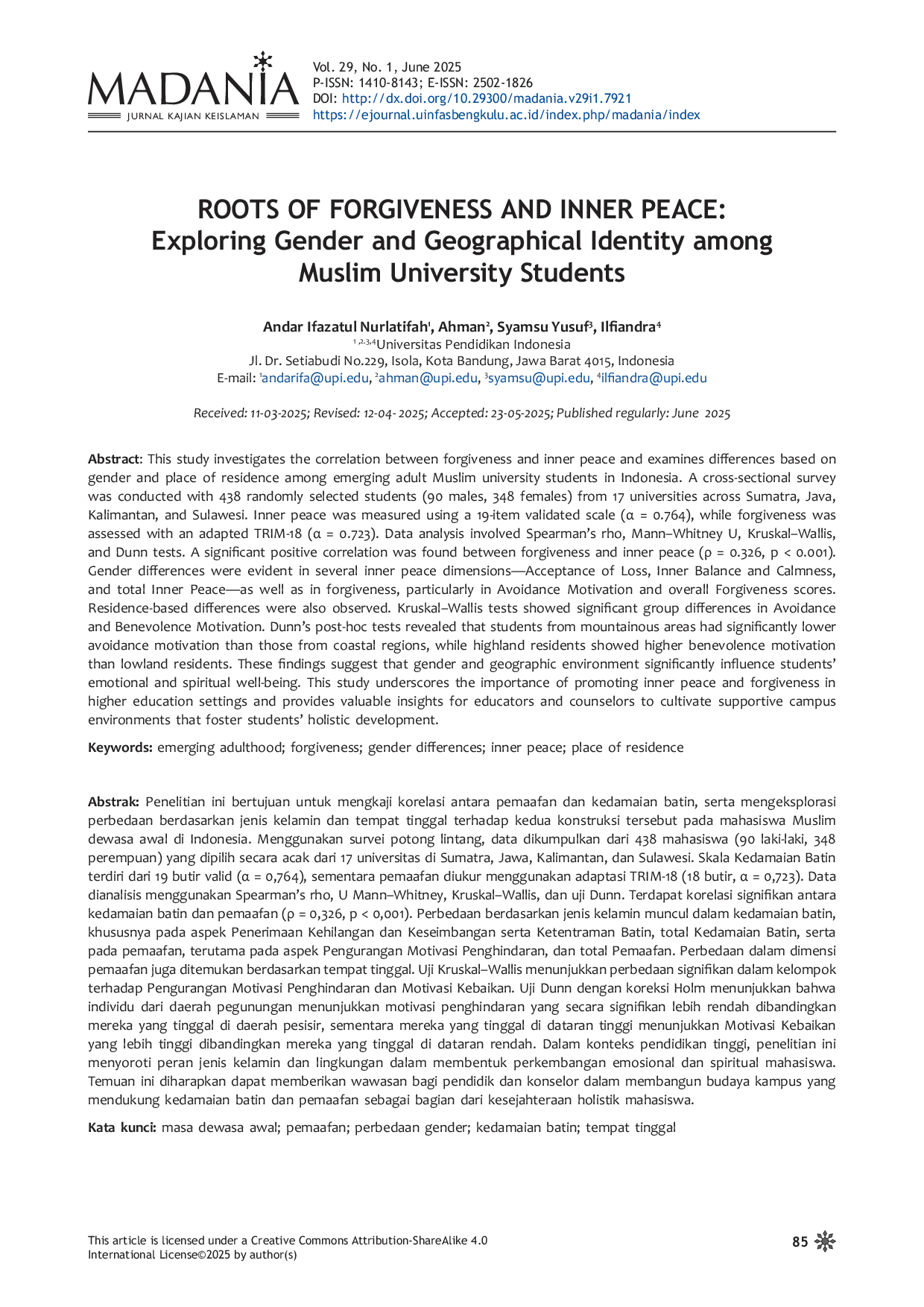
UINFASBENGKULUUINFASBENGKULU Skala Kedamaian Batin terdiri dari 19 butir valid (α = 0,764), sementara pemaafan diukur menggunakan adaptasi TRIM-18 (α = 0,723). Data dianalisis menggunakanSkala Kedamaian Batin terdiri dari 19 butir valid (α = 0,764), sementara pemaafan diukur menggunakan adaptasi TRIM-18 (α = 0,723). Data dianalisis menggunakan
Useful /

JOURNALSTKIPPGRISITUBONDOJOURNALSTKIPPGRISITUBONDO Indonesia Asahan Aluminium (Persero) melalui penguatan employee engagement. Penerapan fleksibilitas kerja yang memberikan keleluasaan dalam pengaturanIndonesia Asahan Aluminium (Persero) melalui penguatan employee engagement. Penerapan fleksibilitas kerja yang memberikan keleluasaan dalam pengaturan

UNIMUNIM Hasil menunjukkan bahwa ARIMA memberikan kinerja terbaik dengan MAPE rata-rata 15,49%, mengungguli SES (16,13%) dan DES (20,19%). Untuk prediksi AQI, ARIMAHasil menunjukkan bahwa ARIMA memberikan kinerja terbaik dengan MAPE rata-rata 15,49%, mengungguli SES (16,13%) dan DES (20,19%). Untuk prediksi AQI, ARIMA

POLSRIPOLSRI Besarnya dasa sinyal serta kecepatan mengunduh dan mengunggah akan dipengaruhi oleh lingkungan sekitar. Pengujian menggunakan tiga perangkat lunak padaBesarnya dasa sinyal serta kecepatan mengunduh dan mengunggah akan dipengaruhi oleh lingkungan sekitar. Pengujian menggunakan tiga perangkat lunak pada
BIARJOURNALBIARJOURNAL Nilai-nilai nasehat dalam cerita rakyat dapat memberikan pelajaran dan contoh perbuatan yang layak diikuti maupun dipandang sebagai contoh perilaku burukNilai-nilai nasehat dalam cerita rakyat dapat memberikan pelajaran dan contoh perbuatan yang layak diikuti maupun dipandang sebagai contoh perilaku buruk