BIABIA
Jurnal Teologi dan Pendidikan Kristen KontekstualJurnal Teologi dan Pendidikan Kristen KontekstualThis research explores models of interreligious tolerance within the phygital neighborhood as practiced by the Young Interfaith Peacemaker Community. In collecting research data, I employ qualitative methods through a phenomenology approach by conducting interviews and observation on websites and social medias such as Instagram of the Young Interfaith Peacemaker Community – Indonesia. From this research, I found that YIPC campaigned for peace and tolerance through physical and digital neighborhoods. YIPC is enthusiastic about promoting a peace generation through young peacemakers. Interestingly, YIPC has consciously been involved in the theological, spiritual, dialogue of action and dialogue of life as well as conducting a holistic dialogue through the dialogue of head, dialogue of heart, dialogue of hands, and dialogue of holiness. Those models of dialogue can be seen through the activism of YIPC, such as youth peace camps, peace forums, book reviews, scriptural reasoning, visits to places of worship, peace campaigns on social media, and various other peaceful actions. These activities take place on physical and digital platforms. YIPC also created peaceful dialogue, practicing true tolerance by caring interreligious friendship. In the phygital neighborhood, interreligious tolerance should employ the virtues of interreligious dialogue, such as humility, openness, commitment, interconnection or commonality, acceptance, hospitality, mutual understanding, hospitality, and the possibility of mutual growth and change.
The activism of the Young Interfaith Peacemakers Community exemplifies effective interreligious peace and tolerance in both physical and digital neighborhoods.YIPC has fostered a mutual tolerance rooted in the core values and conditions of interreligious dialogue, extending beyond mere tolerance to embrace interreligious friendship.The practice of tolerance within YIPC is characterized by a holistic dialogue encompassing theological, spiritual, and practical dimensions, emphasizing virtues like humility, acceptance, and mutual understanding.
Penelitian lebih lanjut dapat dilakukan untuk menginvestigasi dampak jangka panjang dari program YIPC terhadap pembentukan sikap toleransi dan perdamaian pada generasi muda, dengan fokus pada bagaimana pengalaman di ruang phygital diterjemahkan ke dalam interaksi sosial di dunia nyata. Selain itu, studi komparatif dapat dilakukan dengan melibatkan komunitas-komunitas lain yang bergerak dalam bidang toleransi beragama, untuk mengidentifikasi praktik-praktik terbaik dan tantangan-tantangan yang serupa, serta mengembangkan model intervensi yang lebih efektif. Terakhir, penelitian perlu menggali lebih dalam mengenai peran teknologi dan media sosial dalam memperkuat atau melemahkan narasi toleransi, serta merancang strategi komunikasi yang adaptif dan responsif terhadap dinamika ruang digital, termasuk potensi pengembangan platform digital khusus untuk memfasilitasi dialog interreligius yang konstruktif dan berkelanjutan.
| File size | 495.86 KB |
| Pages | 16 |
| DMCA | Report |
Related /

STAIM PROBOLINGGOSTAIM PROBOLINGGO Metode penelitian ini menggunakan pendekatan kualitatif deskriptif dengan desain studi lapangan. Subjek penelitian meliputi 17 siswa kelas I Madrasah IbtidaiyahMetode penelitian ini menggunakan pendekatan kualitatif deskriptif dengan desain studi lapangan. Subjek penelitian meliputi 17 siswa kelas I Madrasah Ibtidaiyah

UNRAMUNRAM Penelitian ini menggambarkan sekaligus menganalisis perubahan perilaku siswa Madrasah Ibtidaiyah (MI) terhadap guru dalam konteks perkembangan digital.Penelitian ini menggambarkan sekaligus menganalisis perubahan perilaku siswa Madrasah Ibtidaiyah (MI) terhadap guru dalam konteks perkembangan digital.

STAIM PROBOLINGGOSTAIM PROBOLINGGO Metode penelitian yang digunakan adalah pendekatan kualitatif dengan studi kasus. Proses pengumpulan data melibatkan wawancara, observasi, dan analisisMetode penelitian yang digunakan adalah pendekatan kualitatif dengan studi kasus. Proses pengumpulan data melibatkan wawancara, observasi, dan analisis

UNUGHAUNUGHA Pola asuh demokratis dianggap paling baik karena mendorong interaksi yang hangat dan terbuka antara orang tua dan anak. Sementara itu, pola asuh permisifPola asuh demokratis dianggap paling baik karena mendorong interaksi yang hangat dan terbuka antara orang tua dan anak. Sementara itu, pola asuh permisif

SCADINDEPENDENTSCADINDEPENDENT Kerangka Kualifikasi Nasional Indonesia (KKNI) berfungsi menilai kualifikasi dan kompetensi tenaga kerja Indonesia, memadukan pendidikan, pelatihan, danKerangka Kualifikasi Nasional Indonesia (KKNI) berfungsi menilai kualifikasi dan kompetensi tenaga kerja Indonesia, memadukan pendidikan, pelatihan, dan

UNRIUNRI Dengan upaya yang berkelanjutan, seperti tambahan pelatihan dan bimbingan di masa depan, program ini memiliki potensi untuk terus memperkuat pembentukanDengan upaya yang berkelanjutan, seperti tambahan pelatihan dan bimbingan di masa depan, program ini memiliki potensi untuk terus memperkuat pembentukan

ALFARABIALFARABI Strategi yang lebih baik adalah melibatkan guru, siswa, dan unsur terkait dalam mengevaluasi pembelajaran PAI berbasis nilai multikultural seperti keadilan,Strategi yang lebih baik adalah melibatkan guru, siswa, dan unsur terkait dalam mengevaluasi pembelajaran PAI berbasis nilai multikultural seperti keadilan,

UIN WALISONGOUIN WALISONGO Temuan ini mengungkapkan gambaran yang komprehensif tentang sikap keagamaan di kalangan mahasiswa, yang menekankan pentingnya memupuk moderasi beragamaTemuan ini mengungkapkan gambaran yang komprehensif tentang sikap keagamaan di kalangan mahasiswa, yang menekankan pentingnya memupuk moderasi beragama
Useful /

ULBULB Kebaruan penelitian terletak pada penggunaan Pendekatan SOBURAL untuk memahami konteks sosial, budaya, dan struktural dari ekspresi simbolik, serta penyusunanKebaruan penelitian terletak pada penggunaan Pendekatan SOBURAL untuk memahami konteks sosial, budaya, dan struktural dari ekspresi simbolik, serta penyusunan

UIN WALISONGOUIN WALISONGO Artikel ini menyoroti negosiasi yang semakin meningkat terhadap otoritas agama di kalangan santri terdidik dalam lingkungan pesantren modern. Etika ketaatanArtikel ini menyoroti negosiasi yang semakin meningkat terhadap otoritas agama di kalangan santri terdidik dalam lingkungan pesantren modern. Etika ketaatan

SCADINDEPENDENTSCADINDEPENDENT Penelitian ini menemukan adanya asosiasi positif yang signifikan sehingga rasa malu dapat menjadi prediktor rasa bersalah. Penelitian ini memiliki implikasiPenelitian ini menemukan adanya asosiasi positif yang signifikan sehingga rasa malu dapat menjadi prediktor rasa bersalah. Penelitian ini memiliki implikasi
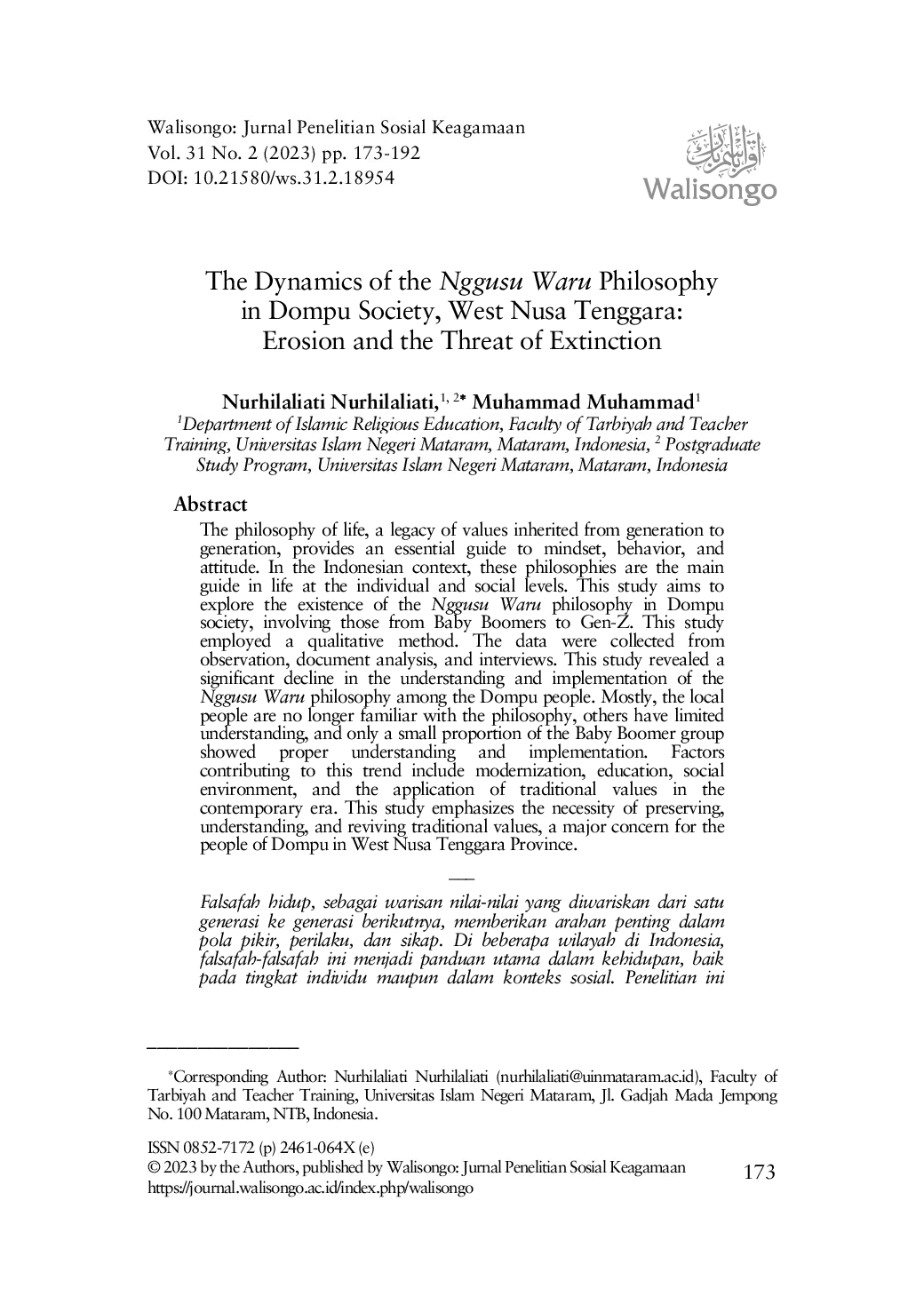
UIN WALISONGOUIN WALISONGO Tantangan utama dalam mempertahankan dan menerapkan nilai Nggusu Waru meliputi modernisasi, perubahan sosial, dan kurangnya pemahaman generasi muda, sehinggaTantangan utama dalam mempertahankan dan menerapkan nilai Nggusu Waru meliputi modernisasi, perubahan sosial, dan kurangnya pemahaman generasi muda, sehingga