UNHAJUNHAJ
Jukeshum: Jurnal Pengabdian MasyarakatJukeshum: Jurnal Pengabdian MasyarakatCases of anemia caused by malnutrition, especially iron deficiency anemia, reach 75%. The prevalence of iron and other micronutrient deficiencies is a serious problem in developing countries. The incidence of anemia or lack of blood among pregnant women in Indonesia is still relatively high, at 48.9%. Anemia is closely related to malnutrition, which is a multifactorial influence and interaction between food intake and frequency of infection. The prevalence of anemia among pregnant women at the Bandar Kalipah Community Health Center was recorded at 24.9%. The community service method applied in this activity directly involves families in efforts to reduce the incidence of anemia in pregnant women, through lectures, counseling, discussions, and training. As an initial step, a pre-test and post-test analysis was carried out to measure family knowledge about anemia, in order to ensure an increase in family knowledge and participation in efforts to prevent anemia. The knowledge of pregnant womens families before (pre-test) and after (post-test) being given education on preventing anemia through family-based education showed good results, with a percentage of good knowledge of 23.29% in the pre-test and increasing to 92.0% in the post-test. Sufficient knowledge was recorded at 24.70%, while low knowledge decreased to 3.00%. This activity aims to provide education to families who accompany pregnant women and is carried out repeatedly and consistently in Bandar Khalifah Village, where pregnant women must be accompanied by their families during pregnancy check-ups. This activity was carried out in October 2024 by providing education on the causes of anemia, the process of anemia, prevention of anemia, and proper treatment for anemia. With this activity, there was an increase in knowledge, attitudes, and experience for families of pregnant women in efforts to prevent anemia.
The community service activity conducted in Bandar Khalifah Village in October 2024 demonstrated a significant increase in family knowledge regarding anemia prevention.29% of families possessed good knowledge, which improved dramatically to 92.This indicates the effectiveness of the family-based education approach in enhancing understanding and promoting active participation in preventing anemia during pregnancy.Therefore, continuous and consistent education for families accompanying pregnant women is crucial for improving maternal health outcomes.
Based on the findings, future research should explore the long-term impact of family-based education on anemia prevalence rates in pregnant women within the Bandar Khalifah Village community. Furthermore, studies could investigate the effectiveness of integrating this educational approach into routine antenatal care services at the Bandar Kalipah Community Health Center, potentially through the development of a standardized training module for healthcare providers. Finally, research is needed to assess the feasibility and effectiveness of utilizing mobile health (mHealth) technologies, such as text message reminders or mobile applications, to reinforce educational messages and promote sustained behavioral changes among families supporting pregnant women, ensuring continued adherence to anemia prevention strategies beyond the initial intervention period.
| File size | 194.58 KB |
| Pages | 8 |
| DMCA | Report |
Related /
STTMCILEUNGSISTTMCILEUNGSI Berdasarkan fluktuasi produksi FFB selama dua tahun (2022–2023), rata-rata produksi proyeksi adalah 325.255 ton per tahun, dengan POME menghasilkan 65%Berdasarkan fluktuasi produksi FFB selama dua tahun (2022–2023), rata-rata produksi proyeksi adalah 325.255 ton per tahun, dengan POME menghasilkan 65%

IPBIPB Alternatif terbaik adalah membentuk pengelola berdasarkan kemitraan dengan kepemilikan saham tidak sama (0,791) dibandingkan saham sama (0,209). IndustriAlternatif terbaik adalah membentuk pengelola berdasarkan kemitraan dengan kepemilikan saham tidak sama (0,791) dibandingkan saham sama (0,209). Industri

POLTEK KAMPARPOLTEK KAMPAR Sistem pendingin yang ada bekerja secara optimal sehingga pembangkit terhindar dari gangguan panas berlebih atau overheat. Teknologi elektrolizer bekerjaSistem pendingin yang ada bekerja secara optimal sehingga pembangkit terhindar dari gangguan panas berlebih atau overheat. Teknologi elektrolizer bekerja
UNHAJUNHAJ Kegiatan pengabdian masyarakat ini terlaksana dengan baik, ditunjukkan dari antusiasme peserta dalam mengikuti senam penguin. Hasil dari PKM ini adalahKegiatan pengabdian masyarakat ini terlaksana dengan baik, ditunjukkan dari antusiasme peserta dalam mengikuti senam penguin. Hasil dari PKM ini adalah
UADUAD The addition of coal ash increases the CaO content in the growing medium, which plays a role in improving the chemical properties of the soil. However,The addition of coal ash increases the CaO content in the growing medium, which plays a role in improving the chemical properties of the soil. However,

SMUJOSMUJO Aktivitas antioksidan dan penilaian analgesik infusa kulit batang Lansium domesticum. Nusantara Bioscience 10.71-75. Tanaman langsat (Lansium domesticumAktivitas antioksidan dan penilaian analgesik infusa kulit batang Lansium domesticum. Nusantara Bioscience 10.71-75. Tanaman langsat (Lansium domesticum

SMUJOSMUJO Bioplastic was made by casting method at temperature 88. 1 ̊C with ratios of cacao pod husk as fillers and jackfruit seed as starch were 9:1, 8:2, 7:3,Bioplastic was made by casting method at temperature 88. 1 ̊C with ratios of cacao pod husk as fillers and jackfruit seed as starch were 9:1, 8:2, 7:3,
SMUJOSMUJO Hal ini menunjukkan bahwa vermicompost dan vermiwash dapat diimplementasikan sebagai metode alternatif dalam budidaya tanaman, sekaligus mengurangi kebutuhanHal ini menunjukkan bahwa vermicompost dan vermiwash dapat diimplementasikan sebagai metode alternatif dalam budidaya tanaman, sekaligus mengurangi kebutuhan
Useful /

STKIPPACITANSTKIPPACITAN Pembelajaran berbantuan software komputer dengan pendekatan CTL mampu meningkatkan kualitas pembelajaran statistika pada materi uji hipotesis rerata. PendekatanPembelajaran berbantuan software komputer dengan pendekatan CTL mampu meningkatkan kualitas pembelajaran statistika pada materi uji hipotesis rerata. Pendekatan
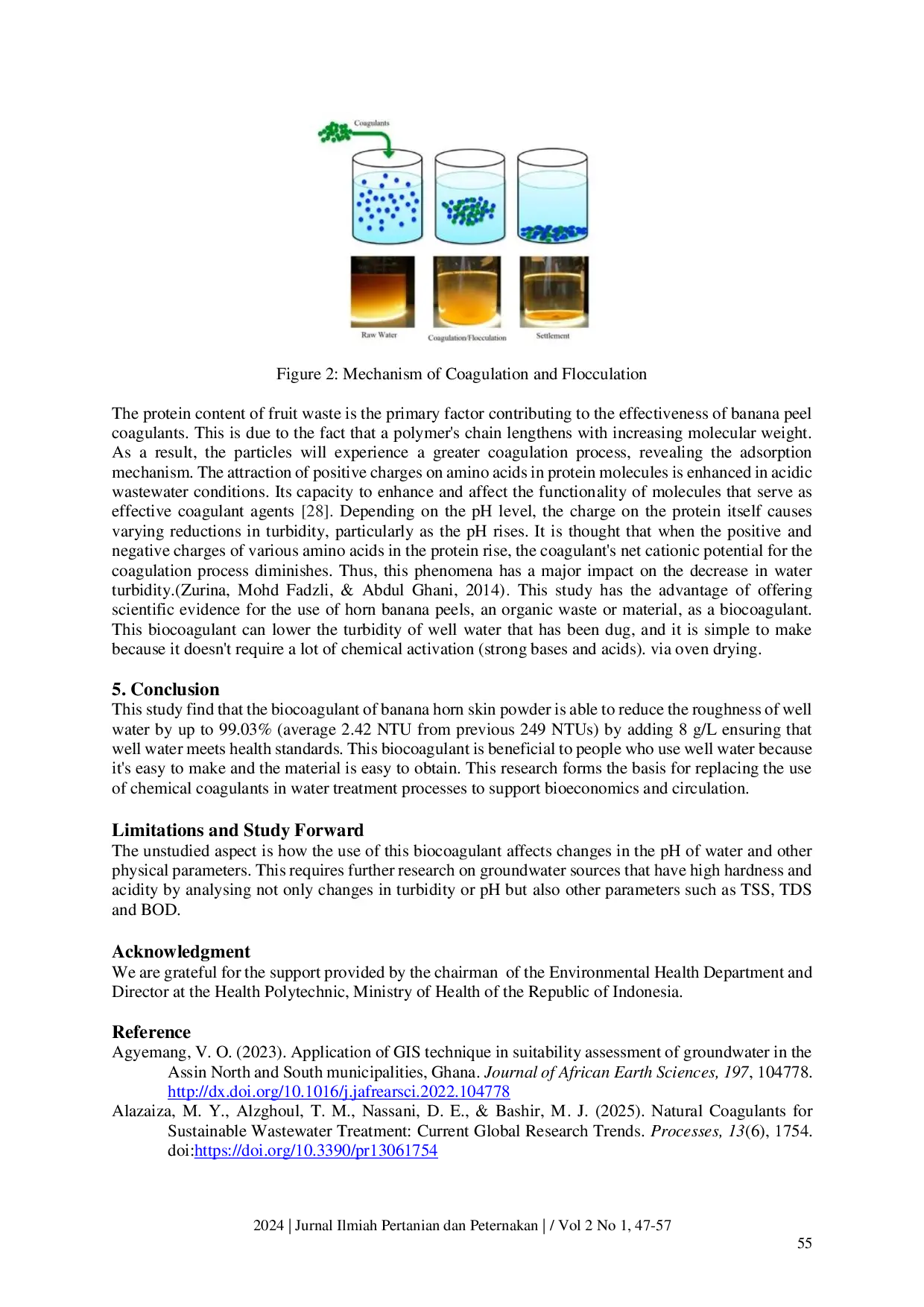
PENERBITGOODWOODPENERBITGOODWOOD Horn banana peel powder effectively reduces well water turbidity, achieving up to 99.03% reduction at a dose of 8 g/L and meeting clean water quality standards.Horn banana peel powder effectively reduces well water turbidity, achieving up to 99.03% reduction at a dose of 8 g/L and meeting clean water quality standards.
UADUAD 43 to 33.79%. The mixture with the addition of 20% fine slag has the highest compressive strength of 33.23 MPa. The nickel slag content of Morosi, Konawe43 to 33.79%. The mixture with the addition of 20% fine slag has the highest compressive strength of 33.23 MPa. The nickel slag content of Morosi, Konawe
UADUAD Pencemaran logam berat yang berasal dari limbah industri, khususnya dari industri kimia, merupakan masalah lingkungan yang serius mengingat sifat toksik,Pencemaran logam berat yang berasal dari limbah industri, khususnya dari industri kimia, merupakan masalah lingkungan yang serius mengingat sifat toksik,