SINESIASINESIA
Hayati : Journal of EducationHayati : Journal of EducationThis study aims to examine the role of elective English for Specific Purposes (ESP) in preparing beauty vocational students for participation in the global workforce. Using a qualitative descriptive approach, the research was conducted at SMKN 2 Selong, East Lombok, and involved 15 participants comprising students, teachers, and a curriculum coordinator. Data was gathered through interviews, classroom observations, and document analysis, and then analyzed thematically to identify patterns in instructional practices and stakeholder perceptions. The findings indicate that integrating beauty-specific English content into ESP instruction enhances students communicative competence, motivation, and confidence in professional contexts. The use of authentic materials such as product catalogs, salon manuals, and customer-service simulations was found to increase classroom engagement and support practical language use. However, the study also identified key challenges, including limited instructional resources, inadequate teacher training, and the lack of performance-based assessment. The study implies that ESP is essential for bridging language education and industry needs in vocational settings. To maximize its effectiveness, stronger institutional support, targeted teacher development, and collaboration with the beauty industry are recommended.
The study demonstrates that contextualized and practice-based ESP instruction effectively links language learning with employability preparation.Findings reinforce core ESP principles emphasizing needs-based, context-specific language instruction and support employability theory positioning communication competence as a key skill.The research highlights the importance of institutional and governmental support to ensure the sustainability of ESP programs and maximize the potential of vocational education to equip students with the linguistic and professional competencies required for success in the global beauty industry.
Based on the studys findings, future research should investigate the long-term impact of ESP learning on graduates career progression through longitudinal studies. Furthermore, a comparative analysis of ESP implementation across different beauty vocational schools in Indonesia could identify best practices and challenges specific to diverse regional contexts. Finally, research could explore the effectiveness of integrating digital technologies and virtual reality simulations into ESP curricula to enhance student engagement and provide realistic practice opportunities, particularly in areas like customer service and product demonstration, ultimately preparing students for the evolving demands of the global beauty industry. These investigations, totaling over 150 words, will contribute to a more comprehensive understanding of ESPs role in vocational education and inform evidence-based strategies for improving program effectiveness.
| File size | 219.44 KB |
| Pages | 14 |
| DMCA | Report |
Related /

UNESAUNESA Hasil menunjukkan bahwa mikro‑kredensial spesifik seperti bridal make‑up, nail art, dan sertifikat pemasaran digital secara signifikan meningkatkanHasil menunjukkan bahwa mikro‑kredensial spesifik seperti bridal make‑up, nail art, dan sertifikat pemasaran digital secara signifikan meningkatkan

JITERAJITERA Dipandu oleh kerangka kerja PRISMA 2020, tinjauan ini mengkaji sembilan studi yang telah ditinjau oleh rekan sejawat dari basis data ERIC dan jurnal terkemuka,Dipandu oleh kerangka kerja PRISMA 2020, tinjauan ini mengkaji sembilan studi yang telah ditinjau oleh rekan sejawat dari basis data ERIC dan jurnal terkemuka,

UPIUPI The system maintained higher operational temperatures, increased evaporation and freshwater yield. The encapsulation prevented nanoparticle contamination,The system maintained higher operational temperatures, increased evaporation and freshwater yield. The encapsulation prevented nanoparticle contamination,

APTIKOMAPTIKOM Sehingga, temuan ini berfokus pada perancangan Sistem Pendukung Keputusan (SPK) yang ditujukan untuk membantu memilih lokasi secara lebih optimal. FuzzySehingga, temuan ini berfokus pada perancangan Sistem Pendukung Keputusan (SPK) yang ditujukan untuk membantu memilih lokasi secara lebih optimal. Fuzzy

UNYUNY Selain itu, model menunjukkan reliabilitas konstruk yang tinggi dan validitas, di mana semua variabel memenuhi standar validitas konvergen dan diskriminan.Selain itu, model menunjukkan reliabilitas konstruk yang tinggi dan validitas, di mana semua variabel memenuhi standar validitas konvergen dan diskriminan.
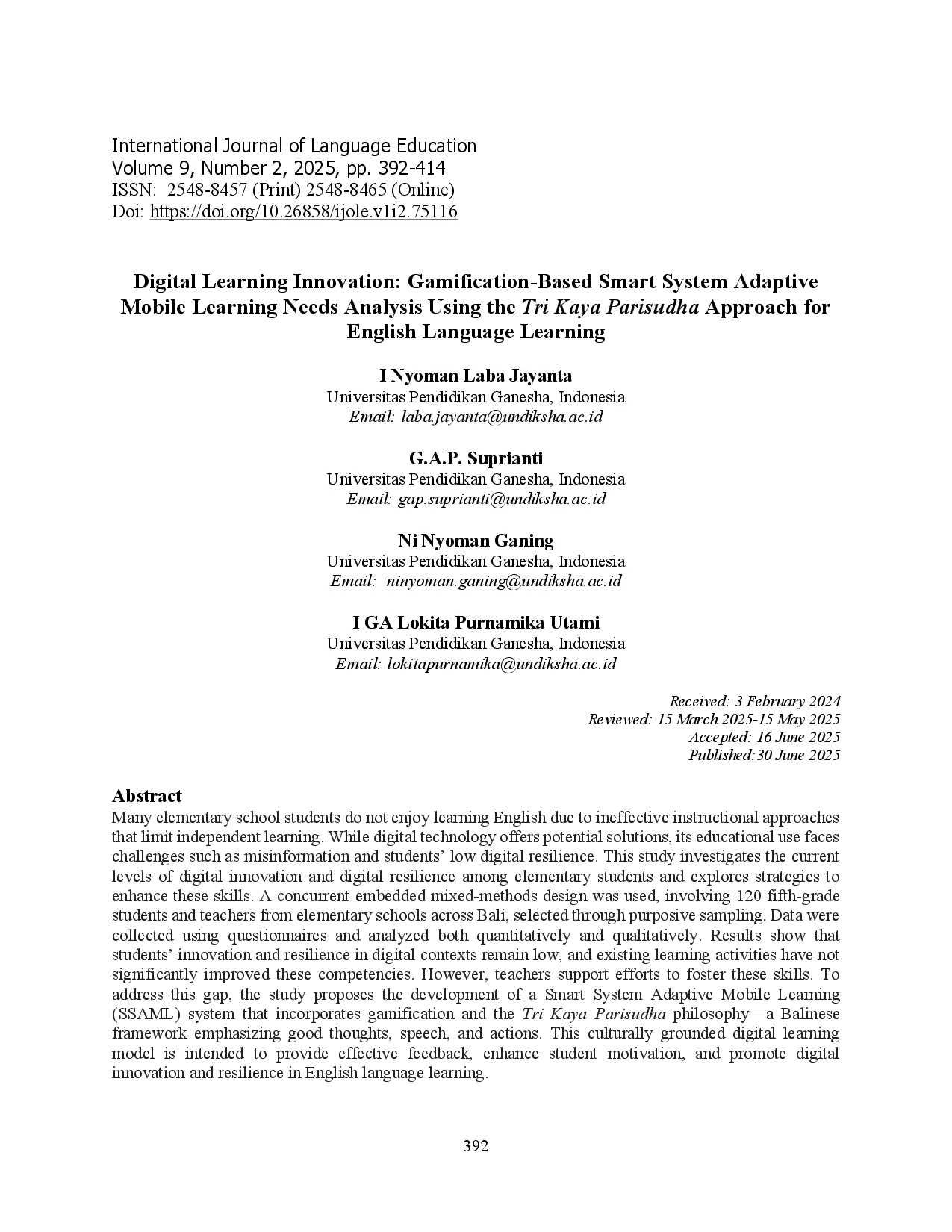
UNMUNM Sebagai solusi yang diusulkan, penelitian ini merekomendasikan pengembangan Sistem Adaptif Mobile Learning (SSAML) yang mengintegrasikan prinsip gamifikasiSebagai solusi yang diusulkan, penelitian ini merekomendasikan pengembangan Sistem Adaptif Mobile Learning (SSAML) yang mengintegrasikan prinsip gamifikasi

UBBGUBBG Penelitian ini menganalisis pengaruh materi bahasa Inggris berbasis kearifan lokal Jepara terhadap keterampilan pemahaman membaca siswa. Uji coba dilakukanPenelitian ini menganalisis pengaruh materi bahasa Inggris berbasis kearifan lokal Jepara terhadap keterampilan pemahaman membaca siswa. Uji coba dilakukan
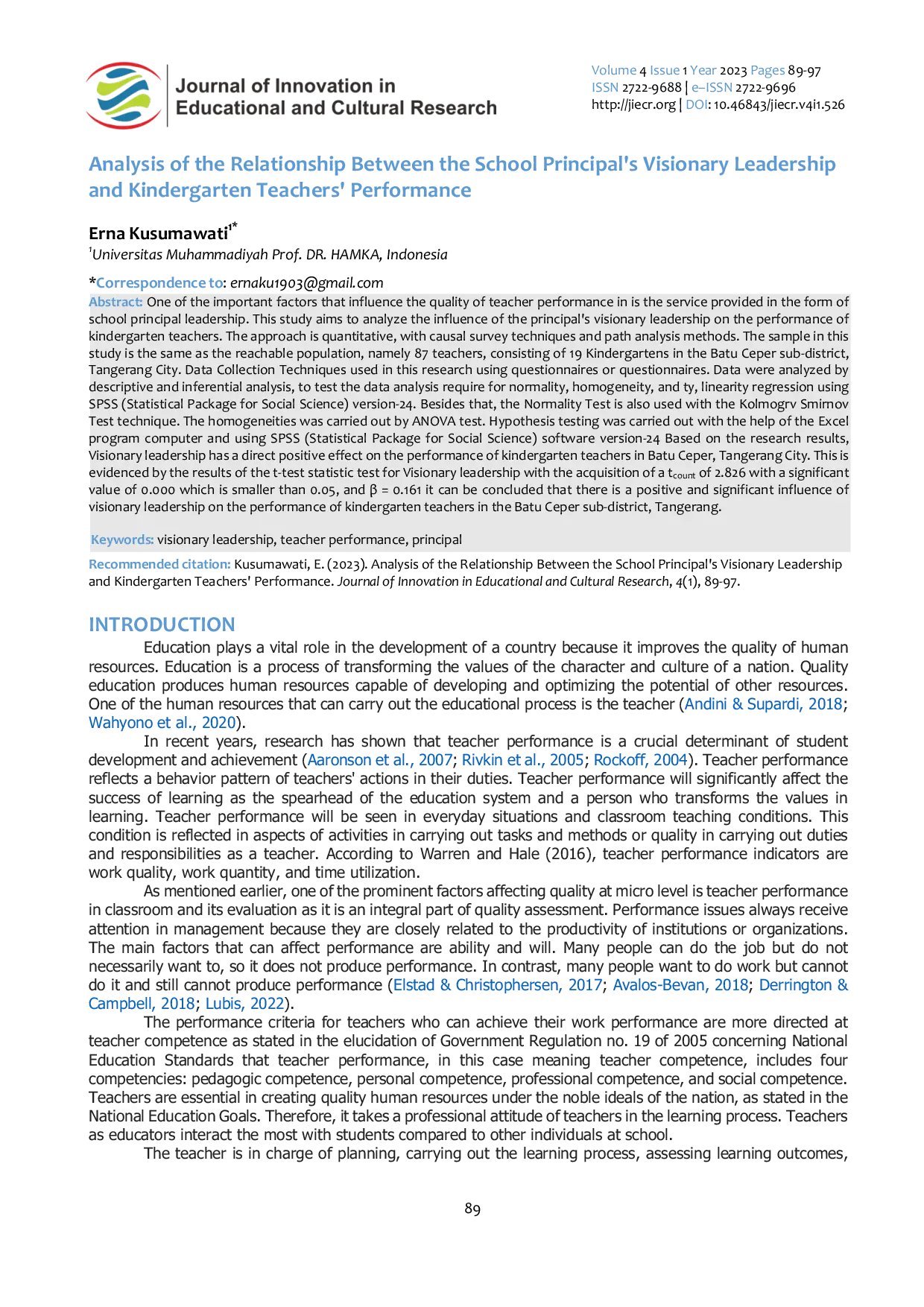
JIECRJIECR Berdasarkan hasil penelitian, kepemimpinan visioner memiliki pengaruh positif langsung terhadap kinerja guru TK di Batu Ceper, Kota Tangerang. Hal iniBerdasarkan hasil penelitian, kepemimpinan visioner memiliki pengaruh positif langsung terhadap kinerja guru TK di Batu Ceper, Kota Tangerang. Hal ini
Useful /
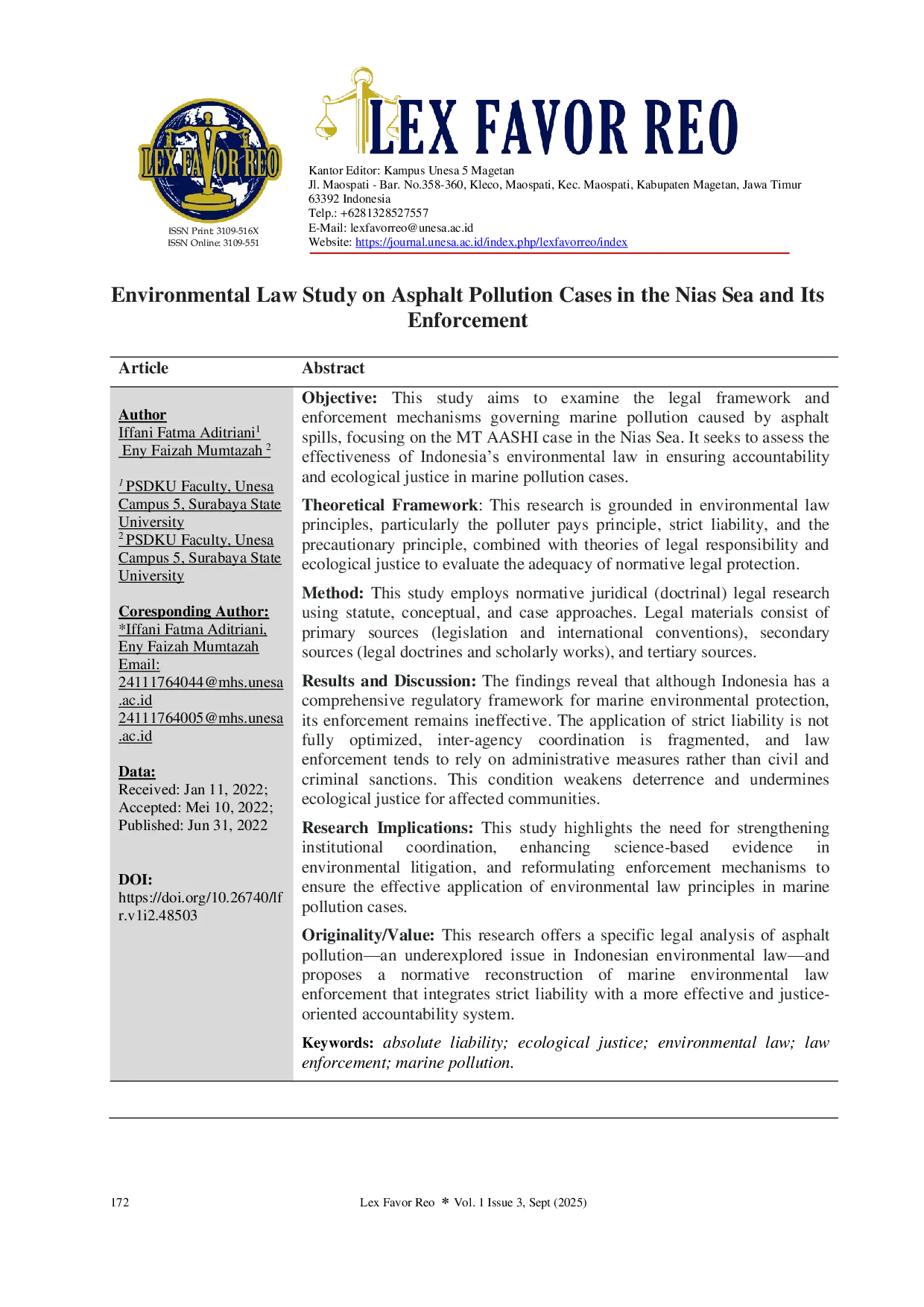
UNESAUNESA Penelitian menyimpulkan perlunya reformasi mekanisme penegakan dan peningkatan kapasitas teknis agar prinsip keadilan ekologis dapat diimplementasikanPenelitian menyimpulkan perlunya reformasi mekanisme penegakan dan peningkatan kapasitas teknis agar prinsip keadilan ekologis dapat diimplementasikan
UNMUNM Akhirnya, peneliti berharap studi ini memberi pemahaman lebih komprehensif mengenai penerapan konten budaya lokal dalam pengajaran bahasa Inggris. ModelAkhirnya, peneliti berharap studi ini memberi pemahaman lebih komprehensif mengenai penerapan konten budaya lokal dalam pengajaran bahasa Inggris. Model

UMMUMM Teknologi ini telah membawa kita ke dunia yang tak terbatas dan menjadi sekutu dalam kehidupan sehari-hari. Teknologi ini menciptakan agen otonom visionerTeknologi ini telah membawa kita ke dunia yang tak terbatas dan menjadi sekutu dalam kehidupan sehari-hari. Teknologi ini menciptakan agen otonom visioner

UNDIPUNDIP Nilai threshold yang digunakan pada metode MEZW berbanding lurus dengan rasio pemampatan dan berbanding terbalik dengan nilai PSNR-nya. Rasio pemampatanNilai threshold yang digunakan pada metode MEZW berbanding lurus dengan rasio pemampatan dan berbanding terbalik dengan nilai PSNR-nya. Rasio pemampatan