UNESAUNESA
DisableDisablePersons with disabilities in Indonesia continue to face numerous obstacles in accessing decent employment, despite the enactment of legal protections such as Law Number 8 of 2016, which is intended to safeguard their rights. Although this regulation is intended to serve as a strong foundation for promoting equality in the labor market, its implementation has not yet met expectations. Findings from this study indicate that the policys implementation remains suboptimal due to weak institutional oversight, limited employer awareness of the capabilities of persons with disabilities, inadequate workplace accessibility, insufficient dissemination of disability rights, lack of incentives for inclusive employers, and the scarcity of necessary support facilities. These issues were identified through legislative, conceptual, and comparative approaches involving both primary legal materials and relevant secondary sources. To foster equal employment opportunities, strategic measures are needed, such as strengthening labor supervision systems, offering fiscal incentives to inclusive companies, improving the physical accessibility of work environments, and providing comprehensive job training programs tailored for persons with disabilities.
The results of the study show that although regulations related to the protection of disabled workers have been available in Indonesia, their implementation still faces various challenges, such as Law Number 8 of 2016 concerning Persons with Disabilities, its implementation still faces various challenges.The main obstacles in the protection of disabled workers include the lack of socialization and understanding of the law among the community and companies, as well as limited infrastructure that is accessible to people with disabilities.In addition, negative views and discriminatory treatment are still the main obstacles in realizing equal employment opportunities for people with disabilities.Therefore, real efforts are needed to optimize the implementation of existing policies in order to create a more inclusive and supportive work environment for them.Indonesia needs to implement a comprehensive strategy to expand employment opportunities for people with disabilities and ensure the protection of their rights in the workplace.
Berdasarkan penelitian ini, terdapat beberapa saran penelitian lanjutan yang dapat dikembangkan. Pertama, perlu dilakukan studi mendalam mengenai efektivitas berbagai insentif yang diberikan kepada perusahaan dalam mendorong penerimaan penyandang disabilitas, dengan fokus pada dampak insentif tersebut terhadap kualitas pekerjaan dan retensi karyawan. Kedua, penelitian dapat difokuskan pada pengembangan model pelatihan kerja yang adaptif dan relevan dengan kebutuhan industri, serta melibatkan penyandang disabilitas dalam proses perancangan kurikulum pelatihan. Ketiga, penting untuk meneliti persepsi dan pengalaman penyandang disabilitas dalam menghadapi diskriminasi di tempat kerja, serta mengidentifikasi strategi efektif untuk mengatasi hambatan-hambatan tersebut. Dengan menggabungkan ketiga saran ini, diharapkan dapat dihasilkan rekomendasi kebijakan yang lebih komprehensif dan berkelanjutan untuk meningkatkan inklusi penyandang disabilitas di dunia kerja, menciptakan lingkungan kerja yang lebih adil dan setara bagi semua individu, serta berkontribusi pada pembangunan sosial ekonomi yang inklusif.
| File size | 452.46 KB |
| Pages | 14 |
| DMCA | Report |
Related /
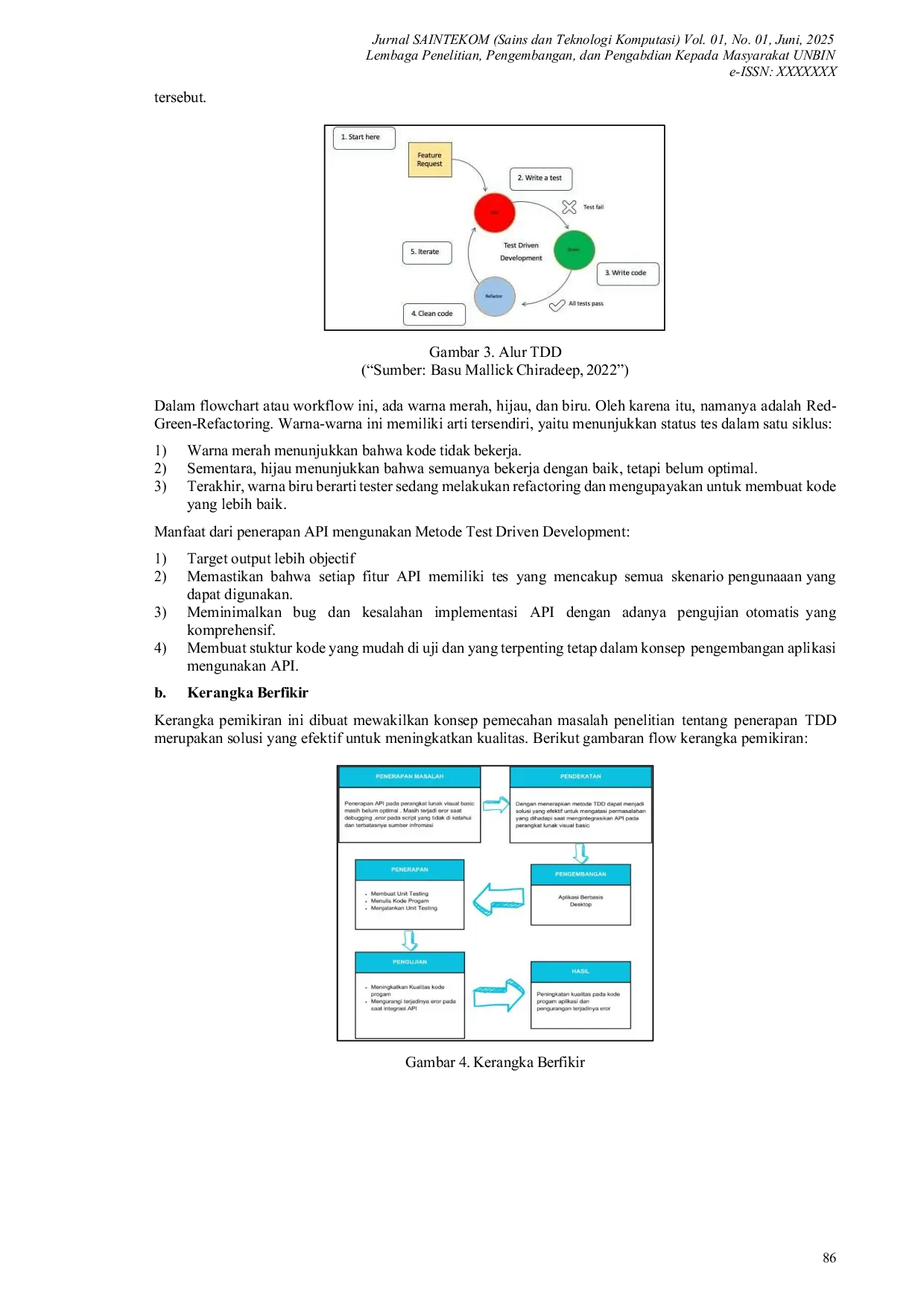
UNBINUNBIN Penelitian ini juga mengeksplorasi alat dan tantangan implementasi TDD di VB.net. Hasil uji ahli menunjukkan efektivitas 85%, sementara uji pengguna mendapatkanPenelitian ini juga mengeksplorasi alat dan tantangan implementasi TDD di VB.net. Hasil uji ahli menunjukkan efektivitas 85%, sementara uji pengguna mendapatkan

INSANINSAN Salah satu kekerasan yang terjadi di lingkungan sekolah adalah bullying. Bullying adalah perilaku kekerasan yang dilakukan oleh seseorang terhadap sekelompokSalah satu kekerasan yang terjadi di lingkungan sekolah adalah bullying. Bullying adalah perilaku kekerasan yang dilakukan oleh seseorang terhadap sekelompok
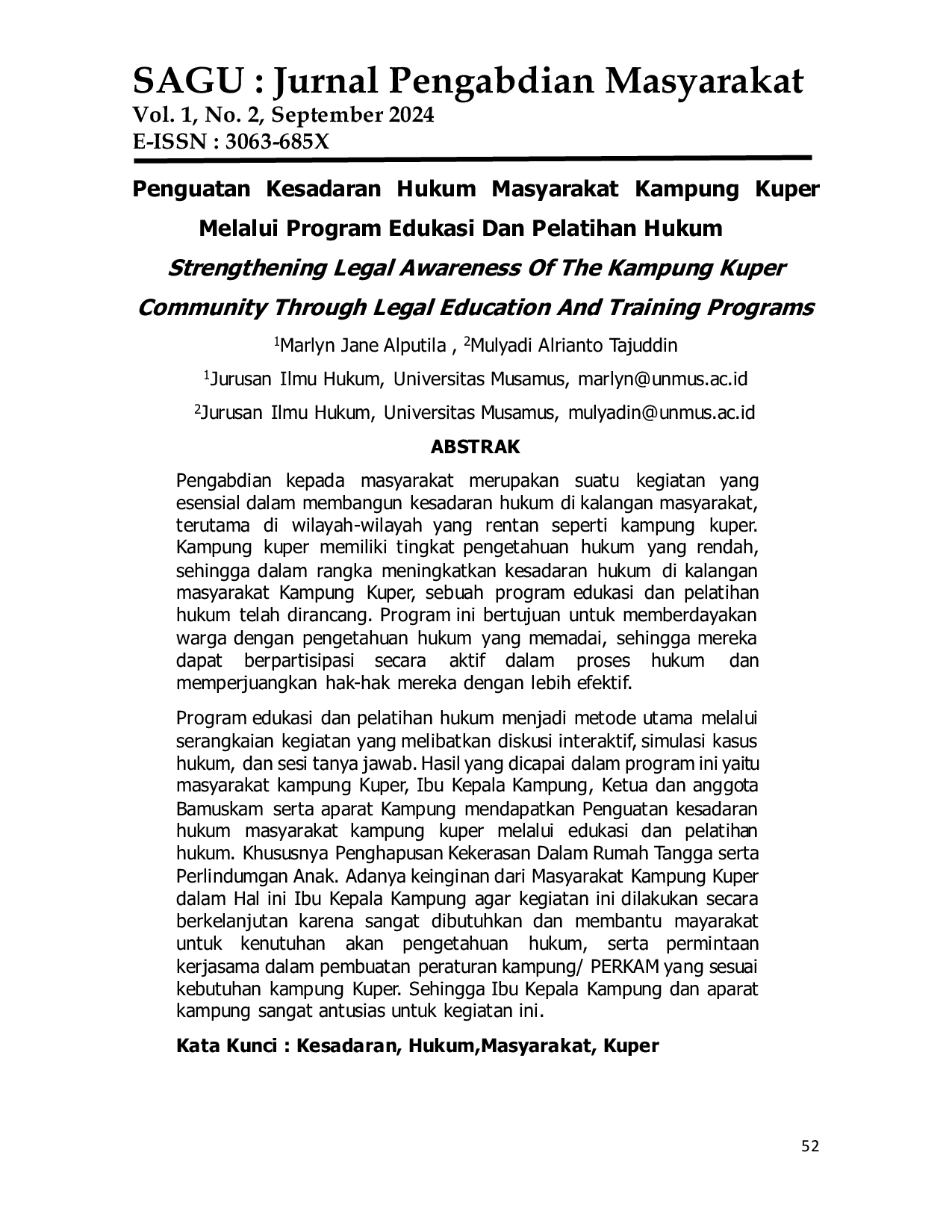
ASTHAGRAFIKAASTHAGRAFIKA Pengabdian kepada masyarakat merupakan suatu kegiatan yang esensial dalam membangun kesadaran hukum di kalangan masyarakat, terutama di wilayah-wilayahPengabdian kepada masyarakat merupakan suatu kegiatan yang esensial dalam membangun kesadaran hukum di kalangan masyarakat, terutama di wilayah-wilayah

UNBINUNBIN Sistem memanfaatkan deskripsi atau fitur yang tersedia dari diagnosis pasien untuk mencocokkannya dengan referensi resep obat. Sistem ini memanfaatkanSistem memanfaatkan deskripsi atau fitur yang tersedia dari diagnosis pasien untuk mencocokkannya dengan referensi resep obat. Sistem ini memanfaatkan
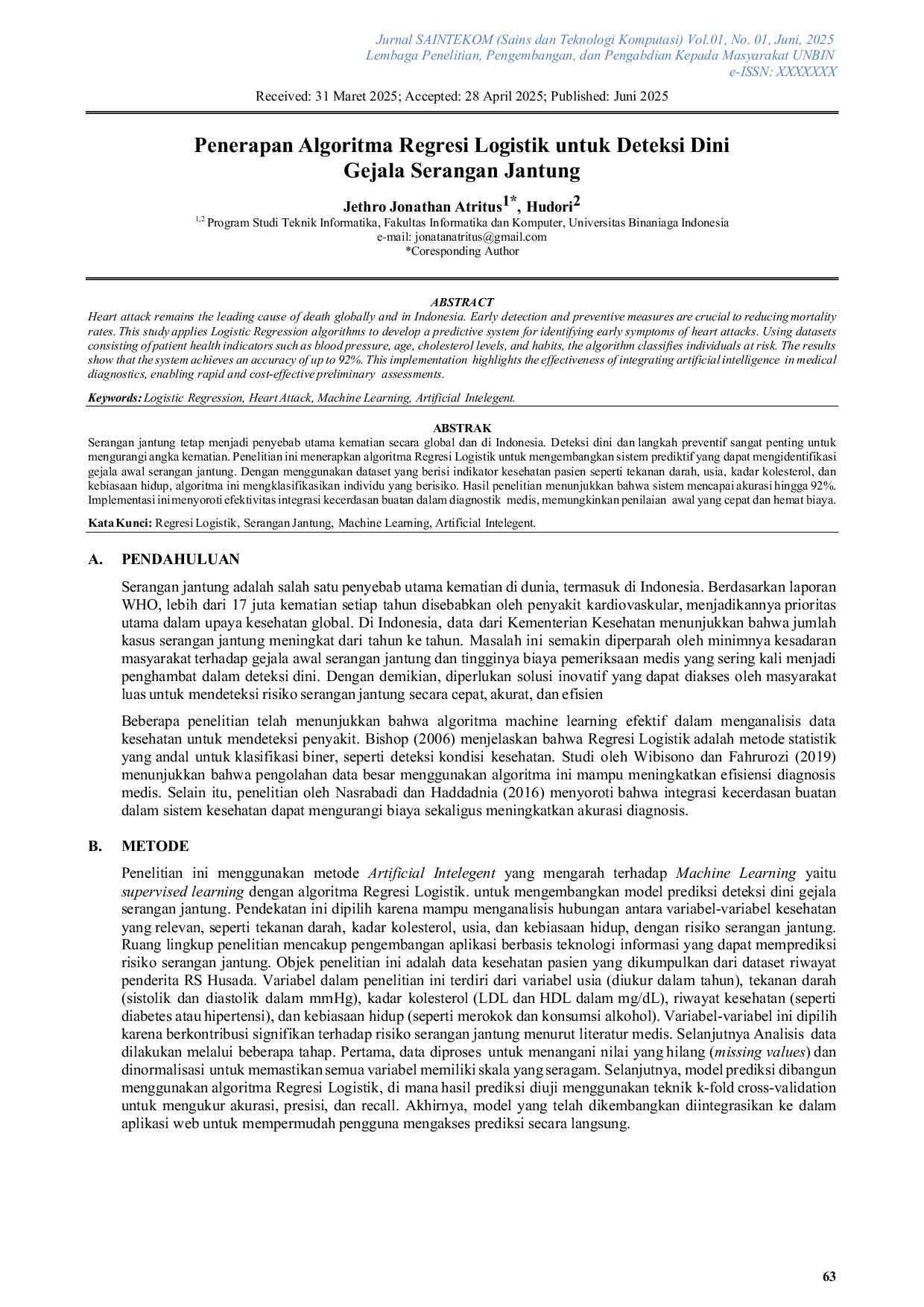
UNBINUNBIN Dengan keakuratan yang tinggi, aplikasi ini dapat membantu masyarakat untuk mengenali risiko sejak dini dan mengambil langkah preventif. Pengembangan lebihDengan keakuratan yang tinggi, aplikasi ini dapat membantu masyarakat untuk mengenali risiko sejak dini dan mengambil langkah preventif. Pengembangan lebih
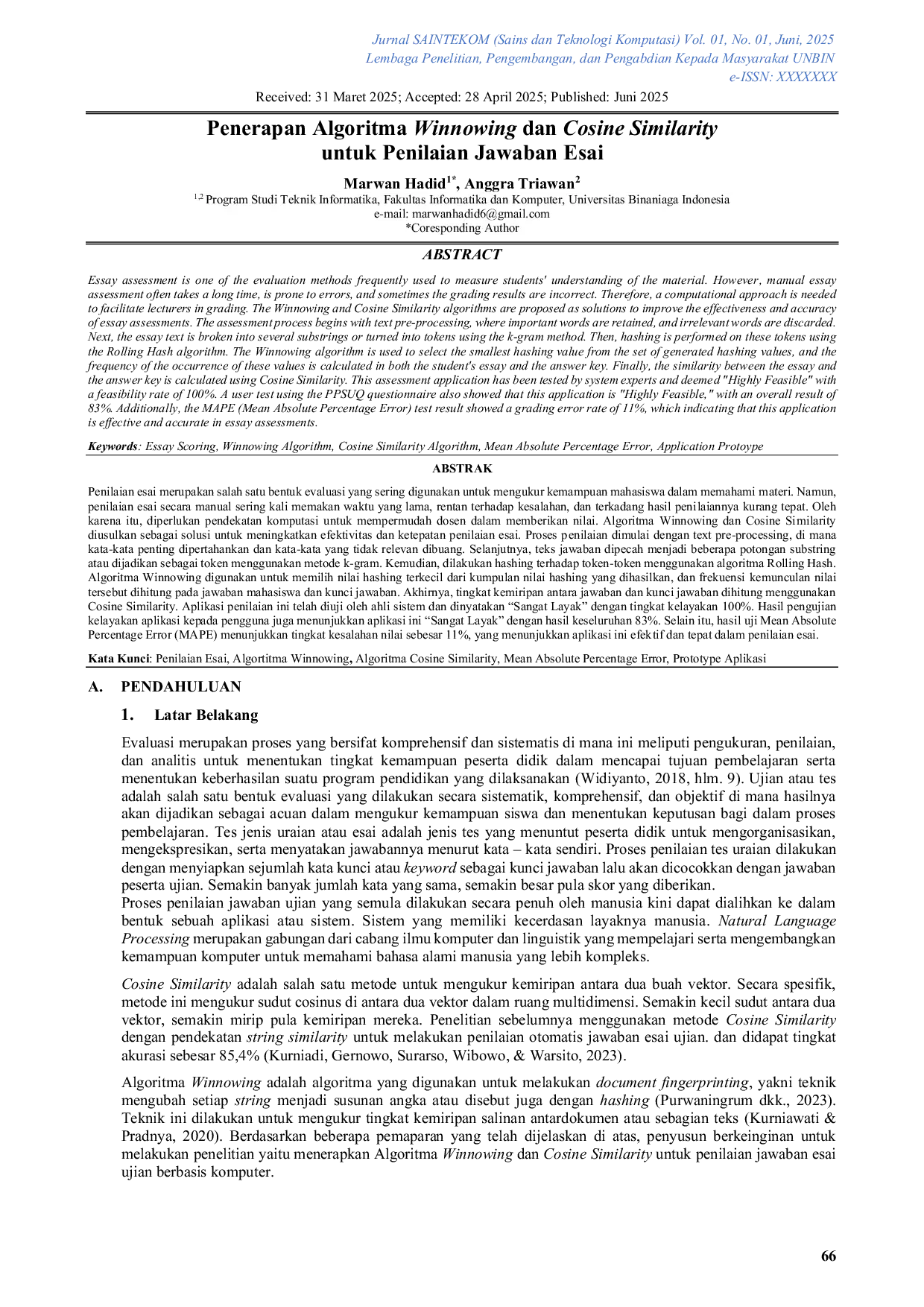
UNBINUNBIN Berdasarkan hasil penelitian yang dilakukan, dapat diuraikan beberapa kesimpulan, antara lain. 1) Mendapatkan hasil nilai perolehan jawaban esai secaraBerdasarkan hasil penelitian yang dilakukan, dapat diuraikan beberapa kesimpulan, antara lain. 1) Mendapatkan hasil nilai perolehan jawaban esai secara

INSANINSAN Anak usia dini hakekatnya adalah bermain, sehingga strategi guru dalam mengembangkan bahasa pada anak salah satunya dengan bermain. Dalam penelitian ini,Anak usia dini hakekatnya adalah bermain, sehingga strategi guru dalam mengembangkan bahasa pada anak salah satunya dengan bermain. Dalam penelitian ini,
UnijoyoUnijoyo Pembangunan teknologi informasi dan komunikasi yang pesat telah mengakibatkan integrasi gawai ke dalam hampir semua aspek kehidupan sehari-hari dan prosesPembangunan teknologi informasi dan komunikasi yang pesat telah mengakibatkan integrasi gawai ke dalam hampir semua aspek kehidupan sehari-hari dan proses
Useful /
JURNALPERTANIANUNISAPALUJURNALPERTANIANUNISAPALU Penelitian ini menyimpulkan bahwa Indonesia, India, dan Thailand memiliki keunggulan komparatif dengan nilai RCA lebih besar dari 1. Hasil analisis EPDPenelitian ini menyimpulkan bahwa Indonesia, India, dan Thailand memiliki keunggulan komparatif dengan nilai RCA lebih besar dari 1. Hasil analisis EPD
UNESAUNESA Penelitian ini mengkaji bagaimana Teori Dramatisme Kenneth Burke bisa membantu dalam memahami narasi yang dibangun dan disampaikan akun Fufufafa di Twitter,Penelitian ini mengkaji bagaimana Teori Dramatisme Kenneth Burke bisa membantu dalam memahami narasi yang dibangun dan disampaikan akun Fufufafa di Twitter,

INSANINSAN The research subject are VIII-5 students of MTSN 2 DELI SERDANG who had error when writing descriptive text using simple present tense, the data of theThe research subject are VIII-5 students of MTSN 2 DELI SERDANG who had error when writing descriptive text using simple present tense, the data of the

INSANINSAN Siswa sebagai pembicara berusaha menyampaikan argumennya agar seluruh timnya setuju dengannya, baik itu kontra (penentang). Kegiatan belajar yang bersifatSiswa sebagai pembicara berusaha menyampaikan argumennya agar seluruh timnya setuju dengannya, baik itu kontra (penentang). Kegiatan belajar yang bersifat