UBTUBT
J-PEN Borneo : Jurnal Ilmu PertanianJ-PEN Borneo : Jurnal Ilmu PertanianThe role of institutions is crucial in the hydroponic vegetable agribusiness subsystem, encompassing input procurement to marketing to enhance product quality and value. However, the institutions in the hydroponic vegetable agribusiness system in Tarakan City have not shown a significant role, indicating the non-functional institutionalization of related institutions. This has led to both horizontal and vertical sectoral egos and conflicts between institutions. This research uses a systems approach to identify and study the institutions involved and the structural model of the hydroponic vegetable agribusiness institution. The research method used was descriptive qualitative with Interpretative Structural Modeling (ISM) data analysis techniques. Purposive sampling was utilized for data collection. The findings reveal that institutions that should have a role in hydroponic vegetable agribusiness are the Food Security and Agriculture Department, Agricultural Extension, Middlemen, Cooperative Department, Small and Medium-sized Enterprises (SMEs), Industry and commerce Department, Cooperatives, Banks, Association of Farmers Groups, Farmer Group, Agricultural Shops, and Central of Bureau of Statistics. The institutions roles include policy-making, facilitation, provision of farming inputs and infrastructure, financial services, lending, selling, marketing, and processing of products. The structural model of the institutions involvement in hydroponic vegetable agribusiness in Tarakan City consists of four levels, with the Key Actor Institution at Level 1, including the Food Security and Agriculture department, Agricultural Extension, Middlemen, Farmer Groups, and Agricultural Shops. The fifth institution is expected to be a driving force in hydroponic vegetable agribusiness.
Based on the research results using the Interpretative Structural Modelling (ISM) approach and empirical studies, it can be concluded that the institutions that play a significant role in hydroponic vegetable agribusiness in Tarakan City are the Food and Agriculture Security Department, Agricultural Extension, Middlemen, Cooperative Office, SMEs, Industry and Commerce Department, Cooperatives, Banks, Association of Farmers Groups, Farmer Groups/Women Farmer Groups, Agricultural Shops, and Central Bureau of Statistics.These institutions play various roles in all subsystems of agribusiness, from upstream to downstream, serving as policymakers, facilitators, providers of farming input facilities and infrastructure, financial service providers, lenders, sellers, and marketers.Furthermore, the structural model of the role of hydroponic vegetable agribusiness institutions in Tarakan City consists of four levels, with level 1 being the most important institution that includes the Food Security and Agriculture Department, Agricultural Extension Officers, Middlemen, Farmer Groups/ Women Farmer Groups, and Agricultural Shops.
Penelitian lebih lanjut perlu dilakukan untuk mengkaji efektivitas koordinasi antar lembaga yang terlibat dalam agribisnis sayuran hidroponik di wilayah perbatasan, dengan fokus pada pengembangan model kemitraan yang saling menguntungkan. Selain itu, studi komparatif dapat dilakukan untuk membandingkan peran dan kinerja lembaga agribisnis hidroponik di berbagai wilayah perbatasan di Indonesia, guna mengidentifikasi praktik terbaik dan tantangan yang serupa. Terakhir, penelitian perlu dilakukan untuk mengeksplorasi potensi penerapan teknologi digital dalam meningkatkan efisiensi dan transparansi rantai pasok agribisnis sayuran hidroponik, termasuk penggunaan platform e-commerce untuk memperluas akses pasar bagi petani dan meminimalkan peran perantara yang tidak efisien. Penelitian-penelitian ini diharapkan dapat memberikan rekomendasi kebijakan yang lebih komprehensif dan berkelanjutan untuk mendukung pengembangan agribisnis hidroponik dan ketahanan pangan di wilayah perbatasan.
| File size | 131.18 KB |
| Pages | 6 |
| DMCA | Report |
Related /

ILININSTITUTEILININSTITUTE Program ini menyimpulkan bahwa integrasi teknologi hidroponik, IoT, dan strategi digital efektif mendorong kemandirian ekonomi masyarakat sekaligus memperkuatProgram ini menyimpulkan bahwa integrasi teknologi hidroponik, IoT, dan strategi digital efektif mendorong kemandirian ekonomi masyarakat sekaligus memperkuat

UNUGHAUNUGHA Penelitian ini bertujuan untuk menganalisis hubungan antara variabel lingkungan, yaitu suhu air, pH air, dan tingkat oksigen terlarut, dengan produktivitasPenelitian ini bertujuan untuk menganalisis hubungan antara variabel lingkungan, yaitu suhu air, pH air, dan tingkat oksigen terlarut, dengan produktivitas
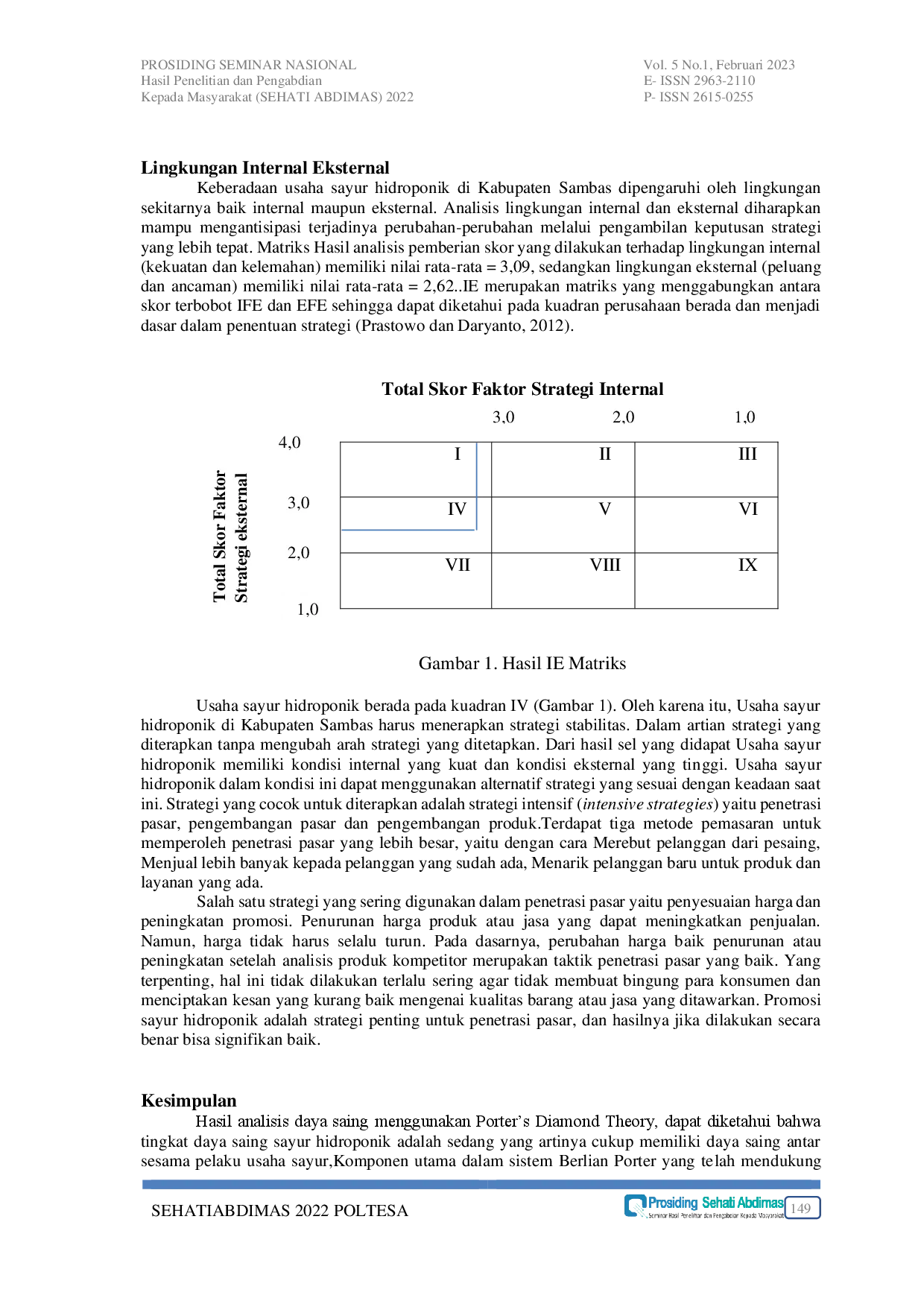
POLTESAPOLTESA Selain itu, faktor sumber daya dengan komponen industri terkait dan pendukung juga berperan penting. Hasil analisis SWOT menunjukkan bahwa strategi yangSelain itu, faktor sumber daya dengan komponen industri terkait dan pendukung juga berperan penting. Hasil analisis SWOT menunjukkan bahwa strategi yang

JOURNALKEBERLANJUTANJOURNALKEBERLANJUTAN Penelitian ini bertujuan menganalisis strategi pemasaran yang diterapkan di bisnis sayuran hidroponik Pekanbaru. Metodologi kualitatif deskriptif denganPenelitian ini bertujuan menganalisis strategi pemasaran yang diterapkan di bisnis sayuran hidroponik Pekanbaru. Metodologi kualitatif deskriptif dengan

UPBUPB Strategi ini terdiri dari mempertahankan kualitas susu yang dijual dengan harga terjangkau, memperluas kemitraan untuk menjangkau basis konsumen yang lebihStrategi ini terdiri dari mempertahankan kualitas susu yang dijual dengan harga terjangkau, memperluas kemitraan untuk menjangkau basis konsumen yang lebih

UPBUPB Selain itu, proses pengeringan dan blanshing pengeringan menyebabkan menurunnya kadar vitamin C pada daun kelor, yaitu 8,29% dan 29,25%. Secara keseluruhan,Selain itu, proses pengeringan dan blanshing pengeringan menyebabkan menurunnya kadar vitamin C pada daun kelor, yaitu 8,29% dan 29,25%. Secara keseluruhan,

UPBUPB Penelitian ini menyoroti pentingnya memperhatikan kualitas produk dan harga yang kompetitif untuk menarik minat konsumen. Selain itu, peningkatan aksesibilitasPenelitian ini menyoroti pentingnya memperhatikan kualitas produk dan harga yang kompetitif untuk menarik minat konsumen. Selain itu, peningkatan aksesibilitas

SMUJOSMUJO Masyarakat pertanian saat ini menghadapi tantangan serius terkait penggunaan bahan kimia dan berkurangnya lahan pertanian akibat salinitas, banjir, sertaMasyarakat pertanian saat ini menghadapi tantangan serius terkait penggunaan bahan kimia dan berkurangnya lahan pertanian akibat salinitas, banjir, serta
Useful /
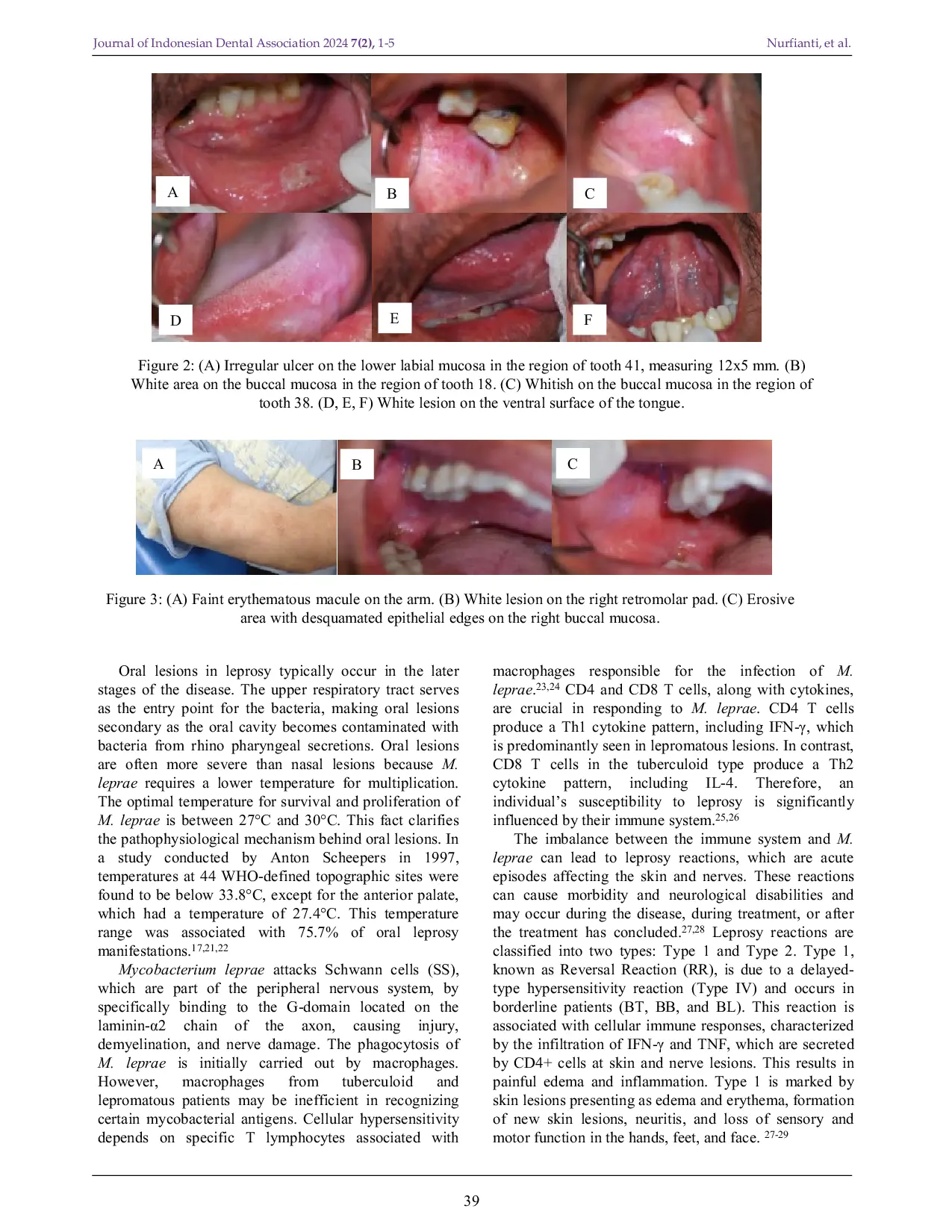
PDGIPDGI Case(s): Five patients diagnosed with borderline lepromatous or lepromatous leprosy were examined, presenting with oral manifestations such as gingivitis,Case(s): Five patients diagnosed with borderline lepromatous or lepromatous leprosy were examined, presenting with oral manifestations such as gingivitis,

UNIGHAUNIGHA Penelitian ini bertujuan untuk mengetahui bagaimana implementasi layanan E-Puskesmas pada Pusat Kesehatan Masyarakat di Kecamatan Indra Jaya KabupatenPenelitian ini bertujuan untuk mengetahui bagaimana implementasi layanan E-Puskesmas pada Pusat Kesehatan Masyarakat di Kecamatan Indra Jaya Kabupaten

UNIGHAUNIGHA Kinerja yang masih kurang tidak lepas dari kendala-kendala yang dihadapi Dinas Lingkungan Hidup Kabupaten Pidie, seperti kurangnya pegawai, sarana danKinerja yang masih kurang tidak lepas dari kendala-kendala yang dihadapi Dinas Lingkungan Hidup Kabupaten Pidie, seperti kurangnya pegawai, sarana dan

UNIGHAUNIGHA Peranan Sekretaris Gampong dalam menata administrasi pemerintahan di Gampong Dayah Leubue Kecamatan Ulim belum terlaksana secara maksimal dikarenakan ditemuiPeranan Sekretaris Gampong dalam menata administrasi pemerintahan di Gampong Dayah Leubue Kecamatan Ulim belum terlaksana secara maksimal dikarenakan ditemui