UADUAD
Buletin Ilmiah Sarjana Teknik ElektroBuletin Ilmiah Sarjana Teknik ElektroThis paper proposes a speed control strategy of Synchronous Reluctance Motors (SynRM) using an Indirect Matrix Converter (IMC) combined with a finite model predictive speed control (MPSC) and PI current control. This control algorithm is chosen rather than fully PI in both loops due to improve overall system stability and dynamic response. The IMC architecture offers advantages such as compactness, bidirectional power flow, and the elimination of bulky passive components, making it ideal for efficient motor drive systems. The proposed control method employs predictive algorithm using augmented state variable and cost function minimization technique. In addition, PI controllers here using a pole-assignment method. Both proposed controls aim to guarantee stability and responsiveness for dynamic performances. The MATLAB/Simulink is used here to simulate the system, incorporating practical motor parameters and space vector modulation techniques. Simulation results show that the control algorithm attains satisfactory speed performance, with minimal steady-state error 0.47%, overshoot below 2%, and fast settling time under various load 0.035 seconds and speed profiles. Additionally, the system performs robustly under reversed and sinusoidal speed commands, demonstrating its effectiveness and suitability for real-world industrial applications also need to implement in the experiment for the future works.
The proposed drive system demonstrates effective control of the SynRM using an indirect matrix converter, achieving fast settling times of less than 0.06 seconds, stable performance across a wide speed range, and a small average speed tracking error of approximately 11.The control strategy effectively manages dynamic performance, including acceleration, speed reversal, and sinusoidal speed commands.These findings validate the proposed MPSC–PI control algorithm as a reliable and high-performance solution for SynRM drive systems.
Future research should focus on experimental validation of the proposed control strategy to confirm its performance in a real-world setting and address potential discrepancies between simulation and practical implementation. Investigating adaptive control techniques that can automatically tune the MPSC parameters based on varying load conditions and motor characteristics could further enhance the systems robustness and performance. Exploring the integration of advanced fault diagnosis and fault-tolerant control strategies would improve the reliability and safety of the drive system, particularly in critical industrial applications. Furthermore, extending the research to include the optimization of the matrix converters switching patterns to minimize harmonic distortion and improve power quality would be beneficial. Finally, a comprehensive analysis of the systems energy efficiency and potential for energy savings compared to traditional drive systems should be conducted to quantify its environmental benefits and economic viability.
- Well-Conditioned Identifiability Criteria With Observability Degree for Parameter Estimation of Permanent... doi.org/10.1109/TTE.2024.3524783Well Conditioned Identifiability Criteria With Observability Degree for Parameter Estimation of Permanent doi 10 1109 TTE 2024 3524783
- An Enhanced Fault-Tolerant Control of a Five-Phase Synchronous Reluctance Motor Fed From a Three-to-Five-Phase... ieeexplore.ieee.org/document/9698199An Enhanced Fault Tolerant Control of a Five Phase Synchronous Reluctance Motor Fed From a Three to Five Phase ieeexplore ieee document 9698199
- Modified Model-Free Predictive Control for Reliable Operation of Multiple Parallel Grid-Forming Inverters... ieeexplore.ieee.org/document/11077120Modified Model Free Predictive Control for Reliable Operation of Multiple Parallel Grid Forming Inverters ieeexplore ieee document 11077120
- Analysis and Simplification of Three-Dimensional Space Vector PWM for Three-Phase Four-Leg Inverters... doi.org/10.1109/TIE.2010.2046610Analysis and Simplification of Three Dimensional Space Vector PWM for Three Phase Four Leg Inverters doi 10 1109 TIE 2010 2046610
- Systematic Synthesis and Derivation of Multilevel Converters Using Common Topological Structures With... doi.org/10.1109/TPEL.2019.2948580Systematic Synthesis and Derivation of Multilevel Converters Using Common Topological Structures With doi 10 1109 TPEL 2019 2948580
| File size | 1.22 MB |
| Pages | 13 |
| DMCA | Report |
Related /

APTIIAPTII Teknik pengumpulan data dilakukan melalui observasi, wawancara, dan studi pustaka pada Bagian Umum Sekretariat Daerah Kabupaten Polewali Mandar. HasilTeknik pengumpulan data dilakukan melalui observasi, wawancara, dan studi pustaka pada Bagian Umum Sekretariat Daerah Kabupaten Polewali Mandar. Hasil

UMSUMS Namun, pemantauan kinerja Pembangkit Listrik Tenaga Surya (PLTS) umumnya masih dilakukan secara konvensional sehingga data yang diperoleh tidak real-timeNamun, pemantauan kinerja Pembangkit Listrik Tenaga Surya (PLTS) umumnya masih dilakukan secara konvensional sehingga data yang diperoleh tidak real-time
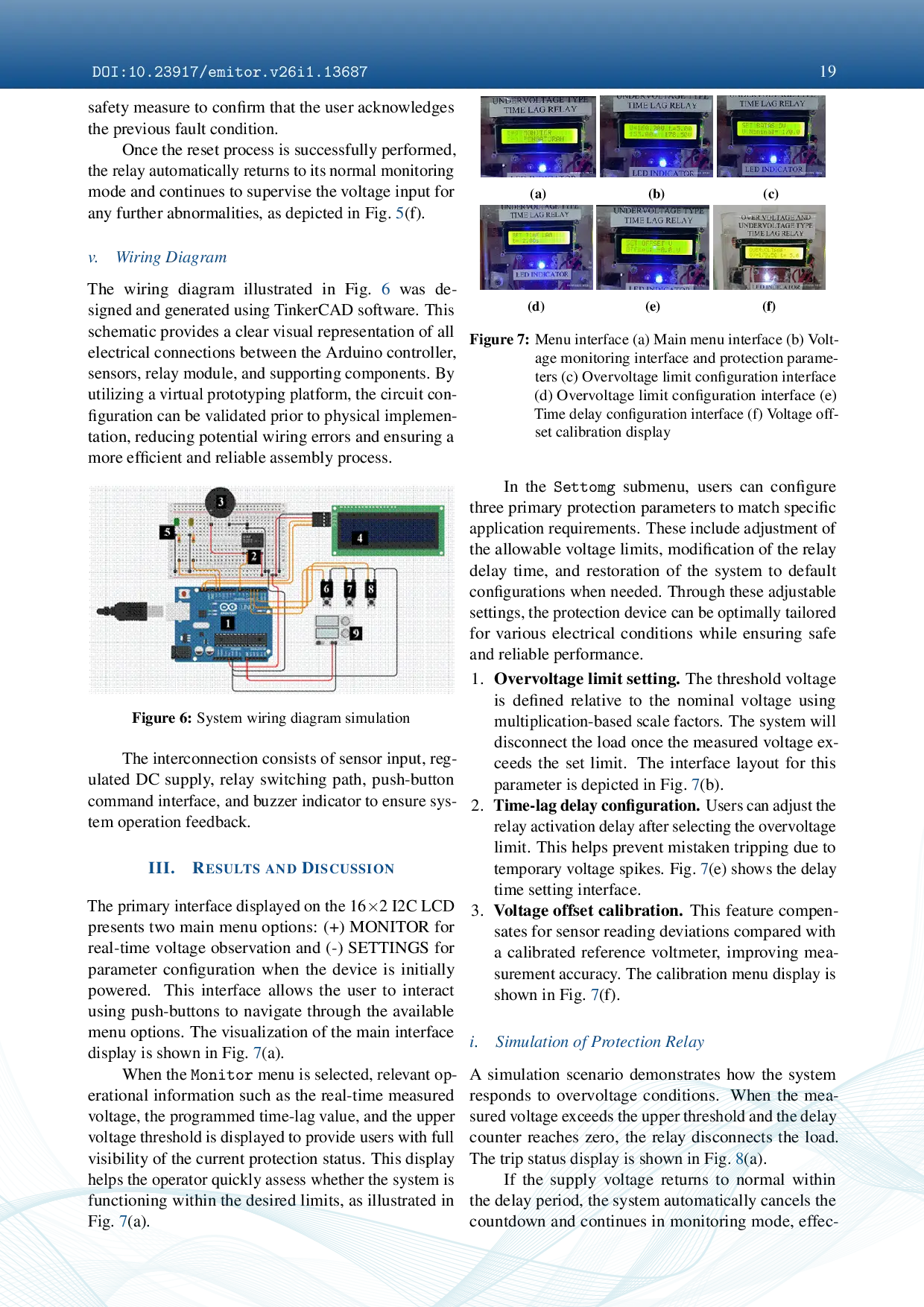
UMSUMS Prototipe relay proteksi overvoltage berbasis Arduino Uno dengan mekanisme time-lag berhasil beroperasi sesuai karakteristik relay proteksi standar, mampuPrototipe relay proteksi overvoltage berbasis Arduino Uno dengan mekanisme time-lag berhasil beroperasi sesuai karakteristik relay proteksi standar, mampu

UMSUMS Hasil pengujian menunjukkan bahwa sistem ini bekerja efektif dan efisien, dan dapat melindungi beban dari kerusakan akibat arus lebih. Relay overcurrentHasil pengujian menunjukkan bahwa sistem ini bekerja efektif dan efisien, dan dapat melindungi beban dari kerusakan akibat arus lebih. Relay overcurrent
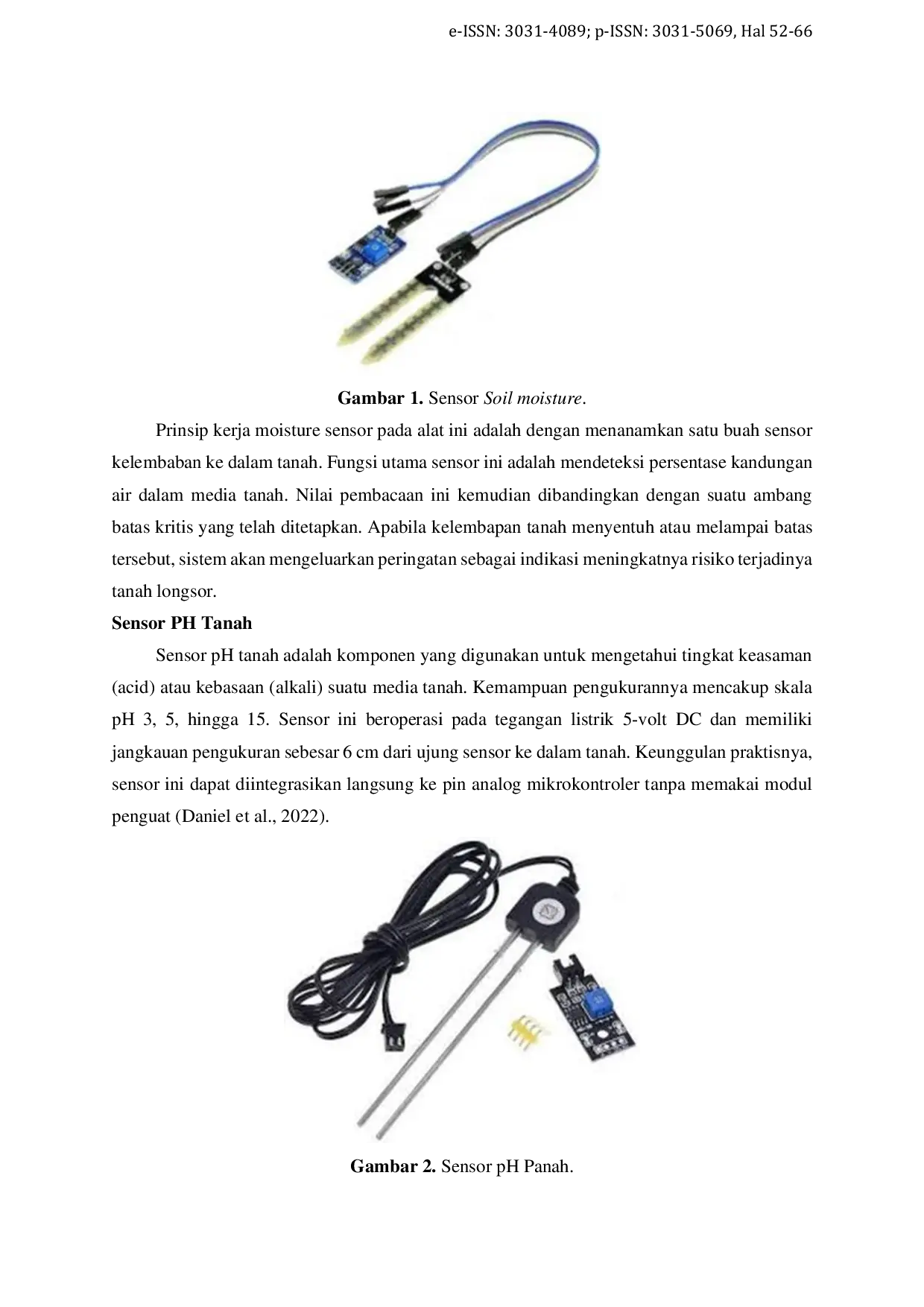
ARITEKINARITEKIN Seluruh data yang diperoleh dari sensor tersebut selanjutnya diproses oleh mikrokontroler Arduino Uno untuk mengaktifkan aktuator seperti pompa air, pompaSeluruh data yang diperoleh dari sensor tersebut selanjutnya diproses oleh mikrokontroler Arduino Uno untuk mengaktifkan aktuator seperti pompa air, pompa

UNIPASBYUNIPASBY Hasil menunjukkan bahwa panel baru meningkatkan kecepatan respons, stabilitas, dan koordinasi aktuator, sekaligus mencapai penghematan biaya hingga 80%Hasil menunjukkan bahwa panel baru meningkatkan kecepatan respons, stabilitas, dan koordinasi aktuator, sekaligus mencapai penghematan biaya hingga 80%

UINMYBATUSANGKARUINMYBATUSANGKAR Hasil penelitian menunjukkan bahwa strategi kepala sekolah dan pengurus dalam menerapkan metode disiplin positif efektif dalam membangun karakter dan moralHasil penelitian menunjukkan bahwa strategi kepala sekolah dan pengurus dalam menerapkan metode disiplin positif efektif dalam membangun karakter dan moral

UNRAMUNRAM Fakultas Teknik telah melakukan tracer study menggunakan media sosial atau Google Form, namun metode ini dianggap kurang tepat karena file tidak tersimpanFakultas Teknik telah melakukan tracer study menggunakan media sosial atau Google Form, namun metode ini dianggap kurang tepat karena file tidak tersimpan
Useful /

POLTEKKES SMGPOLTEKKES SMG Hasil menunjukkan rata‑rata skor kecemasan menurun drastis dari 29,11 menjadi 22,47 (p = 0,000), menunjukkan bahwa video edukasi relaksasi napasHasil menunjukkan rata‑rata skor kecemasan menurun drastis dari 29,11 menjadi 22,47 (p = 0,000), menunjukkan bahwa video edukasi relaksasi napas

POLTEKKES SMGPOLTEKKES SMG Desain cross‑sectional dengan data Survei Kesehatan Indonesia (SKI) 2023 (11.769 responden) dianalisis menggunakan analisis deskriptif dan uji chi‑square.Desain cross‑sectional dengan data Survei Kesehatan Indonesia (SKI) 2023 (11.769 responden) dianalisis menggunakan analisis deskriptif dan uji chi‑square.

ARITEKINARITEKIN Analisis regresi linier berganda menunjukkan bahwa gaya kepemimpinan dan pengawasan, serta perencanaan sumber daya manusia dan alokasi tenaga kerja, memilikiAnalisis regresi linier berganda menunjukkan bahwa gaya kepemimpinan dan pengawasan, serta perencanaan sumber daya manusia dan alokasi tenaga kerja, memiliki

ARITEKINARITEKIN Pedestrian merupakan salah satu ruang publik yang sangat penting bagi perkotaan. Di perbatasan kota Muara Enim mempunyai pedestrian yang menarik perhatianPedestrian merupakan salah satu ruang publik yang sangat penting bagi perkotaan. Di perbatasan kota Muara Enim mempunyai pedestrian yang menarik perhatian