ITSITS
(IJCSAM) International Journal of Computing Science and Applied Mathematics(IJCSAM) International Journal of Computing Science and Applied MathematicsExport activities consist of oil and gas exports and non-oil and gas exports. Non-oil and gas exports are one of the sectors that provide the largest foreign exchange contribution to Indonesia, and the movement of non-oil and gas export values has an impact on economic growth. Therefore, the purpose of this research is to create a model used to predict future non-oil and gas export values. One mathematical model that can be used to predict Indonesias non-oil and gas export values is the combination of the ARIMA model and the stochastic volatility model, also known as Hybrid ARIMA with stochastic volatility. The Hybrid ARIMA with stochastic volatility modeling has advantages in creating models for data with high volatility and is capable of combining linear patterned data and nonlinear patterned data. In this study, the best ARIMA (1,1,1) model was obtained with a MAPE value of 13.2082%. From the residuals of the ARIMA (1,1,1) model, there were signs of heteroscedasticity, so the GARCH model with the best GARCH (0,1) model was used. In the GARCH (0,1) model, it was found that there was an asymmetric influence, so the EGARCH and GJR-GARCH models were used. The comparison of EGARCH and GJR-GARCH models was carried out to address the asymmetric residual data pattern. Based on the research results, the best model used for prediction is the hybrid ARIMA (1,1,1) with EGARCH (1,1) model, with a MAPE value of 9.35158%.
Based on the results of the research on the fluctuating value of Indonesian non-oil and gas exports, a combined ARIMA model was utilized.The use of a hybrid model effectively reduces errors inherent in the ARIMA model by accounting for asymmetric effects, leading to the selection of the optimal model.The study identified the Hybrid ARIMA-EGARCH model as the best performer, achieving a MAPE value of 9.35158%, indicating highly accurate predictions suitable for forecasting future non-oil and gas export values.
Further research could explore the integration of alternative stochastic volatility models, such as HAR (Heterogeneous Autoregressive) models, to capture long-term dependencies in export data and potentially improve forecasting accuracy. Investigating the impact of external macroeconomic factors, like global commodity prices and exchange rates, on Indonesian non-oil and gas exports through a Vector Autoregression (VAR) framework could provide a more comprehensive understanding of the drivers of export fluctuations. Additionally, a comparative analysis of different machine learning algorithms, such as recurrent neural networks (RNNs) or long short-term memory (LSTM) networks, against the hybrid ARIMA-EGARCH model could reveal opportunities for enhancing predictive performance and identifying more complex patterns in the data, ultimately contributing to more informed economic policy decisions and strategic planning for Indonesias export sector.
| File size | 496.92 KB |
| Pages | 7 |
| DMCA | Report |
Related /

PNCPNC Uji fungsional pada bus menunjukkan deteksi sensor dalam 2‑3 detik dengan semua output berfungsi optimal. Hasil uji akurasi mencapai 99,44 % denganUji fungsional pada bus menunjukkan deteksi sensor dalam 2‑3 detik dengan semua output berfungsi optimal. Hasil uji akurasi mencapai 99,44 % dengan
UNIGALUNIGAL Kesimpulan penelitian ini adalah bahwa integrasi Free4Talk ke dalam instruksi bahasa Inggris vokasi menjembatani kebutuhan komunikasi akademik dan tempatKesimpulan penelitian ini adalah bahwa integrasi Free4Talk ke dalam instruksi bahasa Inggris vokasi menjembatani kebutuhan komunikasi akademik dan tempat

STAIRAYASTAIRAYA The alignment between musical drama approaches and elementary students developmental needs, combined with successful adaptation to Islamic educationalThe alignment between musical drama approaches and elementary students developmental needs, combined with successful adaptation to Islamic educational
UNUSIDAUNUSIDA Dengan demikian penelitian ini dapat memberikan persepsi yang berguna untuk penelitian selanjutnya guna meningkatkan pengambilan gambar dengan kamera yangDengan demikian penelitian ini dapat memberikan persepsi yang berguna untuk penelitian selanjutnya guna meningkatkan pengambilan gambar dengan kamera yang

KOPERTAIS4KOPERTAIS4 The results of the study indicate that in the role of the Al Falah Islamic Boarding School Sumber Gayam Kadur Pamekasan chose to act as a facilitator betweenThe results of the study indicate that in the role of the Al Falah Islamic Boarding School Sumber Gayam Kadur Pamekasan chose to act as a facilitator between
UEUUEU (3) DAK fisik terhadap IPM melalui belanja modal mempunyai pengaruh yang signifikan dan tidak langsung. Dari penelitian yang dilakukan, kesimpulan yang(3) DAK fisik terhadap IPM melalui belanja modal mempunyai pengaruh yang signifikan dan tidak langsung. Dari penelitian yang dilakukan, kesimpulan yang
STIKOMBANYUWANGISTIKOMBANYUWANGI Seluruh gejala akan ditampilkan dan yang dipilih akan secara otomatis dilakukan proses cosine untuk mendapatkan hasil penyakit. Berdasarkan hasil uji cobaSeluruh gejala akan ditampilkan dan yang dipilih akan secara otomatis dilakukan proses cosine untuk mendapatkan hasil penyakit. Berdasarkan hasil uji coba
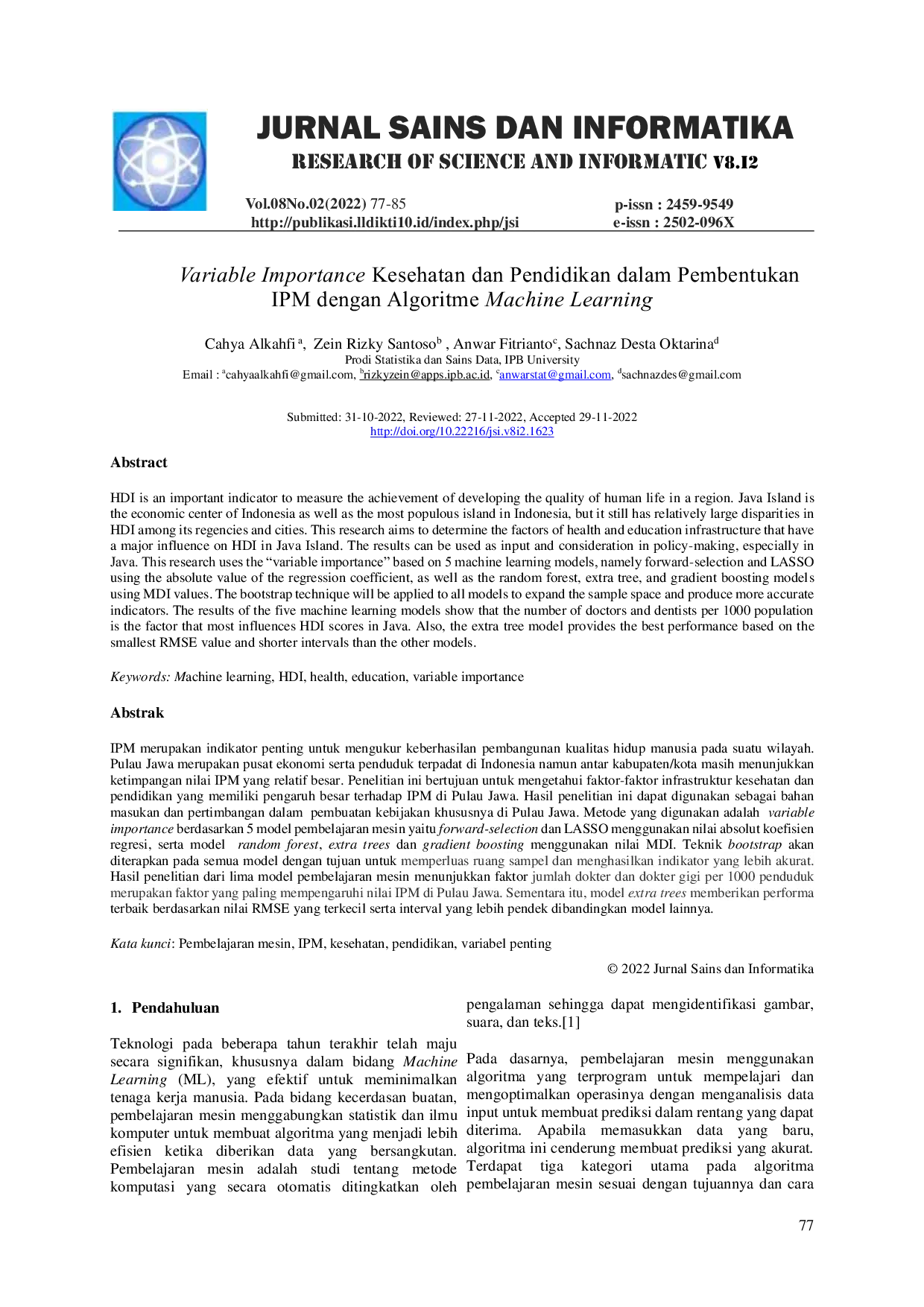
LLDIKTI10LLDIKTI10 Metode yang digunakan adalah variable importance berdasarkan 5 model pembelajaran mesin yaitu forward-selection dan LASSO menggunakan nilai absolut koefisienMetode yang digunakan adalah variable importance berdasarkan 5 model pembelajaran mesin yaitu forward-selection dan LASSO menggunakan nilai absolut koefisien
Useful /

UIGMUIGM Berdasarkan temuan pertama, dapat disimpulkan bahwa di antara tiga bagian TOEFL PBT yang diuji (Mendengarkan, Struktur-Ekspresi Tulisan, dan PemahamanBerdasarkan temuan pertama, dapat disimpulkan bahwa di antara tiga bagian TOEFL PBT yang diuji (Mendengarkan, Struktur-Ekspresi Tulisan, dan Pemahaman

UIGMUIGM Hasil menunjukkan bahwa proses Relasional (38,3 %) dan Proses Mental (20,0 %) mendominasi teks, menekankan perasaan internal dan definisi diri, bukanHasil menunjukkan bahwa proses Relasional (38,3 %) dan Proses Mental (20,0 %) mendominasi teks, menekankan perasaan internal dan definisi diri, bukan
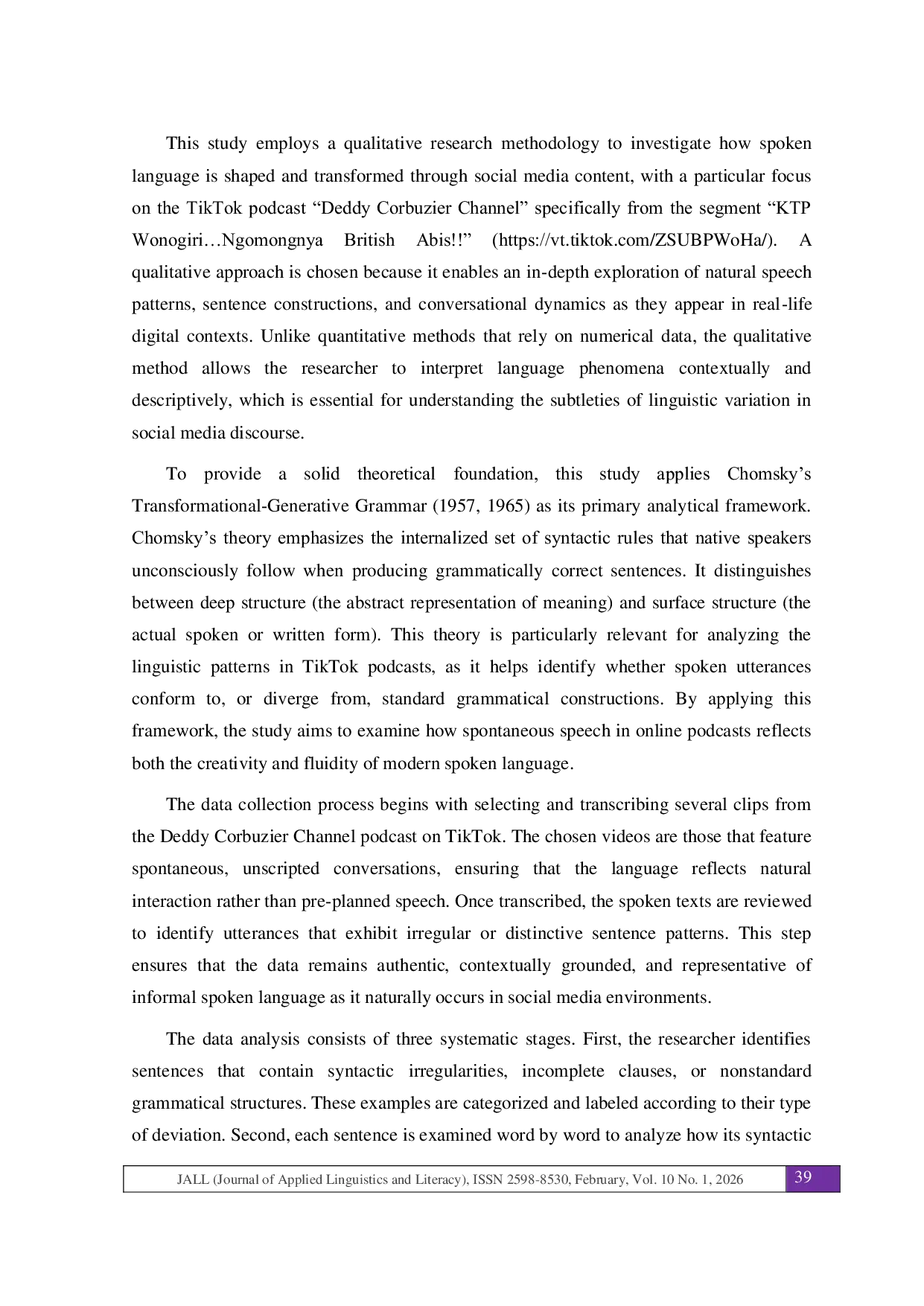
UNIGALUNIGAL Tes kreativitas juga mengungkapkan bahwa penulis ilustrator lebih mengandalkan implicature daripada penulis non-ilustrator. Kemampuan figural memfasilitasiTes kreativitas juga mengungkapkan bahwa penulis ilustrator lebih mengandalkan implicature daripada penulis non-ilustrator. Kemampuan figural memfasilitasi
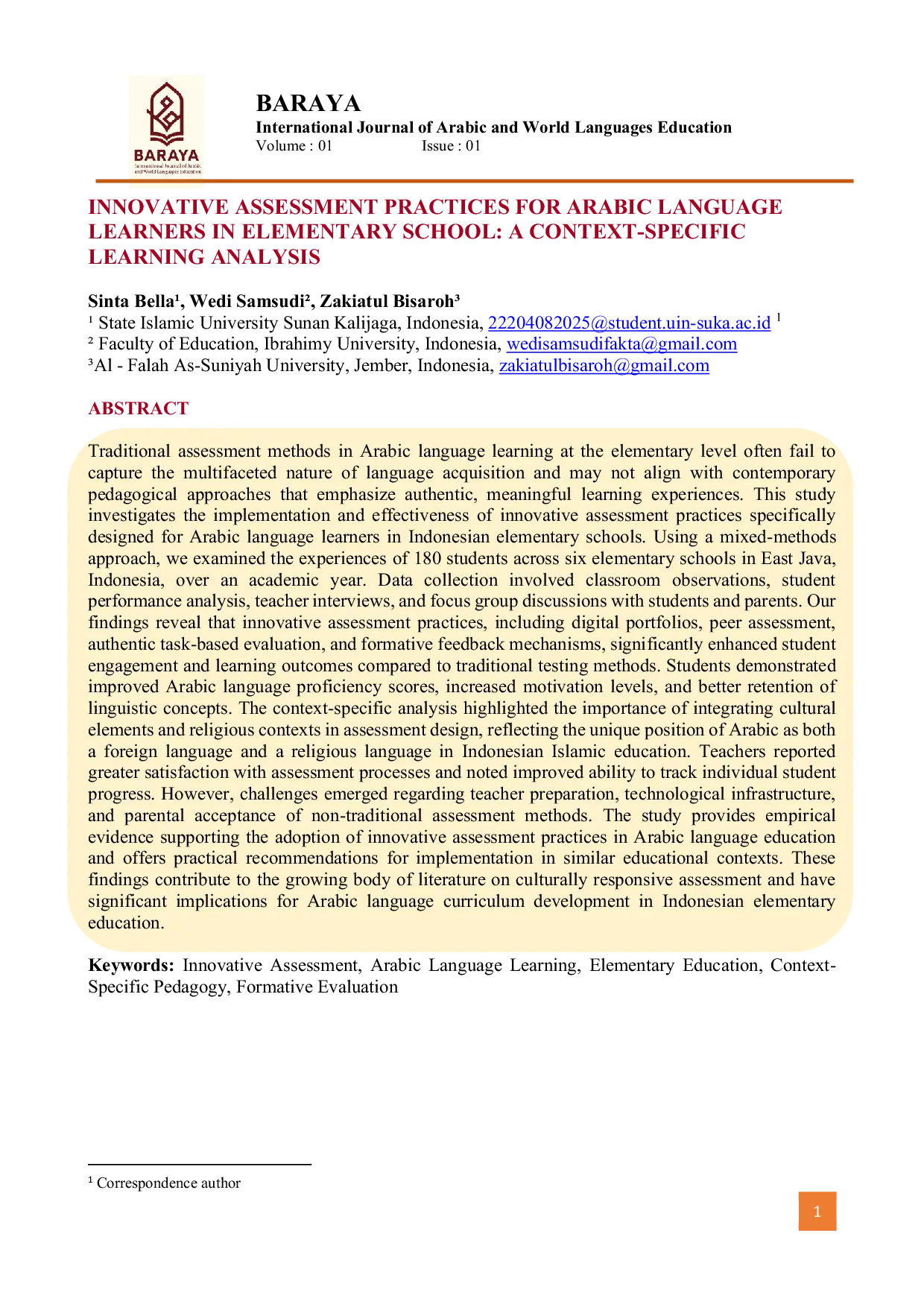
STAIRAYASTAIRAYA Penelitian ini memberikan bukti empiris yang mendukung adopsi praktik penilaian inovatif dalam pendidikan bahasa Arab dan menawarkan rekomendasi praktisPenelitian ini memberikan bukti empiris yang mendukung adopsi praktik penilaian inovatif dalam pendidikan bahasa Arab dan menawarkan rekomendasi praktis