UIN SGDUIN SGD
khazanah hukumkhazanah hukumProses pemilihan umum di Indonesia menghadapi tantangan serius terkait dengan penyelesaian sengketa pemilu. Perpindahan wewenang penyelesaian sengketa pemilu dari Mahkamah Konstitusi ke Pengadilan Partai internal telah menimbulkan ketidakpastian hukum dan mengancam proses demokrasi. Oleh sebab itu, tujuan dari penelitian ini untuk untuk menganalisis dampak pengalihan kewenangan tersebut terhadap kedaulatan rakyat dan integritas sistem hukum di Indonesia. Penelitian ini menggunakan metode hukum normatif, dengan fokus pada ketentuan hukum yang berlaku dan prinsip-prinsip hukum untuk menganalisis implikasi pergeseran wewenang ini. Penelitian ini menemukan bahwa pergeseran wewenang penyelesaian sengketa pemilu ke Pengadilan Partai internal telah menimbulkan konflik dengan putusan Mahkamah Konstitusi, sehingga mengancam prinsip-prinsip akuntabilitas dan transparansi yang penting dalam demokrasi. Selain itu, penelitian ini juga menemukan bahwa kepentingan internal partai politik seringkali mengoverride prinsip-prinsip konstitusional. Penelitian ini menyimpulkan bahwa reformasi hukum dan politik sangat diperlukan untuk memastikan penyelesaian sengketa pemilu yang adil dan menjaga demokrasi di Indonesia. Mahkamah Konstitusi harus kembali memainkan peran penting dalam penyelesaian sengketa pemilu untuk menjaga kepercayaan masyarakat terhadap proses demokrasi di Indonesia. Dengan demikian, prinsip-prinsip akuntabilitas, transparansi, dan kedaulatan rakyat dapat dipertahankan.
The concept of peoples sovereignty, as enshrined in Article 1, paragraph (2) of the 1945 Constitution of Indonesia, posits that the highest power resides in the hands of the people.This fundamental principle must serve as the primary foundation for any regulatory changes, particularly in the context of elections and election results, including the handling of election disputes by the judiciary.The recent shift of authority to resolve election disputes from the Constitutional Court to the Party Court has far-reaching implications for the legitimacy and independence of election dispute resolution.The Constitutional Court, as an independent institution, has been the cornerstone of ensuring justice and transparency in the electoral process.Its independence and impartiality have been critical in maintaining public trust and confidence in the electoral process.In contrast, the Party Court, as part of the political party structure, risks being compromised by conflicts of interest and a lack of objectivity.can an institution affiliated with a political party guarantee neutrality.This is especially concerning when the internal interests of the party override the principle of popular sovereignty enshrined in the constitution.From an epistemological perspective, the change in authority could impact the validity of election results, as the verification process becomes more internal to the Party.This could lead to concerns about the reliability and accuracy of the results.Furthermore, from an axiological perspective, the justice and public interest in democracy could be threatened if election disputes are resolved by an institution that is not independent.Therefore, this policy change must be thoroughly reviewed to avoid undermining transparency and the integrity of the electoral process.It is essential to note that the Party Courts decision does not have binding legal force in determining election results by the General Elections Commission (KPU).This is due to the limited authority of the Party Court, which only functions as a resolution of internal political party disputes and not as an institution authorized to adjudicate election result disputes.Consequently, in Indonesias electoral legal system, the Party Courts decision cannot be used as a basis for the KPU in determining election results, as this authority rests entirely with the Constitutional Court.This finding highlights the need for legal clarity regarding the limitations of the Party Courts authority and the role of the KPU in ensuring legal certainty in the election process.The shift of authority from the Constitutional Court to the Party Court is contrary to the principle of peoples sovereignty, which requires an independent and constitutionally authorized institution to resolve election disputes.Therefore, it is crucial to revisit this policy change and ensure that the electoral process is protected from any potential biases or manipulations that could undermine the democratic principles of transparency, accountability, and fairness.
Berdasarkan temuan dalam penelitian ini, kami mengusulkan beberapa saran penelitian lanjutan yang dapat dilakukan untuk lebih mendalami isu konflik wewenang dalam penyelesaian sengketa pemilu di Indonesia. Pertama, perlu dilakukan penelitian lebih mendalam mengenai dampak pergeseran wewenang dari Mahkamah Konstitusi ke Pengadilan Partai terhadap kedaulatan rakyat dan integritas sistem hukum di Indonesia. Penelitian ini dapat fokus pada analisis dampak pergeseran wewenang tersebut terhadap proses demokrasi, akuntabilitas, dan transparansi dalam penyelesaian sengketa pemilu. Kedua, penelitian lanjutan dapat dilakukan untuk mengeksplorasi lebih lanjut mengenai peran Mahkamah Konstitusi dalam menjaga kepercayaan masyarakat terhadap proses demokrasi di Indonesia. Penelitian ini dapat menyelidiki bagaimana Mahkamah Konstitusi dapat memainkan peran penting dalam penyelesaian sengketa pemilu dan bagaimana peran tersebut dapat memperkuat prinsip-prinsip akuntabilitas, transparansi, dan kedaulatan rakyat. Ketiga, penelitian lanjutan juga dapat dilakukan untuk menganalisis lebih lanjut mengenai konflik wewenang antara Mahkamah Konstitusi dan Pengadilan Partai dalam penyelesaian sengketa pemilu. Penelitian ini dapat menyelidiki bagaimana konflik tersebut terjadi, bagaimana dampaknya terhadap proses demokrasi, dan bagaimana konflik tersebut dapat diatasi atau dicegah di masa mendatang. Dengan melakukan penelitian lanjutan ini, kita dapat memperoleh pemahaman yang lebih mendalam mengenai isu konflik wewenang dalam penyelesaian sengketa pemilu di Indonesia dan mengembangkan solusi yang lebih efektif untuk menjaga integritas sistem hukum dan demokrasi di negara ini.
- Implication of the Constitutional Court Ruling on the Binding Character of the Election Organizer Ethics... jurnal.ahmar.id/index.php/daengku/article/view/1363Implication of the Constitutional Court Ruling on the Binding Character of the Election Organizer Ethics jurnal ahmar index php daengku article view 1363
- Are the EU Member States Still Sovereign States? The Perspective of International Law | European Papers.... europeanpapers.eu/e-journal/are-eu-member-states-still-sovereign-states-perspective-international-lawAre the EU Member States Still Sovereign States The Perspective of International Law European Papers europeanpapers eu e journal are eu member states still sovereign states perspective international law
- Internal Disputes Settlement of Political Parties by Party Courts in Indonesia. internal disputes settlement... doi.org/10.29322/ijsrp.13.02.2023.p13441Internal Disputes Settlement of Political Parties by Party Courts in Indonesia internal disputes settlement doi 10 29322 ijsrp 13 02 2023 p13441
- "Internal Administrative Law" by Gillian E. Metzger and Kevin M. Stack. internal law gillian... doi.org/10.36644/mlr.115.8.internalInternal Administrative Law by Gillian E Metzger and Kevin M Stack internal law gillian doi 10 36644 mlr 115 8 internal
| File size | 350.28 KB |
| Pages | 20 |
| DMCA | Report |
Related /

JOURNAL IASSSFJOURNAL IASSSF Meta-analisis ini bertujuan untuk mengevaluasi akurasi diagnostik LAMP dalam mendeteksi infeksi DENV pada sampel serum manusia. Metode: Pencarian literaturMeta-analisis ini bertujuan untuk mengevaluasi akurasi diagnostik LAMP dalam mendeteksi infeksi DENV pada sampel serum manusia. Metode: Pencarian literatur
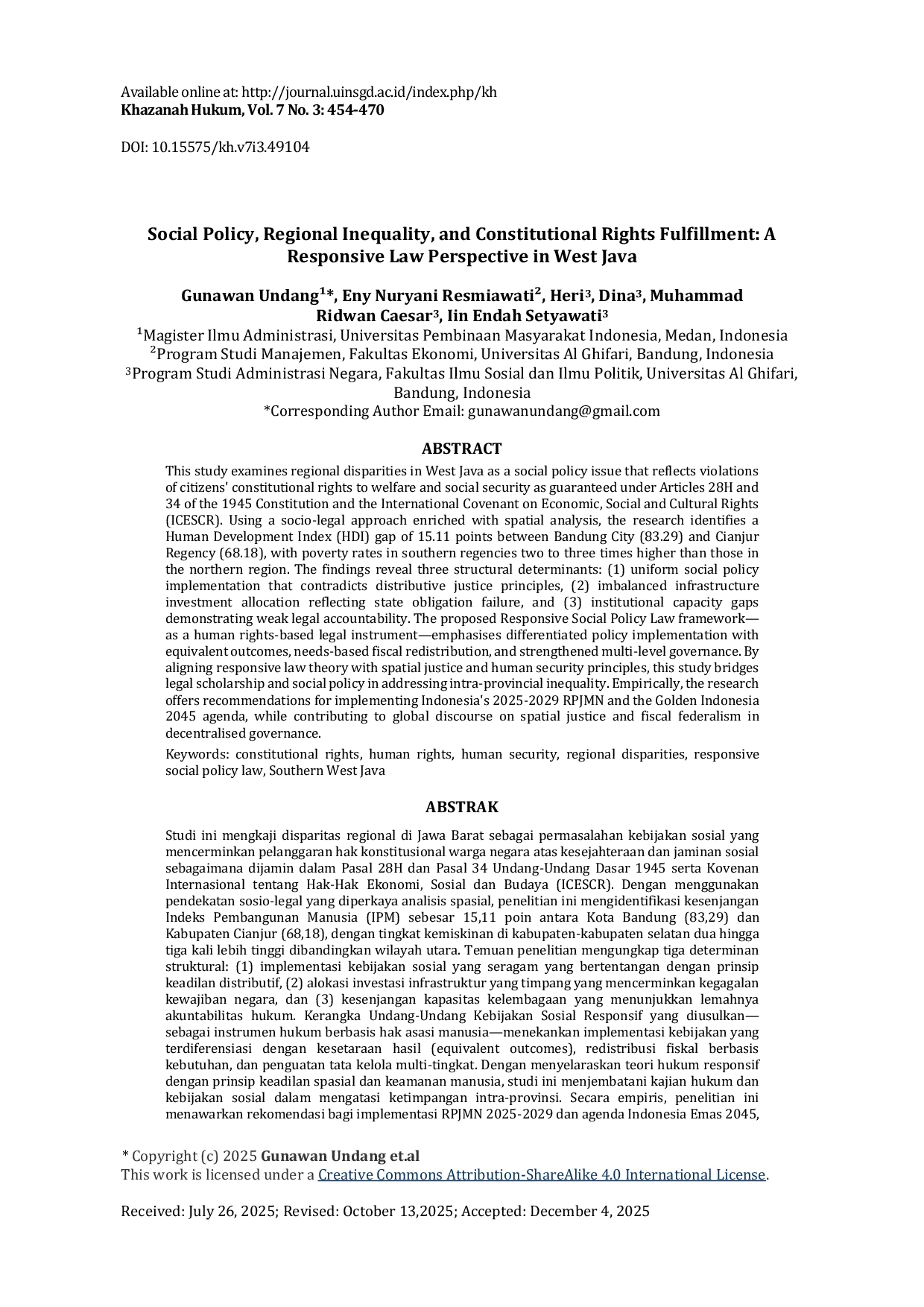
UIN SGDUIN SGD Studi ini menyimpulkan bahwa ketimpangan pembangunan yang berkelanjutan di Jawa Barat merupakan kegagalan negara dalam menjamin kesejahteraan, pengembanganStudi ini menyimpulkan bahwa ketimpangan pembangunan yang berkelanjutan di Jawa Barat merupakan kegagalan negara dalam menjamin kesejahteraan, pengembangan

UIN SGDUIN SGD Meskipun efektif, metode ini menimbulkan ancaman serius terhadap kesehatan masyarakat yang belum ditangani secara memadai secara hukum. Penelitian iniMeskipun efektif, metode ini menimbulkan ancaman serius terhadap kesehatan masyarakat yang belum ditangani secara memadai secara hukum. Penelitian ini

UIN SGDUIN SGD Tujuan penelitian ini adalah untuk menelaah mengapa kekerasan terhadap anak tetap berlangsung meskipun telah ada perangkat hukum yang komprehensif, sepertiTujuan penelitian ini adalah untuk menelaah mengapa kekerasan terhadap anak tetap berlangsung meskipun telah ada perangkat hukum yang komprehensif, seperti
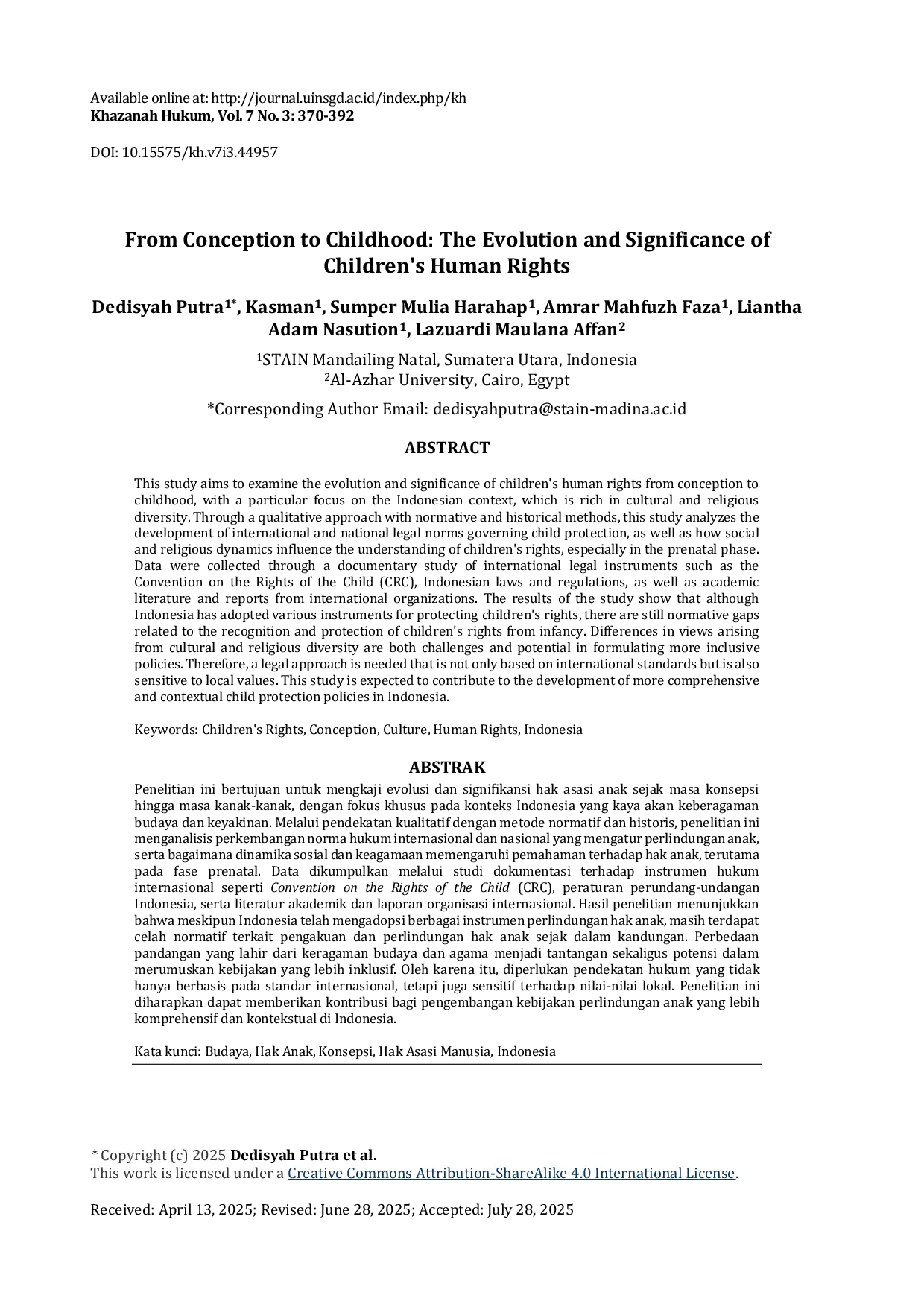
UIN SGDUIN SGD Perlindungan hak anak, dari konsepsi hingga masa kanak-kanak, merupakan bagian integral dari pemenuhan hak asasi manusia yang harus dijamin oleh negara,Perlindungan hak anak, dari konsepsi hingga masa kanak-kanak, merupakan bagian integral dari pemenuhan hak asasi manusia yang harus dijamin oleh negara,

UIN SGDUIN SGD Studi ini juga memperkaya diskursus hukum adat dengan menekankan pentingnya epistemologi lokal dan pemerintahan partisipatif dalam proses pengakuan, sertaStudi ini juga memperkaya diskursus hukum adat dengan menekankan pentingnya epistemologi lokal dan pemerintahan partisipatif dalam proses pengakuan, serta

UMPOUMPO The analysis suggests that strategic investments in sanitation infrastructure can further optimize economic development in the Malang District. These investmentsThe analysis suggests that strategic investments in sanitation infrastructure can further optimize economic development in the Malang District. These investments

UNIRAYAUNIRAYA Thus, it can be concluded that when the leadership style has a positive increase, it will affect employee motivation to increase. Hasil penelitian iniThus, it can be concluded that when the leadership style has a positive increase, it will affect employee motivation to increase. Hasil penelitian ini
Useful /
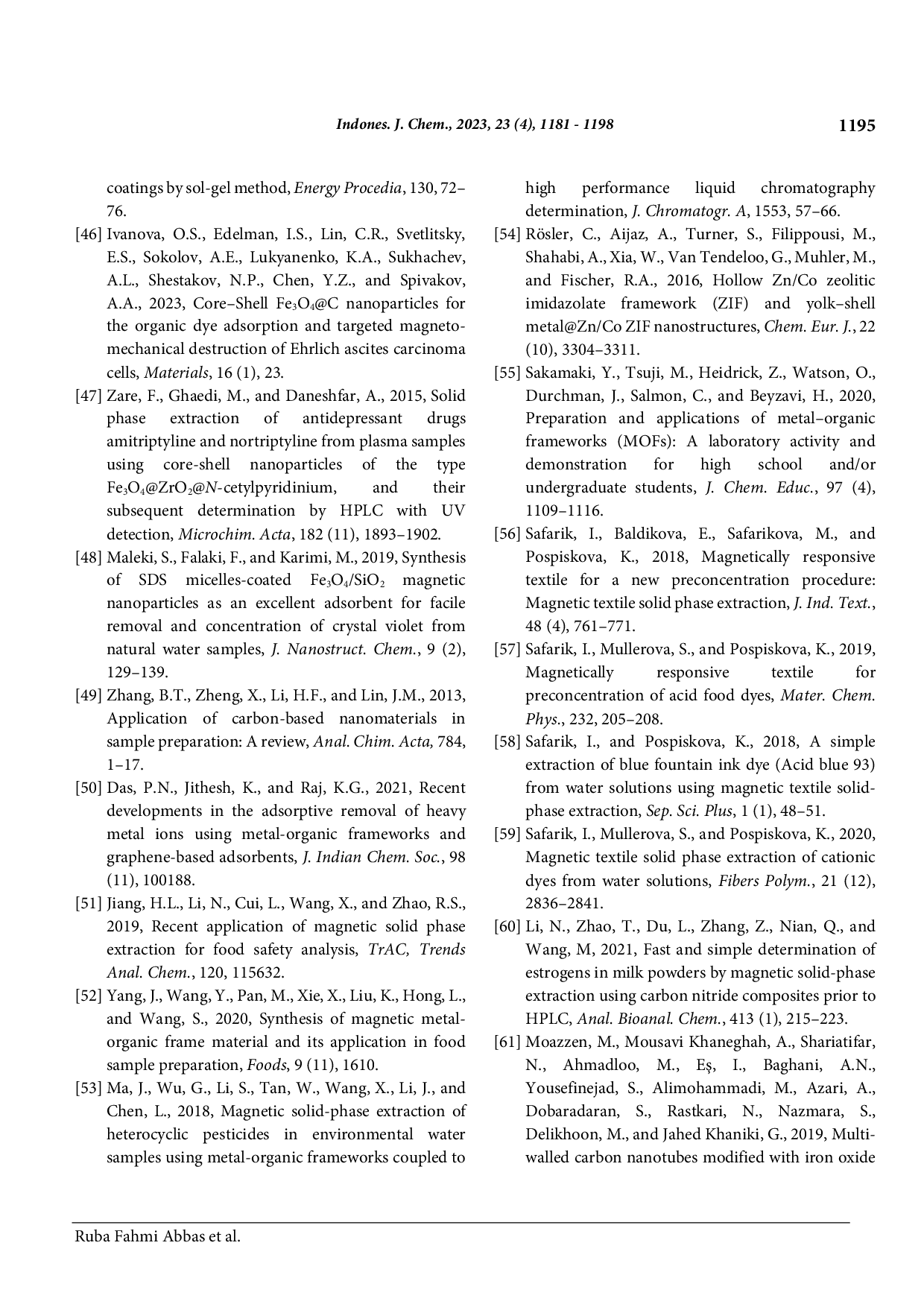
UGMUGM Abstrak: Akhir-akhir ini, ekstraksi fasa padat magnetik (MSPE) merupakan teknologi penting karena penggunaannya dalam bidang kimia analitik, bioteknologi,Abstrak: Akhir-akhir ini, ekstraksi fasa padat magnetik (MSPE) merupakan teknologi penting karena penggunaannya dalam bidang kimia analitik, bioteknologi,
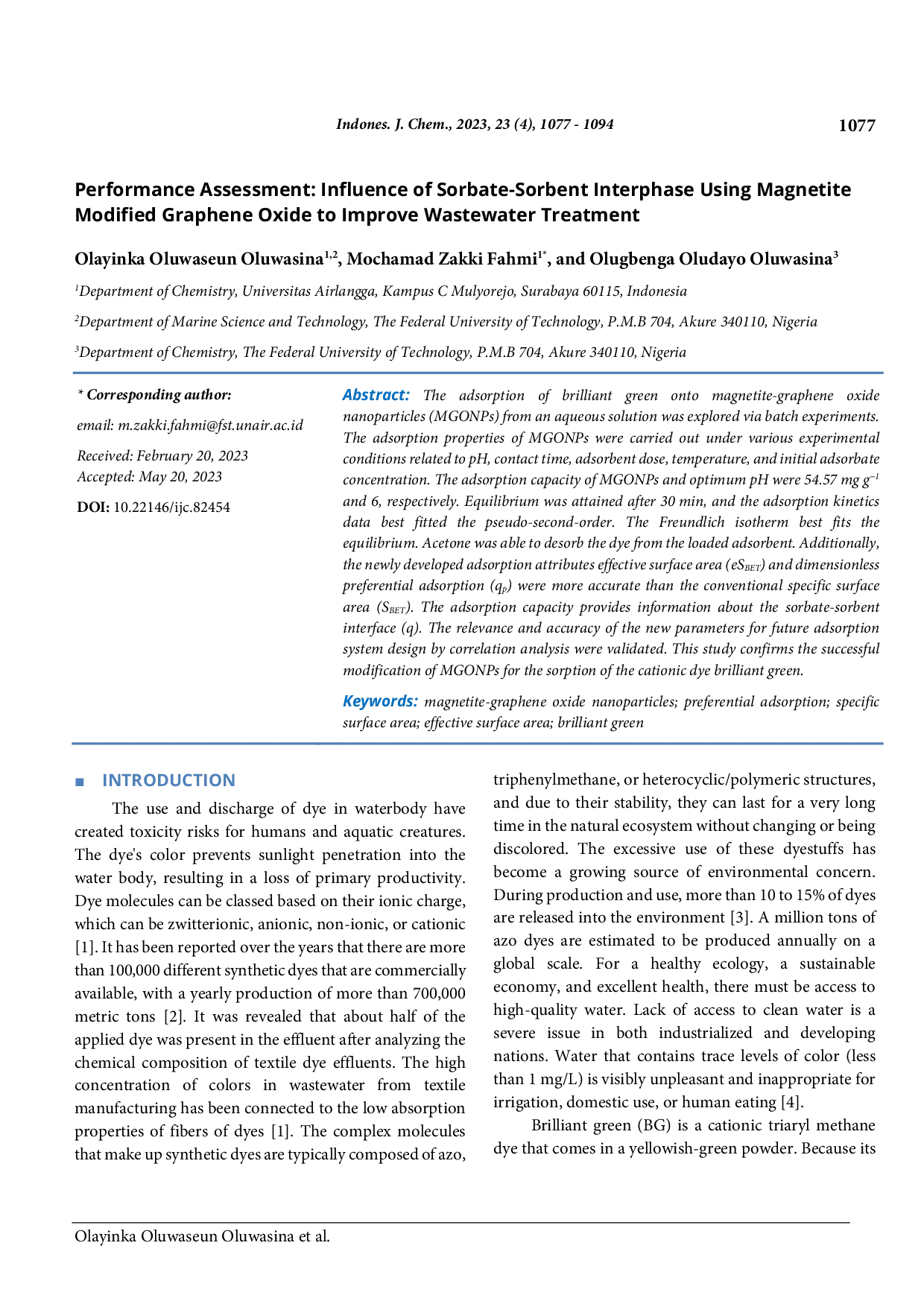
UGMUGM Studi desorpsi dilakukan, dan SEM-EDX mengungkapkan bahwa molekul pewarna terdesorpsi setelah menggunakan aseton sebagai agen desorpsi. Analisis FTIR menunjukkanStudi desorpsi dilakukan, dan SEM-EDX mengungkapkan bahwa molekul pewarna terdesorpsi setelah menggunakan aseton sebagai agen desorpsi. Analisis FTIR menunjukkan
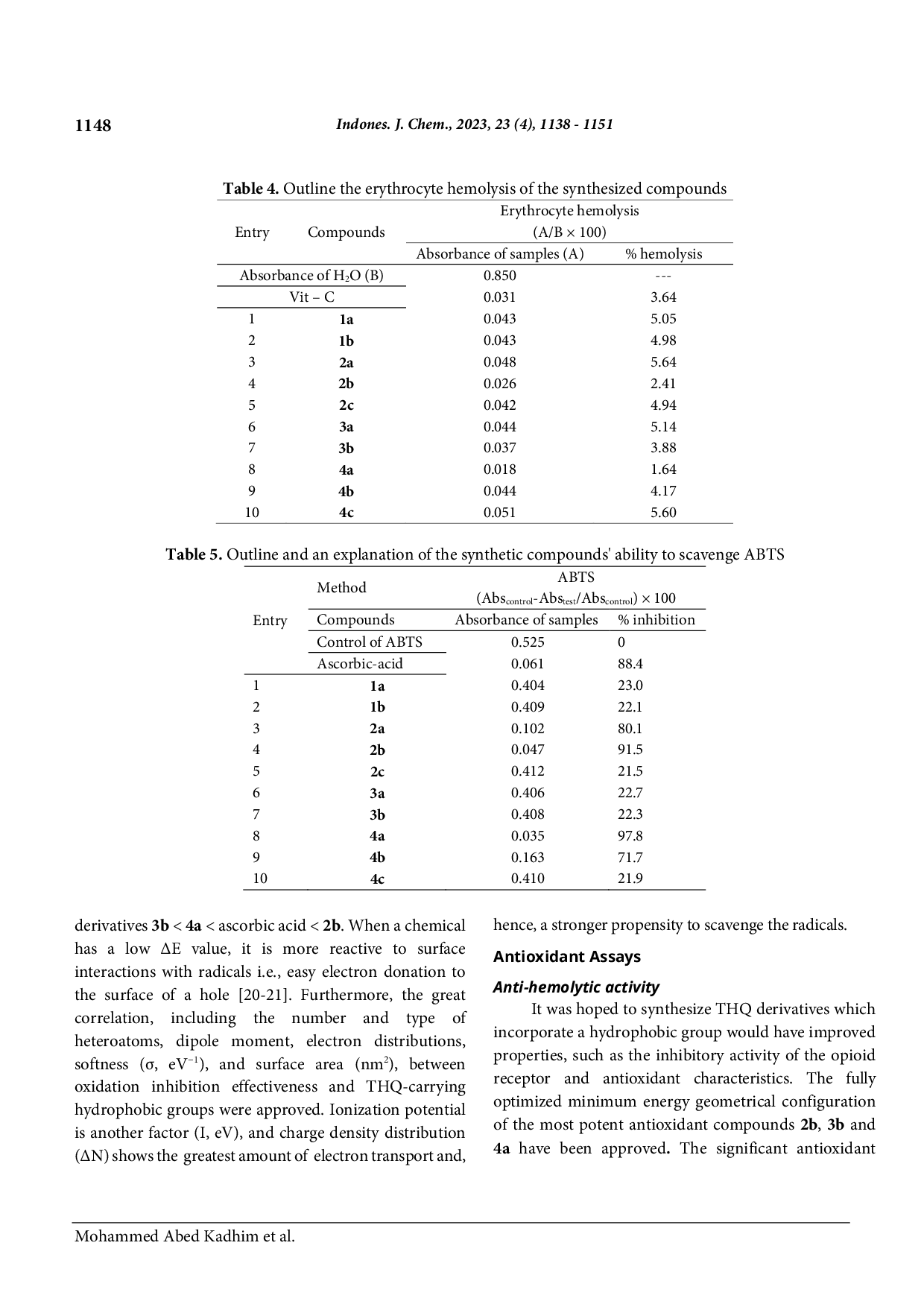
UGMUGM The study confirmed the effectiveness of this method, achieving higher yields and shorter reaction times compared to conventional techniques, aligningThe study confirmed the effectiveness of this method, achieving higher yields and shorter reaction times compared to conventional techniques, aligning
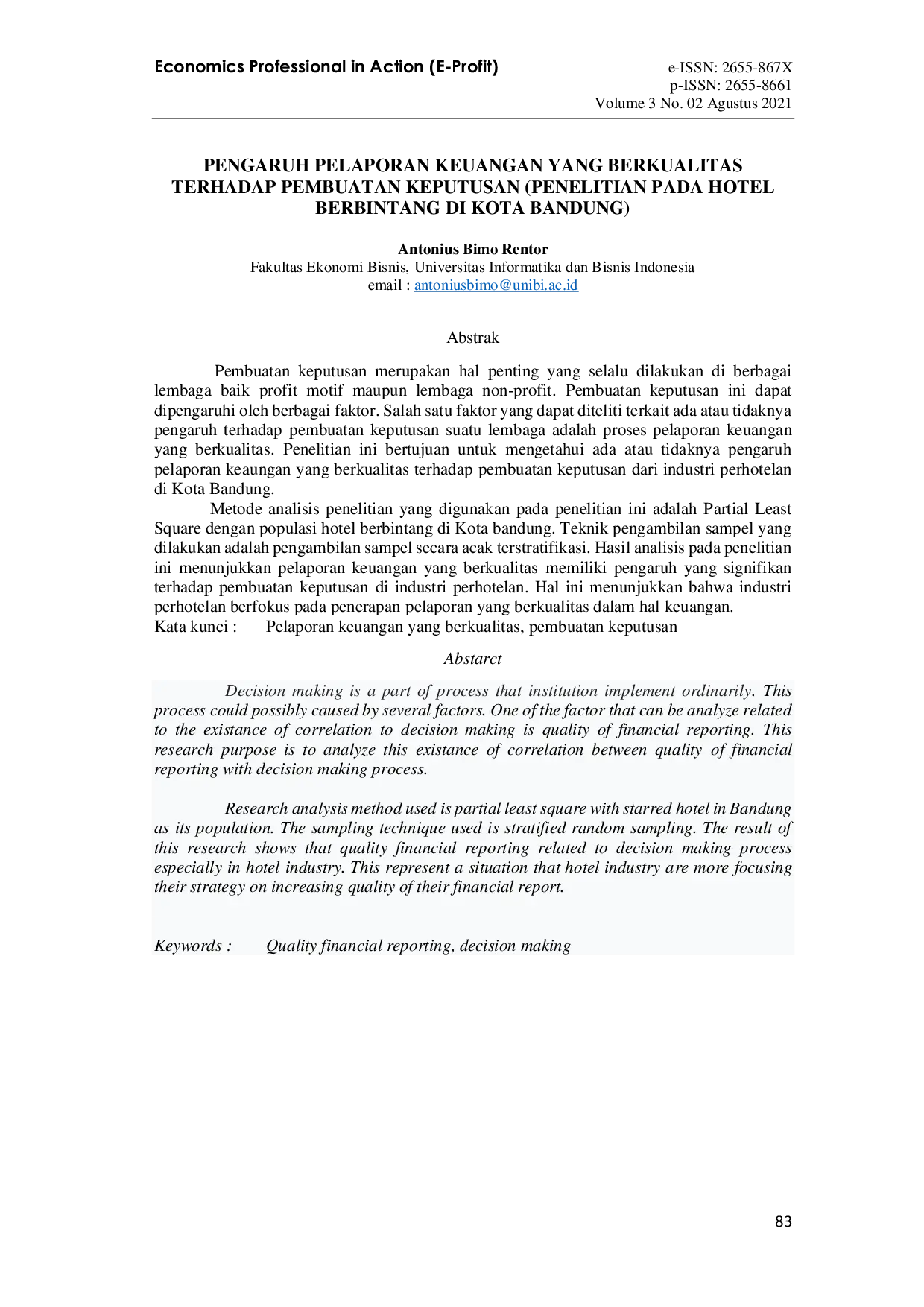
UNIBIUNIBI Pembuatan keputusan ini dapat dipengaruhi oleh berbagai faktor. Salah satu faktor yang dapat diteliti terkait ada atau tidaknya pengaruh terhadap pembuatanPembuatan keputusan ini dapat dipengaruhi oleh berbagai faktor. Salah satu faktor yang dapat diteliti terkait ada atau tidaknya pengaruh terhadap pembuatan