OPENGLOBALSCIOPENGLOBALSCI
Open Global Scientific JournalOpen Global Scientific JournalEfficient mechanized rice transplanting depends on both the structural integrity of seedling mats and the physiological quality of the seedlings. To address this need, enhancing seedling and mat through organic growing media is essential for optimizing mechanized rice transplanting. This study aimed to evaluate the effects of organic amendments on seedling quality (seedling height, biomass, and plant population) and mat characteristics (thickness, weight, rolling score and diameter) in tray nursery. A randomized complete block design with three replications was employed, testing four treatments: alluvial soil without organic amendment (CO), with vermicompost (V), with rice husk ash (R), and with vermicompost and rice husk ash (RV). The results showed that the rice seedling nursery using a mixture of soil and organic growing media (R, RV, and V) produced better seedling quality compared to CO including seedling height, biomass, and plant population. Regarding mat performance, RV produced the thickest (1.77 cm) and lightest (3.27 kg) mats, aligning with ideal conditions for mechanical transplanting. In contrast, CO mats were the heaviest (4.40 kg), and V produced the thinnest mats (1.40 cm). Rolling quality was highest in CO (score 10), while RV mats showed lower rolling integrity (score 6.7). V treatment achieved the smallest roll diameter (13.87 cm), facilitating better handling and transport. Overall, the results demonstrate that organic amendment selection significantly affects both physiological seedling traits and the physical integrity of seedling mats. The RV treatment offered the most balanced improvement in mat structure and seedling growth, making it a promising option for mechanized rice production.
This study demonstrates that rice seedling quality and the physical and structural properties of seedling mats are significantly influenced by the type of organic growing media applied during the nursery phase.The RV treatment produced optimal growth and lighter mats, making them highly suitable for mechanical transplanting.The findings highlight the importance of balancing mechanical suitability with agronomic performance when selecting organic amendments for rice seedling production.
Penelitian lebih lanjut perlu dilakukan untuk mengkaji pengaruh kombinasi berbagai jenis bahan organik lainnya, seperti kompos jerami atau pupuk hijau, terhadap kualitas semai padi dan karakteristik mat. Studi ini dapat dilakukan dengan menguji berbagai proporsi campuran bahan organik untuk menemukan formulasi optimal yang sesuai dengan kondisi tanah dan iklim setempat. Selain itu, penelitian perlu difokuskan pada analisis mendalam terhadap perubahan sifat fisikokimia tanah akibat aplikasi bahan organik, termasuk kandungan unsur hara, struktur tanah, dan aktivitas mikroorganisme tanah. Pemahaman yang lebih baik tentang mekanisme peningkatan kualitas semai dan mat melalui perubahan sifat tanah akan membantu mengembangkan strategi pengelolaan yang lebih efektif dan berkelanjutan. Terakhir, penelitian lanjutan perlu mengevaluasi kinerja semai padi yang dihasilkan dari berbagai perlakuan bahan organik setelah ditransplantasikan ke lahan sawah, termasuk pertumbuhan tanaman, hasil panen, dan ketahanan terhadap hama dan penyakit. Evaluasi ini akan memberikan gambaran yang komprehensif tentang manfaat jangka panjang dari penggunaan bahan organik dalam produksi padi.
| File size | 651.46 KB |
| Pages | 8 |
| DMCA | Report |
Related /

STIAPEMBANGUNANPALUSTIAPEMBANGUNANPALU Selain itu, mengadopsi praktik tata kelola global terbaik, seperti penggunaan alat digital dan jaringan kolaboratif, dapat meningkatkan keberlanjutan danSelain itu, mengadopsi praktik tata kelola global terbaik, seperti penggunaan alat digital dan jaringan kolaboratif, dapat meningkatkan keberlanjutan dan
ISTAZISTAZ Metode ABCD digunakan dalam penelitian ini, yang mencakup eksplorasi dan formulasi kekuatan potensial, serta menentukan alur tujuan bersama dengan komunitasMetode ABCD digunakan dalam penelitian ini, yang mencakup eksplorasi dan formulasi kekuatan potensial, serta menentukan alur tujuan bersama dengan komunitas
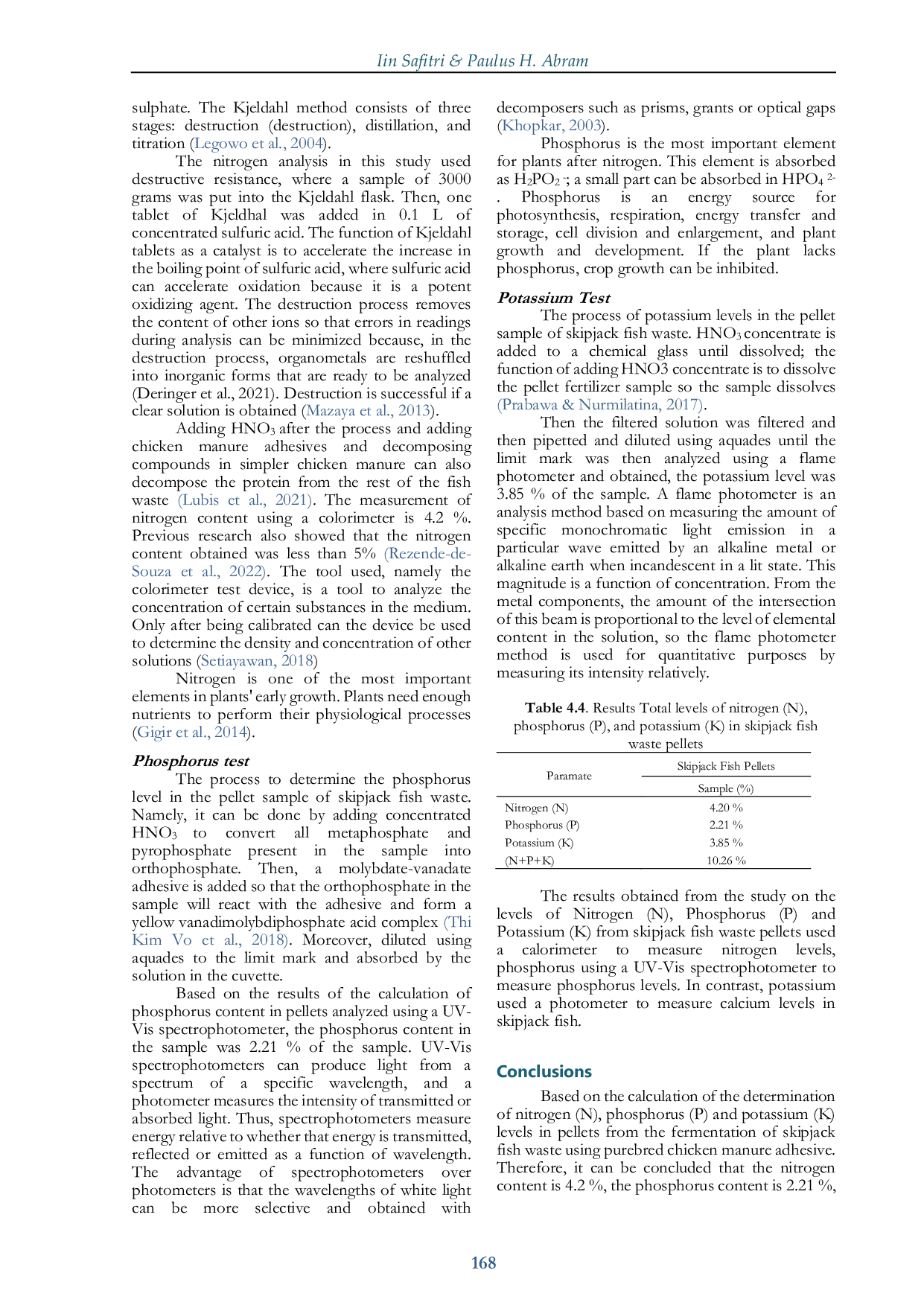
JURNALFKIPUNTADJURNALFKIPUNTAD Kadar nitrogen ditentukan menggunakan kolorimeter, kadar fosfor ditentukan menggunakan spektrofotometer UV-Vis, dan kadar kalium ditentukan menggunakanKadar nitrogen ditentukan menggunakan kolorimeter, kadar fosfor ditentukan menggunakan spektrofotometer UV-Vis, dan kadar kalium ditentukan menggunakan

STIEJBSTIEJB Hasil penelitian menunjukkan bahwa luas lahan memiliki pengaruh yang signifikan terhadap produksi padi di Indonesia. Peningkatan luas lahan sebesar 1 persenHasil penelitian menunjukkan bahwa luas lahan memiliki pengaruh yang signifikan terhadap produksi padi di Indonesia. Peningkatan luas lahan sebesar 1 persen
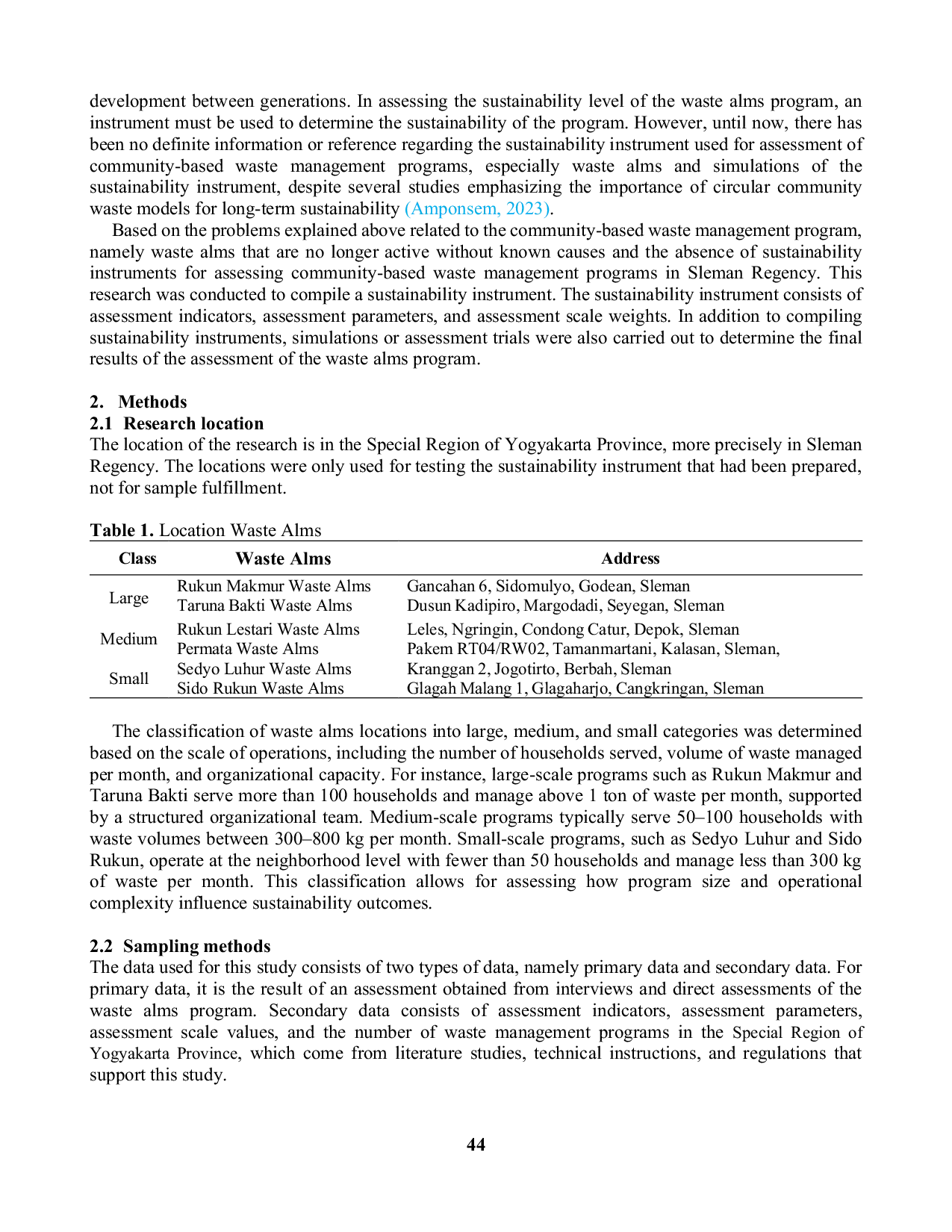
OPENGLOBALSCIOPENGLOBALSCI Hasil: Hasil uji coba instrumen keberlanjutan diperoleh. Sedekah Sampah Sido Rukun memperoleh skor 74%, Sedekah Sampah Taruna Bakti memperoleh skor 75%,Hasil: Hasil uji coba instrumen keberlanjutan diperoleh. Sedekah Sampah Sido Rukun memperoleh skor 74%, Sedekah Sampah Taruna Bakti memperoleh skor 75%,

ILININSTITUTEILININSTITUTE Program pengabdian ini berhasil mencapai tujuannya dalam memberdayakan petani untuk beralih ke pertanian berkelanjutan. Adopsi teknologi ACT berpotensiProgram pengabdian ini berhasil mencapai tujuannya dalam memberdayakan petani untuk beralih ke pertanian berkelanjutan. Adopsi teknologi ACT berpotensi
POLITALAPOLITALA Pengolahan yang lebih luas lebih bervariatif dapat diperkenalkan seperti bentuk jus, awetan kering untuk mengintensifkan hasil panen. Tingkat kebersihanPengolahan yang lebih luas lebih bervariatif dapat diperkenalkan seperti bentuk jus, awetan kering untuk mengintensifkan hasil panen. Tingkat kebersihan
DINAMIKADINAMIKA AWH Tebuireng Jombang Middle School adalah sekolah berbasis pesantren dengan program unggulan pembinaan karakter siswa. Kepedulian terhadap lingkungan,AWH Tebuireng Jombang Middle School adalah sekolah berbasis pesantren dengan program unggulan pembinaan karakter siswa. Kepedulian terhadap lingkungan,
Useful /
DHARMAWANGSADHARMAWANGSA Bahkan mesin berteknologi tinggi pun akan menjadi tidak berarti jika sumber daya manusia yang mengoperasikannya tidak mumpuni untuk memproduksinya. BegituBahkan mesin berteknologi tinggi pun akan menjadi tidak berarti jika sumber daya manusia yang mengoperasikannya tidak mumpuni untuk memproduksinya. Begitu

STIEJBSTIEJB Pertumbuhan ekonomi dan indeks pembangunan manusia berpengaruh secara signifikan terhadap tingkat pengangguran di Sumatera Utara. Penelitian ini menyimpulkanPertumbuhan ekonomi dan indeks pembangunan manusia berpengaruh secara signifikan terhadap tingkat pengangguran di Sumatera Utara. Penelitian ini menyimpulkan

OPENGLOBALSCIOPENGLOBALSCI Based on these findings, it can be concluded that turmeric powder supplementation up to 3% in the diet can enhance the growth performance of broiler chickens,Based on these findings, it can be concluded that turmeric powder supplementation up to 3% in the diet can enhance the growth performance of broiler chickens,

AN NURAN NUR Pengawasan pembiayaan pendidikan dilakukan secara internal dan eksternal. Secara internal dilakukan oleh Kantor Provinsi, sedangkan secara eksternal dilakukanPengawasan pembiayaan pendidikan dilakukan secara internal dan eksternal. Secara internal dilakukan oleh Kantor Provinsi, sedangkan secara eksternal dilakukan