KIPMIKIPMI
Communications in Science and TechnologyCommunications in Science and TechnologyThe radiology examination by computed tomography (CT) scan is an early detection of lung cancer to minimize the mortality rate. However, the assessment and diagnosis by an expert are subjective depending on the competence and experience of a radiologist. Hence, a digital image processing of CT scan is necessary as a tool to diagnose the lung cancer. This research proposes a morphological characteristics method for detecting lung cancer lesion density by using the histogram and GLCM (Gray Level Co-occurrence Matrices). The most well-known artificial neural network (ANN) architecture that is the multilayers perceptron (MLP), is used in classifying lung cancer lesion density of heterogeneous and homogeneous. Fifty CT scan images of lungs obtained from the Department of Radiology of RSUP Dr. Sardjito Hospital, Yogyakarta are used as the database. The results show that the proposed method achieved the accuracy of 98%, sensitivity of 96%, and specificity of 96%.
This research proposes a method to identify the characteristics and classification of lesion density of primary lung cancer by using the histogram and GLCM-based texture feature extraction.The combination of histogram and GLCM-based texture feature extraction achieved an accuracy of 98%, sensitivity of 96%, and specificity of 96%.These results demonstrate the ability of the methods to differentiate lesion density between heterogeneous and homogeneous lung cancer, potentially aiding radiologists in image interpretation and serving as a component in the development of Computer-Aided Diagnosis (CAD) systems for lung cancer.
Penelitian lebih lanjut dapat dilakukan dengan mengeksplorasi teknik segmentasi yang berbeda untuk meningkatkan akurasi deteksi lesi. Selain itu, pengembangan metode ekstraksi fitur baru yang lebih adaptif terhadap variasi karakteristik lesi pada citra CT scan dapat meningkatkan kinerja klasifikasi. Terakhir, studi komparatif dengan metode deep learning, seperti Convolutional Neural Networks (CNN), perlu dilakukan untuk mengevaluasi potensi peningkatan akurasi dan efisiensi dalam diagnosis kanker paru-paru. Penelitian-penelitian ini diharapkan dapat menghasilkan sistem CAD yang lebih andal dan akurat, sehingga membantu dokter dalam membuat keputusan klinis yang lebih tepat dan meningkatkan hasil pengobatan pasien.
| File size | 619.88 KB |
| Pages | 6 |
| DMCA | Report |
Related /
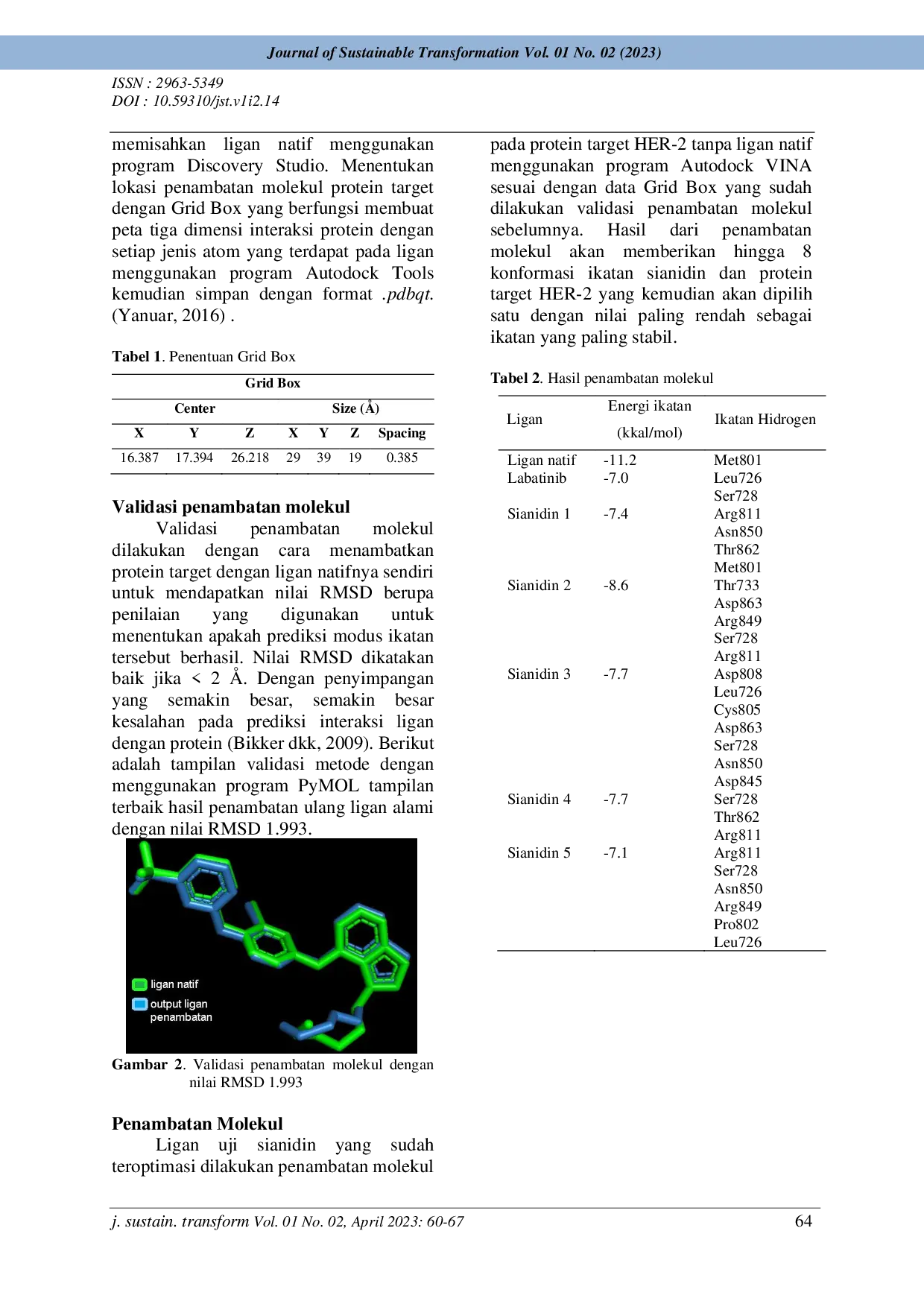
UNUKALTIMUNUKALTIM Untuk mendapatkan hasil yang lebih baik lagi perlu adanya modifikasi lebih lanjut terhadap ligan uji sianidin dan menggunakan program perangkat lunak lebihUntuk mendapatkan hasil yang lebih baik lagi perlu adanya modifikasi lebih lanjut terhadap ligan uji sianidin dan menggunakan program perangkat lunak lebih
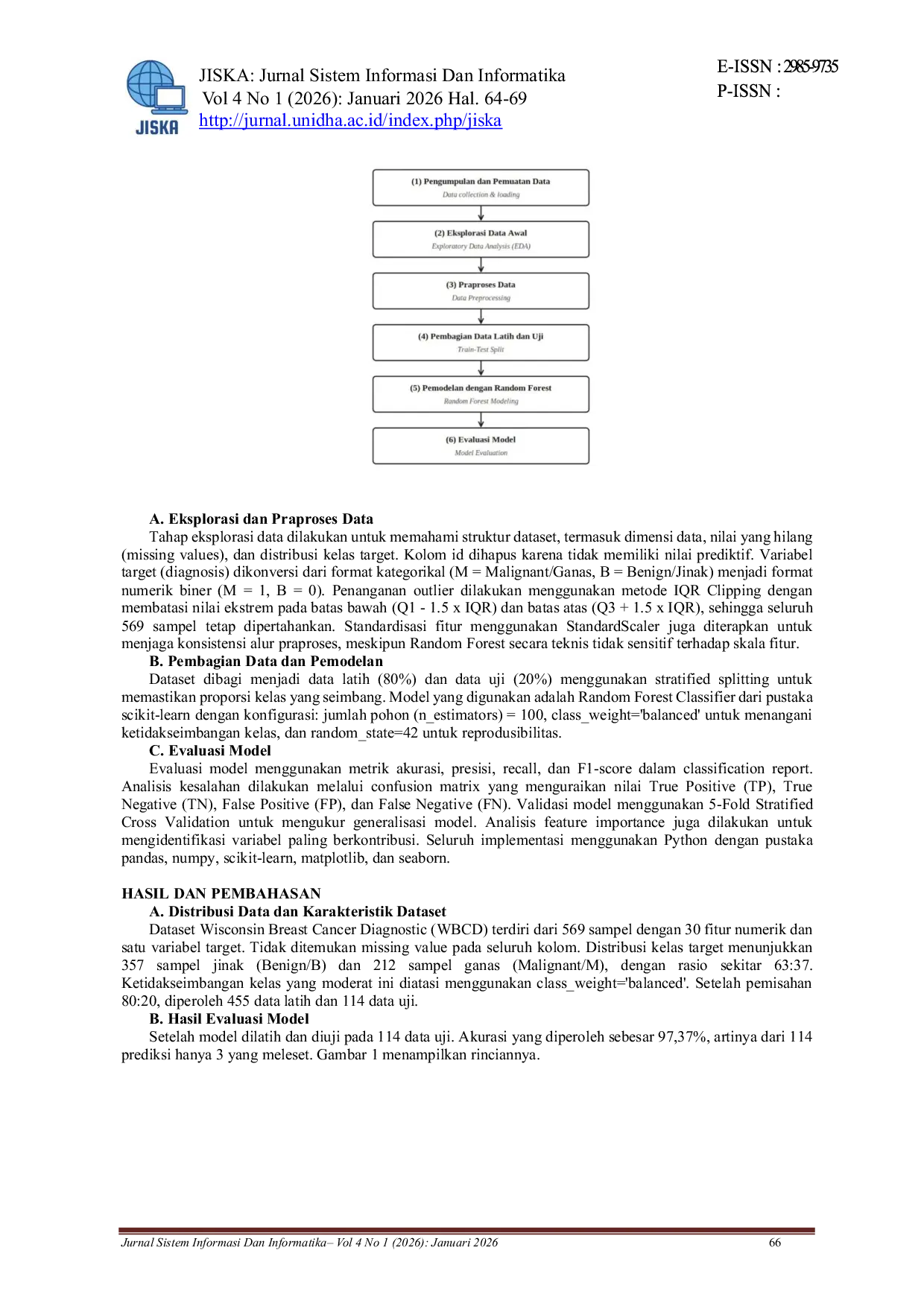
UNIDHAUNIDHA Model menunjukkan kemampuan generalisasi yang baik dengan rata-rata akurasi 96,31% dari validasi silang, serta fitur-fitur terpenting yang teridentifikasiModel menunjukkan kemampuan generalisasi yang baik dengan rata-rata akurasi 96,31% dari validasi silang, serta fitur-fitur terpenting yang teridentifikasi
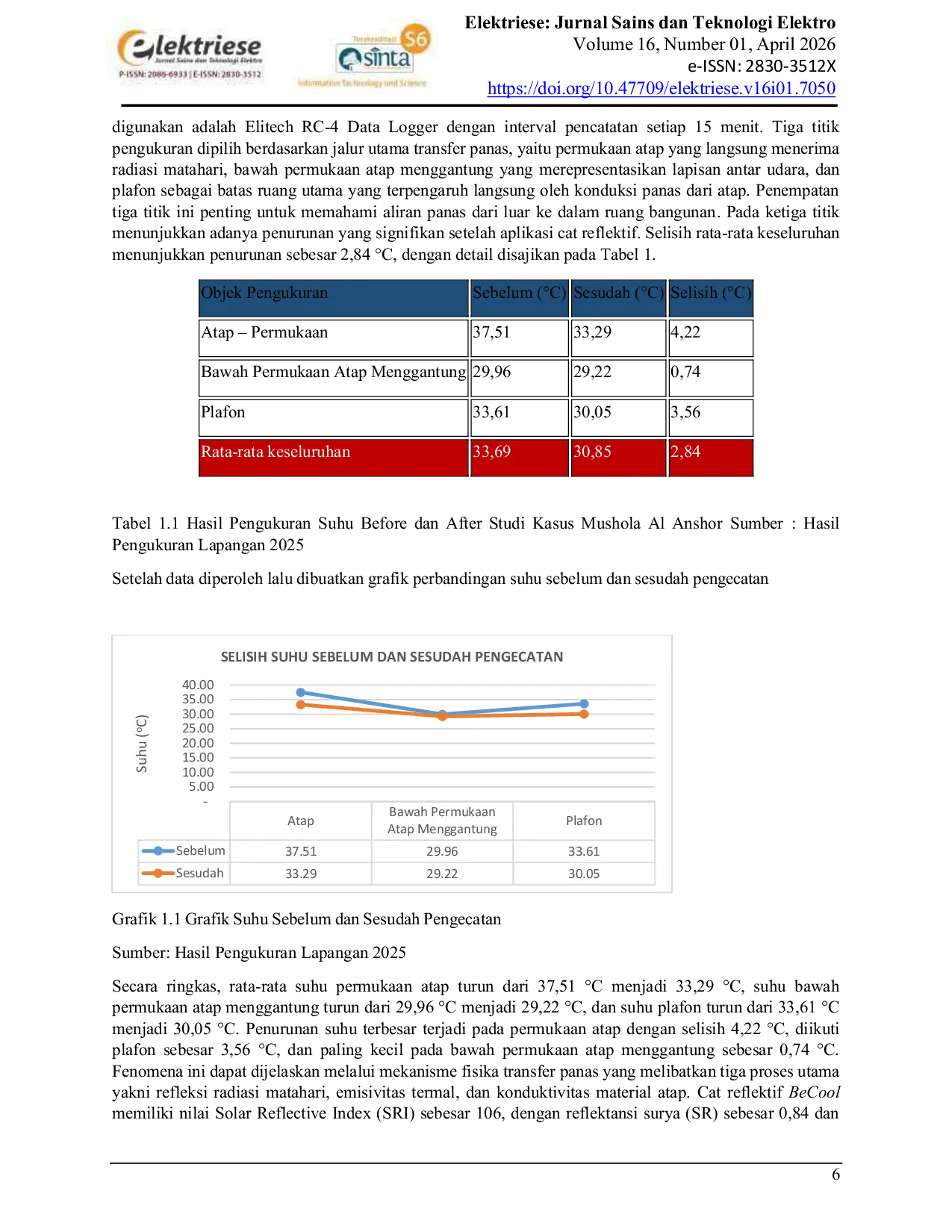
ITSCIENCEITSCIENCE Kondisi tersebut menurunkan kenyamanan dan meningkatkan kebutuhan energi untuk pendinginan. Oleh karena itu, diperlukan inovasi untuk menurunkan suhu udaraKondisi tersebut menurunkan kenyamanan dan meningkatkan kebutuhan energi untuk pendinginan. Oleh karena itu, diperlukan inovasi untuk menurunkan suhu udara
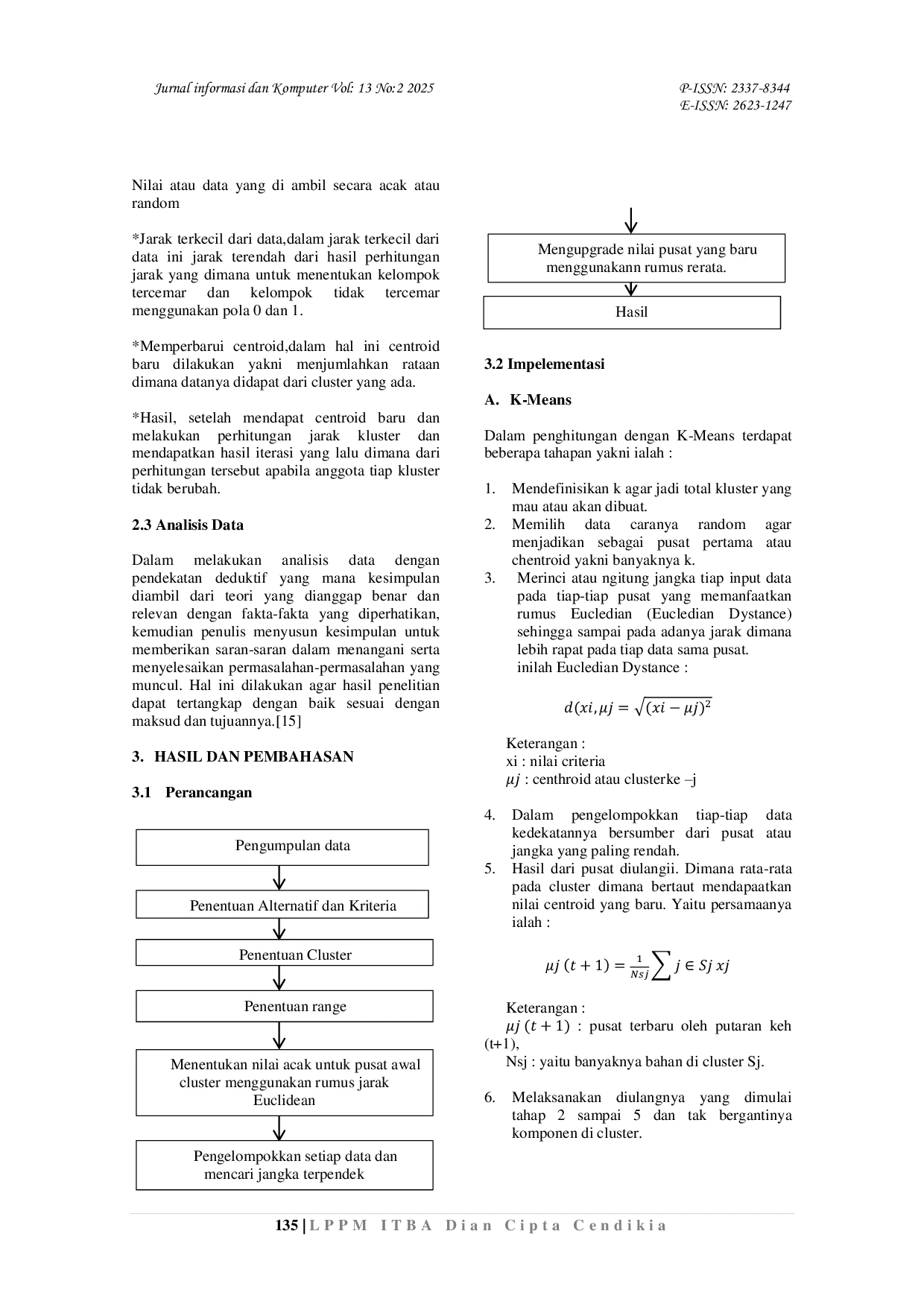
DCCKOTABUMIDCCKOTABUMI Penelitian ini mengukur pencemaran udara yang ada di Kabupaten Pringsewu menggunakan sistem Pendukung keputusan dengan metode K-Means yang dimana akanPenelitian ini mengukur pencemaran udara yang ada di Kabupaten Pringsewu menggunakan sistem Pendukung keputusan dengan metode K-Means yang dimana akan
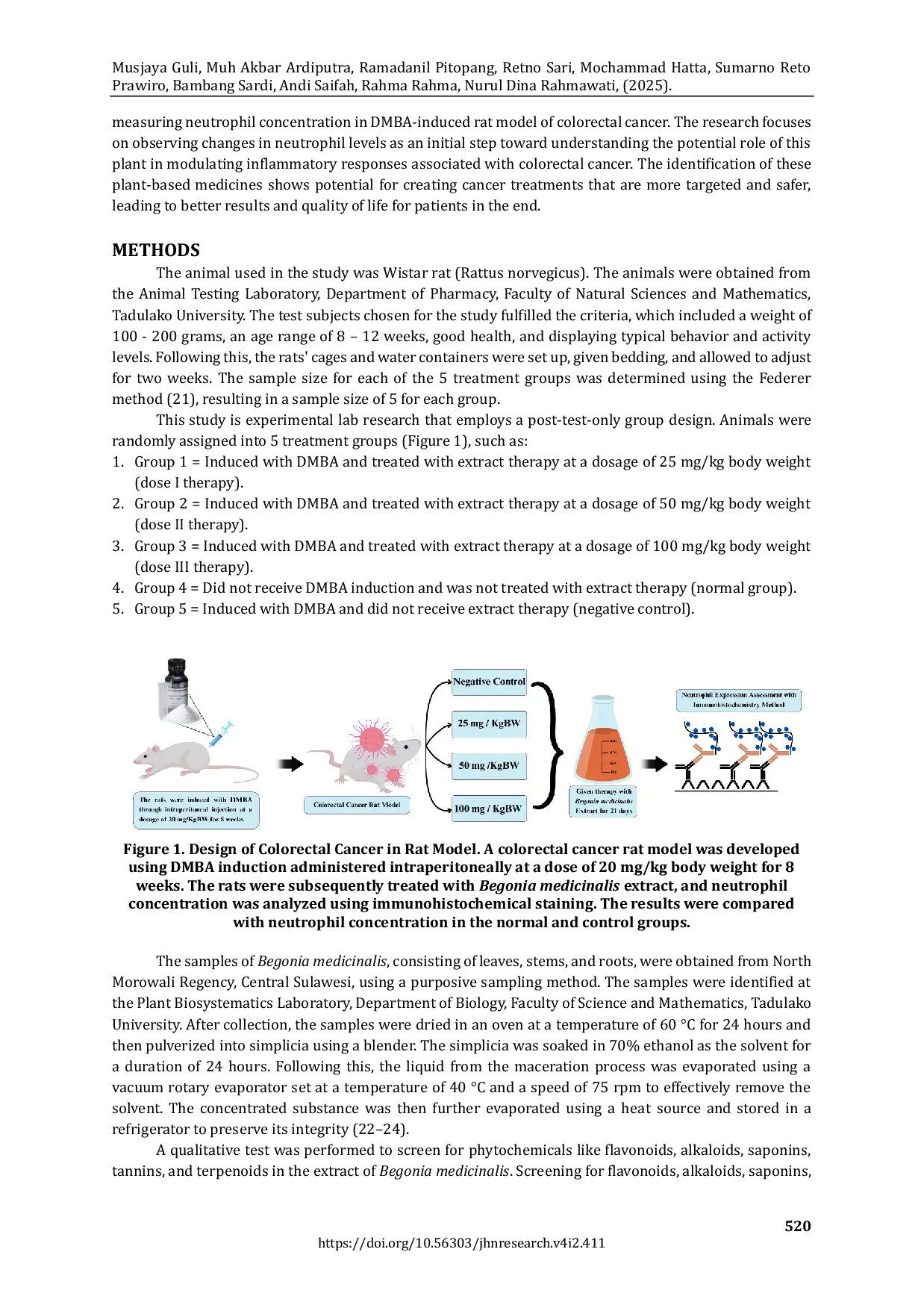
JOURNALMPCIJOURNALMPCI Penelitian ini menggunakan pendekatan eksperimental berbasis laboratorium dengan desain kelompok post-test saja, yang terdiri dari lima kelompok denganPenelitian ini menggunakan pendekatan eksperimental berbasis laboratorium dengan desain kelompok post-test saja, yang terdiri dari lima kelompok dengan
URECOLURECOL Referensi yang digunakan merupakan literature yang didapat dari Google Scholar dan Pub Med dari tahun 2014 hingga tahun 2020. Setelah mereview 15 jurnalReferensi yang digunakan merupakan literature yang didapat dari Google Scholar dan Pub Med dari tahun 2014 hingga tahun 2020. Setelah mereview 15 jurnal
STIKES ISFISTIKES ISFI 8, MarvinSketch 15. 4. 20, PLANTS. Hasil menunjukkan komponen utama minyak kulit buah jeruk nipis adalah senyawa d-limonen dan beta-pinen dengan persentase8, MarvinSketch 15. 4. 20, PLANTS. Hasil menunjukkan komponen utama minyak kulit buah jeruk nipis adalah senyawa d-limonen dan beta-pinen dengan persentase

USNSJUSNSJ Lentivirus memiliki envelope yang dapat dimodifikasi menjadi lentivirus pseudotyping dengan menggunakan glikoprotein filovirus, salah satunya ebolavirus.Lentivirus memiliki envelope yang dapat dimodifikasi menjadi lentivirus pseudotyping dengan menggunakan glikoprotein filovirus, salah satunya ebolavirus.
Useful /

UNIDHAUNIDHA Setiap cluster merepresentasikan segmen pelanggan yang berbeda seperti pelanggan dengan pendapatan tinggi dan belanja tinggi maupun rendah. Hasil ini dapatSetiap cluster merepresentasikan segmen pelanggan yang berbeda seperti pelanggan dengan pendapatan tinggi dan belanja tinggi maupun rendah. Hasil ini dapat

JOURNALMPCIJOURNALMPCI Enterobacter dapat menyebabkan berbagai infeksi serius, termasuk infeksi saluran kemih, meningitis, pneumonia, dan sepsis. Upaya mengurangi kontaminasiEnterobacter dapat menyebabkan berbagai infeksi serius, termasuk infeksi saluran kemih, meningitis, pneumonia, dan sepsis. Upaya mengurangi kontaminasi

JOURNALMPCIJOURNALMPCI Penelitian ini menyoroti peran penting status akreditasi Puskesmas dan kepemilikan aset keluarga dalam pencegahan stunting. Status akreditasi PuskesmasPenelitian ini menyoroti peran penting status akreditasi Puskesmas dan kepemilikan aset keluarga dalam pencegahan stunting. Status akreditasi Puskesmas
JOURNALMPCIJOURNALMPCI Pemberian mangga Gedong Gincu, jeruk manis, dan buah naga merah secara oral selama 14 hari terbukti efektif dalam menurunkan kadar protein C-reaktif (CRP)Pemberian mangga Gedong Gincu, jeruk manis, dan buah naga merah secara oral selama 14 hari terbukti efektif dalam menurunkan kadar protein C-reaktif (CRP)