PANDAWAINSTITUTEPANDAWAINSTITUTE
Journal of Multidisciplinary Applied Natural ScienceJournal of Multidisciplinary Applied Natural ScienceThis study investigates the key factors influencing the solubility, viscosity, and density of aqueous electrolyte systems. Model solutions of types 1-1, 1-2, 2-1, and 2-2 electrolytes were examined across a wide concentration range. The results show that solubility increases with temperature due to a higher proportion of free water molecules, while greater electrolyte concentrations lead to a rise in viscosity and density. It was found that ion radius and charge density strongly impact solution properties: larger ion radii and lower charge densities decrease viscosity and increase density, whereas smaller radii and higher charge densities have the opposite effect. The findings offer new insights into the relationship between ionic parameters and macroscopic solution behavior, supported by mathematical modeling and graphical analysis.
The solubility of electrolytes is primarily influenced by the free component of bulk water, increasing with temperature.Higher electrolyte concentrations result in increased viscosity and density due to a greater number of hydrated ions in the solution.The viscosity and density of aqueous electrolyte systems are determined by the radius and charge density of the ionic components, with smaller radii and higher charge densities increasing viscosity and decreasing density, and vice versa.
Further research should investigate the impact of varying temperature gradients on the solubility and viscosity of aqueous electrolyte solutions, potentially revealing non-linear effects not captured in this study. A detailed exploration of the structural changes in water molecules surrounding ions at different concentrations could provide a more fundamental understanding of the observed viscosity and density variations. Additionally, investigating the influence of external electric fields on the behavior of hydrated ions and their impact on solution properties could open new avenues for controlling and optimizing electrolyte solutions for various applications, such as energy storage and chemical processing. These investigations should employ advanced spectroscopic techniques and molecular dynamics simulations to complement experimental findings and provide a comprehensive understanding of the underlying mechanisms.
- The Nature of Processes Affecting the Solubility, Viscosity, and Density Characteristics of Aqueous Electrolyte... journal.pandawainstitute.com/index.php/jmans/article/view/281The Nature of Processes Affecting the Solubility Viscosity and Density Characteristics of Aqueous Electrolyte journal pandawainstitute index php jmans article view 281
- Handbook of Aqueous Solubility Data | Samuel H. Yalkowsky, Yan He, Par. handbook aqueous solubility data... doi.org/10.1201/ebk1439802458Handbook of Aqueous Solubility Data Samuel H Yalkowsky Yan He Par handbook aqueous solubility data doi 10 1201 ebk1439802458
- Model for Calculating the Density of Aqueous Electrolyte Solutions | Journal of Chemical & Engineering... pubs.acs.org/doi/10.1021/je0498659Model for Calculating the Density of Aqueous Electrolyte Solutions Journal of Chemical Engineering pubs acs doi 10 1021 je0498659
| File size | 2.08 MB |
| Pages | 19 |
| DMCA | Report |
Related /
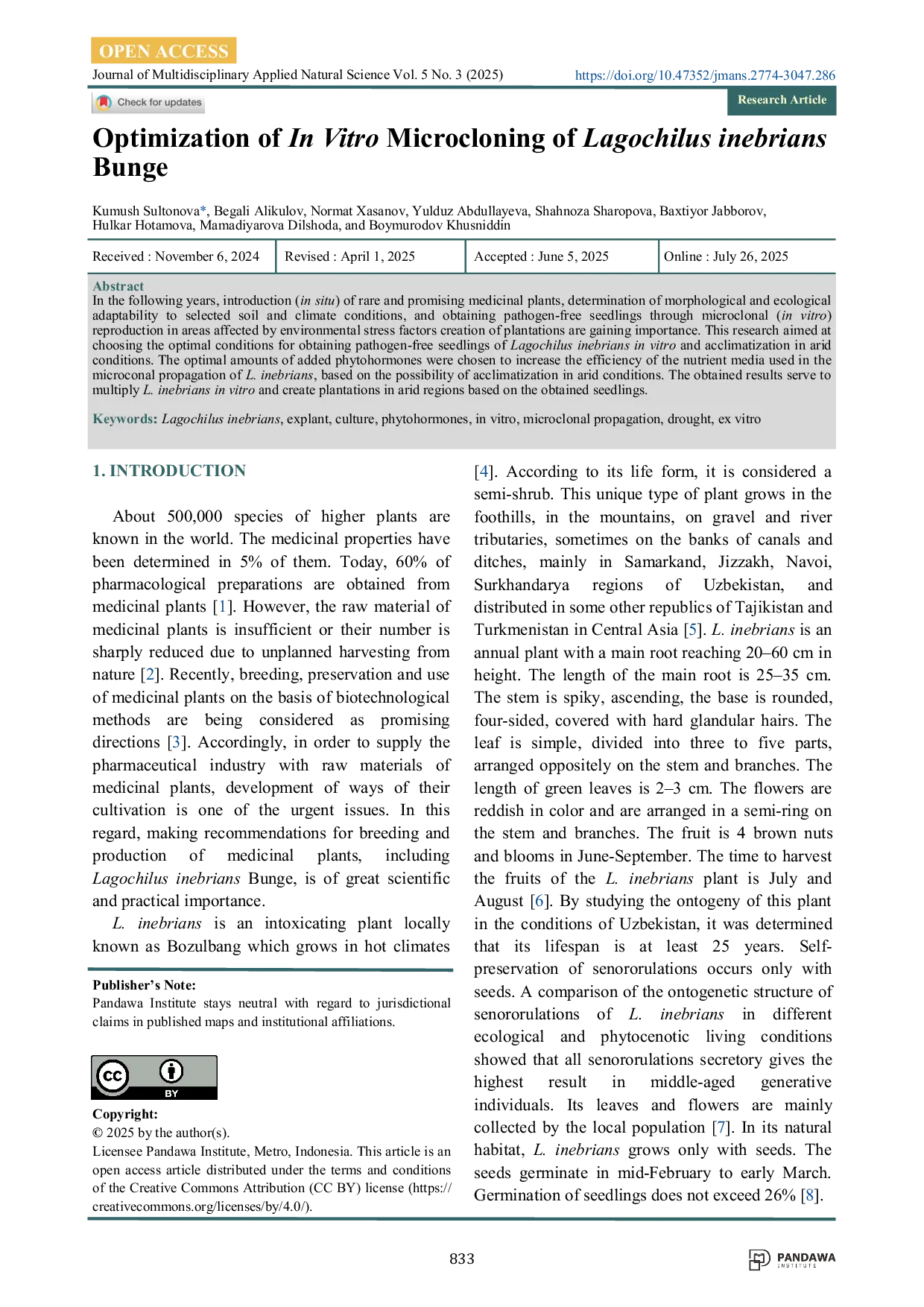
PANDAWAINSTITUTEPANDAWAINSTITUTE Hasil yang diperoleh dapat digunakan untuk memperbanyak L. inebrians secara in vitro dan membuat perkebunan di daerah kering berdasarkan bibit yang dihasilkan.Hasil yang diperoleh dapat digunakan untuk memperbanyak L. inebrians secara in vitro dan membuat perkebunan di daerah kering berdasarkan bibit yang dihasilkan.

PHBPHB Several universities have made efforts to prevent and address sexual violence on campus. This study aimed to compile a Collaboration Strategy of collegeSeveral universities have made efforts to prevent and address sexual violence on campus. This study aimed to compile a Collaboration Strategy of college

UNIDAUNIDA Data primer dikumpulkan melalui survei responden menggunakan skala Likert dan dianalisis dengan uji Wilcoxon signed-rank. Badan POM mengklasifikasikanData primer dikumpulkan melalui survei responden menggunakan skala Likert dan dianalisis dengan uji Wilcoxon signed-rank. Badan POM mengklasifikasikan

UNIDAUNIDA angulata sebagai aktivator SOD1 alami menggunakan pendekatan docking molekul in silico. Empat puluh sembilan ligan yang diambil dari konstituen aktif P.angulata sebagai aktivator SOD1 alami menggunakan pendekatan docking molekul in silico. Empat puluh sembilan ligan yang diambil dari konstituen aktif P.

UNIDAUNIDA Data tersebut merupakan angka tahunan dari tahun 2000 hingga 2023. Hasil penelitian menunjukkan bahwa ARIMA (1,3,0) adalah model yang paling sesuai, denganData tersebut merupakan angka tahunan dari tahun 2000 hingga 2023. Hasil penelitian menunjukkan bahwa ARIMA (1,3,0) adalah model yang paling sesuai, dengan
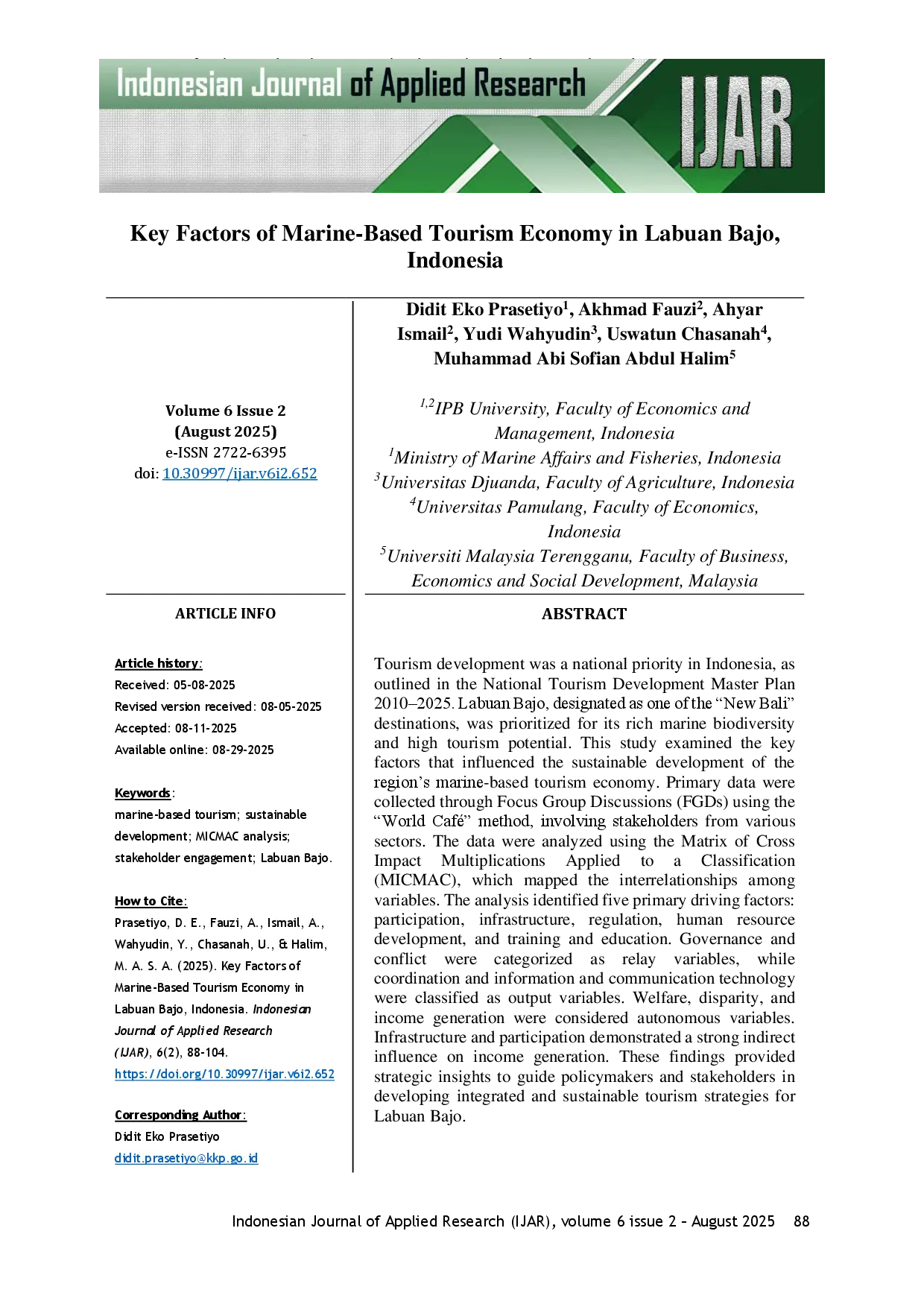
UNIDAUNIDA Studi ini mengidentifikasi dan menganalisis 12 variabel kunci yang mempengaruhi pengembangan ekonomi pariwisata berbasis laut di Labuan Bajo menggunakanStudi ini mengidentifikasi dan menganalisis 12 variabel kunci yang mempengaruhi pengembangan ekonomi pariwisata berbasis laut di Labuan Bajo menggunakan

IAIN KEDIRIIAIN KEDIRI The findings underscore the importance of fostering a learning environment that supports learner autonomy and cultivates positive emotional experiences.The findings underscore the importance of fostering a learning environment that supports learner autonomy and cultivates positive emotional experiences.

UM MetroUM Metro Temuan studi menunjukkan korelasi yang signifikan dan positif antara dukungan sosial dan resiliensi pada remaja panti asuhan di kota Ambon. Untuk meningkatkanTemuan studi menunjukkan korelasi yang signifikan dan positif antara dukungan sosial dan resiliensi pada remaja panti asuhan di kota Ambon. Untuk meningkatkan
Useful /

IAIN KEDIRIIAIN KEDIRI Penelitian ini meneliti kesadaran pemangku kepentingan terhadap AI, pandangan mereka tentang kelebihan dan hambatan, serta potensi AI dalam pembuatan kurikulumPenelitian ini meneliti kesadaran pemangku kepentingan terhadap AI, pandangan mereka tentang kelebihan dan hambatan, serta potensi AI dalam pembuatan kurikulum

PNJPNJ Layanan memiliki efek positif yang signifikan secara langsung dan tidak langsung terhadap minat dalam menggunakan shoppepay melalui kenyamanan. KemanfaatanLayanan memiliki efek positif yang signifikan secara langsung dan tidak langsung terhadap minat dalam menggunakan shoppepay melalui kenyamanan. Kemanfaatan

STAIM PROBOLINGGOSTAIM PROBOLINGGO Berdasarkan penelitian, peran guru di RA Miftahul Ulum Lumbang Ketangi dalam menangani anak hiperaktif tergolong baik, dengan upaya seperti pengawasan,Berdasarkan penelitian, peran guru di RA Miftahul Ulum Lumbang Ketangi dalam menangani anak hiperaktif tergolong baik, dengan upaya seperti pengawasan,
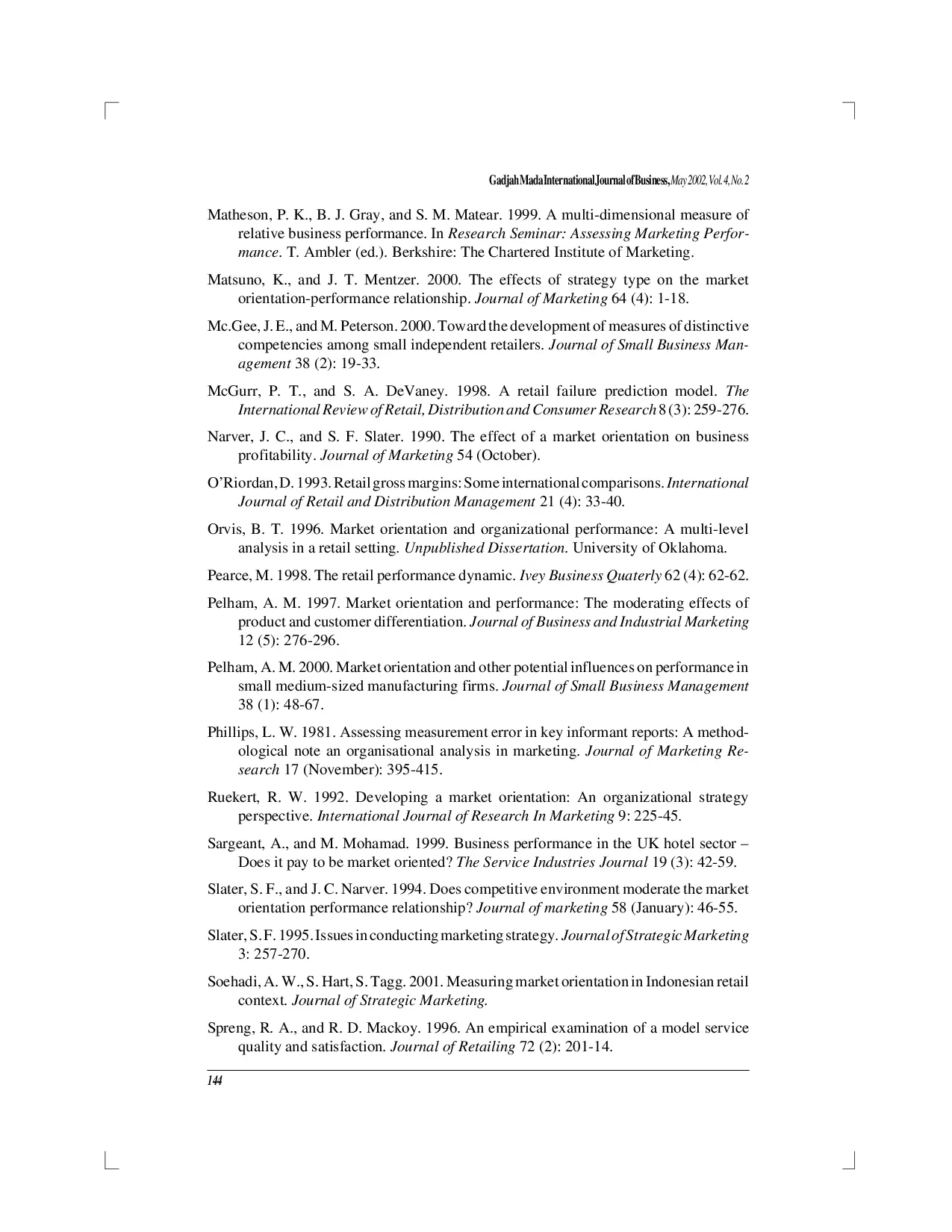
UGMUGM Terakhir, penelitian ini bisa dikembangkan dengan membandingkan dampak orientasi pasar terhadap kinerja keuangan antara bisnis ritel kecil milik keluargaTerakhir, penelitian ini bisa dikembangkan dengan membandingkan dampak orientasi pasar terhadap kinerja keuangan antara bisnis ritel kecil milik keluarga