IAIC PUBLISHERIAIC PUBLISHER
International Journal of Cyber and IT Service Management (IJCITSM)International Journal of Cyber and IT Service Management (IJCITSM)The limited research on the impact of external debt on financial system stability at the micro level creates a clear need for further investigation. This study addresses that gap by conducting a comprehensive micro panel data analysis, covering the performance of 523 individual Non-Financial Corporations (NFCs) in Indonesia, utilizing a dynamic model and System-Generalised Methods of Moments (Sys-GMM) estimation. The research tackles endogeneity issues using GMM estimators to ensure the robustness of findings. The results indicate that different capital flows exert varying impacts on corporate performance. Specifically, private external debt inflows and Portfolio Investments (PI) positively influence financial stability, while direct investment in manufacturing firms and corporate credit growth significantly impact financial stability. From a macroprudential policy perspective, the findings highlight the importance of monitoring corporate vulnerabilities, as they may pose risks to the banking sector. These insights provide valuable guidance for policymakers in developing more effective external debt management strategies to ensure financial stability.
This study demonstrates that capital inflows, particularly external debt and portfolio investments, significantly enhance corporate financial stability in Indonesia.The positive impact is likely due to the implementation of hedging strategies to mitigate associated risks.Furthermore, direct investment in the manufacturing sector plays a crucial role in improving corporate financial performance.Therefore, continuous monitoring of corporate credit growth and vulnerabilities is essential for maintaining financial stability and mitigating potential risks to the banking sector.
Further research should investigate the long-term effects of different types of capital inflows on the Indonesian financial system, considering the evolving global economic landscape and potential shifts in investor behavior. A detailed analysis of the effectiveness of current hedging policies and regulatory frameworks in mitigating risks associated with external debt is needed, potentially incorporating stress-testing scenarios to assess resilience under adverse conditions. Additionally, exploring the role of financial technology (FinTech) and digital platforms in facilitating capital flows and improving corporate access to finance, while also addressing associated cybersecurity and data privacy concerns, could provide valuable insights for policymakers and industry stakeholders. These investigations should also consider the impact of capital inflows on specific sectors, such as small and medium-sized enterprises (SMEs), to develop targeted policies that promote inclusive and sustainable economic growth. Finally, research could explore the potential for developing early warning systems based on machine learning algorithms to identify and mitigate systemic risks arising from capital flow volatility.
- Unveiling the Hidden Risks of Capital Inflows on Non-Financial Firm Performance in Indonesia | International... iiast.iaic-publisher.org/ijcitsm/index.php/IJCITSM/article/view/224Unveiling the Hidden Risks of Capital Inflows on Non Financial Firm Performance in Indonesia International iiast iaic publisher ijcitsm index php IJCITSM article view 224
- International Journal of Cyber and IT Service Management (IJCITSM). journal cyber service management... doi.org/10.34306/ijcitsmInternational Journal of Cyber AUAUand IT Service Management IJCITSM journal cyber service management doi 10 34306 ijcitsm
| File size | 1.07 MB |
| Pages | 15 |
| DMCA | Report |
Related /

RADJAPUBLIKARADJAPUBLIKA Hasil penelitian menunjukkan bahwa dewan komisaris independen memiliki pengaruh positif dan signifikan terhadap nilai perusahaan, pengungkapan lingkunganHasil penelitian menunjukkan bahwa dewan komisaris independen memiliki pengaruh positif dan signifikan terhadap nilai perusahaan, pengungkapan lingkungan

RADJAPUBLIKARADJAPUBLIKA Penelitian ini mengkaji kesesuaian permainan tradisional dengan pilar utama NEP 2020, termasuk pembelajaran berbasis olahraga, Sistem Pengetahuan IndiaPenelitian ini mengkaji kesesuaian permainan tradisional dengan pilar utama NEP 2020, termasuk pembelajaran berbasis olahraga, Sistem Pengetahuan India

RADJAPUBLIKARADJAPUBLIKA The Break Even Point (BEP) analysis supports these findings, showing that the actual selling volume and price of all product variants far exceed the break-evenThe Break Even Point (BEP) analysis supports these findings, showing that the actual selling volume and price of all product variants far exceed the break-even

RADJAPUBLIKARADJAPUBLIKA The results showed that the institutional conditions of KWTs in Kalimanah Subdistrict varied, influenced by leadership, member participation, internalThe results showed that the institutional conditions of KWTs in Kalimanah Subdistrict varied, influenced by leadership, member participation, internal

RADJAPUBLIKARADJAPUBLIKA Namun, pada tahun 2024, kondisi menjadi tidak menguntungkan dengan deviasi -0,001%, di mana biaya aktual melebihi anggaran karena peningkatan biaya pupukNamun, pada tahun 2024, kondisi menjadi tidak menguntungkan dengan deviasi -0,001%, di mana biaya aktual melebihi anggaran karena peningkatan biaya pupuk

RADJAPUBLIKARADJAPUBLIKA Penelitian ini menyimpulkan bahwa inovasi memiliki pengaruh positif dan signifikan terhadap kinerja UMKM. Kompetensi juga terbukti berpengaruh positifPenelitian ini menyimpulkan bahwa inovasi memiliki pengaruh positif dan signifikan terhadap kinerja UMKM. Kompetensi juga terbukti berpengaruh positif

RADJAPUBLIKARADJAPUBLIKA Kualitas sistem, informasi, dan layanan berperan sebagai fondasi untuk implementasi akuntansi berbasis cloud yang berhasil, sementara keberhasilan akuntansiKualitas sistem, informasi, dan layanan berperan sebagai fondasi untuk implementasi akuntansi berbasis cloud yang berhasil, sementara keberhasilan akuntansi
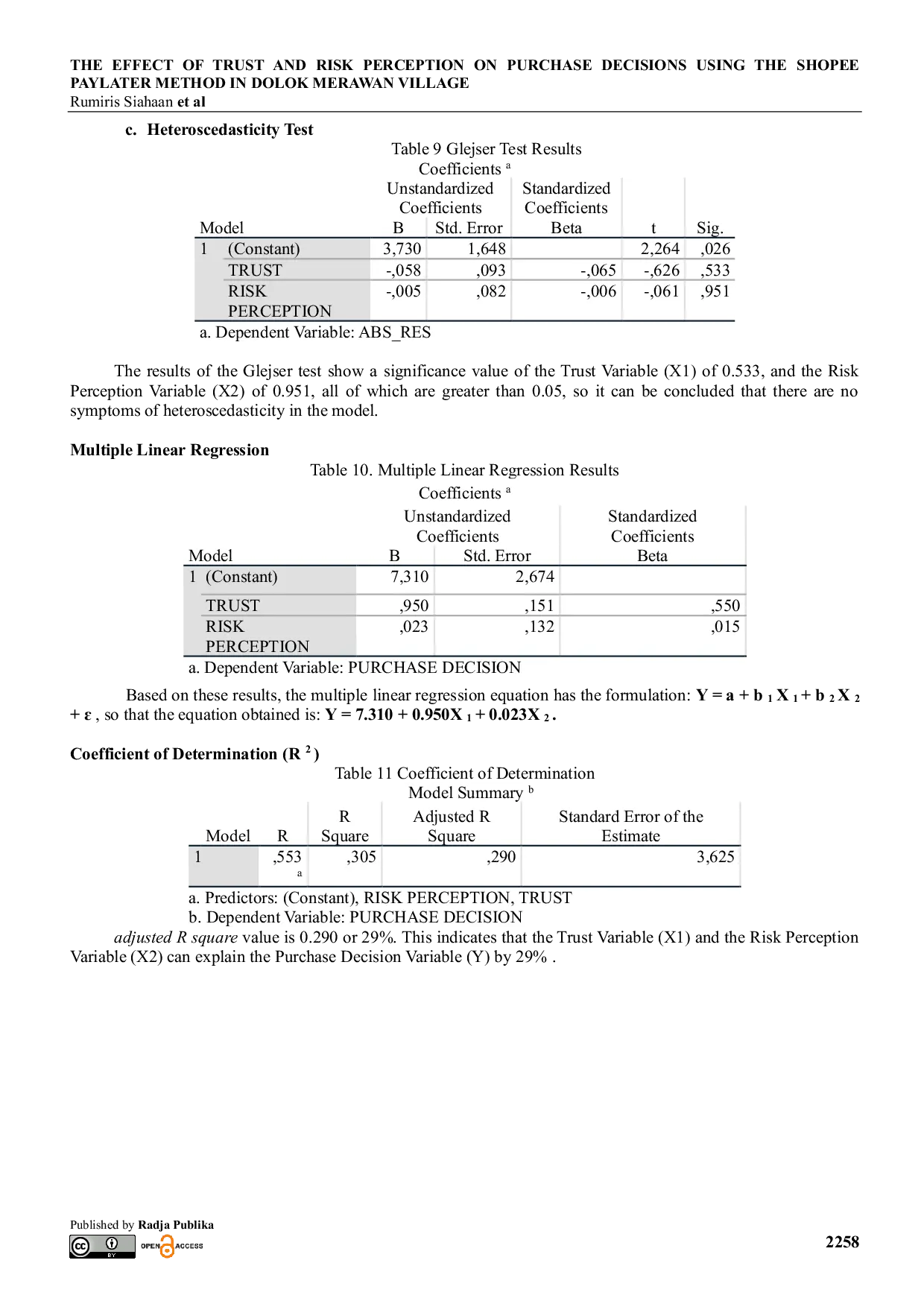
RADJAPUBLIKARADJAPUBLIKA Hasil menunjukkan bahwa kepercayaan berpengaruh signifikan terhadap keputusan pembelian, sedangkan persepsi risiko tidak berpengaruh signifikan. TemuanHasil menunjukkan bahwa kepercayaan berpengaruh signifikan terhadap keputusan pembelian, sedangkan persepsi risiko tidak berpengaruh signifikan. Temuan
Useful /

IAIC PUBLISHERIAIC PUBLISHER Berdasarkan evaluasi bobot dan penilaian, nilai IFAS mencapai 0,78 sedangkan nilai EFAS berada di 0,4, menempatkan perusahaan di kuadran I. Hal ini menunjukkanBerdasarkan evaluasi bobot dan penilaian, nilai IFAS mencapai 0,78 sedangkan nilai EFAS berada di 0,4, menempatkan perusahaan di kuadran I. Hal ini menunjukkan

UMBIMAUMBIMA Pendampingan masyarakat desa/kelurahan dalam kegiatan pengukuran elevasi dan perencanaan jalan tani baru merupakan upaya penting untuk meningkatkan infrastrukturPendampingan masyarakat desa/kelurahan dalam kegiatan pengukuran elevasi dan perencanaan jalan tani baru merupakan upaya penting untuk meningkatkan infrastruktur
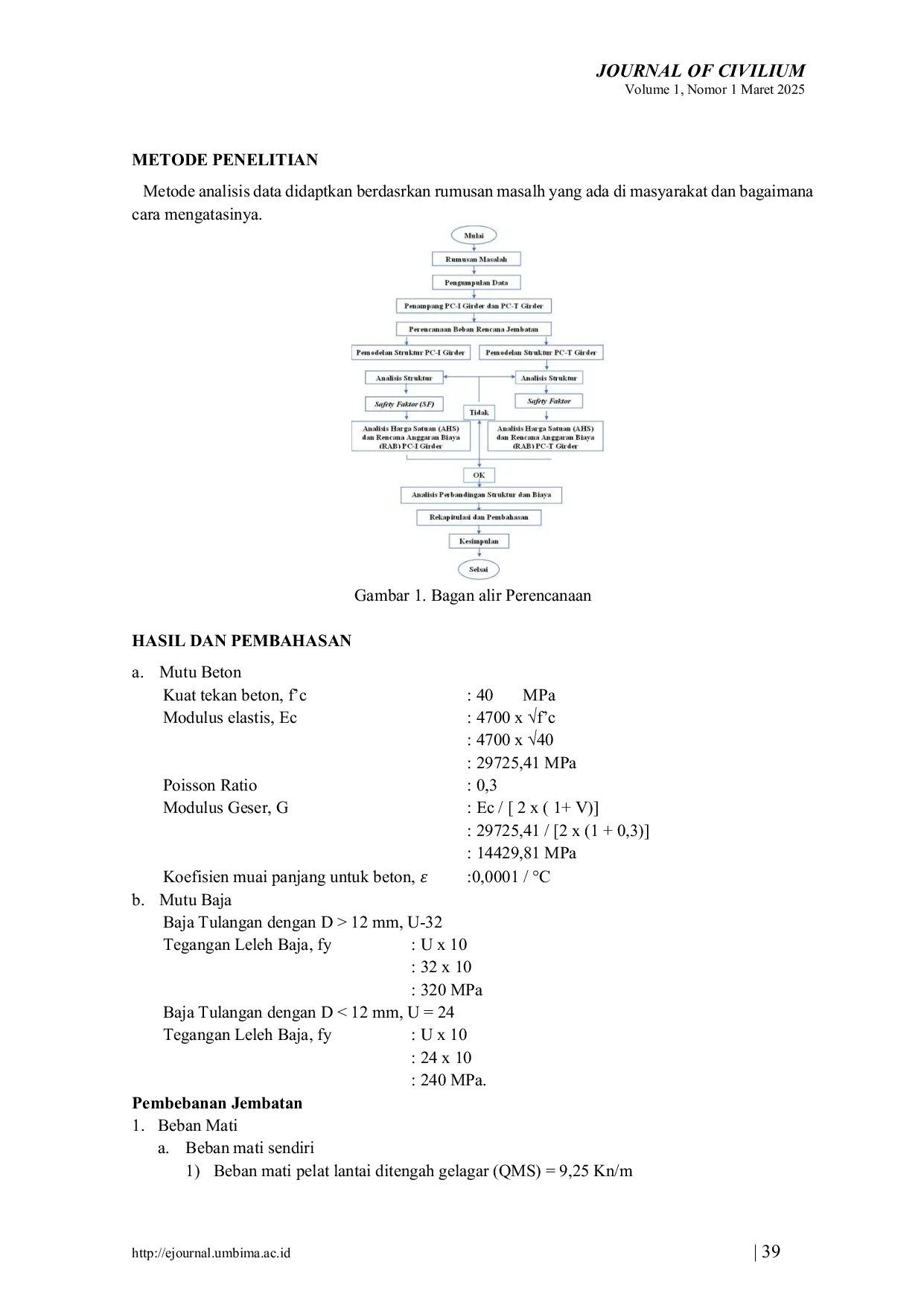
UMBIMAUMBIMA Jembatan sendiri diklasifikasikan berdasarkan jenis struktur atasnya, satu jenis struktur atas jembatan adalah menggunakan beton prategang, beton prategangJembatan sendiri diklasifikasikan berdasarkan jenis struktur atasnya, satu jenis struktur atas jembatan adalah menggunakan beton prategang, beton prategang

MEDIAPUBLIKASIMEDIAPUBLIKASI Sekolah Menengah Kejuruan (SMK) Cendikia di Kota Cirebon tidak terkecuali. Penelitian ini bertujuan untuk memberikan analisis mendalam tentang situasiSekolah Menengah Kejuruan (SMK) Cendikia di Kota Cirebon tidak terkecuali. Penelitian ini bertujuan untuk memberikan analisis mendalam tentang situasi